
Light Requirements
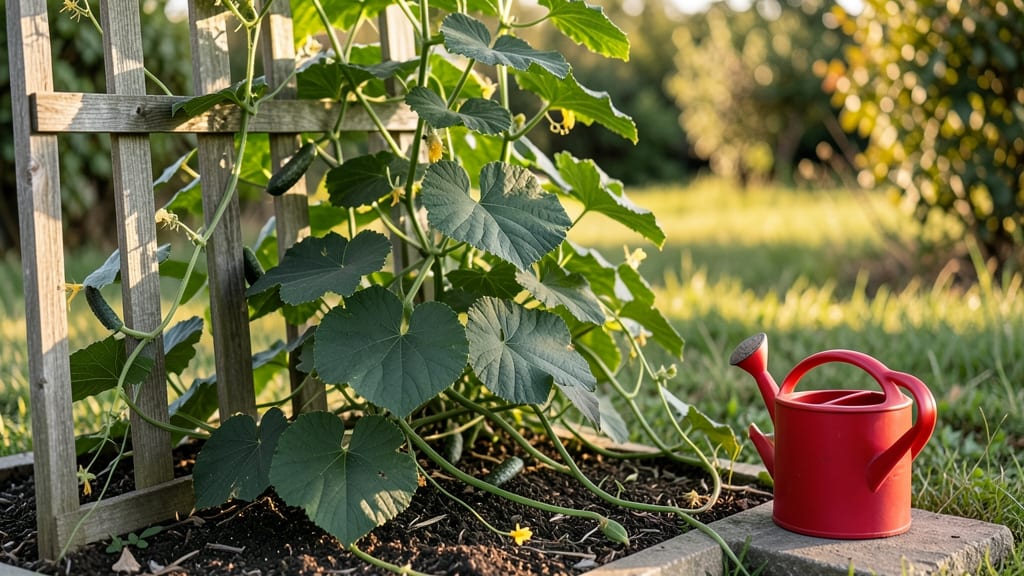
Cucumbers are 95% water, so maintaining proper hydration is critical for their growth and fruit production. 💧 The key is balancing moisture—too little causes wilting and poor fruit development, while overwatering can lead to root rot or blossom-end rot, that telltale black spot on the fruit.
I've found that morning watering works best, as it allows excess moisture to evaporate during the day, reducing fungal risks.
Your soil type plays a huge role in how often you need to water. Sandy soils drain quickly, often requiring daily checks in hot weather, while clay holds moisture longer but can suffocate roots if not properly amended.
Container-grown cucumbers dry out faster than in-ground plants, so they may need watering every 1-2 days in summer. Always check soil moisture by sticking your finger about an inch deep—if it's dry, it's time to water.
💡 In This Article
- Why Consistent Moisture Matters for Cucumber Growth
- Adjusting Watering for Climate and Soil Types
Why consistent moisture matters for cucumber growth
Cucumbers thrive on consistent moisture because their roots absorb water and nutrients through a process called osmosis, where water moves from the soil into the plant's vascular system. When soil moisture drops below 40% capacity, cucumber roots struggle to uptake water efficiently, leading to wilting and poor fruit development.
The plant's large, shallow root system spreads just 12-18 inches deep, so even slight dryness can stress the plant. 💧 This is why maintaining 1 to 1.5 inches of water per week is critical—it keeps the root zone hydrated without drowning the plant.
The science gets even more interesting when you consider how water affects nutrient absorption. Cucumbers need nitrogen, phosphorus, and potassium in specific ratios to produce high-quality fruit. When soil dries out, these nutrients become less available to the roots, causing stunted growth or bitter-tasting cucumbers.
I've noticed that during dry spells, cucumbers grown in well-amended soil (with compost or aged manure) handle moisture fluctuations better because the organic matter improves water retention and microbial activity that breaks down nutrients.
Overwatering, however, creates just as many problems. Excess moisture displaces oxygen in the soil, suffocating roots and promoting Pythium or Fusarium fungi, which cause root rot. This is why proper drainage is non-negotiable—cucumber beds should have sandy loam or be amended with perlite to prevent waterlogging.
The ideal soil pH for cucumbers is 6.0-6.8, where nutrients are most available, but poor drainage can push the pH toward alkaline levels, further reducing nutrient uptake.
Here's what happens when watering goes wrong: Underwatered cucumbers develop thick, tough skins and bitter flavors due to stress hormones called abscisic acids. Overwatered plants, on the other hand, suffer from blossom-end rot (a calcium deficiency symptom) because excess water leaches calcium from the soil.
The black, sunken spots on the fruit's blossom end are a classic sign of this imbalance, which can ruin an entire harvest if not corrected early.
One of the most fascinating aspects is how cucumber plants transpire—they release water vapor through tiny leaf pores called stomata. On a hot day, a single cucumber plant can lose up to 0.25 gallons of water per hour through transpiration!
This is why morning watering is ideal: it replenishes moisture before the day's heat causes rapid evaporation. Mulching with straw or wood chips helps retain soil moisture and reduces water loss by up to 30%, making your watering schedule more efficient.
Pay attention to the color and texture of your cucumber leaves as an early warning system. Healthy leaves should be deep green and slightly waxy, while underwatered leaves turn dull yellow and crispy at the edges.
Overwatered plants develop yellowing between leaf veins (a sign of nutrient deficiencies) or moldy spots. These visual cues help you adjust your watering routine before problems become severe. 🌱