
Pests and Diseases
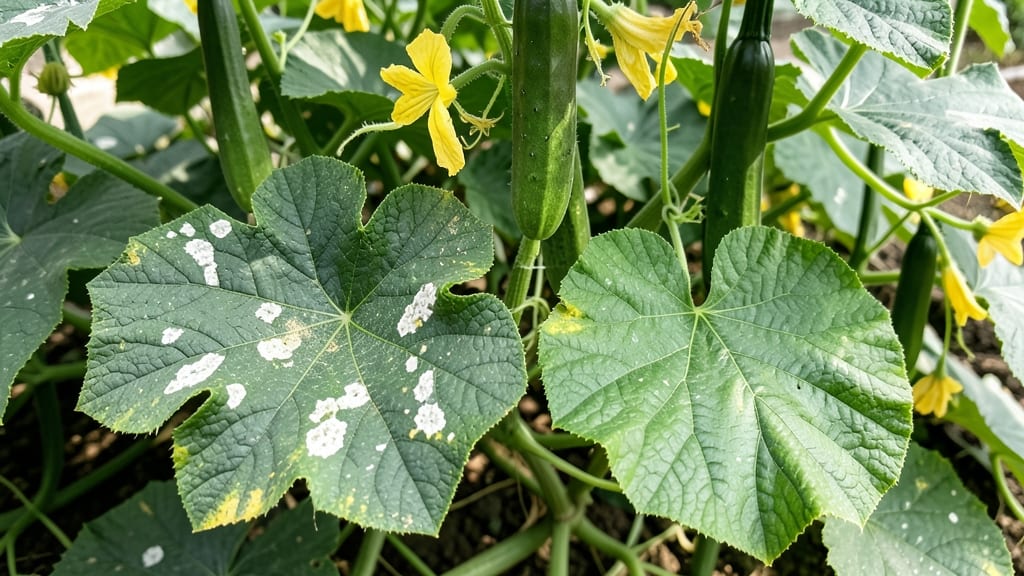
Wondering why do my cucumber leaves have white spots? That powdery film isn’t just unsightly—it’s stealing sunlight and nutrients from your plants, and I’ve battled powdery mildew in my garden for years. early.
The good news? You can stop the spread without harsh chemicals, and your cucumbers will bounce back stronger than ever.
Most white spots start as powdery mildew, a fungal infection that thrives in warm, humid conditions. The telltale signs? White or gray spots on leaves that spread like dust when you brush them.
Unlike pests, this isn’t something you’ll see crawling—it’s a quiet thief that weakens plants over time. The key to fixing it? Act fast before it reaches the vines and fruits.
With the right approach, you’ll see new green growth within 7-10 days. Prune infected leaves immediately, spray with a mix of baking soda and water (or neem oil for organic control), and improve airflow around your plants.
The goal isn’t just to treat the symptoms—it’s to create an environment where mildew can’t take hold again.
This method works for all cucumber varieties, whether you’re growing in containers or a full garden bed. The secret? Consistency. Check your plants daily, adjust watering habits, and don’t let the problem linger. Your harvest is worth the effort—imagine crisp, blemish-free cucumbers all season long.
Hidden Culprits Behind White Spots
White spots on cucumber leaves aren’t just a cosmetic nuisance—they’re often a red flag from the plant’s microscopic world. Understanding the root causes helps you act fast and save your harvest.
Let’s break down the science behind the most common triggers, so you can diagnose and treat your plants like a pro.
Powdery mildew (Erysiphe cichoracearum or Podosphaera xanthii) is the #1 culprit behind those fuzzy white spots. This fungus thrives in warm, humid conditions (60–80°F) and spreads via wind or splashing water.
How it works:
- Spores land on leaves and germinate within 4–6 hours under ideal conditions.
- The fungus penetrates leaf tissue, forming thread-like structures (hyphae) that suck nutrients.
- White, powdery patches expand, blocking sunlight and weakening photosynthesis.
🔍 Tell-tale signs:
- Spots start small, then grow into white, dusty patches (like a sprinkle of flour).
- Leaves may yellow, curl, or drop prematurely.
- Severe cases lead to stunted growth and bitter cucumbers.
Spider mites (Tetranychus urticae) aren’t fungi—they’re microscopic arachnids that leave behind white, stippled damage. Their saliva disrupts plant cells, causing chlorotic (white/yellow) speckling before the leaves turn bronze.
How they strike:
- Mites pierce cells to feed, injecting toxins that trigger white or yellow spots.
- Heavy infestations create a fine webbing on undersides of leaves.
- Stress from drought or heat supercharges their reproduction (they multiply in days, not weeks).
🕷️ What to watch for:
- White stippling (tiny dots) that looks like salt sprinkled on leaves.
- Leaves crunch when touched (a sign of severe damage).
- Plants wilt or appear scorched despite adequate water.
If your cucumbers get splashy water (like from overhead sprinklers), you might be inviting bacterial leaf spot** (Pseudomonas syringae) or fungal anthracnose (Colletotrichum orbiculare). These pathogens hitchhike on water droplets, causing white, water-soaked spots that turn brown and crinkly.
The science behind it:
- Bacteria/fungi enter through stomata (tiny leaf pores) when water splashes.
- Humidity + moisture creates the perfect breeding ground for spores.
- Spots may have yellow halos or dark centers as they age.
💦 Red flags:
- Spots appear suddenly after rain or watering.
- Leaves develop ragged edges or holes.
- Young leaves are more vulnerable than mature ones.
Sometimes, white spots aren’t pathogens at all—they’re physical damage from intense sunlight or heat stress. Cucumbers are shade-loving plants; when exposed to direct midday sun (especially in hot climates), leaves can develop bleached or white patches due to sun scald.
How it happens:
- UV rays + high temps break down chlorophyll, causing white or necrotic (dead) spots.
- Transpiration stress (too much water loss) leads to leaf curling and crispy edges.
- Common in plastic-covered greenhouses or south-facing gardens with poor airflow.
🌞 Key indicators:
- Spots appear on exposed leaf surfaces (not undersides).
- Damage is worse on older leaves first.
- Plants wilt in the afternoon but recover at night.
Overzealous gardening can backfire. Excessive nitrogen, salt buildup from tap water, or harsh pesticides can cause white, crusty deposits or bleached patches on leaves.
How it damages:
- Salt buildup (from hard water or over-fertilizing) disrupts osmosis, causing cells to plasmolyze (shrink and die).
- Pesticide drift (especially sulfur or copper sprays) can bleach leaves if applied incorrectly.
- Chlorine in tap water may leave white mineral deposits on foliage.
🚨 What to look for:
- White, powdery residue on leaves or soil surface.
- Leaf edges turn brown while centers stay green.
- New growth is stunted or yellowed.
How to Fix White Spotted Cucumber Leaves
Now that you’ve identified the cause of those pesky white spots on your cucumber leaves, it’s time to roll up your sleeves and restore your plants to their vibrant, healthy selves! Here’s a clear, step-by-step guide to treating each issue—plus tips to keep your cucumbers thriving long-term.
If your cucumbers are battling powdery mildew, act fast—this fungus spreads quickly and can weaken your plants. Here’s how to tackle it:
🔥 Step 1: Remove Infected Leaves Start by pruning any severely infected leaves.
This stops the fungus from spreading further. - How to do it: Use clean, sharp pruners or scissors to snip off leaves with white powdery patches. - Pro tip: ❌ Don’t compost infected leaves—toss them in the trash to prevent reinfection.
🍳 Step 2: Apply Fungicidal Sprays
Use a baking soda spray (a natural, budget-friendly option) or a commercial fungicide like neem oil or sulfur-based sprays.
- DIY Baking Soda Spray Recipe:
- Mix 1 tsp baking soda + 1 tsp vegetable oil + 1 tsp mild dish soap in 1 quart of water.
- Spray evenly on both leaf sides (especially undersides where spores hide).
- Reapply every 7–10 days until symptoms disappear.
- Store-Bought Options:
- Neem oil (1 tsp per quart of water + a drop of soap as a sticker).
- Sulfur spray (follow label instructions—best for dry conditions).
🌡️ Step 3: Improve Airflow & Light
Powdery mildew thrives in humid, shady conditions.
Boost your cucumbers’ defenses by: - Spreading plants at least 12–18 inches apart (or use trellises for vertical growth). - Pruning overcrowded vines to allow sunlight and airflow. - Watering at the base (never overhead) to keep leaves dry.
If spider mites are the culprits, they’ll need a different approach—these tiny pests suck plant sap and leave behind white webbing.
👨🍳 Step 1: Blast Them Off with Water Spider mites hate water.
Give your plants a strong spray from the hose to knock them off. - Best time: Early morning or evening (avoid midday sun stress). - Pro tip: 💡 Use a drop cloth under the plant to wash mites into the soil—then hose them away.
🥘 Step 2: Introduce Natural Predators
Encourage ladybugs, lacewings, or predatory mites (like Phytoseiulus persimilis) to eat spider mites.
- How to attract them:
- Plant dill, fennel, or marigolds nearby (they love these flowers).
- Avoid chemical pesticides (they kill beneficial bugs too!).
🔪 Step 3: Use Insecticidal Soap or Oil
For stubborn infestations, try:
- Insecticidal soap (spray directly on mites; reapply every 5–7 days).
- Neem oil (same recipe as above—miters can’t resist!).
- Horticultural oil (apply in early morning/late evening to avoid burning leaves).
Once your cucumbers are back in shape, keep them healthy with these long-term strategies:
| Problem | Prevention Tip |
|---|---|
| Powdery Mildew | 🌡️ Space plants for airflow + rotate crops yearly to avoid soil buildup. |
| Spider Mites | 💦 Water deeply but infrequently (mites love dry soil). |
| Bacterial Leaf Spot | ✂️ Remove lower leaves to improve airflow + sterilize pruners with rubbing alcohol. |
| General Pests | 🌿 Mulch with straw to deter pests + interplant with herbs (like basil). |
- Epsom Salt Soak (1 tbsp per gallon of water) – Strengthens leaves and helps recovery.
- Compost Tea – Spray foliarly to boost immunity naturally.
- Reflective Mulch – Use white plastic mulch to reduce heat stress and deter pests.
Remember: Consistency is key! Check your plants weekly for early signs of trouble, and your cucumbers will reward you with crisp, spot-free leaves and a bountiful harvest. 🥒🌱
Frequently asked questions
Are white spots on cucumber leaves always a sign of disease?
Not necessarily! While powdery mildew and fungal infections are common causes, white spots can also result from spider mites (which leave stippled damage) or even sun scald when leaves get too much direct sunlight. Always check for webbing or leaf curling to distinguish between pests and pathogens.
How quickly can I expect to see results after treating white spots?
With immediate action, you should notice improvements in 7-10 days. For powdery mildew, new growth appears within 5-7 days if you remove infected leaves and improve airflow. Spider mite damage may take slightly longer (2-3 weeks) since eggs can remain dormant.
Can I still harvest cucumbers if the leaves have white spots?
Yes, but only if the spots are on older leaves and haven't reached the vines. Harvest cucumbers before they reach full size to prevent further stress on the plant. If the disease is severe, focus on treating the leaves first—your next harvest will be healthier.
Will homemade sprays really work against powdery mildew?
A baking soda spray (1 tsp baking soda + 1 tsp oil + 1 tsp soap per quart of water) is 70-80% effective when applied correctly. For best results, spray both leaf surfaces in the early morning and reapply every 7-10 days. Neem oil works similarly but also deters spider mites.
What's the best way to prevent white spots from coming back?
Focus on three key strategies:
- Improve airflow by spacing plants properly,
- Water at the base (never overhead), and
- Rotate crops annually to prevent soil-borne pathogens. Adding reflective mulch can also reduce heat stress that weakens leaves.