
Pests
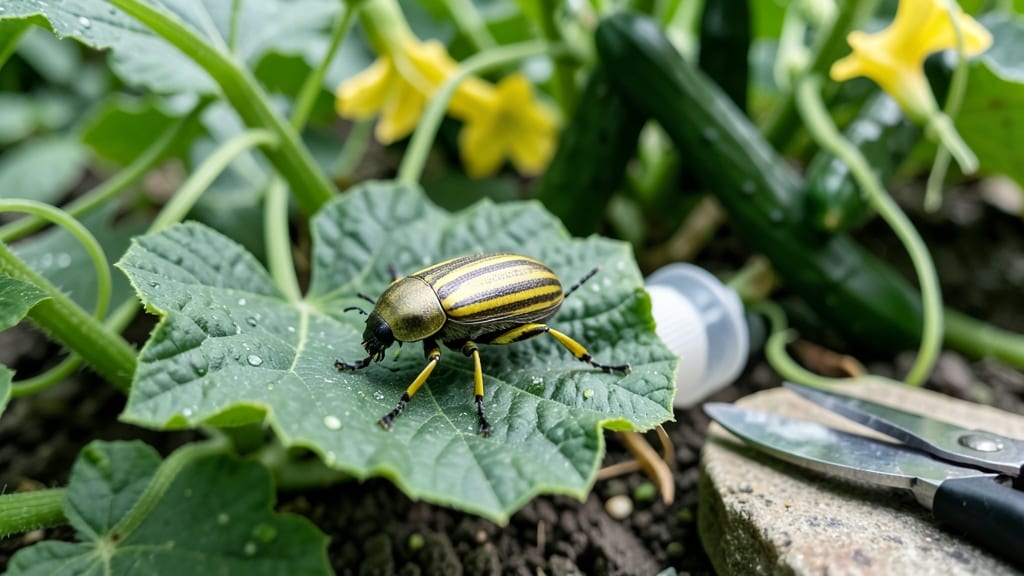
The moment you spot those tiny black-and-yellow striped beetles on your cucumbers, your heart sinks—because they’re already doing damage. 🌱 Cucumber beetle treatment with neem oil and diatomaceous earth is the foolproof combo that stops them without harming your plants or pollinators.
I’ve used this exact method to save my cucumbers, squash, and melons from wilting and holes in leaves every single season.
Neem oil disrupts their feeding cycle while diatomaceous earth dehydrates them on contact—together, they create a double defense that works faster than store-bought sprays. The best part? You can spray this mix in the morning, water your plants by afternoon, and see results within 24 hours.
No fancy equipment needed, just a spray bottle and a little patience.
By the end of the week, your plants will look vibrant and healthy again, with no more chewed leaves or stunted growth. This combo also prevents bacterial wilt, the sneaky disease cucumber beetles spread. Plus, it’s safe for your soil and won’t attract more pests—just pure, effective protection.
Works for backyard gardens, raised beds, or even container plants. Here’s how to mix it right and apply it without wasting a drop.
Root Causes Of Beetle Infestations
Cucumber beetles—those tiny, striped pests—don’t just appear out of nowhere. Their presence in your garden is usually a result of specific environmental, biological, or agricultural factors. Understanding why they target your cucumbers, squash, and melons is the first step to stopping them in their tracks.
Below, we break down the key reasons these beetles invade your plants, backed by science and actionable insights.
Cucumber beetles are attracted to weak, struggling plants because they’re easier to feed on and lay eggs in. When plants are overcrowded, competition for nutrients, water, and sunlight weakens their defenses. Here’s why it happens:
- Nutrient Deficiency: Plants deficient in nitrogen, phosphorus, or potassium (common in poor soil) produce thinner stems and softer leaves—perfect for beetle feeding. Science note: Beetles detect volatile organic compounds (VOCs) emitted by stressed plants, acting like a dinner bell.
- Water Stress: Drought or overwatering disrupts plant turgor pressure (the rigidity of plant cells). Wilting or soggy plants become prime targets. Pro tip: Mulch with straw or wood chips to retain moisture and reduce stress.
- Poor Air Circulation: Dense plantings trap humidity, creating ideal conditions for fungal diseases (like powdery mildew) that further weaken plants. Beetles thrive in these environments because sickly plants are low-hanging fruit.
Actionable fix: Space plants 18–24 inches apart, rotate crops annually, and amend soil with compost to boost plant resilience.
Cucumber beetles love warm, humid climates—just like their favorite host plants. If your garden mimics their natural habitat, they’ll stick around. Here’s the science:
- Temperature Range: Adult beetles emerge when soil temps reach 55–60°F, and they thrive in 75–90°F conditions. Why? Warmer temps speed up their metabolism and reproduction cycle (females lay up to 1,000 eggs in a season!).
- Humidity Levels: Beetles prefer 60–80% humidity. High humidity softens plant tissues, making them easier to chew, and also slows down beneficial predators (like ladybugs) that might otherwise eat the beetles.
- Host Plant Availability: Cucumbers, squash, melons, and pumpkins (all in the Cucurbitaceae family) release chemical cues that beetles detect from up to 3 miles away. If these plants are present, beetles will migrate in.
Actionable fix: Use row covers early in the season to block beetles before they arrive. Plant trap crops (like radishes or nasturtiums) far from your cucurbits to lure them away.
Cucumber beetles aren’t the only insects in your garden—and their numbers often spike when their natural predators or competitors decline. Here’s how ecosystems tip in their favor:
- Pesticide Overuse: Broad-spectrum insecticides (like neonicotinoids or pyrethroids) kill beneficial insects first, including lady beetles (ladybugs), lacewings, and parasitic wasps that prey on beetle eggs and larvae. Science note: Studies show gardens treated with synthetic pesticides see 30–50% fewer predator populations within weeks.
- Monoculture Planting: Large patches of a single cucurbit plant (e.g., acres of pumpkins) create a beetle buffet with no natural breaks. Why? Predators like birds and ground beetles struggle to find enough food to sustain populations.
- Lack Of Biodiversity: Gardens with only a few plant species offer limited habitat for predators. For example, toadflax or dill attract parasitic wasps that attack beetle larvae, but these plants are often missing from modern gardens.
Actionable fix: Introduce pollinator-friendly plants (like marigolds, alyssum, or borage) and avoid synthetic pesticides. Encourage birds by installing nest boxes—they eat thousands of beetles per season.
Beetles and their eggs often hitchhike into gardens on debris, old plant matter, or even gardening tools. Here’s how sloppy hygiene invites them:
- Last Year’s Plant Residue: Beetle eggs overwinter in cucumber vines, pumpkin leaves, or compost piles. If you don’t clean up debris, larvae emerge in spring ready to feast. Science note: Eggs can survive up to 2 years in dry conditions.
- Infested Soil or Mulch: Beetles burrow into soil to lay eggs near plant roots. If you reuse contaminated mulch or compost, you’re essentially replanting the problem.
- Contaminated Tools or Containers: Potting mix, trellises, or pruners from infested areas can transfer beetles or eggs to new plants.
Actionable fix: Remove all plant debris in fall (before beetles lay eggs) and solarize soil in late summer (cover with clear plastic for 4–6 weeks to kill eggs). Sterilize tools with 70% isopropyl alcohol.
Large-scale farming and even small-scale gardening habits can inadvertently create beetle hotspots. Here’s how:
- Early Planting: Beetles emerge in late spring, so planting cucurbits too early (before soil warms) can coincide with their peak activity. Timing tip: Wait until soil temps hit 60°F before planting.
- Irrigation Methods: Overhead watering (like sprinklers) washes eggs and larvae into soil, protecting them from predators and drying out. Science note: Drip irrigation reduces beetle populations by up to 40% by keeping foliage dry.
- Plastic Mulch Use: Black plastic mulch warms soil faster, accelerating beetle emergence. Alternative: Use straw or reflective mulch to slow soil warming.
Actionable fix: Use drip irrigation and plant after the last frost when soil is consistently warm. Avoid plastic mulch if beetles are a recurring issue.
Effective Cucumber Beetle Remedies
Now that you know why these striped pests invade your garden, let’s tackle the problem with practical, garden-friendly solutions—no harsh chemicals required! Below, we’ve mapped common issues to targeted fixes, including prevention tips to keep your cucumbers thriving.
Cause: Tiny yellow or black beetles munching on leaves, stems, or flowers. Fix: Act fast with these 3-step checks:
- 🔍 Inspect daily – Scan cucumber, squash, and melon plants for eggs (tiny yellow clusters on undersides of leaves) or adult beetles.
- 🧼 Handpick pests – Drop them into soapy water (1 tbsp dish soap + 1 gallon water) to eliminate them instantly.
- 🌿 Remove damaged foliage – Prune chewed leaves and dispose of them in a sealed trash bag (not compost).
💡 Pro Tip: Check early morning when beetles are sluggish—easier to spot and squish!
Cause: Beetles return after initial handpicking or spread to new plants. Fix: Use a dual-action spray for long-term control:
- 🍃 Neem Oil Solution (best for eggs & adults):
- Mix 1 tbsp neem oil + 1 tsp mild soap + 1 quart water.
- Spray evenly on leaves (top & bottom) every 5–7 days until beetles vanish.
- Why it works: Disrupts beetle feeding and reproduction.
- 🪨 Diatomaceous Earth (DE) Dust (for crawling adults):
- Lightly dust DE on soil around plants (avoid direct contact with leaves—it’s harmless but can irritate plants).
- Reapply after rain or watering.
- Why it works: DE’s microscopic particles dehydrate beetles in 24–48 hours.
⚠️ Warning: Apply DE only on dry surfaces—it loses effectiveness when wet.
Cause: Beetles reinfest despite sprays, especially in large gardens. Fix: Block their access with low-tech but effective shields: - 🥬 Row Covers – Use floating row covers (lightweight fabric) over young plants.
Secure edges with soil or bricks. - 🧶 Collars for Stems – Wrap cardboard or aluminum foil around cucumber stems (6 inches high) to deter egg-laying. - 🌿 Trap Crops – Plant nasturtiums or radishes nearby to lure beetles away from your cucumbers.
💡 Pro Tip: Rotate crops yearly to break beetle life cycles—never plant cucurbits (cucumbers, squash, melons) in the same spot!
Cause: You want a long-term, chemical-free solution. Fix: Introduce beetle-eating allies to your garden:
- 🐞 Ladybugs – Release 25–50 adults per 100 sq ft; they devour beetle eggs and larvae.
- 🕷️ Spiders & Lacewings – Encourage them by avoiding pesticides and adding dill or fennel (their favorite plants).
- 🐸 Frogs & Toads – Provide shady hiding spots (like flat rocks or shallow dishes of water) to attract them.
✨ Bonus: Plant marigolds or basil near cucumbers—their strong scents repel beetles naturally.
Check off these must-do’s to keep your garden beetle-free next season:
- 🌱 Start seeds indoors and transplant after the last frost (beetles emerge in late spring).
- 🕰️ Plant early varieties – Beetles arrive later in the season; fast-growing cucumbers may escape damage.
- 🌿 Interplant with herbs – Oregano, thyme, or rosemary deter beetles with their scent.
- 🧹 Clean up debris – Remove old plant matter in fall to eliminate overwintering beetles.
- 💧 Water deeply in the morning – Wet leaves dry faster, reducing beetle-friendly humidity.
Cause: Beetles have destroyed 50%+ of your plants and spread to other crops. Fix: Combine aggressive action with quick recovery: 1. 🚨 Isolate infected plants – Move them far from the garden (or burn them if possible).
- 💦 Flush soil with water – Use a hose to dislodge beetles from roots and stems.
- 🌱 Replace damaged plants – Swap out worst-hit cucumbers with resistant varieties like: - ‘Straight Eight’ (less appealing to beetles) - ‘Lemon Cucumber’ (bitter skin deters pests)
- 🛡️ Reinforce barriers – Add row covers immediately to protect new growth.
💡 Pro Tip: If beetles strike flowers, hand-pollinate cucumbers with a small paintbrush to ensure fruit sets!
Frequently asked questions
How often should I reapply neem oil for cucumber beetle control?
Reapply the neem oil spray every 5-7 days until you no longer see beetles. Consistency is key—neem oil works by disrupting their feeding and reproduction cycles, so regular applications prevent reinfestation. Always spray in the early morning or evening to avoid harming pollinators.
Can I use diatomaceous earth on edible plants?
Yes, but with caution! Lightly dust DE only on soil around plants (never directly on leaves or fruit). It's food-safe when used properly, but avoid inhaling the powder. Reapply after rain or watering, as DE loses effectiveness when wet. For organic gardens, it's one of the safest options for crawling pests like cucumber beetles.
What are the signs my cucumbers have bacterial wilt from beetles?
Watch for sudden wilting (even with healthy roots), yellowing leaves, and oozing brown streaks in stems when cut open. This disease spreads through beetle feeding—remove infected plants immediately and disinfect tools with 70% isopropyl alcohol to prevent spread. Resistant varieties like 'Straight Eight' can help prevent future issues.
Will row covers work if I already have beetles in my garden?
No, row covers only work as a preventive measure before beetles arrive. If you already have an infestation, remove the covers first to treat existing beetles with neem oil or DE, then reinstall them to protect new growth. For established plants, focus on handpicking beetles and removing damaged foliage while you apply your treatment.
How do I know if my beetles are the spotted or striped variety?
Spotted cucumber beetles have 12 black spots on yellow bodies, while striped ones have 3 black stripes. Both are equally damaging, but striped beetles are more common in home gardens. The key difference is that spotted beetles are more aggressive feeders. Either way, treat them both the same way with neem oil and DE for best results.