
Picking
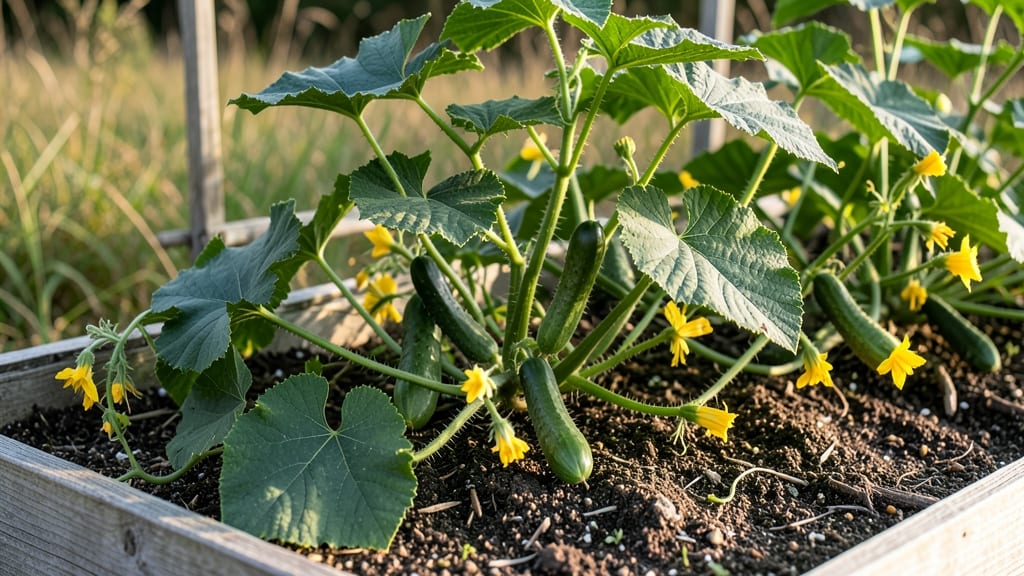
Nature designed cucumbers with these prickly defenses because they're incredibly effective at warding off threats. 🌱 The spines create physical barriers that make it difficult for pests like cucumber beetles or deer to feed on the plant, while also reducing water loss through evaporation.
Interestingly, these adaptations aren't just for protection—they also help the vines grip surfaces better as they grow upward. This dual-purpose design makes cucumbers particularly resilient in their natural habitats.
What's fascinating is how these spines develop from specialized hair cells called trichomes, which harden into rigid structures. This evolutionary trait isn't unique to cucumbers—many plants in the cucurbit family, like melons and squash, share similar protective adaptations.
The spines' effectiveness varies by species, with some varieties having more pronounced defenses than others.
💡 In This Article
- The Science Behind Cucumber Spines: Evolutionary Adaptations
- Managing Cucumber Spines in Gardening: Tips for Handling Prickly Plants
The science behind cucumber spines: evolutionary adaptations
Cucumber spines, scientifically called trichomes, evolved primarily as a physical defense mechanism against herbivores. These sharp, hair-like structures develop from epidermal cells and harden into rigid, calcium-based protrusions measuring 0.5-3 millimeters in length.
When pests like cucumber beetles or rabbits attempt to feed on the plant, the spines create painful punctures that deter them—similar to how thorns protect roses.
This defense is particularly effective because the spines aren't just randomly placed; they're concentrated along the main stems and leaf veins where herbivores would first target the plant.
The spines' effectiveness comes from their chemical composition too. Each spine contains silica deposits that make them even harder and more abrasive to the touch. Studies show that plants with denser spines experience 30-50% less herbivore damage compared to spineless varieties.
Interestingly, cucumbers also use these spines to reduce water loss by creating microclimates that trap moisture near the leaf surface—a clever dual-purpose adaptation. 🌱 The spines' orientation (pointing outward) maximizes their defensive potential while minimizing self-damage to the plant.
This evolutionary strategy isn't unique to cucumbers—many plants in the Cucurbitaceae family (which includes melons, squash, and pumpkins) share similar adaptations. For example, bitter melon has even more aggressive spines that can reach 5 millimeters in length, while some squash varieties develop curved hooks that make them harder to remove.
The spines' development is also influenced by environmental factors: plants grown in higher light conditions tend to develop denser spines as a response to increased herbivore pressure.
What's particularly fascinating is how these spines develop through a process called differentiation. The plant's meristem cells first form trichome initials, which then elongate and harden through lignification (a process similar to wood formation). This hardening makes the spines 10 times stronger than regular plant hairs.
The spines' placement isn't random either—they're most concentrated on young leaves and stems, where the plant is most vulnerable to damage. This targeted distribution makes cucumbers particularly efficient at protecting their most critical growth areas.
The spines also play a role in the plant's climbing ability. As cucumber vines grow, these prickly structures help them grip surfaces more effectively, allowing them to reach higher and access more sunlight.
This dual functionality—defense and support—demonstrates how plant adaptations often serve multiple purposes. 🌿 In agricultural settings, breeders have even exploited this trait by developing cucumber varieties with denser spines that require less chemical pest control, showing how nature's designs can inform sustainable farming practices.