
Companion Plants
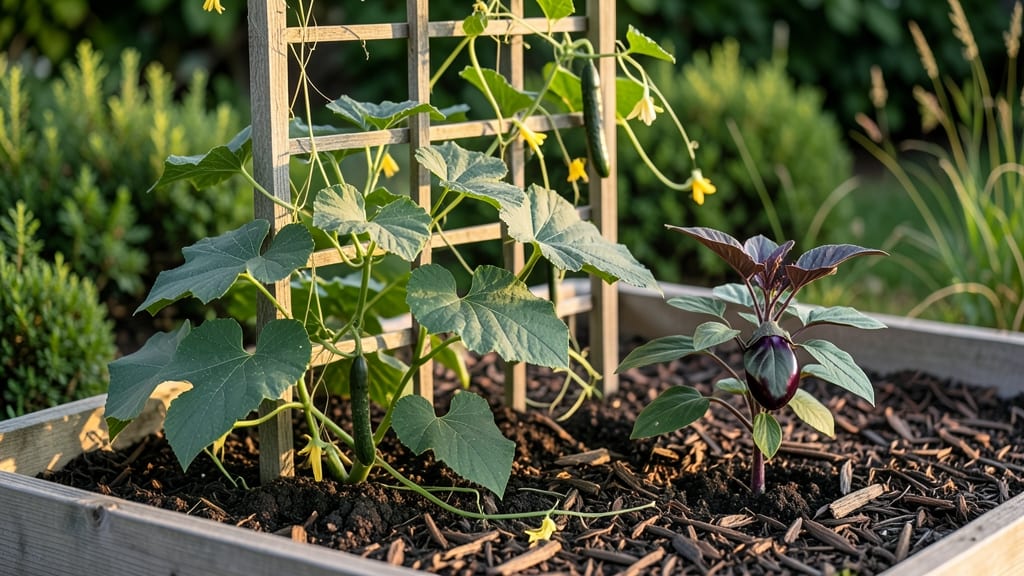
This clever cucumber and eggplant companion planting isn’t just space-saving—it’s a growth hack that repels pests, improves soil, and boosts yields. 🌱 I’ve seen my own eggplants thrive alongside cucumbers, their broad leaves shading shallow roots while cucumber vines deter squash bugs. that target eggplants.
The secret lies in their complementary needs: cucumbers climb, eggplants stay compact, and together they create a self-regulating ecosystem.
Start with well-draining soil rich in compost—both plants crave nutrients but hate soggy roots. Plant eggplants first (they’re slower to establish), then tuck cucumbers nearby, training vines along trellises to keep them off the ground.
Space eggplants 18-24 inches apart and cucumbers 12-18 inches apart, leaving 3 feet between rows to prevent competition. A mulch layer keeps moisture steady and suppresses weeds that smother shallow eggplant roots.
What you’ll get is a low-maintenance power duo: cucumbers deter flea beetles that plague eggplants, while eggplants’ deep roots access nutrients cucumbers can’t reach. By midsummer, you’ll harvest crisp cucumbers and glossy eggplants—without the usual pest battles.
The only challenge? Watching for aphids on cucumbers (spray with soapy water) and ensuring both plants get enough water (they’re thirsty!).
If space is tight, try containers: pair one eggplant with two cucumber plants in a 5-gallon pot. For alternatives, swap cucumbers for beans (they fix nitrogen) or nasturtiums (repel pests), but nothing matches this duo’s synergy. Ready to transform your garden layout?
📚 In This Guide
- What you need
- Instructions
- Tips and common mistakes
- Wrapping up and next steps
What you need
- ● Seeds or Seedlings: Cucumber seeds (6–10 plants, depending on space)
- ● Eggplant seedlings or seeds (3–5 plants)
- ● Soil: Well-draining, nutrient-rich soil (pH 6.0–6.8)
- ● Compost or aged manure (1–2 gallons per planting area)
- ○ Planting Containers or Garden Bed: Raised beds (optional but ideal for drainage)
- ● Large pots (minimum 12" deep, 1–2 plants per container)
- ● Basic Tools: Garden trowel or hand shovel
- ● Gloves (to protect your hands)
- ● Watering can or hose with a gentle spray nozzle
- ● Companion Plants: Basil, marigolds, or beans (to deter pests naturally)
- ● Mulch: Straw or wood chips (to retain moisture and suppress weeds)
- ● Trellis or Cage: For cucumbers (to save space and improve air circulation)
- ● Fertilizer: Balanced organic fertilizer (10-10-10 NPK ratio)
- ● Row Cover or Netting: To protect young plants from pests
Step-by-step guide to cucumber and eggplant companion planting
This pairing thrives when you strategically place plants to maximize space, deter pests, and enhance flavor.
🌱 Step 1: Plan Your Layout for Optimal Spacing and Sunlight
Both cucumbers and eggplants crave full sun (6-8 hours daily), so choose a south-facing bed or raised area. I space eggplants 18-24 inches apart in rows 2 feet apart—their broad leaves create natural shade that cucumbers love. Plant cucumbers 12-18 inches apart between eggplant rows, where they’ll climb trellises or sprawl without competing for light.
Here’s the thing—eggplants need room to breathe, while cucumbers thrive when their vines spread. I always place taller companion plants like beans near cucumbers to give them vertical support while keeping eggplants’ sprawling habit contained. Mark your layout with sticks to avoid crowding later.
🌿 Step 2: Choose the Right Companion Plants for Your Quad
For cucumbers, prioritize marigolds (1 plant per 4 sq ft)—their strong scent repels cucumber beetles, while nasturtiums (3 plants per bed) lure pests away from eggplants. Add basil (2 plants per 6 sq ft) between rows; it improves cucumber flavor and deters whiteflies that plague eggplants.
For eggplants, interplant onions (1 per 2 sq ft)—their pungent aroma confuses eggplant borers, and thyme (1 plant per 3 sq ft) attracts predatory wasps that hunt tomato hornworms (a shared menace). Avoid planting potatoes or fennel nearby; they stunt eggplant growth through allelopathy.
✂️ Step 3: Mulch and Water Strategically for Dual Success
Spread 2-3 inches of straw mulch around both plants to retain moisture and suppress weeds. Cucumbers need consistent soil moisture—water deeply 1-2 inches per week, aiming for the base to prevent powdery mildew. Eggplants, however, prefer slightly drier soil; let the top inch dry between waterings to avoid fruit rot.
I water in the morning to let foliage dry by evening—this prevents fungal diseases like downy mildew on cucumbers and verticillium wilt on eggplants. Use drip irrigation or soaker hoses to avoid wetting leaves, which spreads pathogens faster.
💧 Step 4: Monitor and Adjust for Pest/Disease Synergy
Watch for aphids on cucumbers—they spread to eggplants quickly. Spray both with neem oil weekly as a preventative. If you spot eggplant flea beetles, handpick them early; cucumbers’ dense foliage hides their damage until it’s too late.
Rotate companion plants seasonally. By mid-summer, marigolds may fade—replace them with dill or cilantro to attract beneficial insects. If cucumbers outcompete eggplants for nutrients, side-dress with compost tea (1 gallon per 10 sq ft) every 4 weeks to balance growth.
☀️ Step 5: Harvest and Extend the Companion Cycle
Pick cucumbers when 6-8 inches long to encourage more production; overripe fruit stresses the vine and attracts pests that target eggplants. Harvest eggplants when 6-8 inches across and glossy—this prevents sunscald and keeps plants productive longer.
After harvest, leave companion plants like basil and thyme in place until frost. Their roots improve soil structure, and their scent deters overwintering pests. I always save seeds from marigolds and nasturtiums—they’re self-replenishing and save money next season.
Tips & tricks for perfect cucumber and eggplant pairings
Between us, these two plants are like the dynamic duo of the vegetable garden—when you get their relationship right, you'll see explosive growth and pest control you never imagined.
Sunlight Strategy: The 6-8 hours of daily sun is non-negotiable, but here's what nobody tells you—eggplants actually appreciate a little afternoon shade in hot climates. If your summer temperatures regularly hit 90°F+, consider planting cucumbers on the north side of eggplants to provide natural shade during peak heat while still letting both get their morning sun. This prevents sunscald on eggplant fruit while keeping cucumbers from overheating.
Companion Planting Precision: When you're placing those marigolds (1 per 4 sq ft) and nasturtiums (3 per bed), think vertically as well as horizontally. I've found that planting marigolds along trellises near cucumbers creates a pest-repelling canopy while allowing cucumber vines to climb. The key is to space them so their leaves don't completely shade the cucumbers—leave about 12 inches of open space between companion plants and cucumber vines for proper airflow.
Watering Wisdom: That 1-2 inches of weekly water for cucumbers is your baseline, but here's the real secret: water eggplants only when the top inch of soil is dry. I use a soil moisture meter for both plants—it's the only way to get this right without overwatering. For cucumbers, water at the base using a soaker hose in the morning; for eggplants, use a drip irrigation line placed near the roots. This targeted approach prevents fungal diseases while meeting each plant's specific needs.
Seasonal Rotation Hack: When you're swapping out those fading marigolds for dill or cilantro mid-season, don't just pull and replace—transplant the marigolds to another part of your garden. Their roots break up compacted soil, and their scent continues to deter pests even after the flowers fade. I've kept marigold plants going for two full growing seasons this way, saving both money and pest control efforts.
Pro Tips for Cucumber And Eggplant Companion Planting
- Between us, these two plants are like the dynamic duo of the vegetable garden—when you get their relationship right, you'll see explosive growth and pest control you never imagined.
- Sunlight Strategy: The 6-8 hours of daily sun is non-negotiable, but here's what nobody tells you—eggplants actually appreciate a little afternoon shade in hot climates.
- Companion Planting Precision: When you're placing those marigolds (1 per 4 sq ft) and nasturtiums (3 per bed), think vertically as well as horizontally.
Frequently asked questions
Got questions about growing cucumbers and eggplants together? You’re not alone!
Here are some of the most common queries—and their straightforward answers—to help you nail this dynamic duo in your garden.
1. Can cucumbers and eggplants compete for nutrients in the soil?
Not if you plan ahead! Both plants have different root depths—cucumbers spread shallowly while eggplants dive deeper. To avoid competition, mulch heavily around cucumbers to retain moisture and nutrients. Adding compost or a balanced fertilizer (like 10-10-10) at planting time ensures both get enough to thrive. Pro tip: Rotate crops yearly to prevent soil depletion!
2. What’s the best time to plant cucumbers and eggplants together?
Eggplants need warm soil (at least 60°F) to germinate, while cucumbers prefer soil temps above 55°F. Start eggplants indoors 8–10 weeks before your last frost, then transplant them 2–3 weeks after sowing cucumber seeds directly outdoors. This staggered approach gives cucumbers a head start while eggplants warm up. Zone tip: In cooler climates, use black plastic mulch to speed up soil warming!
3. Will cucumbers smother eggplants or vice versa?
Not if you give them space! Cucumbers are vining plants and need 6–12 inches of vertical support (trellises work great), while eggplants stay compact (2–3 feet wide). Space them 2–3 feet apart in rows or plant cucumbers on the north side of eggplants to avoid shading. Troubleshooting: Prune cucumber vines if they encroach on eggplant foliage.
4. Do cucumbers and eggplants attract the same pests?
Yes, but their companion benefits help! Cucumbers deter aphids and spider mites (which dislike their strong scent), while eggplants repel colorado potato beetles. However, both can attract squash bugs. Solution: Handpick pests early, use row covers, or interplant with marigolds or basil to confuse bugs. Monitor leaves daily for signs of damage.
5. What if I don’t have eggplants—are there good cucumber alternatives?
Cucumbers pair well with beans, peas, or radishes (they fix nitrogen), dill or fennel (repel pests), or lettuce (shade-tolerant). For eggplant-like benefits, try tomatoes or peppers—they share similar pest-repelling traits and love warm soil. Swap tip: Try cucumbers + nasturtiums for a pest-free, edible border!
Wrapping up and next steps
Companion planting cucumbers and eggplants isn’t just smart—it’s a game-changer for your garden! 🌱 By leveraging their natural benefits, like pest control, space efficiency, and shared nutrients, you’ll enjoy healthier plants, higher yields, and less work.
Whether you’re a seasoned gardener or just starting out, these pairings make growing easier and more rewarding.
Ready to put your new knowledge to work? Start small—try one of these powerhouse pairings in your next planting season and watch your garden thrive! 🌿 For even more inspiration, explore other companion planting combos or share your progress with fellow green thumbs online.