
Neem Oil
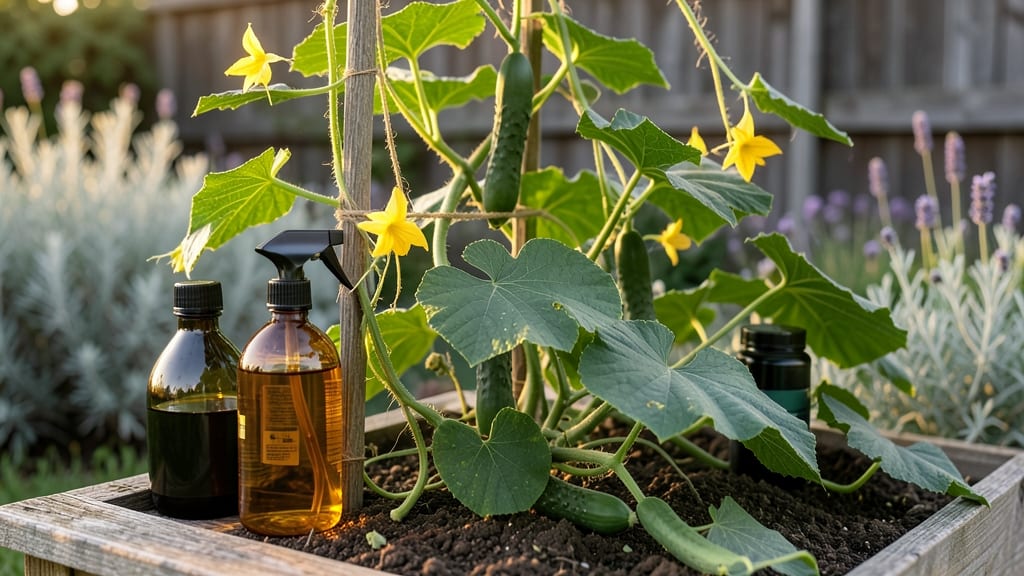
Neem oil on cucumber plants is the fastest organic fix for aphids, spider mites, and powdery mildew—no harsh chemicals needed. 🌱 I’ve used it to rescue struggling vines after just one treatment, and the results speak for themselves: crisp leaves, no more pests, and cucumbers that taste like summer should.
The secret lies in timing and concentration. Mix 1 tablespoon of neem oil with 1 quart of water and add a drop of dish soap to help it stick. Spray in the early morning or evening when bees aren’t active, and avoid flowering plants to protect pollinators.
Reapply every 7–10 days or after rain, and you’ll keep those vines thriving all season. What you’ll notice first is the immediate halt to new pest activity—aphids stop feeding, mites vanish, and fungal spots fade within 24 hours.
The plants stay lush, and you avoid the bitter taste that chemical sprays leave behind. Works for backyard gardens, containers, and even greenhouse cucumbers. Here’s how to do it right—no guesswork, just results.
Root Causes Behind Cucumber Plant Struggles
Neem oil is a garden superhero, but even the best defenses can backfire if misapplied. When cucumber plants react poorly—whether with leaf burn, stunted growth, or pest resurgence—it’s usually due to one (or more) of these key factors.
Understanding why these issues arise helps you avoid them like a pro. Let’s break down the science behind the chaos.
Neem oil is not a one-size-fits-all solution—it’s sensitive to environmental conditions. When temperatures soar above 90°F (32°C) or drop below 50°F (10°C), the oil’s active compounds (like azadirachtin) can become volatile. Here’s what happens:
- Leaf Scorch: High heat causes neem oil to evaporate too quickly, leaving behind a sticky residue that clogs stomata (leaf pores). This blocks gas exchange, leading to brown, crispy edges—even if pests are gone.
- Reduced Efficacy: Cold temps slow down the oil’s absorption, making it less effective against soft-bodied pests like aphids or spider mites. The pests may return within days, thinking your plants are still a buffet.
- Humidity Matters: Low humidity (<30%) dries out the oil faster, while high humidity (>80%) can dilute its potency. Think of it like a martini—too dry, and it’s ineffective; too wet, and it loses its kick.
Actionable Fix: Apply neem oil early in the morning or late afternoon when temps are 55–85°F (13–29°C) and humidity is moderate. Avoid spraying on wilted or stressed leaves—they’re more prone to burn.
Neem oil is concentrated—1–2% solution is standard for most garden pests. But when growers use it neat (undiluted) or exceed recommended rates, the results are disastrous. Here’s the breakdown:
| Problem | Why It Happens | Signs to Watch For |
|---|---|---|
| Phytotoxicity (Leaf Burn) | Undiluted oil disrupts the cuticle layer of leaves, causing cell membranes to rupture. Cucumbers, with their thin, delicate foliage, are especially vulnerable. | Yellowing between veins, brown patches, or a "frostbitten" appearance. |
| Pesticide Resistance | Overuse (e.g., weekly applications) can select for resistant pests. Some aphids or whiteflies develop tolerance to azadirachtin, making them harder to kill. | Pests return within 3–5 days despite treatment. |
| Soil Contamination | Excess oil in the soil can alter microbial activity, harming beneficial fungi and bacteria that cucumbers rely on for nutrient uptake. | Stunted growth, yellowing lower leaves, or root rot in severe cases. |
Actionable Fix:
- Dilute neem oil to 1–2 tbsp per gallon of water (or follow label instructions). For severe infestations, max out at 3 tbsp/gallon once.
- Use a surfactant (like dish soap, 1 tsp per gallon) to help the oil spread evenly—but don’t overdo it, or you’ll risk burn.
- Rotate with other natural sprays (e.g., garlic spray, insecticidal soap) every 7–10 days to prevent resistance.
Neem oil works best when applied at the right stage of a pest’s life cycle. Miss the window, and you’re basically spraying water. Here’s how timing goes wrong:
- Adult Pests vs. Eggs/Larvae: Neem oil is most effective against soft-bodied adults and larvae (e.g., aphids, cucumber beetles). But it doesn’t kill eggs or hard-shelled pests (like squash bugs). If you spray too late, the next generation hatches unharmed.
- Slow-Acting Formula: Unlike synthetic pesticides that kill on contact, neem oil takes 24–48 hours to work. Spraying right before rain or at dusk washes it away before it can take effect.
- Hidden Pests: Some bugs (e.g., spider mites on the undersides of leaves or root aphids) hide where neem oil can’t reach. A missed spot = a pest colony.
Actionable Fix:
- Time sprays for early morning (pests are sluggish) or late evening (avoids UV degradation).
- Reapply every 5–7 days for mobile pests (e.g., aphids) or 10–14 days for larvae (e.g., squash bug eggs).
- Check all plant surfaces, including stems and leaf undersides, with a magnifying glass before spraying.
Stressed cucumber plants are like open invitations to pests—and neem oil can’t save them if the foundation is weak. Common stressors that sabotage neem oil’s effectiveness:
- Nutrient Deficiencies: Plants low in phosphorus or potassium have thinner cell walls, making them more prone to oil burn. A lack of magnesium (seen as yellowing between veins) also weakens resilience.
- Water Stress: Overwatering or underwatering disrupts the plant’s ability to metabolize the oil’s active compounds. Wilting leaves absorb neem oil like a sponge—leading to burn—while overly saturated soil dilutes its impact.
- Transplant Shock: Recently transplanted cucumbers are still recovering their root systems. Applying neem oil too soon can double the stress, making them susceptible to secondary infections.
Actionable Fix:
- Test soil pH (6.0–6.8 is ideal for cucumbers) and amend with compost or a balanced fertilizer (e.g., 10-10-10) 2 weeks before applying neem oil.
- Water plants deeply 24 hours before spraying to ensure leaves are dry and turgid (firm). Avoid overhead watering 48 hours post-application to let the oil bind.
- Wait until plants are fully acclimated (4–6 weeks after transplanting) before using neem oil.
Fixing Common Cucumber Plant Issues
Neem oil is a powerful ally for cucumber plants, but even the best solutions can face challenges—whether from pests, fungal threats, or environmental stress. The good news? Most problems have simple, natural fixes using neem oil (or complementary methods) to restore your vines to peak health.
Below, we’ll tackle the most common issues with practical, step-by-step solutions and prevention tips to keep your cucumbers thriving.
---
Neem oil is famous for repelling pests, but some critters might still sneak in. Here’s how to evict them for good:
#### 🔥 Spider Mites & Aphids Cause: Tiny, sap-sucking pests that leave silvery webs or sticky residue. Fix: 1. 🍳 Mix Your Neem Oil Spray: - Combine 1 tbsp neem oil, 1 tsp mild liquid soap (or castile soap), and 1 quart of water. - Stir well and add 1 tsp vegetable oil (helps the oil stick to pests).
2. 👨🍳 Spray Thoroughly: - Apply early in the morning or late evening (avoid direct sunlight) to cover all leaf surfaces, including undersides. - Reapply every 5–7 days until pests disappear.
3. 🌿 Boost Defense: - Introduce predatory insects like ladybugs or lacewings to eat remaining mites. - Prevention: Keep plants well-watered (mites hate humidity) and prune crowded foliage to improve airflow.
#### 🥘 Cucumber Beetles & Flea Beetles Cause: Chewing pests that create holes in leaves and spread disease. Fix: 1. 🔪 Trap & Remove: - Handpick beetles into soapy water (they’re easy to spot—look for black/yellow striped bugs).
2. 🌟 Neem Oil Barrier Spray: - Use the same neem oil mix as above, but add 1 tsp garlic oil for extra repellent power. - Spray stems and leaves to deter egg-laying.
3. 🌱 Row Covers & Prevention: - Cover young plants with floating row covers until they’re 4–6 inches tall. - Prevention: Plant marigolds or basil nearby—these act as natural pest deterrents.
---
Overwatering or poor airflow can invite mold and rot. Neem oil fights fungi and prevents future outbreaks.
#### 🌡️ Powdery Mildew Cause: White, powdery fungus on leaves, slowing growth. Fix: 1. ✨ Neem Oil Fungicide Spray: - Mix 1 tbsp neem oil, 1 tsp baking soda, and 1 quart of water. - Add a few drops of dish soap to help the solution stick.
2. 💦 Apply & Air Out: - Spray until leaves are glistening wet, focusing on undersides. - Prevention: Space plants 12–18 inches apart and water at the base (avoid wetting foliage).
#### 💀 Root Rot & Stem Rot Cause: Too much moisture in soil, leading to mushy stems or blackened roots. Fix: 1. 🚿 Drain & Dry: - Stop watering immediately and let the soil dry out for 2–3 days. - If potting, repot in fresh, well-draining soil with perlite or sand.
2. 🌿 Neem Oil Soil Drench (Optional): - Mix 1 tsp neem oil with 1 gallon of water and pour around (not on) the base of the plant to discourage fungal spores.
3. 🎯 Prevention: - Use containers with drainage holes or raised beds. - Water deeply but infrequently—wait until the top 1–2 inches of soil are dry.
---
Yellowing leaves or stunted growth? Your cucumbers might be hungry—or thirsty.
#### 💪 Yellow Leaves (Nitrogen Deficiency) Cause: Pale or yellowing leaves, weak stems. Fix: 1. 🍎 Feed with Neem + Fish Emulsion: - Mix 1 tbsp neem oil with 1 tbsp fish emulsion (or compost tea) and 1 gallon of water. - Fertilize at dusk to avoid leaf burn.
2. 🌱 Boost Soil Health: - Add aged compost or worm castings to the topsoil. - Prevention: Side-dress with balanced fertilizer (10-10-10) every 3–4 weeks.
#### 🥗 Blossom End Rot (Calcium Issue) Cause: Dark, sunken spots on cucumbers (not a pest—it’s a mineral deficiency). Fix: 1. 📊 Calcium Boost: - Sprinkle crushed eggshells or oyster shell meal around the base of plants. - Water well to help absorption.
2. 💧 Consistent Moisture: - Keep soil evenly moist (but not soggy)—fluctuations worsen the issue. - Prevention: Mulch with straw or grass clippings to retain moisture and calcium.
---
Even the hardiest plants need a little TLC when conditions get tough.
#### 🔥 Sunburn or Heat Stress Cause: Scorched leaves or wilting in hot weather. Fix: 1. 🌞 Provide Shade Cloth: - Use 30–50% shade cloth during peak sun hours (11 AM–3 PM).
2. 💦 Mulch & Water Deeply: - Apply 2–3 inches of mulch to retain moisture. - Water early morning or late evening to reduce evaporation. - Prevention: Choose heat-tolerant cucumber varieties like ‘Straight Eight’ or ‘Lemon.’
#### 🌧️ Wind or Physical Damage Cause: Torn leaves or bent vines from strong gusts. Fix: 1. 🏗️ Build a Windbreak: - Use bamboo stakes or trellises to support vines and tie gently with soft twine. - Plant near fences or hedges as a natural barrier.
2. 🌱 Prune Damaged Leaves: - Snip off torn or bruised leaves to prevent disease entry. - Prevention: Stake plants early (before they get too tall).
--- - 🌱 Rotate Crops: Avoid planting cucumbers in the same spot yearly to prevent soil-borne diseases. - 🔄 Test Your Soil: Use a DIY soil test kit to check pH (ideal: 6.0–6.8) and amend as needed. - 🍃 Companion Planting: Grow radishes, nasturtiums, or dill nearby to repel pests naturally. - 🌿 Harvest Regularly: Picking cucumbers every 2–3 days encourages new growth and deters pests.
--- With these targeted fixes, your cucumber plants will bounce back stronger—and neem oil will be your secret weapon for keeping them pest-free, disease-resistant, and productive all season long! 🌱💚
Frequently asked questions
How often should I apply neem oil to cucumber plants?
For general pest prevention, apply neem oil every 7–10 days during active growing seasons. If treating an active infestation (like aphids or spider mites), spray every 5–7 days until pests disappear. Always avoid spraying during flowering or fruiting stages to protect pollinators.
Can I mix neem oil with other sprays for cucumbers?
Yes, but with caution! You can safely combine neem oil with insecticidal soap or garlic spray for enhanced pest control. However, avoid mixing with chemical pesticides or other oils—this can cause phytotoxicity (leaf burn). Always test small areas first.
Will neem oil harm beneficial insects like bees?
Neem oil is safe for bees when used correctly. Apply only in the early morning or late evening when bees aren't active, and avoid spraying during flowering periods. The oil breaks down quickly in sunlight, minimizing risks to pollinators.
Why did my cucumber leaves turn brown after using neem oil?
Leaf burn usually happens when neem oil is applied too concentrated (undiluted) or in hot weather above 90°F (32°C). Dilute properly (1–2 tbsp per gallon) and apply during cooler hours. Avoid spraying on wilted or stressed leaves.
How long does neem oil take to work on cucumber pests?
Neem oil works within 24–48 hours for soft-bodied pests like aphids and spider mites. For fungal issues (like powdery mildew), you'll see improvement in 3–5 days with regular applications. Patience is key—consistency beats one-time treatments!