
Picking
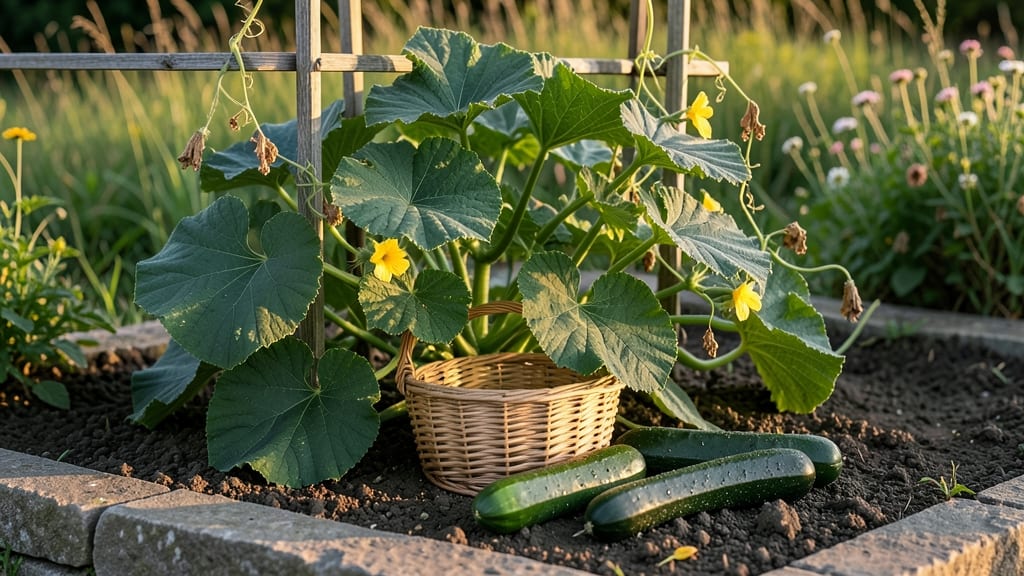
Knowing when are cucumbers ripe for picking—around 6-8 inches with a firm, slightly yielding skin—ensures you harvest them at peak crispness and flavor.
Picture this: you’ve been waiting weeks for that first cucumber, and now you’re staring at a vine full of them. But how do you know which ones to pick? Grab one, press your thumbnail into the skin — if it leaves a faint dent, that’s your cue to harvest.
Skip this step, and you might end up with cucumbers that turn bitter or mealy, ruining your salad plans.
Not all cucumbers follow the same rules. Slicing varieties like ‘Straight Eight’ are best picked when they’re 7-9 inches long, while pickling cucumbers like ‘Boston Pickling’ should be harvested smaller, around 3-4 inches.
Ignoring these differences can lead to overripe, seedy, or tough cucumbers that even the best recipe can’t save.
In this guide, I’ll walk you through three tactile tests to nail ripeness every time, plus the best times of day to harvest and how to avoid common mistakes that waste your garden’s potential. Ready to turn your cucumber patch into a crisp, crunchy goldmine?


3 Tactile tests to determine cucumber ripeness beyond size
Counting on size alone to judge cucumber ripeness is a common mistake. Even 6-inch slicing cucumbers can taste bland if picked too early, while pickling varieties left too long turn bitter. Instead, I rely on three hands-on tests that reveal true ripeness—no ruler required.
These methods work for all varieties, from Bush Champion to Lemon Cucumber, and help you harvest at peak flavor and texture.
The first test focuses on skin firmness, which tells you whether the cucumber has reached its ideal crispness level. A perfectly ripe cucumber should yield slightly when pressed with your thumbnail but still feel firm to the touch.
For slicing types, aim for a gentle give—like pressing a ripe avocado. Meanwhile, pickling cucumbers should feel slightly firmer, almost like a baseball.
Here’s how to perform the thump test, my second go-to method. Hold the cucumber in one hand and gently tap it with your fingertips—a ripe cucumber will produce a hollow, crisp sound. If it thuds like a drum, it’s overripe.
This test works best when comparing cucumbers side by side. I’ve found that heatwave conditions can make cucumbers thump louder even when underripe, so always combine this with the firmness test for accuracy.
For stem separation, the third test, look for the stem end to change color. A ripe cucumber’s stem will turn from bright green to yellow or white.
Gently twist the cucumber at the stem—if it separates easily from the vine with a slight popping sound, it’s ready to harvest. This is especially useful for bush varieties, where cucumbers can hide behind leaves.
Pro tip: Harvest in the morning when cucumbers are coolest for the most accurate results.
Each cucumber variety has its own ideal ripeness window, so I always cross-reference these tactile tests with visual cues. For example, English cucumbers should have a deep green skin with tiny bumps, while Armenian cucumbers are ready when their skin turns slightly yellowish-green.
If you’re growing heirloom varieties, like Boston Pickling, pay extra attention to the stem separation test, as these can ripen unevenly.
One mistake I’ve seen gardeners make is relying too heavily on color alone. While uniform green is a good sign, some cucumbers—like Lemon Cucumbers—change color as they ripen. Instead, combine color with the thump test for the most accurate results.
For instance, a yellow cucumber that thuds like a drum is likely overripe, even if its color looks perfect.
For container growers, these tactile tests are even more critical since space is limited. I’ve found that bush varieties like Spacemaster ripen faster and benefit from daily checks. Use a small handheld magnifier to inspect the stem end if your cucumbers
Common mistakes that ruin cucumber harvest timing (and how to avoid them)
Even experienced gardeners sometimes fall into traps that turn crisp cucumbers into bitter, mealy disappointments. One of the biggest mistakes is waiting too long to harvest—overripe cucumbers develop bitter compounds as they mature, ruining their sweet, refreshing flavor.
Heat waves can also accelerate ripening, making timing even trickier for summer gardeners.
Another common error is picking cucumbers at the wrong time of day. Harvesting in the early morning ensures you get the freshest, most flavorful produce, as daytime heat can cause cucumbers to lose crispness quickly. Even a few hours difference can impact texture and taste.
I’ve learned the hard way that ignoring variety-specific cues leads to inconsistent harvests. For example, pickling cucumbers should be harvested small and firm, while slicing varieties need more time to develop their signature crunch. Skipping these details means missing the perfect window for each type.
🚨 CALLOUT WARNING 🚨
Don’t wait for full size! Cucumbers are ripe when they reach 6-8 inches for slicing types or 2-3 inches for pickling. Check for a yellow or white stem end—this signals peak ripeness. If the skin gives slightly when pressed (not mushy), it’s ready. Overripe cucumbers develop yellow streaks and bitter flavors.
Pro Tip: Harvest every 2-3 days to encourage continuous production. Use sharp pruners to avoid damaging vines.
Heat stress is another silent harvest killer. When temperatures soar above 90°F (32°C), cucumbers ripen faster and develop hollow centers or blossom-end rot. I’ve found that providing afternoon shade with row covers or mulch can buy you extra days of optimal harvest windows during extreme heat.
One mistake that surprises many gardeners is assuming all cucumbers ripen at the same rate. Bush varieties mature faster than vining types, and some heirloom cucumbers take weeks longer. Keeping a harvest journal with dates and variety names helps me track patterns and adjust my picking schedule accordingly.
To avoid these pitfalls, I’ve created a simple harvest checklist: ☑️ Pick in the morning for peak freshness ☑️ Use the thumb press test (gentle pressure = ready) ☑️ Harvest pickling cucumbers small and firm ☑️ Watch for heat stress signs (yellowing, wilting) ☑️ Use variety-specific size guides ☑️ Prune regularly to improve air circulation ☑️ Rotate harvest locations to prevent disease ☑️ Store in a cool, dark place (not the fridge) for short-term freshness