
Picking
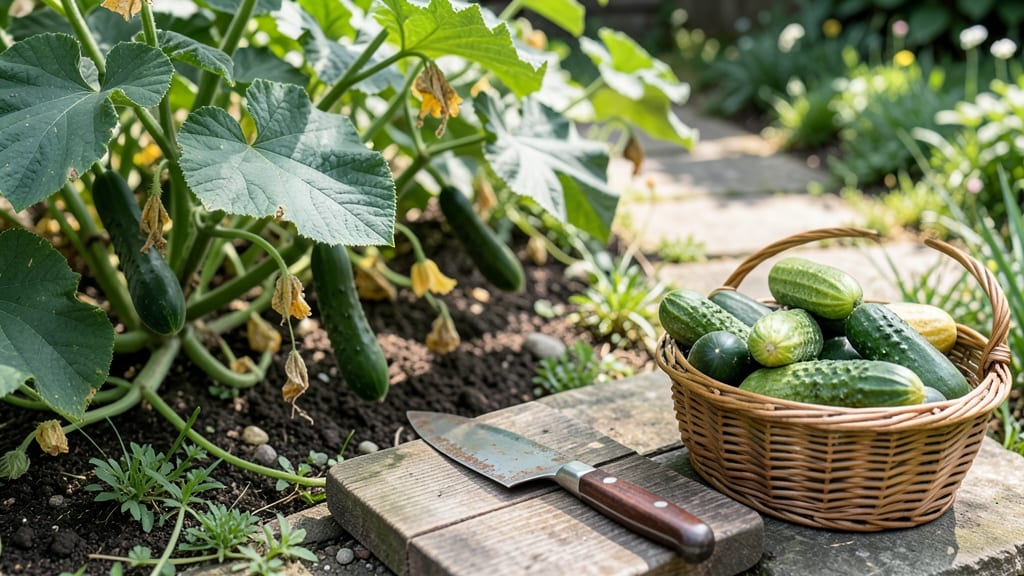
Some cucumbers taste bitter because they contain high levels of cucurbitacin, a natural compound plants produce as a defense against stress factors like extreme heat, drought, or poor soil quality. Certain varieties, such as bitter melon or wild cucumbers, naturally produce more of this compound.
Bitter cucumbers aren't necessarily "bad"—they're just a sign of the plant's resilience. 🌱 Cucurbitacin acts like a built-in pesticide, deterring pests when conditions get tough. The good news?
Gardeners can control this by maintaining consistent moisture and providing shade during heatwaves. Even store-bought cucumbers can develop bitterness if they're overripe or stressed during transport.
What's fascinating is how genetics play a role: some heirloom varieties are bred to be naturally milder, while others—like the spicy 'Armenian' cucumber—embrace the bite as a signature trait. If you're growing your own, harvesting at the right size (typically 6-8 inches) helps prevent bitterness from setting in.
💡 In This Article
- The Science Behind Cucurbitacin and Bitter Cucumbers
- How to Avoid Bitter Cucumbers in Home Gardening
The science behind cucurbitacin and bitter cucumbers
Cucurbitacin is a bitter-tasting compound that belongs to the class of chemicals called triterpenoids, which plants produce as a natural defense mechanism. When cucumber plants experience stress—like extreme heat, inconsistent watering, or nutrient-deficient soil—they ramp up cucurbitacin production as a way to fend off pests.
Think of it like a plant's immune system kicking into overdrive. 🌱 The chemical works by making the plant unpalatable to insects and herbivores, ensuring its survival in harsh conditions.
Chemically, cucurbitacin has a complex structure with multiple ring formations that interact with taste receptors in our mouths, specifically the TAS2R family of bitter taste receptors. These receptors are highly sensitive to compounds like cucurbitacin, which can trigger a strong aversion response.
For comparison, the bitterness level in cucumbers can vary dramatically: some varieties contain up to 100 times more cucurbitacin than others. Wild cucumbers and bitter melon (a close relative) naturally contain high concentrations, while commercial slicing cucumbers typically have much lower levels when grown under optimal conditions.
The environmental triggers for cucurbitacin production are well-documented. Studies show that soil moisture fluctuations—like drought followed by sudden watering—can spike bitterness levels within days. Heat stress also plays a role: temperatures above 90°F can cause cucurbitacin to accumulate rapidly in the plant's tissues.
Even the stage of growth matters—young cucumbers tend to be milder because they haven't had time to develop high concentrations of the compound. This is why gardeners often recommend harvesting cucumbers when they're still small (6-8 inches) for the best flavor.
Genetics also determine how much cucurbitacin a variety will produce. Commercial cucumbers like 'Straight Eight' or 'Marketmore' are bred to have low natural levels, making them consistently sweet. In contrast, heirloom varieties such as 'Lemon Cucumber' or 'Boothby Blonde' may develop bitterness more easily due to their genetic makeup.
The key difference lies in how these varieties respond to environmental stressors—a trait that plant breeders carefully select against in modern cultivars. 💡
What's interesting is how cucurbitacin affects different parts of the plant. The compound tends to concentrate in the seeds and skin first, which is why removing the peel can reduce bitterness in some cases.
However, once the compound spreads to the flesh—especially in larger, mature cucumbers—the entire fruit can become unpleasantly bitter. This is why overripe cucumbers in grocery stores often have a harsh taste: they've had more time to accumulate cucurbitacin during transport and storage.
Understanding this science helps explain why some cucumbers taste like they've been dipped in soap (a common description for extreme bitterness). The compound doesn't just make them taste bad—it can actually cause a physical reaction in sensitive individuals, like a tingling sensation on the tongue.
This is why chefs and gardeners alike take such careful measures to prevent its buildup, ensuring that every bite of cucumber is refreshing rather than off-putting. ✨