
Companion Plants
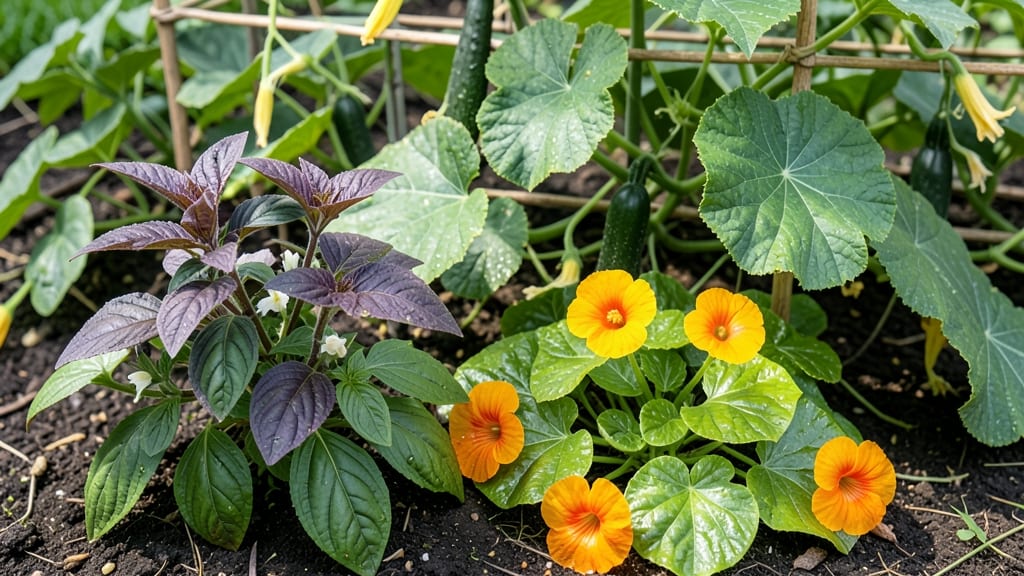
Cucumbers thrive when paired with the right neighbors in your garden. 🌱 Legumes like beans and peas fix nitrogen in the soil, giving cucumbers a natural fertilizer boost. Other great partners include radishes, which deter pests, and lettuce, which tolerates shade from taller vines.
The key is balancing plants that support cucumbers without competing for nutrients or space. For example, marigolds repel harmful insects, while nasturtiums act as sacrificial traps for aphids—both are cucumber powerhouses.
On the flip side, avoid planting cucumbers near aromatic herbs like basil or oregano, as their strong scents can confuse pollinators and reduce fruit production. Potatoes also release toxins that stunt cucumber growth, so keep them far apart.
The right companions don't just improve yields—they create a healthier, more resilient garden ecosystem. 🌿
💡 In This Article
- How Companion Planting Improves Cucumber Growth
- Top 12 Cucumber Companion Plants for Thriving Gardens
How companion planting improves cucumber growth
The magic of companion planting for cucumbers lies in how different plants interact at a biological level. Legumes like beans and peas, for example, form a symbiotic relationship with soil bacteria called Rhizobia, which converts atmospheric nitrogen into a form the plants can absorb.
This process, called nitrogen fixation, enriches the soil naturally—cucumbers, which are heavy feeders, benefit directly from this nutrient boost without needing synthetic fertilizers. A single bean plant can fix up to 250 pounds of nitrogen per acre over a growing season, creating a fertile microclimate for cucumbers.
Pest control is another key mechanism. Plants like marigolds release alpha-terthienyl, a compound that repels nematodes and other soil-dwelling pests that damage cucumber roots. Meanwhile, nasturtiums act as trap crops, luring aphids away from cucumbers with their sweet nectar.
Even physical structure plays a role—lettuce and spinach grow well under cucumber vines, utilizing shade and reducing weed competition. This vertical layering maximizes space while keeping the soil moist and cool, which cucumbers prefer.
Soil enrichment goes beyond nitrogen. Comfrey, often called "nature's fertilizer," grows deep roots that pull up nutrients from lower soil layers. When chopped and composted, it creates a nutrient-rich tea that cucumbers absorb quickly.
The plant's high potassium content strengthens cucumber vines, making them more resistant to diseases like powdery mildew. This is why companion planting isn't just about proximity—it's about creating a self-sustaining ecosystem where each plant contributes to the others' health.
Timing and spacing also matter. For instance, radishes mature quickly (in about 30 days) and can be planted early in the season to deter cucumber beetles before cucumbers even sprout. Their shallow roots don't compete with cucumbers' deeper needs.
Conversely, planting cucumbers too close to potatoes risks introducing verticillium wilt, a fungal disease that thrives in shared soil. The right spacing—typically 3-4 feet between rows—ensures cucumbers have room to sprawl while companions like dill or borage thrive in the gaps.
One often-overlooked benefit is pollination support. Borage, with its bright blue flowers, attracts bees and other pollinators that also visit cucumber blossoms. Studies show gardens with diverse pollinator-friendly plants can increase cucumber yields by up to 20% due to better fruit set.
The key is balancing plants that support cucumbers without overcrowding them—think of it like a well-orchestrated garden choir, where each plant plays its part to create harmony.
Finally, companion planting reduces stress on cucumbers by minimizing competition for water and nutrients. For example, planting cucumbers with corn (a tall support structure) and beans (nitrogen fixers) creates a three-sisters polyculture, a traditional method that maximizes space and resources.
This approach mirrors natural forest ecosystems, where different species coexist by specializing in different layers—roots, stems, and canopy—without fighting for dominance.