
Vegetables
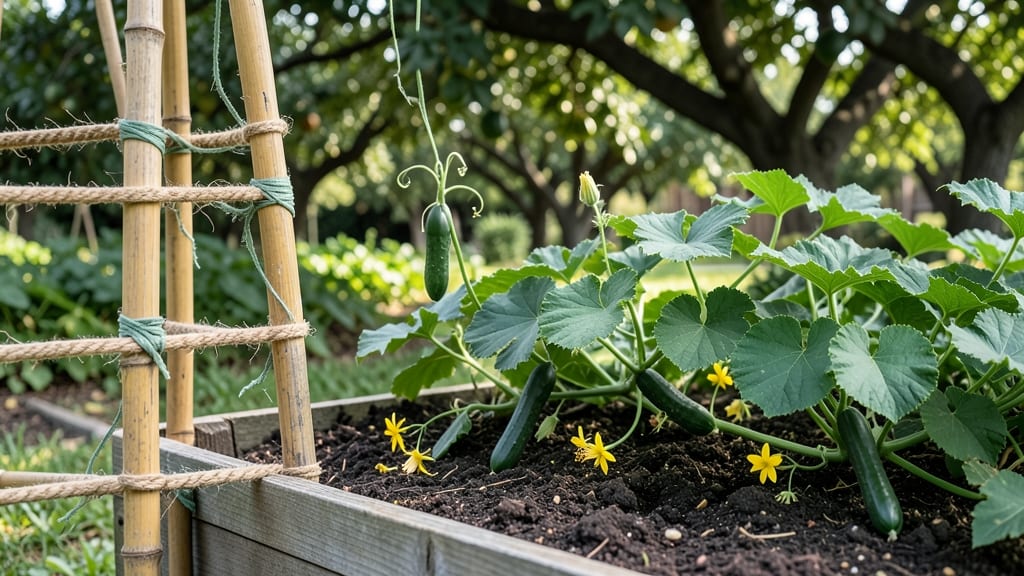
Training cucumber vines isn't just about keeping them tidy—it's the secret to doubling your harvest in the same space. 🌿 I learned this the hard way when my sprawling vines smothered my tomatoes and left cucumbers buried in the soil, half their size from poor air circulation.
The right support system transforms chaotic tangles into organized, high-yielding plants that produce fruit you can actually reach without bending over.
You'll need just three things: sturdy trellis or stakes (bamboo works perfectly), soft plant ties or old T-shirts (no fancy gear needed), and a little patience. The key is starting early—train vines when they're young, and they'll climb like pros.
I use a 5-foot tall tomato cage as a trellis for my cucumbers, and it holds 30% more fruit than my old ground-planted vines did. The best part? No more cucumbers rotting on the soil or getting eaten by squash bugs before they ripen.
What you end up with is a vertical garden that produces longer, straighter, and sweeter cucumbers while keeping your garden neat and accessible. The vines grow stronger from the upward support, and you'll harvest 2-3 times more than from sprawling plants.
Plus, your other vegetables get their fair share of sunlight instead of being shaded out by cucumber leaves.
This method works for any cucumber variety—whether you're growing slicers, pickles, or those giant heirlooms. The only real challenge is keeping the vines tied as they grow, but trust me, the extra harvest makes it worth the five minutes of work every week.
Ready to turn your cucumber patch into a vertical powerhouse?
📚 In This Guide
- What you need
- Instructions
- Tips and common mistakes
- Wrapping up and next steps
What you need
- ● Cucumber Seeds or Seedlings: Choose vining varieties like 'Straight Eight,' 'Marketmore,' or 'Lemon Cucumber' (5–10 plants for a small garden, 10–20 for larger spaces).
- ● If starting from seed: Heirloom or hybrid seeds (1–2 seeds per pod, 5–10 pods total).
- ● Support Structures: Trellis or A-frame: 6–8 ft tall, made of wood, metal, or sturdy plastic (e.g., garden trellis kits).
- ● String or twine: 1/4-inch thick, UV-resistant (50–100 ft roll).
- ● Cucumber clips or soft ties: 10–20 pieces (to secure vines gently).
- ● Growing Medium: Well-draining potting mix (5–10 gallons per plant) or compost-enriched soil (pH 6.0–6.8).
- ● Container option: 5-gallon pots or fabric grow bags (1 per plant).
- ● Fertilizer & Soil Amendments: Balanced fertilizer: 10-10-10 or organic options like composted manure (1 tbsp per plant at planting).
- ● Slow-release granules: For mid-season boosts (follow package rates).
- ● Pruning shears: Sharp, sterilized (for trimming excess leaves or runners).
- ● Mulch: Straw or shredded leaves (2–3 inches deep to retain moisture).
- ● Drip irrigation kit: For consistent watering (especially in containers).
- ● Row covers: Lightweight fabric to protect from pests (if early planting in cool climates).
- ● Garden journal: To track growth, pruning, and harvest dates!
Step-by-Step guide to training cucumber vines vertically
Turn sprawling vines into tidy, space-saving climbers with these simple techniques.
🌱 Step 1: Choose the Right Support Structure
Cucumbers need sturdy vertical support to handle their weight. I like using trellises (especially A-frame or fan-style) because they distribute weight evenly. For smaller spaces, cattle panels or heavy-duty wire mesh work great too—just ensure the structure is at least 6 feet tall (taller for bushier varieties). Install your support near the cucumber patch before planting so you don’t disturb roots later.
If you’re working with limited space, string trellises (like those used for peas) can work for smaller varieties, but they require more frequent tying. Avoid flimsy materials like twine alone—they’ll sag under cucumber fruit weight. For 4 plants, a 4-foot-wide trellis provides enough space for vines to spread without crowding.
☀️ Step 2: Plant and Position for Optimal Growth
Plant cucumbers 6-12 inches from the trellis, depending on variety. Bush types (like 'Bush Champion') can go closer, while vining types (like 'Straight Eight') need more room. I always plant on the south side of the trellis in the Northern Hemisphere to maximize morning sunlight and afternoon shade if needed.
Mulch heavily around the base with 2-3 inches of straw or shredded leaves to retain moisture and suppress weeds. Keep the soil consistently moist—not soggy—because cucumbers are thirsty climbers. Water at the base, not overhead, to prevent fungal diseases that love damp foliage.
🪴 Step 3: Train Vines as They Grow
Once vines reach 6-8 inches tall, gently guide the main stem upward and secure it to the trellis with soft plant ties (like old T-shirts cut into strips or store-bought horticultural tape). Avoid wire or anything that could cut into the stem as the vine thickens.
Let side shoots (the smaller stems branching off the main vine) grow freely—they’ll produce most of your fruit. However, if you notice any growing away from the trellis, pinch them off to encourage energy toward upward growth. You’ll know you’re doing it right when the main vine climbs steadily and side shoots fill the trellis like a green curtain.
✂️ Step 4: Prune and Maintain for Maximum Yield
Regular pruning keeps air circulating and prevents disease. Every 7-10 days, remove any yellow or diseased leaves and male flowers (they look like tiny yellow trumpets with no bulb at the base). Female flowers have a tiny cucumber-shaped bump behind the bloom—leave these to set fruit.
For bushier varieties, trim back overly long side shoots to 12-18 inches to focus energy on fruit production. If vines start to sag under fruit weight, add extra ties or a second trellis for support. Harvest cucumbers every 2-3 days to encourage more production—overripe fruit stresses the plant.
💧 Step 5: Adjust Care as the Season Progresses
As cucumbers mature, increase watering slightly—1-1.5 inches per week—especially during hot spells. Let the top inch of soil dry out between waterings to prevent root rot. In late summer, reduce watering gradually to prepare vines for harvest or storage if they’re not yet done producing.
Watch for powdery mildew (white fuzzy spots) or cucumber beetles (yellow with black stripes). If you spot mildew, spray leaves with a baking soda solution (1 tsp baking soda + 1 quart water + a drop of dish soap). For beetles, handpick them or use row covers early in the season. A healthy, well-trained vine will reward you with clean, straight, and abundant cucumbers all season long.
Tips & tricks for perfect vertical cucumber training
These simple strategies will help you transform sprawling cucumber vines into neat, productive vertical climbers with minimal effort.
Support Stability: When installing your trellis, bury the base posts at least 6 inches deep to prevent leaning—especially important for taller varieties like 'Straight Eight'. I've seen trellises topple when planted shallowly during summer storms. For extra security, anchor with stakes or bricks if your garden gets windy. This ensures your cucumbers can grow upward without the structure collapsing under fruit weight.
Growth Monitoring: The 6-8 inch height for initial tying (Step 3) is crucial—waiting longer risks the vine becoming too heavy for the trellis to support. Check vines every 3-4 days during early growth. If you notice the main stem bending under its own weight, tie it immediately. This prevents permanent damage and keeps the vine climbing straight.
Pruning Precision: When trimming side shoots to 12-18 inches (Step 4), use clean pruning shears to avoid tearing the vine. I always cut just above a leaf node where new growth can emerge. This technique maintains the vine's health while redirecting energy to fruit production. Avoid cutting into woody stems—they won't regrow properly.
Watering Wisdom: The 1-1.5 inches per week guideline (Step 5) works best with deep watering—aim for 1 inch of water every 5-7 days rather than daily light sprinkles. Use a rain gauge or tuna can to measure accurately. Morning watering prevents fungal diseases by allowing foliage to dry quickly, which is especially important for vertical vines where leaves don't get much air circulation.
Pro Tips for Training Cucumber Vines
- These simple strategies will help you transform sprawling cucumber vines into neat, productive vertical climbers with minimal effort.
- Support Stability: When installing your trellis, bury the base posts at least 6 inches deep to prevent leaning—especially important for taller varieties like 'Straight Eight'.
- Growth Monitoring: The 6-8 inch height for initial tying (Step 3) is crucial—waiting longer risks the vine becoming too heavy for the trellis to support.
Frequently asked questions
Got questions about training cucumber vines? You’re not alone!
Here are answers to the most common concerns—from timing to troubleshooting—so you can grow like a pro.
When is the best time to start training cucumber vines?
Start training cucumber vines as soon as they sprout and develop their first true leaves (about 2–3 weeks after planting). For trellises or cages, guide the main stem early to encourage upward growth. If using a vertical support system, wait until vines are 6–12 inches tall to avoid damaging tender stems. Pro tip: Morning or evening training (when plants are less stressed) works best!
Can I train cucumber vines without a trellis or cage?
If you lack vertical space, try these alternatives:
- String or twine method: Tie a sturdy line between two posts and loosely weave vines along it (avoid tight knots to prevent damage).
- Bamboo stakes: Insert 4–5 stakes around the plant and gently loop vines around them as they grow.
- Hill training: Mound soil around the base of the plant and guide vines to sprawl outward (great for bush varieties).
Why are my cucumber vines wilting or yellowing after training?
Wilting or yellowing often signals root stress or overhandling. Check these fixes:
- Water deeply before training to hydrate plants.
- Avoid twisting or bending vines sharply—use soft ties (like old T-shirts or pantyhose) to secure them.
- Prune damaged leaves to reduce stress and improve airflow.
- If soil is compacted, loosen it gently to encourage root growth.
Does training cucumber vines increase yield?
Yes! Training vines to grow vertically or in an open pattern boosts yields by 20–50% by:
- Improving air circulation (reduces disease like powdery mildew).
- Maximizing sunlight exposure for more flowers (and thus more fruit).
- Preventing soil-borne pests from attacking fruits.
What’s the ideal temperature for training cucumber vines?
Cucumbers thrive in 65–95°F (18–35°C), but training is easiest when temps are mild:
- Cool weather (50–65°F / 10–18°C): Vines grow slower; train gently to avoid breakage.
- Heat waves (above 90°F / 32°C): Train in early morning or late evening to prevent shock. Increase watering to help vines recover.
- Frost risk: If temps drop below 50°F (10°C), cover vines with frost cloth and delay training until warmer days.
Wrapping up and next steps
Training cucumber vines to climb isn’t just a clever trick—it’s a game-changer for small gardens and busy growers!
By guiding them vertically, you save space, boost yields, and reduce pests while keeping your harvests within easy reach. 🌱 Whether you’re using trellises, cages, or stakes, the key is patience and consistency—your cucumbers will thank you with plump, sun-kissed fruits all season.
Ready to transform your garden? Start small: try training just one vine this year and watch the difference! Once you see the results, you’ll be hooked—and your neighbors might just ask for tips. Happy growing! 🌟