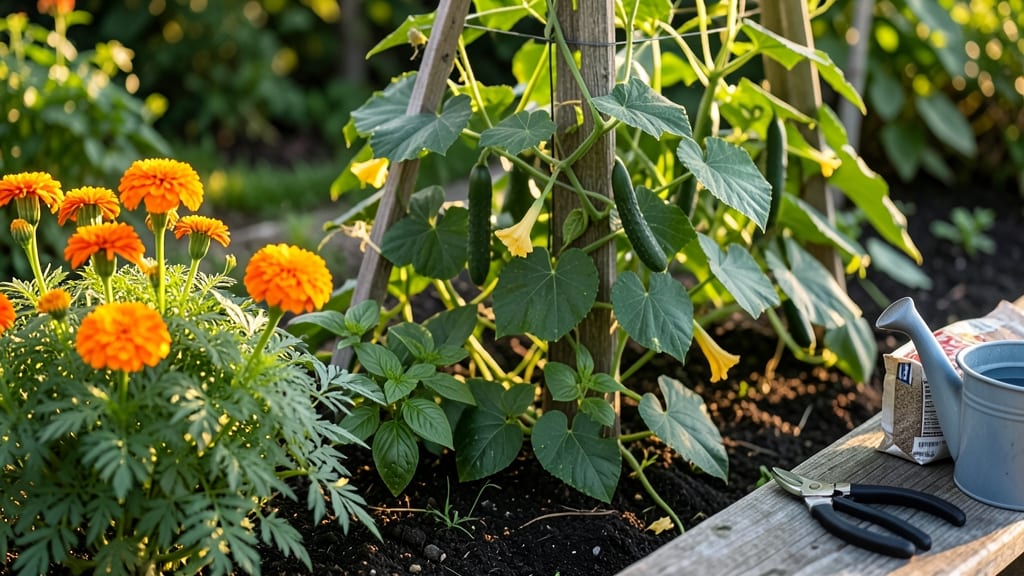
Buying guide: how to choose the right cucumber companion plants for your vegetable garden
1. Pest-Repellent Properties 💡
Not all companion plants are created equal when it comes to pest control.
Look for varieties that naturally deter cucumber beetles, aphids, and spider mites—the biggest threats to your harvest. Marigolds and nasturtiums are top performers because they emit strong scents that repel pests, while basil and dill attract beneficial predators like ladybugs and wasps.
Counterintuitively, some plants like potatoes or fennel can actually attract pests, so avoid them near your cucumbers. Prioritize plants with proven organic pest-repelling compounds like alpha-terthienyl in marigolds or essential oils in basil.
2. Growth Habit Compatibility (Space Efficiency) ⚡
Your garden layout matters just as much as the plants themselves. Vining plants like beans or nasturtiums are perfect for trellises or containers, saving precious ground space, while bushy herbs like dill or marigolds thrive in tight clusters.
I recommend interplanting cucumbers with low-growing companions like lettuce or radishes to maximize vertical and horizontal space. Avoid overcrowding—cucumbers need 12-18 inches of spacing between plants, and their companions should complement, not compete, for sunlight and nutrients.
3. Edibility and Culinary Benefits ✅
Why settle for just pest control when your companions can also enhance your meals?
Many top cucumber companions—like basil, dill, nasturtiums, and beans—are edible and add flavor to your dishes. Basil, for example, not only deters flies but also improves cucumber flavor when planted nearby. Nasturtiums offer a peppery kick in salads, while scarlet runner beans provide edible flowers and pods.
This dual-purpose approach means you’re growing both protection and produce in one go, making your garden more productive and rewarding.
4. Soil Improvement and Nutrient Contribution 🔍
Healthy soil equals healthy cucumbers. Nitrogen-fixing plants like beans are a game-changer—they pull nitrogen from the air and deposit it into the soil, enriching it for your cucumbers. Other companions, like clover or alfalfa, also improve soil structure and moisture retention.
If your soil is poor, pair cucumbers with legumes or cover crops to naturally boost fertility. Pro tip: Rotate companion plants yearly to prevent nutrient depletion and keep your soil dynamic. For container gardens, use compost-rich potting mix and supplement with organic fertilizer to support both cucumbers and their companions.
Frequently asked questions
Q: Which companion plants are best for cucumbers to deter pests naturally?
1
Marigolds, nasturtiums, and basil
are the top choices for cucumbers. Marigolds contain alpha-terthienyl, a natural nematode repellent, while nasturtiums act as pest traps by luring aphids away. Basil deters flies and mosquitoes with its strong scent. These three create a powerful pest-repelling trio, especially when planted around the perimeter of your cucumber patch. For best results, interplant them every 12-18 inches.
Q: Can I plant cucumbers with herbs like dill or parsley?
Yes, but with caution. Dill is an excellent companion as it attracts beneficial wasps that prey on cucumber pests like spider mites. However, avoid parsley—it can attract harmful insects and compete with cucumbers for nutrients. Stick to dill, basil, and chives, which enhance flavor and deter pests without causing conflicts. Always ensure proper spacing to avoid overcrowding.
Q: Why aren't my cucumbers thriving even with companion plants?
Check for poor soil quality, overcrowding, or incompatible companions. Cucumbers need well-draining, nutrient-rich soil, so amend with compost if needed. Ensure they have 12-18 inches of spacing and avoid planting near potatoes, sage, or aromatic herbs, which can stunt growth. If pests persist, rotate companion plants yearly to prevent resistance. Also, ensure they receive 6-8 hours of sunlight daily.
Q: What’s the difference between marigolds and nasturtiums for cucumbers?
2
Marigolds
are the best for nematode and beetle control due to their strong scent, while nasturtiums act as pest traps, luring aphids and whiteflies away. Marigolds are bushy and ideal for borders, whereas nasturtiums trail, making them perfect for containers or trellises. Both are edible—marigold petals add color to dishes, and nasturtiums offer a peppery kick. Choose marigolds for broad pest protection and nasturtiums for targeted aphid control.
Q: Are there any companion plants that improve cucumber flavor?
3
Basil and dill
are the best flavor enhancers. Basil’s essential oils not only deter pests but also boost cucumber sweetness, while dill attracts pollinators, improving fruit set. Plant them close to cucumbers—basil within 12 inches and dill slightly farther to avoid shading. Other flavor-boosting companions include thyme and oregano, which also repel pests while adding aromatic notes to your garden.
Q: How long do companion plants like marigolds or nasturtiums last in the garden?
4
Marigolds
typically bloom for 3-4 months (early summer to fall) and may self-seed for next year, while nasturtiums are perennial in warm climates and self-seed aggressively. Both are budget-friendly annuals that require minimal maintenance. For long-term benefits, plant biennial or perennial companions like chives or comfrey, which return yearly and improve soil health over time.
Q: What’s a good budget-friendly alternative to premium basil seeds?
If you’re looking for a budget-friendly alternative, try dill or cilantro. Both deter pests like spider mites and improve cucumber flavor. Dill attracts beneficial insects, while cilantro repels aphids and attracts predatory wasps. For a mid-range option, thyme or oregano are hardy, long-lasting perennials that deter pests and thrive in poor soil. Start with organic seed packets for cost-effective results.