
Companion Plants
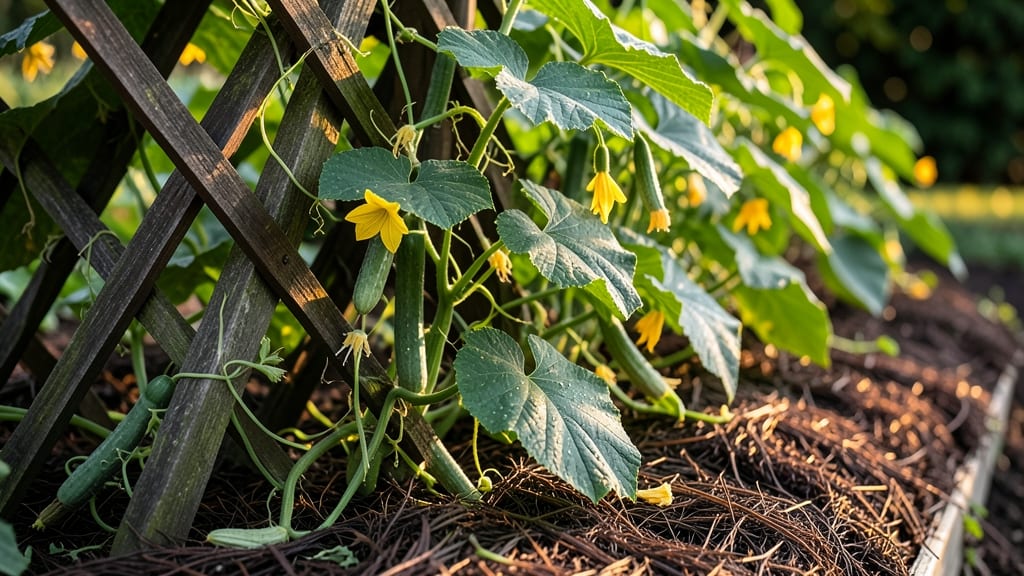
Cucumber plants grow like jungle vines—fast, sprawling, and impossible to ignore once they take off. 🌿 The leaves are the first giveaway: large, rough-edged, lobed shapes with jagged teeth that look like they could cut through your gardening gloves.
Early on, they start small and fuzzy, then balloon out to 6-12 inches wide by midseason, with a deep green that borders on blue-green in sunlight. The stems are another clue: thick, hairy, and covered in tiny spines that make them feel like sandpaper.
Flowers appear early—tiny yellow blooms that look like miniature trumpets—and if pollinated, those blooms turn into the cucumbers you know. But here’s the trick: cucumbers are monoecious, meaning they produce separate male and female flowers (the female ones have tiny cucumbers forming behind them).
Confusing cucumbers for squash or melons? Look closer: squash leaves are more rounded with smoother edges, while melons have hairless stems and a more waxy leaf surface. Cucumber vines also stay trailing or climbing—never bushy like some squash varieties.
Spotting these details early helps you prune for airflow (preventing powdery mildew) and train vines (saving space and maximizing fruit). Mastering these visual cues turns gardening from guesswork to confidence.
You’ll know exactly when to thin seedlings, fertilize, or watch for pests like cucumber beetles hiding in those leafy nooks. Once you’ve got the look down, cucumbers become one of the easiest plants to grow—and the harvest? Unstoppable.
📚 In This Guide
- What you need
- Instructions
- Tips and common mistakes
- Wrapping up and next steps
What you need
- ● Cucumber seeds or seedlings: Choose heirloom or hybrid varieties (e.g., 'Straight Eight,' 'Lemon Cucumber,' or 'Armenian Cucumber'). Pro tip: Start with 3–5 plants for a small harvest!
- ● Containers or garden bed: Containers: 5-gallon pots or larger (1 plant per container). Ensure drainage holes!
- ● Garden bed: Full sun (6+ hours/day) and well-draining soil. Space vines 12–24 inches apart.
- ○ Potting mix: Lightweight, organic mix (e.g., 60% peat moss, 30% perlite, 10% compost). Optional: Add worm castings for extra nutrients.
- ● Support structures: Trellis (4–6 ft tall) or stakes (5–6 ft long)
- ● Twine or soft plant ties (for securing vines)
- ● Watering supplies: Watering can or hose with a gentle spray nozzle
- ○ Optional: Drip irrigation system for consistent moisture
- ● Fertilizer: Balanced fertilizer (10-10-10) or compost tea
- ○ Optional: Liquid seaweed extract for leafy growth
- ● Pruning shears (for trimming excess leaves or runners)
- ● Mulch (straw or shredded leaves to retain moisture)
- ● Row covers (to protect young plants from pests)
- ● Plant identifier app (e.g., PlantNet) for field spotting!
- ● Camera or sketchbook (to document leaf shapes and vine habits)
Step-by-Step guide to identifying cucumber plants in the garden
Spot cucumbers fast by mastering their unique vine structure and leaf patterns—here's how to recognize them instantly.
🌿 Step 1: Examine the Vine Structure for Classic Traits
Cucumber vines grow aggressively, climbing or sprawling with hairy stems that develop sharp, curved tendrils at the leaf nodes. These tendrils act like tiny grappling hooks, wrapping around supports or neighboring plants. You'll notice the vines produce both male and female flowers on separate stems—male flowers have long, slender stems and no swelling at the base, while female flowers appear with a tiny cucumber forming right behind the bloom.
Real talk: That hairy stem is your first clue. Run your fingers along it—you'll feel the fine, soft hairs that distinguish cucumbers from other vines like squash or melons. The vines also grow in a sprawling habit, often reaching 6-12 feet if left unchecked, with a tendency to trail rather than bush out like tomatoes or peppers.
🌱 Step 2: Study the Leaf Shape and Arrangement
Cucumber leaves are large, 3-6 inches wide, with a distinctive five-lobed shape that resembles a maple leaf but with more pronounced serrations along the edges. The leaves grow alternately along the stem, not in opposite pairs like basil or in whorls like some squash varieties. Younger leaves often appear slightly fuzzy on the underside, which helps distinguish them from smooth-leaved plants.
Here's the thing—you'll see the leaves growing directly from the stem at 45-degree angles, creating a zigzag pattern when looking down the vine. This alternating arrangement is a dead giveaway when comparing to other garden plants. Hold a leaf up to light—you'll notice the veins form a network that spreads outward from a single central point, creating a classic palmate pattern.
☀️ Step 3: Look for Flowers and Fruit Development
Female cucumber flowers appear first on the main stem, followed by male flowers on side branches. The female flowers have a small cucumber-shaped ovary at their base, which develops into fruit after pollination. Male flowers, meanwhile, have long stems and no ovary. Watch for bees and other pollinators visiting these flowers—cucumbers rely on them to produce fruit.
If you spot tiny cucumbers forming, that's your confirmation. They'll start as 1-2 inch green bulbs behind the female flowers before growing rapidly. The fruit themselves are cylindrical with bumpy or smooth skin depending on the variety, and they'll grow in clusters along the vine rather than singly like some squash fruits.
✂️ Step 4: Check for Common Growth Habits and Leaf Patterns
Cucumber plants exhibit rapid growth, often producing new leaves daily during peak season. The leaves tend to be dark green on top with lighter green undersides, and you'll notice they grow larger as the plant matures. Look for the hairy stems extending between leaf nodes—this is a key distinguishing feature from other cucurbits like zucchini.
Don't skip this: Run your hand along a mature stem and feel for the rough texture created by the hairy growth. This texture, combined with the alternate leaf arrangement and five-lobed leaves, creates a visual and tactile signature that makes cucumbers unmistakable once you know what to look for. Compare it to other vining plants in your garden—you'll quickly spot the differences.
Tips & tricks for identifying cucumber plants with confidence
Mastering these quick visual cues will help you spot cucumbers in seconds—no gardening degree required.
Tendril Texture is Your First Clue: The hairy stems and sharp, curved tendrils are cucumber's calling card. These tendrils act like natural grappling hooks, wrapping around supports or neighboring plants. Run your fingers along the stem—you'll feel the fine, soft hairs that distinguish them from smooth-stemmed plants like melons or zucchini. This rough texture is especially noticeable when comparing to tomato plants, which have smooth, hairless stems.
Leaf Angle Reveals the Pattern: In Step 2, when you examine the leaves, focus on their 45-degree angle growth pattern. This creates a distinctive zigzag pattern when looking down the vine. Hold a leaf up to light to see the classic palmate vein pattern—veins radiating outward from a single central point. This arrangement is unique to cucumbers and helps differentiate them from other vining plants that grow in opposite pairs or whorls.
Flower Differences Confirm the Plant: The presence of both male and female flowers on separate stems is a dead giveaway. Female flowers have that tiny cucumber-shaped ovary at their base, while male flowers have long, slender stems. Watch for bees and other pollinators visiting these flowers—this active pollination is a good sign you've found a productive cucumber plant. The tiny cucumbers forming behind female flowers are your final confirmation.
Growth Speed is a Game-Changer: Cucumber plants exhibit rapid growth, often producing new leaves daily during peak season. This aggressive growth habit means you'll notice them spreading quickly across your garden. Compare this to slower-growing plants like beans or peas—their more measured growth pattern contrasts sharply with cucumbers' sprawling, fast-paced development.
Pro Tips for What Do Cucumber Plants Look Like
- Mastering these quick visual cues will help you spot cucumbers in seconds—no gardening degree required.
- Tendril Texture is Your First Clue: The hairy stems and sharp, curved tendrils are cucumber's calling card. These ten...
- Leaf Angle Reveals the Pattern: In Step 2, when you examine the leaves, focus on their 45-degree angle growth pattern...
Frequently asked questions
about cucumber plants can help you identify them quickly and grow them successfully. Here are some common queries:How can I tell if a plant is a cucumber vs. a squash or melon?
Cucumber plants have serrated, jagged leaves with a rough texture, while squash and melon leaves are broader, smoother, and more rounded. Cucumbers also grow long, trailing vines (not bushy like some squash), and their flowers are yellow with a single pistil (unlike melons, which have both male and female flowers).
When do cucumber plants start looking like cucumbers?
You’ll see tiny baby cucumbers (about 2–3 inches long) about 4–6 weeks after planting, but full-sized fruit takes 50–70 days depending on the variety. If you’re growing bush cucumbers, check the vines earlier—they mature faster than vining types.
Why do my cucumber leaves look weird or yellow?
Yellowing leaves often mean overwatering, pests (like aphids or cucumber beetles), or nutrient deficiencies (like nitrogen). Check the soil moisture and inspect the undersides of leaves for bugs. Powdery mildew (white dust) is common—prune for airflow and use fungicide if needed.
Can I grow cucumbers in containers, and how do they look different?
Yes! Container cucumbers have shorter vines (5–6 feet) and may need trellising to save space. Their leaves stay similar, but bush varieties (like ‘Bush Champion’) grow compact, while vining types sprawl. Just ensure pots are at least 12 inches deep and wide.
Are there cucumber plants that don’t look like typical cucumbers?
Some varieties have different leaf shapes (e.g., ‘Armenian cucumbers’ have thorny vines and smaller leaves) or fruit colors (like ‘Lemon cucumbers,’ which are pale green). Decorative cucumbers (e.g., ‘Apple cucumbers’) may even have star-shaped cross-sections!
Wrapping up and next steps
Now that you’ve got the scoop on cucumber plant identification—from their vining habits and leaf shapes to their fruit and flower clues—you’re ready to spot them like a pro! 🌱 Whether you’re a gardening newbie or a seasoned green thumb, recognizing these plants early ensures healthier growth and bountiful harvests. Next up: Try growing your own cucumbers or pair them with companion plants like beans or radishes for a thriving garden ecosystem! 🌿