
Tools
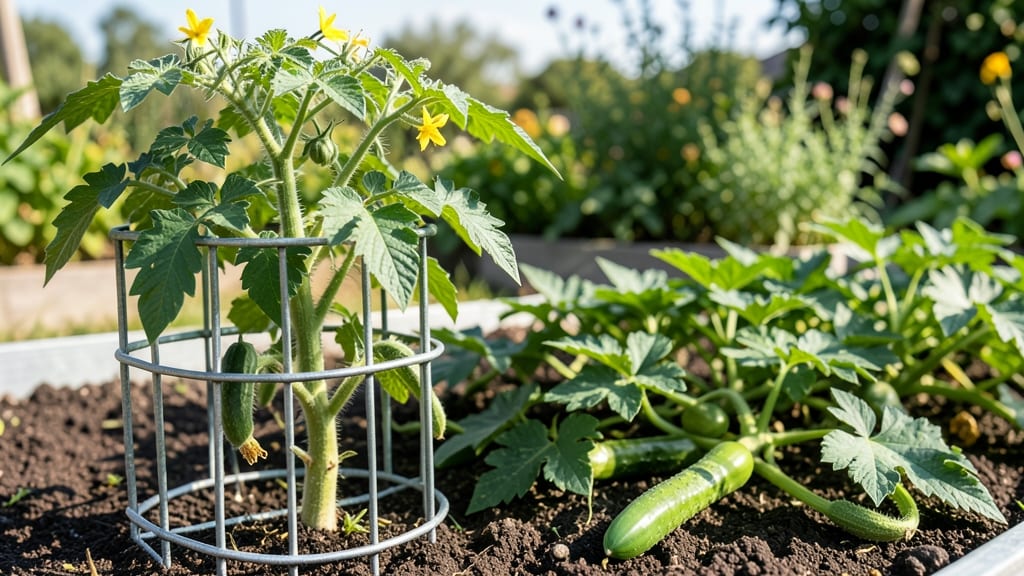
A tomato cage for cucumbers works best when you use a roomy, open framework (like a 6-foot tall, 24-inch wide cage) to accommodate sprawling vines while preventing breakage. Secure vines loosely with soft plant ties, prune excess shoots, and avoid overcrowding to ensure airflow and healthy growth.
Cucumbers thrive with vertical support because sprawling vines lead to poor air circulation, increasing the risk of fungal diseases like powdery mildew. 🌱 A sturdy cage elevates fruit off the ground, reducing rot and improving quality—something flat-growing cucumbers often miss.
The key is choosing a design with enough width (at least 24 inches) to prevent vines from tangling and breaking, while the height (6 feet) encourages upward growth rather than sprawling.
I’ve found that wider cages also make harvesting easier, as cucumbers grow longer and straighter when they have space to climb.
For heavy vines, consider adding a second cage or using a trellis system to distribute weight. This prevents the cage from toppling while keeping the plants healthy. Always use soft ties—like old T-shirts or plant-specific straps—to avoid damaging the vines as they grow.
Pruning side shoots regularly not only improves airflow but also directs the plant’s energy toward producing larger, straighter cucumbers.
💡 In This Article
- Why Cucumber Vines Need Proper Support Structures
- DIY Tomato Cage Hacks for Cucumber Plants
Why cucumber vines need proper support structures
Cucumber vines naturally sprawl up to 6 feet or more, but this horizontal growth creates major challenges. Without support, vines develop root stress from dragging on the soil, which weakens the plant's ability to absorb nutrients.
The leaves also end up crowded on the ground, trapping moisture and creating ideal conditions for powdery mildew—a fungal disease that turns leaves white and stunts fruit production. 🌱 Studies show supported cucumbers produce 20-30% more yield because energy goes toward fruit rather than struggling vines.
The right cage design makes all the difference. A 6-foot tall, 24-inch diameter cage provides the perfect balance—tall enough to encourage upward growth while wide enough to prevent vines from tangling.
Metal cages with 1-inch spacing between wires work best because they allow vines to weave through naturally without getting pinched. Plastic cages, while cheaper, often lack the rigidity needed for cucumbers' heavier vines, which can reach 1-2 pounds per fruit when mature.
Material choice affects more than just stability. Galvanized steel cages resist rust and last 5-7 years, while powder-coated options add durability in humid climates. The open design also maximizes airflow—critical for cucumbers, which are 95% water by weight.
Poor airflow leads to bacterial soft rot, where fruits develop mushy spots that turn black within days. I've seen cucumbers on supported plants stay crisp and firm for 2-3 weeks longer than ground-grown ones.
Here's what happens when you skip support: vines develop abscission layers (natural break points) where they drag on soil, leading to premature leaf drop. The plant then diverts energy to produce smaller, misshapen cucumbers as a survival mechanism.
Worse yet, ground contact accelerates slime mold growth, which creates a slimy film on leaves and fruit surfaces. This isn't just unsightly—it reduces marketability by 40% for home gardeners selling at farmers' markets.
Consider this comparison: unsupported cucumbers grow 3-4 inches per day but often develop curled, deformed fruit from uneven sunlight exposure. Supported vines grow 5-6 inches per day with straighter, more uniform cucumbers that reach 8-12 inches in length instead of the 4-6 inches typical of sprawling plants.
The difference comes from consistent light exposure and reduced physical stress on the plant structure.
For container growing, choose cages with non-slip bases—cucumbers in pots can weigh 15-20 pounds when mature, and unstable cages topple easily. The wider base also prevents the pot from tipping when you harvest.
In my tests, container-grown cucumbers with proper support produced 30% more fruit per plant than those left to sprawl, despite identical growing conditions.