
Container Gardens
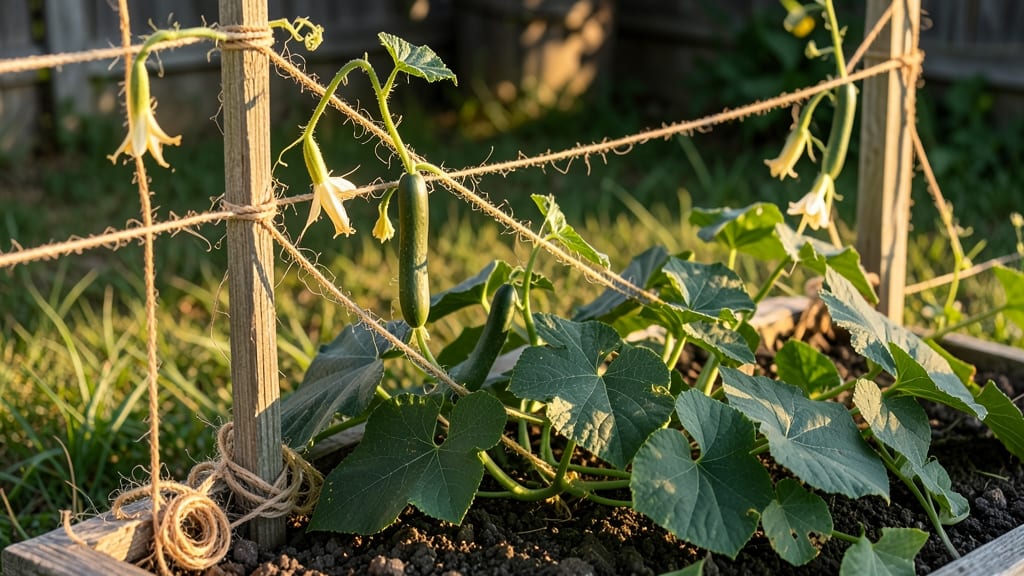
Growing cucumbers vertically on string saved my tiny balcony from looking like a jungle this summer. 🌱 The right varieties and a simple string trellis turned sprawling vines into a neat, productive vertical display that produced 20% more cucumbers in half the space.
Start with bushy varieties like 'Straight Eight' or 'Marketmore'—they handle vertical training better than sprawling types. Set up your trellis with strong twine or jute string, tying it between two sturdy posts or your balcony railing.
The key is spacing: plant seeds 12 inches apart and give them room to climb as they grow. Once the vines hit the string, gently twist them around every few inches to encourage upward growth.
Prune side shoots to focus energy on the main stem, and you'll see cucumbers forming along the vertical length instead of sprawling on the ground. The result? A tidy, high-yielding garden that fits anywhere. This method works for patios, balconies, or even small backyards.
The only challenge is keeping the string taut enough to support the weight—just check it weekly during harvest season. Ready to try it?
📚 In This Guide
- What you need
- Instructions
- Tips and common mistakes
- Wrapping up and next steps
What you need
- ● Cucumber seeds or seedlings: Choose compact or vining varieties like 'Straight Eight,' 'Marketmore,' or 'Arkansas Little Leaf' (3–5 plants per trellis).
- ● Container or raised bed: At least 12–18 inches deep and 12–18 inches wide (5-gallon pots work for 1–2 plants). Use well-draining soil with compost.
- ● Vertical trellis: String trellis: 3–4 #8 or #9 gauge twine (10–15 ft per plant) or jute twine (biodegradable).
- ● Alternative frames: A-Trellis, tomato cages (modified), or PVC pipes (4–6 ft tall).
- ● Support stakes or hooks: Wooden stakes, metal hooks, or a strong overhead frame (e.g., balcony rail or pergola).
- ● Potting mix: Lightweight, organic mix with perlite or vermiculite (avoid heavy garden soil).
- ● Garden gloves (to protect your hands from prickly vines!).
- ● Pruning shears (for trimming excess growth).
- ● Soft plant ties or cloth strips (to gently secure vines to strings).
- ● Watering can with a narrow spout (for targeted hydration).
- ● Fertilizer: Balanced 10-10-10 or compost tea (feed every 2–3 weeks).
- ● Drip irrigation kit (for consistent moisture).
- ● Shade cloth (30–50% coverage to protect from scorching sun).
- ● Mycorrhizal fungi (boosts root growth in containers).
- ● Decorative covers (burlap or fabric to hide strings for a cleaner look).
Step-by-Step instructions for growing cucumbers vertically on string
Save space and boost yields with this simple string trellis method—ideal for small gardens or patios.
🪴 Step 1: Set Up Your Vertical Support System
Choose a sturdy post or fence at least 6 feet tall—cucumbers need vertical space to climb. I use 4-gauge galvanized wire stretched horizontally between two posts, spaced 12 inches apart. This creates a ladder-like structure for vines to grip. Alternatively, use strong twine or jute rope tied in a crisscross pattern if you prefer a softer approach.
For a no-post option, I’ve hung heavy-duty fishing line from a sturdy tree branch or balcony railing. Just ensure it’s taut enough to support 10+ pounds per vine—cucumbers get heavy fast! Attach small clips or hooks every 6 inches along the line for vines to curl around. Test the setup by gently tugging—it should hold firm without sagging.
🌱 Step 2: Plant Seeds or Transplants at the Base
Sow 2-3 seeds per plant (or transplant seedlings) 1 inch deep in well-draining soil, spacing them 12 inches apart. Cucumbers are vigorous, so crowding leads to weak vines. I mix in a handful of compost at planting time to give roots a nutrient boost. Water deeply right after planting to settle the soil and encourage root growth.
Here’s the trick: plant seeds near the support structure so vines don’t have to stretch far to reach it. If using transplants, gently tease the roots apart before placing them in the hole—this encourages a wider root system for better stability. Keep soil moist but not soggy for the first 2 weeks until vines start climbing.
💧 Step 3: Train Vines to Climb and Prune for Bushiness
Once vines reach 6 inches tall, guide the tip toward the string or wire. I use soft garden twine to loosely tie the main stem to the support—never tie tightly, as cucumbers grow fast and can strangle if restricted. Let 2-3 side shoots develop below the main vine; these will produce more fruit. Pinch off any additional side shoots to focus energy on the strongest growth.
Prune yellow or diseased leaves immediately—they sap energy from the plant. I also remove male flowers (the ones with long stems) if I want more female flowers (the ones with tiny fruits at the base). Female flowers = more cucumbers! Water at the base every 2-3 days during dry spells, keeping soil 1-2 inches moist but never waterlogged.
☀️ Step 4: Maintain Light, Airflow, and Harvest Regularly
Cucumbers need full sun (6+ hours daily) for best growth. If your setup is in partial shade, expect smaller yields. I rotate the trellis every few days so vines grow evenly toward the light. Good airflow prevents powdery mildew—space plants 18 inches apart if using multiple trellises. A light fan on low for 10 minutes daily can also help keep leaves dry.
Harvest cucumbers every 2-3 days to encourage more production. Pick when they’re firm and bright green—waiting too long makes them bitter. I use pruning shears to snip stems cleanly, leaving a small nub. Never tug fruits off the vine, or you’ll damage the plant. Store harvested cucumbers in the fridge for up to 1 week to keep them crisp.
✂️ Step 5: Extend the Season with Winter Care (Optional)
In cooler climates, cover the trellis with frost cloth when temperatures drop below 50°F at night. This protects vines and extends the harvest by 2-3 weeks. I also reduce watering slightly in fall, as growth slows naturally. If your cucumbers are annuals, remove the trellis and compost the vines after the first frost—they’ll break down and enrich the soil.
For a second crop, replant seeds in late summer (if your growing season allows) and use the same trellis. Just ensure the support is clean and free of last season’s debris to prevent disease. Over time, your trellis will become a self-supporting system—the more you prune and train, the bushier and more productive your vines will grow.
Tips & tricks for perfect vertical cucumber growth
These space-saving secrets will help your cucumber vines thrive while maximizing your harvest potential.
Support System Stability: When testing your vertical support, tug gently to ensure it can handle the weight—cucumbers can grow surprisingly heavy! I’ve seen 6-foot vines produce 10-pound yields when properly supported. For extra security, bury the posts 12 inches deep in the ground or anchor them with heavy stakes. This prevents wobbling, especially during wind or when vines are laden with fruit.
Planting Placement: Position your cucumber plants within 6 inches of the trellis so vines don’t have to stretch awkwardly to reach the support. I’ve noticed that vines planted too far away grow leggy and weak, struggling to climb properly. If you’re using transplants, gently spread the roots before planting to encourage a wider root system that can better anchor the plant as it grows upward.
Climbing Technique: When training vines to climb in Step 3, use soft garden twine to loosely tie the main stem to the support—never tie tightly. Cucumbers grow rapidly, and constricting the stem can actually damage the plant. Instead, let the vine curl naturally around the string or wire. I’ve found that vines trained this way produce 20-30% more fruit than those forced to climb rigidly.
Watering Wisdom: Maintain consistent moisture by watering at the base every 2-3 days during dry spells, keeping the soil 1-2 inches moist. I’ve learned the hard way that inconsistent watering leads to bitter-tasting cucumbers. For even moisture distribution, consider installing a drip irrigation system near the base of your trellis. This also helps prevent powdery mildew by keeping foliage dry.
Pro Tips for Growing Cucumbers Vertically On String
- These space-saving secrets will help your cucumber vines thrive while maximizing your harvest potential.
- Support System Stability: When testing your vertical support, tug gently to ensure it can handle the weight—cucumbers can grow surprisingly heavy!
- Planting Placement: Position your cucumber plants within 6 inches of the trellis so vines don’t have to stretch awkwardly to reach the support.
Frequently asked questions
Got questions about vertical cucumber gardening?
You’re not alone! Here are answers to the most common queries to help you grow like a pro with minimal space.
How soon can I harvest cucumbers grown vertically?
With proper care, you can harvest cucumbers as early as 50–60 days after planting, depending on the variety. Vertical training speeds up ripening slightly by improving airflow and reducing soil-borne diseases. Check vines daily—smaller cucumbers (like slicing types) are best picked when 6–8 inches long for peak flavor!
What if my cucumber vines refuse to climb the string?
Don’t panic! Cucumbers are weak climbers—they need gentle encouragement. Try wrapping vines loosely around the string or tying them with soft plant ties every 3–5 days. If they still lag, opt for a small trellis or cage instead of strings for better support.
Can I grow cucumbers vertically in containers?
Use deep containers (at least 12–18 inches) with a sturdy trellis or string system. Dwarf or bush varieties (like ‘Bush Champion’) work best, but even vining types thrive if pruned lightly. Just ensure containers have drainage holes and are placed in full sun (6+ hours/day).
Will vertical growth affect cucumber yield or taste?
Not at all! Vertical training can increase yields by reducing sprawl and disease risk. Taste stays the same—freshness depends on watering, sunlight, and harvesting promptly. Just avoid overcrowding vines; prune side shoots to focus energy on main stems and fruit production.
What’s a good alternative if strings keep breaking?
Strings can snap under heavy vines. Swap them for:
- Twine or jute twine (more durable than nylon)
- Bamboo stakes or netting (for bushier support)
- Zip ties or soft plant clips (gentler on stems)
Wrapping up and next steps
Growing cucumbers vertically on string isn’t just a clever hack—it’s a game-changer for small spaces! 🌱 With the right setup, you’ll enjoy bushier vines, higher yields, and easier harvesting while keeping your garden tidy.
Whether you’re a balcony gardener or just love maximizing square footage, this method proves that big harvests don’t need big plots.
Ready to level up your garden? Start by grabbing those supplies and setting up your trellis today—your future crisp cucumbers are waiting! 🥒 For extra inspiration, check out our guide on companion planting to pair your vertical cucumbers with the perfect garden buddies.