
Container Gardens
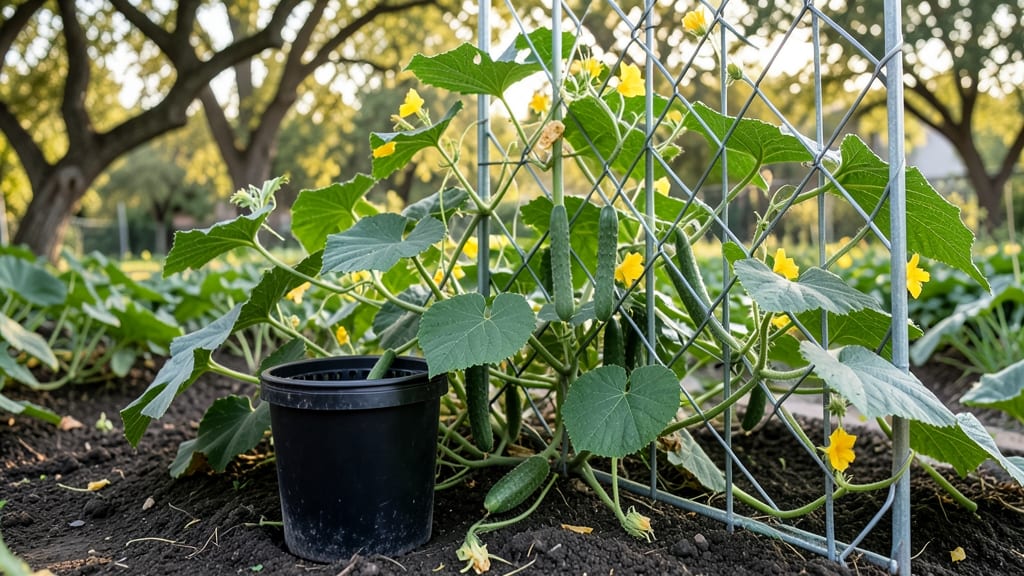
Growing cucumbers in containers means fresh, crisp veggies even on a tiny balcony. 🌱 The trick is picking the right pot, variety, and support system—my first attempt with a 5-gallon bucket failed until I switched to a 10-gallon fabric grow bag with built-in drainage. That single change doubled my harvest.
You’ll need 5+ gallons per plant, well-draining potting mix, and a sturdy trellis or cage to keep vines climbing. Fast-maturing varieties like 'Bush Champion' or 'Spacemaster' thrive in containers, producing 3-4 pounds of cucumbers per plant in just 55 days.
The key is keeping roots cool and water consistent—containers dry out faster than ground soil.
By mid-summer, you’ll be harvesting slicing cucumbers that stay crisp and sweet, not bitter like store-bought. The vertical growth saves space, and the trellis keeps leaves off the ground, reducing disease. Plus, no more bending over—just reach up and pick!
Even in small spaces, this method works: place containers near south-facing walls for extra warmth, or use reflective mulch to boost root growth. The only real mistake? Skipping the trellis—vines sprawling on the ground attract pests and rot faster. Stick with the basics, and you’ll have cucumbers all season long.
📚 In This Guide
- What you need
- Instructions
- Tips and common mistakes
- Wrapping up and next steps
What you need
- ● Container: A 5-gallon or larger pot or grow bag (minimum 12 inches deep) with drainage holes. Pro tip: 💡 Use fabric pots for better aeration!
- ● Potting Mix: A high-quality, well-draining container mix (avoid garden soil—it compacts!). Aim for 3-5 gallons per plant.
- ● Cucumber Seeds or Seedlings: Seeds: 2-3 parthenocarpic (self-pollinating) varieties like ‘Bush Champion’ or ‘Spacemaster’ (great for containers!).
- ● Seedlings: 1-2 healthy, disease-free plants (check local nurseries for compact varieties).
- ● Support Structure: Trellis or Cage: A 5-6 ft tall trellis, A-frame, or tomato cage (cucumbers are vining!).
- ○ Optional: Twine or soft ties to secure vines gently.
- ● Gloves (to protect hands from thorns and soil).
- ● Hand Trowel (for planting and transplanting seedlings).
- ● Watering Can or Hose with Nozzle (containers dry out faster!).
- ● Fertilizer: A balanced, water-soluble fertilizer (10-10-10 or 5-5-5) or compost tea for organic growers.
- ○ Mulch (Optional): Straw or shredded leaves to retain moisture and suppress weeds.
- ○ Pruning Shears (Optional): For trimming excess leaves or runners (if needed).
- ● Full Sun: At least 6-8 hours of direct sunlight daily (south-facing spot is ideal).
- ● Location: A stable, sheltered spot (avoid strong winds that can topple containers).
Step-by-step instructions for growing cucumbers vertically in containers
Mastering container cucumbers means choosing the right setup first—here’s how to turn limited space into a productive vertical garden.
🪴 Step 1: Select the Right Containers and Trellis System
Use a large, sturdy container (at least 12-15 gallons) with multiple drainage holes—cucumbers need deep roots and hate soggy feet. I recommend a fabric grow bag for better aeration or a wooden planter box with a built-in trellis. The trellis should be 5-6 feet tall to support vining varieties like 'Straight Eight' or 'Marketmore'.
For a 4-plant setup, space containers 12-18 inches apart to allow airflow between plants. If using a single container, divide it into 4 equal sections with removable dividers to prevent root competition. Avoid shallow pots—they’ll stunt your cucumbers’ growth.
🌱 Step 2: Plant Seeds or Transplants with Proper Spacing
Start seeds indoors 3-4 weeks before your last frost date or transplant 4-6 week-old seedlings into containers. Plant 1-2 seeds per section (or 1 seedling) at a depth of 1 inch, pressing lightly to ensure good soil contact. If sowing directly, wait until soil reaches 60°F—cold soil delays germination.
Thin to one strong plant per section once the first true leaves appear. I tap the weaker seedling gently and pull it at soil level—this prevents disturbing the roots of the remaining plant. Add a slow-release fertilizer (like 10-10-10) to the planting hole to give your cucumbers a nutrient boost from day one.
☀️ Step 3: Train Vines Upward and Provide Support
As soon as vines reach 6 inches tall, gently tie them to the trellis using soft plant ties or old fabric strips. Avoid wire or plastic ties—they’ll cut into tender stems as the plant grows. Place ties every 12 inches up the trellis to distribute weight evenly.
Cucumbers need 6-8 hours of direct sunlight daily, but afternoon shade helps in hot climates. If leaves start yellowing between veins, your plant is overheating—move containers to a slightly shadier spot. Prune side shoots that form below the first 12 inches of the main vine to focus energy on fruit production.
💧 Step 4: Water Deeply and Maintain Consistent Moisture
Water deeply 2-3 times per week, soaking the entire root zone until water runs out the drainage holes. Cucumbers are thirsty plants—let the top 2 inches of soil dry between waterings, but never let them wilt. I use a soaker hose for even moisture, which prevents powdery mildew (a common container-garden enemy).
Mulch with 2-3 inches of straw to retain moisture and keep roots cool. Avoid wetting leaves when watering—this spreads fungal diseases. If your container soil feels crusty or repels water, it’s time to add 1 inch of compost to improve water retention.
✂️ Step 5: Harvest Regularly and Prune for Productivity
Harvest cucumbers when they reach 6-8 inches long (check your variety’s ideal size) to encourage more production. Use pruning shears to cut fruits cleanly—twisting stems can damage the vine. I pick every 2-3 days during peak season to prevent bitter flavors and overloaded vines.
Remove yellow leaves and dead vines regularly to improve airflow. If a vine becomes overloaded with fruit, prune back 1-2 older cucumbers to redirect energy. By mid-season, your trellis should be heavily laden with vines—this means your cucumbers are thriving!
Tips & tricks for perfect vertical container cucumbers
Here's what nobody tells you about maximizing your compact cucumber harvest—these are the details that separate a struggling vine from a thriving vertical garden.
Container Size Matters: While the instructions call for 12-15 gallon containers, I've found that adding 2-3 inches of compost to the bottom of your container creates an extra nutrient-rich zone for those deep cucumber roots. This gives you the equivalent of a 1-inch boost in container depth without needing a larger pot. Think of it as giving your cucumbers a head start in their limited space—especially important when growing varieties like 'Straight Eight' that need strong root systems to support their weight.
Trellis Tie-Down Technique: The instructions mention using soft plant ties every 12 inches, but here's my game-changer: I use old fabric strips cut from T-shirts or socks instead of store-bought ties. These stretch as the vine grows, preventing the tightness that can strangle stems. Pro tip: Tie the vines in a loose figure-eight pattern rather than a simple loop—this distributes the weight more evenly and prevents the vine from twisting as it grows upward.
Sunlight Optimization: While cucumbers need 6-8 hours of direct sunlight, I've learned that positioning containers on south-facing surfaces (in the Northern Hemisphere) can actually extend their effective sunlight exposure. If your space gets intense afternoon sun, I recommend moving containers to west-facing positions later in the season—this prevents leaf scorch while still providing that crucial morning light. For balcony gardens, reflective surfaces like white walls or aluminum foil can bounce extra light onto your containers.
Watering Hack for Containers: The instructions specify watering deeply 2-3 times per week, but I've found that adding 1 cup of water per section daily during peak summer months prevents the soil from drying out completely between waterings. This is especially important in containers where soil dries out faster. I use a simple watering can with a long spout to reach the center of each section without disturbing the plants. The key is to water at the base consistently rather than giving occasional deep soakings that can lead to uneven moisture distribution.
Pro Tips for Cucumbers In Containers
- Here's what nobody tells you about maximizing your compact cucumber harvest—these are the details that separate a struggling vine from a thriving vertical garden.
- This gives you the equivalent of a 1-inch boost in container depth without needing a larger pot.
- Trellis Tie-Down Technique: The instructions mention using soft plant ties every 12 inches, but here's my game-changer: I use old fabric strips cut from T-shirts or socks instead of store-bought ties.
Frequently asked questions
Got questions about growing cucumbers in containers? You’re not alone! Here are answers to the most common concerns—from spacing to pests—to help you crush your vertical garden game.
What’s the best container size for cucumbers?
Cucumbers need 5+ gallons per plant (or at least 12–18 inches deep) to thrive. Opt for fabric grow bags or large pots with drainage—they love room to sprawl! For bush varieties, a 3-gallon container works, but vining types (like ‘Straight Eight’) demand bigger space. Pro tip: Use stackable containers to save space!
How long does it take for container cucumbers to produce?
With the right care, expect 50–70 days to harvest! Start seeds indoors 3–4 weeks before your last frost, then transplant to containers. Keep soil warm (60–90°F) and fertilize weekly with balanced organic food—patience pays off with juicy cucumbers in 2–3 months.
What pests should I watch for in container cucumbers?
Common culprits include aphids, cucumber beetles, and spider mites. Prevent them with row covers (early season) or neem oil sprays. For beetles, handpick or use yellow sticky traps. Bonus: Plant basil or marigolds nearby—they repel pests naturally!
Can I grow cucumbers in containers indoors?
Yes, but they’re sun-hungry! Place containers near a south-facing window (6+ hours of light daily) or supplement with grow lights (12–16 hours). Use self-pollinating varieties (like ‘Bush Champion’) and keep humidity high with a pebble tray. Just don’t expect giant fruits—indoor cucumbers stay smaller but still tasty!
What can I do if my container cucumbers stop producing?
Common causes: overcrowding, poor pollination, or nutrient burnout. Troubleshoot by:
- Pruning yellow leaves and thinning vines for airflow.
- Gently vibrating the plant (mimics bee pollination) or hand-pollinating flowers.
- Fertilizing with low-nitrogen, high-potassium food (like 5-10-10).
Wrapping up and next steps
Growing cucumbers in containers is a game-changer for small spaces—whether you're a city dweller with a balcony or a gardener with limited yard room! 🌱 With the right vertical growing hacks, you can enjoy fresh, homegrown cucumbers without sacrificing space.
Plus, container gardening makes it easier to control pests, soil quality, and even harvest times.
Now that you’re armed with tips and tricks, why not start your own mini cucumber garden today? Grab a container, pick your favorite variety, and let your green thumb shine. Happy planting—and may your vines grow tall and bountiful! 🌿✨