
Tools
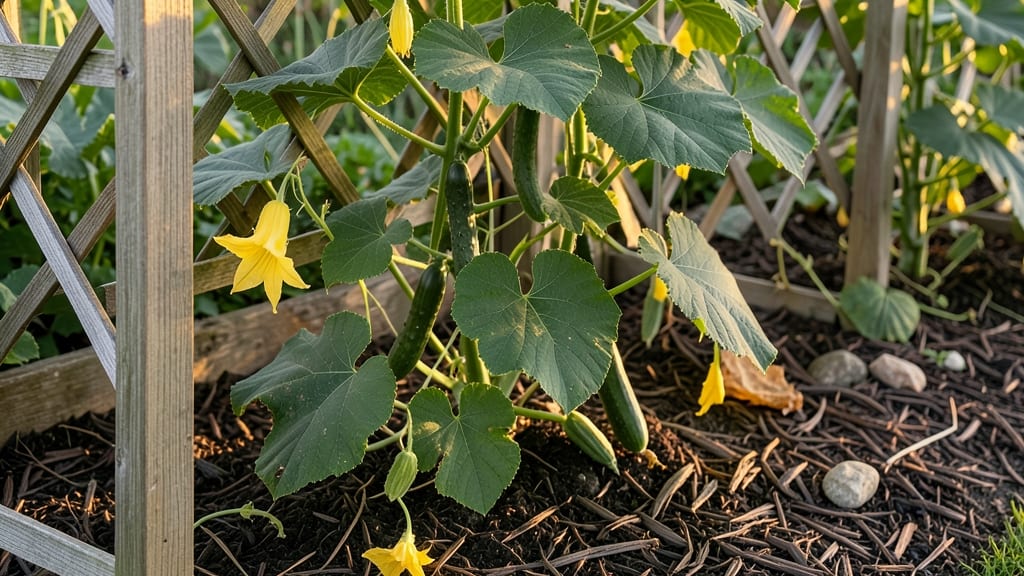
A cucumber garden bed that climbs instead of sprawls could be your ticket to more harvests in less space. 🌱 I used to watch my vines take over the yard, but now they grow vertically—producing twice as many cucumbers in the same footprint.
The secret is combining the right trellis, spacing, and companion plants to keep everything healthy and productive. Start with a 3-foot-wide bed and plant cucumbers 12 inches apart along a sturdy trellis or fence. Add radishes or lettuce between rows—they thrive in cucumber shade and deter pests.
Amend the soil with compost before planting, and you’ll see vigorous vines climbing within weeks. The key is keeping the trellis 6 feet tall to support heavy vines and fruit.
By midsummer, you’ll be picking crisp cucumbers straight from the vine, and the bed will look neat, organized, and shockingly productive. The vertical design also makes harvesting easier—no more bending or searching for hidden fruit. Plus, fewer vines on the ground means less disease risk.
Works for raised beds, in-ground plots, or even containers—just scale the trellis size. Here’s how to set it up for maximum yield without the sprawl.
📚 In This Guide
- What you need
- Instructions
- Tips and common mistakes
- Wrapping up and next steps
What you need
- ● Vertical Garden Bed: 1 pre-made vertical planter (e.g., fabric pocket planter, trellis bed, or DIY wooden frame) OR
- ● 1 sturdy trellis (6–8 ft tall, 2–3 ft wide) with netting or lattice
- ● Soil: 3–5 bags (1–2 cubic feet each) of well-draining potting mix (avoid garden soil—it compacts too much!).
- ● Cucumber Seeds or Seedlings: 5–10 cucumber seeds (varieties like ‘Straight Eight’ or ‘Bush Champion’ work well) OR
- ● 3–5 healthy cucumber seedlings (transplant after last frost).
- ● Compost: 1–2 cups of organic compost or worm castings for nutrient boost.
- ● Watering System: 1 drip irrigation kit OR
- ● 1 watering can with a long spout (2+ gallons).
- ● Fertilizer: 1 bottle of balanced, low-nitrogen fertilizer (5-10-10 ratio) or compost tea.
- ○ Support Tools: 1 roll of landscape fabric (to suppress weeds, optional but helpful).
- ● 1 pack of plant ties or soft twine (for securing vines).
- ● 1 mulch blanket (straw or shredded leaves) to retain moisture.
- ● 1 soil moisture meter (to avoid over/under-watering).
- ● 1 spray bottle with neem oil (organic pest deterrent).
- ● 1 timer for automated watering (if using a drip system).
- ● Decorative elements (e.g., solar lights, painted stakes) for a cute garden vibe! 🎨
Step-by-step instructions for building a vertical cucumber garden bed
Here's how to maximize your harvest in minimal space—this design works in any yard or patio.
🪴 Step 1: Plan and Prepare the Vertical Framework
Start with a sturdy base: a 4-foot tall wooden frame (like a trellis or A-frame) or repurpose metal cages designed for cucumbers. I like using 2x4 lumber for the frame, spaced 12 inches apart vertically to give vines room to climb. Secure everything with galvanized screws—rust will ruin the structure faster than you'd think.
Position your structure in full sun (at least 6-8 hours daily) with soil nearby for easy watering. If you're using a freestanding design, anchor it with stakes to prevent tipping when vines get heavy. The key here is stability—cucumbers can get 20-30 pounds per vine, so flimsy supports will sag under the weight.
🌱 Step 2: Amend and Fill the Growing Space
Fill the base area with 3-4 inches of compost mixed into the top 6 inches of native soil. Cucumbers are heavy feeders, so I add 1 cup of 10-10-10 fertilizer per square foot of bed space. Work it in gently—over-mixing can damage roots before they even start.
For container versions, use sterile potting mix with 20% perlite to prevent compaction. The goal is loose, fertile soil that drains well but retains moisture. Test moisture by squeezing a handful—it should hold together but not drip water when you release it. Too dense, and roots suffocate; too sandy, and they dry out overnight.
☀️ Step 3: Plant and Train Vines Immediately
Set out 4-6 cucumber plants (or transplant seedlings) at the base of the structure, spacing them 12-18 inches apart. Bury the stems 1 inch deeper than their current soil line to encourage stronger root growth. This is the moment that matters: the deeper you plant, the more stable the vine becomes as it climbs.
As soon as the first true leaves appear, gently tie the main stem to the trellis with soft plant ties (not wire—it cuts into tender vines). Train lateral shoots upward every 2-3 days to prevent sprawling. You'll see new tendrils curling toward the structure within a week—that's your cue to keep guiding them upward. Prune any side shoots that grow below the bottom third of the frame to focus energy on fruit production.
💧 Step 4: Water and Maintain Through the Season
Water deeply 2-3 times per week (more in 90°F+ heat), aiming for 1-2 inches of moisture per week. I use drip irrigation to keep leaves dry—wet foliage invites powdery mildew, which spreads like wildfire in humid conditions. Water at the base only, never overhead after 10 AM to prevent sunburn on damp leaves.
Fertilize again at first flowering with ½ cup of balanced fertilizer per plant. Watch for yellowing lower leaves—this is normal as the plant channels nutrients upward, but if it spreads to new growth, your soil may be nitrogen-deficient. Side-dress with compost tea to boost microbial activity without shocking the roots.
✂️ Step 5: Harvest and Prune for Continuous Production
Start harvesting when cucumbers reach 6-8 inches long (check your variety's ideal size). Pick every 2-3 days—neglected fruit signals the plant to stop producing. I harvest in the early morning when cucumbers are firmest and most flavorful. Use pruning shears to cut stems cleanly, leaving a ½-inch stub to prevent disease entry.
Remove any yellowed or diseased leaves immediately to improve air circulation. As the season progresses, prune overly aggressive vines that threaten to overtake the structure. The goal is to keep the plant upright and open—this maximizes sunlight exposure and reduces humidity buildup. With proper care, a single vertical cucumber plant can yield 20-30 cucumbers in a 4x4-foot space—that's 5x the harvest of a traditional row garden.
Tips & tricks for perfect vertical cucumber garden beds
Between us, these small adjustments can transform your vertical cucumber garden from decent to extraordinary. The devil's in the details when it comes to maximizing space and yield.
Framework Stability: I can't stress this enough—your 4-foot frame needs to be anchored like it's holding up a small house. For freestanding designs, use two stakes per corner driven at 45-degree angles. I've seen metal cages topple under 15-pound cucumber loads, so don't skimp on the support. If you're using wood, pre-drill screw holes to prevent splitting when you tighten them. That 12-inch vertical spacing between supports? Keep it precise—any less and vines will tangle, any more and they'll flop over.
Soil Science: The 3-4 inches of compost mixed into 6 inches of native soil is non-negotiable for heavy feeders like cucumbers. But here's what nobody tells you—pre-mix your compost with 1 tablespoon of Epsom salt per square foot. The magnesium boosts chlorophyll production, giving you greener, more productive vines. For container versions, that 20% perlite is your secret weapon against root rot. Pack it gently—you're creating a sponge, not a brick. And that moisture test? Do it every morning before watering. If your soil crumbles when you squeeze it, it's time to hydrate.
Vine Training: That first true leaf appearance is your cue to start training immediately. I use soft plant ties made from old T-shirts (cut into strips) because they stretch as vines grow. Watch for those tendrils—when they curl like little hooks, that's nature's way of saying "tie me up." The 2-3 day training schedule keeps vines from getting tangled, but here's my real trick: I mark the bottom third of the frame with a permanent marker. Any shoots growing below that line get pruned immediately—they're just stealing energy from your fruit production. You'll notice a difference in yield within weeks.
Harvest Hack: The 6-8 inch size range is ideal, but timing matters more than you'd think. I harvest in the morning when cucumbers are coolest and firmest, and I always use clean, sharp pruning shears. That ½-inch stub left on the stem might seem insignificant, but it prevents disease entry points. Here's what I do with the harvest: I store them in the fridge in a single layer on a towel to prevent moisture buildup. For long-term storage, I wrap them in paper towels and keep them in the crisper drawer—this extends their freshness by nearly a week compared to plastic bags.
Pro Tips for Cucumber Garden Bed
- Between us, these small adjustments can transform your vertical cucumber garden from decent to extraordinary.
- Framework Stability: I can't stress this enough—your 4-foot frame needs to be anchored like it's holding up a small house.
- Soil Science: The 3-4 inches of compost mixed into 6 inches of native soil is non-negotiable for heavy feeders like cucumbers.
Frequently asked questions
Got questions about maximizing your cucumber garden bed? You’re not alone! Here are answers to the most common queries to help you grow like a pro.
When is the best time to plant cucumbers in a vertical garden bed?
Cucumbers thrive in warm soil—wait until after the last frost when nighttime temps stay above 55°F (13°C). For cooler climates, use row covers or start seeds indoors 3–4 weeks before transplanting. Pro tip: Plant in late spring to early summer for the best harvest!
Why are my cucumber vines wilting or turning yellow?
Wilting or yellowing leaves often signal underwatering, overwatering, or pests. Check soil moisture (keep it consistently damp but not soggy) and inspect for aphids or powdery mildew. If roots are mushy, you’re overwatering; if soil is dry, water deeply at the base and mulch to retain moisture.
Can I grow cucumbers in a vertical bed without trellises?
Yes! Use cattle panels, A-frames, or sturdy netting to save space. If you skip trellises, expect smaller yields and more sprawling vines. For bush cucumber varieties (like ‘Bush Champion’), a dense vertical planter with built-in supports works great. Pro tip: Prune vines to encourage upward growth!
How long does it take for cucumbers to grow in a vertical garden?
From seed to harvest, expect 50–70 days for slicing cucumbers and 60–80 days for pickling varieties. Vertical growing can speed up maturity slightly by improving airflow and reducing disease. Harvest regularly to encourage more production—wait until cucumbers are 6–8 inches long and firm.
What can I plant alongside cucumbers in a vertical bed?
Cucumbers love companion plants like beans, peas, radishes, or marigolds (which repel pests). Avoid planting near potatoes or aromatic herbs (like sage), as they can stunt growth. In a vertical setup, fast-growing radishes or bush beans make great neighbors—they won’t overcrowd vines!
Wrapping up and next steps
Growing cucumbers in a vertical garden bed isn’t just space-smart—it’s a game-changer for fresh, homegrown harvests with minimal effort! 🌱 Whether you’re a seasoned gardener or just starting out, this design maximizes yields while keeping your garden tidy and organized.
With the right setup, you’ll enjoy crisp, flavorful cucumbers all season long.
Now that you’re armed with the materials, design tips, and answers to common questions, it’s time to roll up your sleeves and build your own! Start small if you’re new, experiment with varieties, and watch your vertical garden thrive. Happy growing—your future harvests will thank you! 🌿