
Planting
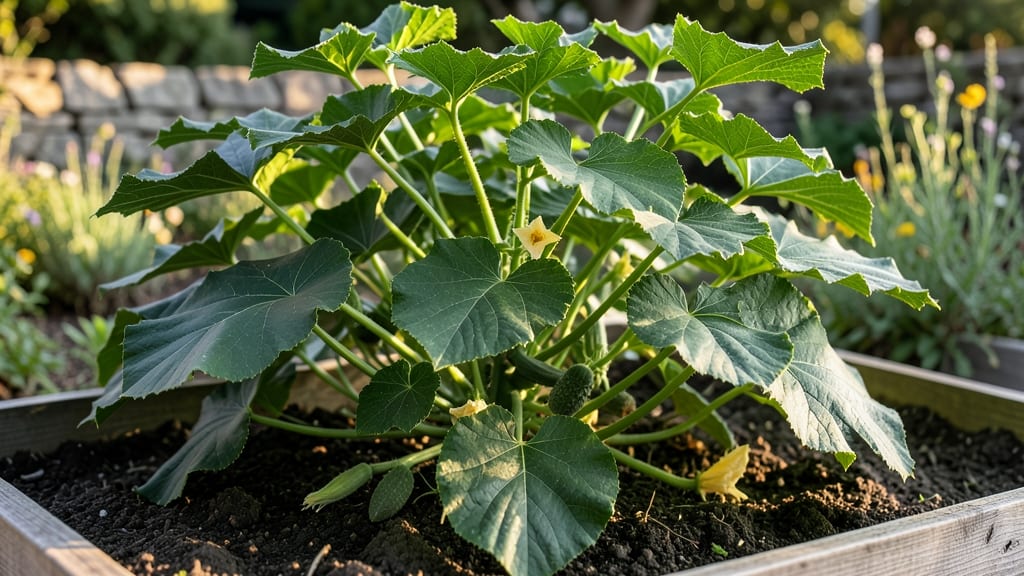
Those healthy cucumber plant leaves you want—vibrant green and crisp—aren’t just about water or fertilizer; pruning the right way boosts airflow and deters pests before they strike. 🌿 pests before they start.
I’ve watched my cucumbers go from sad, spotted messes to thriving vines just by cutting back the right leaves—and you can too.
Start by removing any leaves that touch the soil (they’ll rot) and prune off the bottom two leaves when planting. Once vines start climbing, snip off any leaves that block sunlight or crowd the plant—this keeps air moving and stops powdery mildew before it starts.
A sharp pair of scissors and 10 minutes of focused work every week is all it takes to keep your plant happy.
What you’ll end up with is a cucumber plant that looks nearly perfect—thick, glossy leaves that repel pests naturally and produce cucumbers faster than you can pick them.
The first sign of improvement? Leaves stay bright green instead of yellowing, and you’ll see fewer aphids or spider mites clinging to the undersides.
This method works for both trellised and sprawling cucumbers, whether you’re growing in a raised bed or containers. The key is consistency—once you start pruning, your plants will reward you with healthier growth all season long. Let’s get those leaves looking their best!
📚 In This Guide
- What you need
- Instructions
- Tips and common mistakes
- Wrapping up and next steps
What you need
- ● Cucumber seeds or seedlings: 10–20 seeds (if starting from seed) or 3–5 healthy seedlings (for transplanting)
- ● Recommended varieties: 'Straight Eight,' 'Marketmore,' or 'Armenian' (disease-resistant options)
- ● Potting mix or garden soil: 5–10 gallons of well-draining, organic-rich soil (pH 6.0–6.8)
- ○ Optional: Add compost or aged manure (1–2 cups per plant) for extra nutrients
- ● Containers or garden space: Containers: 5-gallon pots or larger (1 plant per container)
- ● Garden beds: Full sun (6+ hours/day) and space for vines to spread (5–6 feet)
- ● Pruning tools: 1 pair of sterilized pruning shears (sharp, bypass-style)
- ● 1 small hand pruner (for delicate trimming)
- ● Pro tip: Clean blades with rubbing alcohol (70%+) between cuts to prevent disease! 💡
- ● Support system: Trellis, cage, or stakes (6+ feet tall for vining varieties)
- ● Fertilizer: Balanced organic fertilizer (10-10-10 or 5-5-5 ratio)
- ○ Optional: Liquid seaweed or fish emulsion (for a nutrient boost)
- ● Pest control (preventative): Neem oil (1–2 tbsp per gallon of water for spraying)
- ● Insecticidal soap (for soft-bodied pests like aphids)
- ● Natural repellents: Crushed garlic or chili pepper spray (homemade option!)
- ● Garden gloves (to protect hands during pruning)
- ● Mulch (straw or shredded leaves to retain moisture)
- ● pH test kit (to monitor soil acidity)
- ● Grow lights (if starting indoors or in low-light areas)
- ● Companion plants (marigolds or basil to deter pests naturally)
Instructions for pruning cucumbers to keep leaves thriving
Here's how to prune your cucumbers for stronger, pest-resistant vines and lush foliage.
✂️ Step 1: Identify and Remove Weak Growth Early
Start by inspecting your cucumber plants for yellowing, wilted, or diseased leaves—these are your first targets. Use clean, sharp pruning shears to cut these back to a healthy leaf node. I always prune in the morning when leaves are dry, which prevents fungal spores from spreading.
Watch for suckers—those small shoots growing in the joint between the main stem and a leaf. These compete for nutrients and weaken your plant. Pinch them off with your fingers when they're still small; you'll see new side shoots forming at the leaf nodes instead.
🌿 Step 2: Encourage Airflow and Light Penetration
Cucumber plants need space to breathe, so aim to keep the center of the plant open. Remove any leaves that are growing inward or blocking sunlight from reaching the lower stems. Focus on the bottom third of the plant first—these older leaves often yellow and die back naturally.
You'll know you're doing it right when the plant's center looks airy and sunlight reaches all the way to the base. Healthy leaves should be dark green and waxy, while overcrowded areas will show pale, weak growth. Prune on a weekly basis to maintain this open structure.
💧 Step 3: Prune for Pest Prevention and Fruit Production
Look for leaves with holes, chew marks, or webbing—these are signs of pests like cucumber beetles or spider mites. Remove these immediately and drop them in soapy water to prevent reinfestation. Healthy leaves should feel firm and slightly leathery to the touch.
For fruit production, focus on keeping the plant's energy directed toward the main stem and fruit-bearing areas. Prune back any side shoots that aren't producing flowers or fruit, leaving only the strongest, most vigorous growth. This ensures your plant puts its energy where it counts—on large, healthy leaves and abundant harvests.
☀️ Step 4: Maintain Balance Between Leaves and Fruit
Your goal is to keep a 3:1 ratio of leaves to fruit on the plant. If you see more than three leaves per fruit, it's time to prune back some of the excess foliage. This prevents the plant from becoming overburdened and ensures each fruit gets enough energy to grow properly.
Check your plants every 3-4 days during peak growing season to stay on top of this balance. You'll notice that pruned plants develop thicker stems, larger leaves, and more uniform fruit size compared to unpruned vines. This method also reduces the risk of fungal diseases by improving airflow.
Tips & tricks for thriving cucumber leaves
Here’s how to take your cucumber pruning from good to exceptional—keeping your plants strong and productive all season long.
Timing is Everything: Morning pruning is non-negotiable. Dew or overnight moisture can spread fungal spores when you cut, so always wait until leaves are completely dry. I’ve seen plants go from thriving to struggling overnight just because I pruned in the afternoon—don’t make that mistake! The morning light also helps any small wounds dry quickly, reducing infection risks.
Tool Selection Matters: Never use dull or dirty pruning shears—they crush stems and spread disease. I keep a dedicated pair of shears just for cucumbers, cleaned with rubbing alcohol between uses. For suckers, your fingers work perfectly, but make sure they’re clean too. A quick wipe with a damp cloth before you start prevents transferring any hidden pathogens.
Visual Cues for Balance: When checking your 3:1 leaf-to-fruit ratio, look for the classic "V" shape where sunlight hits the center of the plant. If you see shadows or crowded growth, that’s your cue to prune. I train my eye to spot this pattern—once you notice it, you’ll see it everywhere. This open structure isn’t just about looks; it’s what keeps your cucumbers producing fruit consistently.
Pro Tips for Healthy Cucumber Plant Leaves
- Here’s how to take your cucumber pruning from good to exceptional—keeping your plants strong and productive all seaso...
- Timing is Everything: Morning pruning is non-negotiable. Dew or overnight moisture can spread fungal spores when you ...
- Tool Selection Matters: Never use dull or dirty pruning shears—they crush stems and spread disease. I keep a dedicate...
Frequently asked questions
Got questions about keeping your cucumber leaves vibrant and pest-free?
Here are answers to the most common queries—so you can grow like a pro!
Why are my cucumber leaves turning yellow, even with healthy-looking vines?
Yellowing leaves (a condition called chlorosis) often signal nutrient deficiencies (like nitrogen or magnesium) or overwatering. Test your soil’s pH (ideal: 6.0–6.8) and adjust with compost or a balanced fertilizer. If roots are soggy, improve drainage—cucumbers hate "wet feet."
How do I know if my cucumber plant has pests vs. natural leaf damage?
Pests leave distinct clues:
- Holes or chewed edges = Cucumber beetles or slugs.
- Sticky residue = Aphids or spider mites (wipe leaves with soapy water).
- Curled or discolored leaves = Early signs of powdery mildew (spray with neem oil).
When’s the best time to prune cucumber leaves to repel pests?
Prune early and often—remove yellowed, diseased, or overly crowded leaves before pests arrive (spring/summer). Focus on:
- Leaves touching soil (traps moisture/pests).
- Lower leaves shading vines (promotes airflow).
Can I use homemade sprays instead of chemical pesticides for cucumber leaves?
Try these DIY pest repellents:
- Neem oil spray: Mix 1 tsp neem oil + 1 tsp mild soap in 1 quart water. Spray undersides of leaves weekly.
- Garlic/chili spray: Blend 2 garlic cloves + 1 tbsp cayenne pepper in 1 quart water. Strain and spray (repeats every 3 days).
- Companion planting: Interplant with marigolds or basil to deter pests naturally.
Will pruning cucumber leaves reduce my harvest?
Not if done right! Pruning boosts growth by:
- Improving air circulation (fewer diseases).
- Redirecting energy to fruit production (not just leaves).
- Preventing overcrowding (which stresses plants).
Wrapping up and next steps
Growing healthy cucumber plant leaves is all about balance—pruning strategically to boost airflow, deter pests, and encourage vibrant growth. By mastering the art of pest-repellent pruning, you’ll enjoy a thriving vine and a bountiful harvest. 🌱
Ready to put these secrets into action? Start small—pick one technique (like succession pruning or leaf removal) and observe how your plant responds. Before you know it, you’ll be a cucumber-growing pro with lush, pest-resistant foliage!