
Diseases
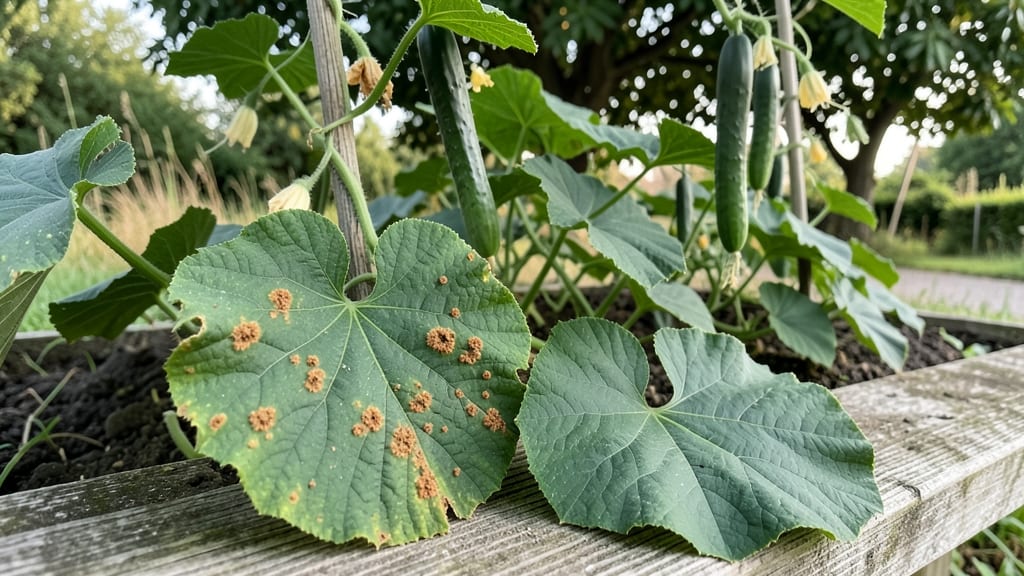
Those suspicious orange-brown spots on your cucumber leaves could signal the rust on cucumbers—and here’s how to stop it.
That’s rust fungus—and it spreads faster than you think. 🌱 I’ve seen entire vines collapse in under two weeks if you don’t act fast, but copper spray can stop it in its tracks when applied at the first sign of trouble.
The problem starts with spores from nearby plants or old crop debris, then thrives in warm, humid conditions—exactly the kind of weather cucumbers love.
You’ll spot the classic rust-colored pustules on the undersides of leaves first, then watch them multiply until the whole plant looks like it’s been dusted with cinnamon.
A copper fungicide spray (like copper sulfate or copper hydroxide) works best when you catch it early—just mix it up and apply it every 7-10 days until the new growth is clear. For organic gardeners, neem oil is a good backup, though it’s slower to act.
Prevention is even easier: space plants properly, remove infected leaves immediately, and choose rust-resistant varieties like ‘Straight Eight’ or ‘Lemon.’ The key is acting before the spores take over—your harvest depends on it.
The Hidden Triggers Behind Fungal Spots
Those unsightly brown or orange spots on your cucumbers—often mistaken for dirt or bruising—are usually signs of cucumber scab or rust fungus, caused by pathogens like Cladosporium cucumerinum or Puccinia species.
Understanding why these spots appear is key to stopping them before they ruin your harvest. Let’s break down the science behind the problem.
Fungal spores thrive in moist, stagnant conditions. When cucumbers grow in a greenhouse, under plastic tunnels, or in dense plantings with little airflow, excess humidity creates the perfect breeding ground. Here’s how it works:
- Spores spread via water droplets: Rain, overhead irrigation, or dew cling to leaves, carrying fungal spores directly onto cucumber surfaces.
- Prolonged leaf wetness: If leaves stay damp for more than 6–12 hours, spores germinate and infect the plant.
- Greenhouse effect: Plastic or glass traps heat and moisture, accelerating fungal growth.
Actionable fix: Space plants 12–18 inches apart, use drip irrigation (never overhead watering), and ensure proper ventilation to dry leaves quickly.
When cucumber vines compete for sunlight, air, and nutrients, they become stressed—and stressed plants are far more susceptible to fungal infections. Here’s why:
- Reduced photosynthesis: Shady, crowded vines produce weaker cell walls, making them easier targets for fungal penetration.
- Increased leaf moisture: Overlapping foliage traps humidity, slowing evaporation and extending the window for spore germination.
- Nutrient competition: Poor root health from overcrowding weakens the plant’s natural defenses.
Actionable fix: Thin out vines to allow sunlight to reach the lower leaves, prune excess growth, and avoid planting cucumbers too densely.
Fungal spores can linger in soil for years, waiting for the right conditions to strike. Even well-meaning gardeners unknowingly spread them through:
- Infected plant debris: Leaving old cucumber vines or diseased leaves in the soil releases spores into the next growing season.
- Reused tools: Pruners, trellises, or stakes contaminated with rust spores can transfer the fungus to healthy plants.
- Compost from diseased plants: While composting kills some pathogens, fungal spores can survive and reinfect new crops.
Actionable fix: Rotate crops (avoid planting cucumbers or squash in the same spot for 3+ years), sterilize tools with a 10% bleach solution, and remove all plant debris at season’s end.
Fungal rust and scab love warm, damp conditions. While they can appear in cooler weather, the ideal temperature range for spore germination and spread is:
- 60–80°F (15–27°C): Perfect for fungal growth, especially when paired with high humidity.
- Frequent rain or morning dew: Each drop of water on leaves extends the infection risk.
- Slow-drying foliage: Cloudy, humid days prevent leaves from drying, keeping spores active longer.
Actionable fix: Monitor weather forecasts and use fungicidal sprays (like copper-based treatments) before rain is predicted. Choose rust-resistant cucumber varieties if your climate is prone to these conditions.
Pro Tip: 💡 Early detection is everything! Check the undersides of leaves and young cucumbers regularly—rust often starts there before spreading to the fruit.
Quick fixes for fungal spots
Cucumbers with rusty brown spots aren’t just unsightly—they can spread quickly if left unchecked. The good news? You can tackle this fungal issue with simple, effective solutions.
Below, we break down the root causes and pair them with practical fixes, plus prevention tips to keep your cucumbers healthy and blemish-free.
Cause: Cucumber scab or rust fungus (often caused by Cladosporium or Pseudopeziza) thrives in damp, warm conditions.
Fix:
- DIY Copper Spray Recipe:
- Mix 1 teaspoon of copper sulfate (or 1 tablespoon of liquid copper fungicide) with 1 gallon of water.
- Add a dash of dish soap (½ teaspoon) to help it stick to leaves.
- Spray thoroughly on both sides of leaves and the stems, focusing on infected areas.
- Reapply every 7–10 days or after heavy rain.
- Store-Bought Option:
- Use a pre-mixed copper fungicide (like Bordeaux mixture or copper hydroxide spray).
- Follow label instructions for dilution and application.
✅ Why It Works: Copper disrupts fungal spores’ cell membranes, stopping their spread.
💡 Pro Tip: Apply in the early morning or late afternoon to avoid burning leaves in direct sunlight.
Cause: Overcrowded plants or poor circulation trap humidity, creating the perfect breeding ground for rust fungus.
Fix:
- Prune & Space Plants:
- Thin out overgrown vines to allow 3–4 inches of space between plants.
- Remove yellow or diseased leaves immediately (don’t compost them—dispose of them in the trash).
- Adjust Watering:
- Water at the base (not overhead) to keep foliage dry.
- Use drip irrigation or a soaker hose for precision.
- Water early in the day so leaves dry before evening.
- Mulch Properly:
- Apply 2–3 inches of straw or shredded leaves around plants to prevent soil splash onto leaves.
🌡️ Pro Tip: If humidity is high, consider a small fan on low speed near plants to improve airflow.
Cause: Early-stage rust spots can sometimes be halted with natural fungicides before they worsen.
Fix:
- Baking Soda Spray:
- Mix 1 teaspoon baking soda + ½ teaspoon oil (like olive or vegetable) + 1 gallon of water.
- Add a drop of dish soap as a surfactant.
- Spray every 7–10 days (best for preventive care).
- Neem Oil Solution:
- Combine 1 tablespoon neem oil + 1 teaspoon mild soap + 1 quart of water.
- Shake well and spray directly on infected spots.
- Reapply every 5–7 days until new growth appears.
- Milk Spray (Yes, Really!):
- Use raw milk (1 part) + water (9 parts) and spray on leaves.
- The lactic acid helps inhibit fungal growth.
💡 Pro Tip: Test sprays on a small leaf first to ensure no irritation occurs.
The best defense? Stop rust before it starts. Here’s how:
- Rotate Crops: Avoid planting cucumbers (or other cucurbits like squash) in the same spot for 3–4 years to break fungal cycles.
- Choose Resistant Varieties: Opt for disease-resistant cucumber seeds (look for labels like "scab-resistant").
- Solarize Soil (Advanced but Effective):
- Cover soil with clear plastic for 4–6 weeks in hot sun to kill fungal spores.
- Clean Up Debris: Remove all plant debris at season’s end to eliminate hiding spots for spores.
✨ Bonus Prevention: Interplant cucumbers with marigolds or basil—these act as natural fungicide companions!
If more than 30% of leaves are severely infected:
- Pull the plant and dispose of it in the trash (not compost).
- Do not replant in that spot for at least one season.
- Sterilize tools with rubbing alcohol between uses.
Final Thought: Rust on cucumbers is manageable with copper sprays, better airflow, and organic remedies. Act fast, and your plants will bounce back—rust-free and ready for harvest! 🥒✨
Frequently asked questions about cucumber rust
Can I still eat cucumbers with rust spots?
Yes, but only the healthy fruit! Rust fungus primarily affects leaves and stems, not the cucumbers themselves. Simply wash the cucumbers thoroughly before eating. The spots on the fruit are usually cosmetic and won't harm you, but avoid any cucumbers with visible lesions or soft spots.
How do I tell if it's rust fungus or just dirt?
Rust fungus appears as orange-brown pustules on the undersides of leaves, often in clusters. Unlike dirt, these spots won't wipe off easily and may appear powdery. Check both sides of the leaves—rust starts on the underside before spreading to the top.
Will copper spray harm bees or beneficial insects?
Copper-based fungicides are generally safe for bees when used correctly. Apply sprays in the early morning or late evening when bees are less active. Avoid spraying directly on flowers where bees might be foraging. Always follow label instructions for safe application times.
Can I use vinegar to treat rust on cucumbers?
Regular vinegar isn't recommended—it can damage plant tissues. However, you can use a very diluted vinegar spray (1 tablespoon white vinegar + 1 gallon water + 1 teaspoon dish soap) as a preventive measure. Test on a small leaf first, and never use it on infected plants as it won't treat the fungus.
How long does it take for copper spray to work?
You'll typically see improvement within 3-5 days of consistent application. For best results, spray every 7-10 days until new growth appears free of spots. Remember, copper works best as a preventative—start treating at the first sign of rust to stop its spread.