
Planting
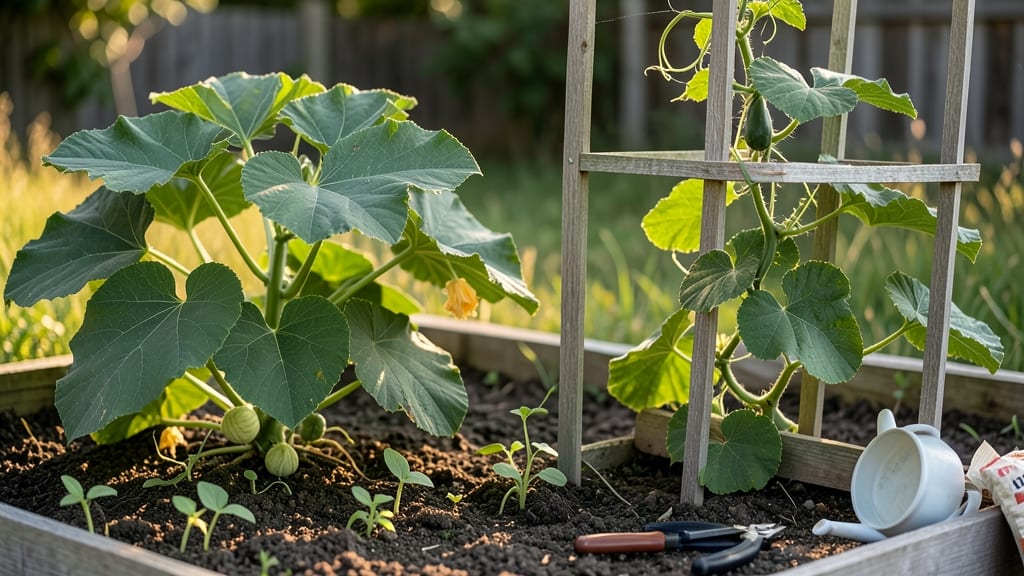
Planting squash and cucumbers together isn't just clever gardening—it's a pest-fighting power duo that saves space and boosts yields. 🌱 I learned this the hard way after losing half my cucumbers to squash bugs one summer, until I realized their natural chemistry works in our favor when planted side by side.
The squash acts as a living mulch, shading soil to keep cucumbers' roots cool, while cucumbers deter squash vine borers with their rapid growth habit. This pairing thrives in full sun with rich, well-draining soil—think compost-amended loam or raised beds filled with a 60-40 mix of topsoil and compost.
Spacing matters: give squash 3-4 feet of diameter and cucumbers 12-24 inches apart, depending on variety. Vining types need trellises to keep fruits off the ground and pests away. By mid-summer, you'll watch both plants explode with productivity—squash sprawling low while cucumbers climb, creating a lush, shade-dappled canopy.
The real magic? Fewer pests, healthier soil, and a garden that looks like a thriving ecosystem instead of a battleground. Works in ground beds or large containers (minimum 15-gallon pots for cucumbers). Just avoid planting near potatoes or aromatic herbs—their scents confuse both plants' pollinators.
Here's how to make this dynamic duo work for you!
📚 In This Guide
- What you need
- Instructions
- Tips and common mistakes
- Wrapping up and next steps
What you need
- ● Seeds or Seedlings: Squash seeds (e.g., zucchini, butternut, or pumpkin) – 3-5 seeds per plant
- ● Cucumber seeds (e.g., bush or vining varieties) – 2-3 seeds per hill
- ● Soil: Well-draining, nutrient-rich soil (pH 6.0-7.0); mix in 2-3 inches of compost before planting.
- ● Fertilizer: Balanced organic fertilizer (e.g., 10-10-10) or compost tea for a nutrient boost.
- ● Watering Supplies: Garden hose with adjustable nozzle or watering can
- ○ Drip irrigation system (optional but recommended for consistency)
- ● Planting Containers or Garden Bed: Containers: At least 5-gallon pots per plant (squash needs more space)
- ● Garden Bed: Minimum 3 feet wide x 4 feet long per pair of plants
- ● Mulch: Straw, shredded leaves, or grass clippings to retain moisture and suppress weeds.
- ● Trellis or Support (for vining cucumbers): Bamboo stakes, wire trellis, or a 6-foot tall A-frame.
- ● Companion Plants: Marigolds (to deter pests) or nasturtiums (to attract pollinators).
- ● Row Covers: Lightweight fabric to protect seedlings from pests or frost.
- ● Pruning Shears: For trimming excess vines or leaves to improve airflow.
- ● Garden Gloves: To keep hands clean while handling prickly squash vines.
- ● Plant Markers: Labels to track varieties (e.g., wooden stakes or stone markers).
How to plant squash and cucumbers together for maximum yield
This pairing works because their vines grow differently—one sprawls, the other climbs—while both thrive under the same care.
🌱 Step 1: Select Compatible Varieties and Prepare the Soil
Choose bush-type squash (like 'Eight Ball' zucchini) and vining cucumbers (like 'Straight Eight' or 'Lemon Cucumber') for best results. These varieties grow well together without competing aggressively for space. Avoid sprawling squash like 'Yellow Crookneck'—they’ll smother cucumber vines.
Test your soil’s pH first—both plants prefer 6.0-6.8. Amend heavy clay with 2-3 inches of compost and mix in 1 cup of 5-10-10 fertilizer per 10 square feet for a nutrient boost. Work the soil to a depth of 12 inches, breaking up any compacted layers. Squash and cucumbers hate soggy roots, so ensure drainage by adding 1 inch of coarse sand if your soil feels dense.
🌿 Step 2: Plant at the Right Time and Spacing
Wait until after the last frost date when soil temperatures reach at least 60°F. Plant cucumbers first—drop 2-3 seeds per hill, 1 inch deep, spacing hills 3-4 feet apart. This gives their vines room to climb trellises later. After cucumbers sprout (in 7-10 days), plant squash seeds 1 inch deep, 2-3 feet from cucumber hills, with 3-4 feet between squash plants. Squash needs more space to sprawl.
Thin seedlings to 1-2 strong plants per hill once they develop 2 true leaves. If you’re short on space, opt for compact bush cucumbers instead, but expect slightly lower yields. Mulch with 2-3 inches of straw to retain moisture and suppress weeds—both plants hate competition.
☀️ Step 3: Train Vines and Provide Support Structures
Install 5-6 foot tall trellises near cucumber hills within 2 weeks of planting. As vines grow, gently weave them upward, securing with soft plant ties. This keeps fruits off the ground, reducing rot and making harvests easier. Squash vines stay low—let them sprawl naturally, but keep them 12 inches away from cucumber trellises to prevent shading.
Here’s the thing—cucumbers need full sun (6-8 hours daily), while squash tolerates partial shade in hot climates. If your summer hits 90°F+, provide afternoon shade cloth (30-50%) for squash to prevent sunscald on fruits. Watch for powdery mildew on cucumber leaves—spray with neem oil at first signs to protect both crops.
💧 Step 4: Water and Fertilize for Dual Success
Water deeply 1-2 times weekly, aiming for 1-1.5 inches per week. Use drip irrigation to keep foliage dry—wet leaves invite diseases like downy mildew. Water at the base of plants in the morning so vines dry quickly. Squash and cucumbers both hate inconsistent moisture, so check soil 1 inch below the surface—if it’s dry, water again.
Feed plants every 2-3 weeks with liquid fertilizer (fish emulsion or compost tea). Squash is heavy feeder—look for large, dark green leaves as a sign it’s happy. Cucumbers show stress with yellowing leaves or stunted growth. If you see either, side-dress with 1 tablespoon of 10-10-10 fertilizer per plant and water deeply to activate nutrients.
✂️ Step 5: Harvest Strategically to Extend the Season
Pick cucumbers when 6-8 inches long—they’ll turn bitter if left too long. Harvest squash when firm and fully colored (usually 7-10 days after flowering). Regular picking encourages more production. Use clean pruners to avoid damaging vines, and harvest in the morning when fruits are crispest.
Here’s the secret to keeping both plants productive: prune aggressively. For cucumbers, trim side shoots (suckers) that grow below the main vine to direct energy upward. For squash, remove yellowing leaves and dead vines to improve airflow. If you see blossoms but no fruit, hand-pollinate by gently shaking plants in the morning—this tricks them into setting fruit faster.
Tips & tricks for perfect squash and cucumber companion planting
Common pitfalls—and how to sidestep every one. The difference between a thriving garden and a disappointing harvest often comes down to these overlooked details.
Soil Preparation Secret: Don't just amend the top layer of soil—dig down to 12 inches to break up compacted layers. Squash and cucumbers have deep roots that need room to spread. I learned this the hard way after watching my plants struggle in dense soil. Use a garden fork to loosen the earth, then mix in 1 inch of coarse sand if your soil feels heavy. This ensures proper drainage, which both plants absolutely hate.
Timing and Spacing Game-Changer: Plant cucumbers first—they establish roots faster and give squash seedlings a head start. The 3-4 feet spacing between cucumber hills is crucial for their vining growth, while squash needs 3-4 feet between plants to sprawl comfortably. I've seen gardeners crowd plants together, only to watch their yields suffer from competition. Mark your planting spots with stakes before you start to maintain these distances.
Sunlight Strategy: While cucumbers need full sun (6-8 hours daily), squash can handle partial shade in hot climates. If your summer hits 90°F+, provide afternoon shade cloth (30-50%) for squash to prevent sunscald on fruits. Position your trellises on the north side of cucumber plants to avoid shading them. This balance keeps both plants happy without one overshadowing the other.
Pruning Rescue Strategy: If you notice blossoms but no fruit, hand-pollinate by gently shaking plants in the morning. This mimics natural pollination and tricks the plants into setting fruit faster. For cucumbers, trim side shoots (suckers) below the main vine to direct energy upward. For squash, remove yellowing leaves to improve airflow—this prevents disease and keeps plants productive throughout the season.
Pro Tips for Plant Squash And Cucumbers Together
- Common pitfalls—and how to sidestep every one.
- Soil Preparation Secret: Don't just amend the top layer of soil—dig down to 12 inches to break up compacted layers.
- Timing and Spacing Game-Changer: Plant cucumbers first—they establish roots faster and give squash seedlings a head start.
Frequently asked questions
Got questions about planting squash and cucumbers together? You’re not alone! Here are some of the most common queries—plus straightforward answers to help you grow like a pro.
Why should I plant squash and cucumbers together?
These plants are perfect companions! Squash acts as a natural pest deterrent (especially for cucumbers), while cucumbers help shade the squash roots, keeping the soil cool and moist. Plus, they share similar growing conditions, making them efficient space-savers in your garden.
How close can I plant them together?
Give them space to thrive! Plant cucumbers 12–24 inches apart and squash 3–5 feet apart (depending on the variety). If space is tight, opt for bush varieties or use trellises for cucumbers. Just avoid overcrowding—both need room to sprawl or climb.
Can I plant squash and cucumbers in containers?
Use a large container (at least 5-gallon size per plant) with well-draining soil. Pair bush cucumbers with compact squash varieties like ‘Eight Ball’ zucchini. Ensure the container has drainage holes and place it in a sunny spot.
What pests should I watch for when growing them together?
Squash bugs and cucumber beetles are the biggest threats. Monitor leaves daily and handpick pests early. Plant nasturtiums nearby as a trap crop, or use row covers for extra protection. Healthy plants with proper spacing resist pests better!
What if my cucumbers or squash aren’t thriving together?
Check for overcrowding, poor soil, or pests first. If vines look stressed, prune gently to improve airflow. Add compost or mulch to retain moisture. If diseases (like powdery mildew) appear, space plants further apart and avoid wetting foliage when watering.
Wrapping up and next steps
Planting squash and cucumbers together isn’t just a clever trick—it’s a game-changer for your garden! 🌱 These dynamic duo thrive as companions, boosting yields, deterring pests, and even improving soil health.
Whether you’re a seasoned gardener or just starting out, this simple strategy can lead to a bountiful, low-maintenance harvest that’s hard to beat.
Ready to put these secrets to work? Start small—try a patch in a corner of your garden or even in containers—and watch your plants flourish. Happy planting, and here’s to a summer full of fresh, homegrown goodness! 🥒🎉