
Pests and Diseases
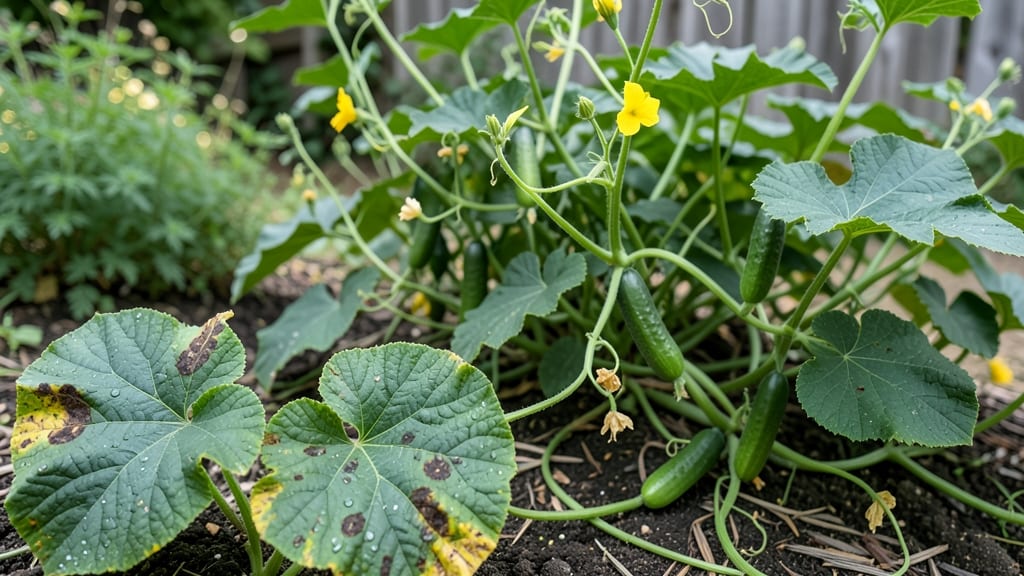
Those brown spots on cucumber leaves are a gardener’s worst nightmare—your plants are screaming for help, and fungal blight is the culprit. 🌱 I’ve battled it on my vines, and a simple baking soda spray saved my harvest. The key?
Spotting the problem early and acting fast before it ruins your plants. Those spots could be powdery mildew (white fuzzy edges), bacterial spot (tiny water-soaked marks), or even nutrient burn. Overwatering or crowded vines make it worse. The good news?
A foolproof baking soda mix stops the spread in days—no fancy chemicals needed. By the end of this, your leaves will stay vibrant green, not brown and crispy. You’ll learn the exact spray recipe, how often to apply it, and why garden hygiene matters more than you think.
Works for cucumbers, squash, and melons too. Let’s turn those spots into history!
Root Causes Behind Leaf Spots
Brown spots on cucumber leaves aren’t just a cosmetic nuisance—they’re often a cry for help from your plants. Understanding the why behind these unsightly marks is the first step to saving your harvest.
Below, we break down the most common culprits, backed by science, so you can diagnose the issue and take targeted action.
Fungi thrive in warm, humid conditions, and cucumber leaves are a prime target. Here’s how they strike:
- Downy Mildew (Pseudoperonospora cubensis)
- How it spreads: Spores land on leaves, germinate in moisture, and create yellow-green spots that turn brown with a fuzzy downy growth on the undersides.
- Why it happens: Poor air circulation, overhead watering, and temperatures between 60–80°F (15–27°C) create the perfect fungal buffet.
- Tell-tale sign: Spots appear purple-brown on top and grayish with mold underneath.
- Powdery Mildew (Erysiphe cichoracearum)
- How it spreads: White, powdery patches (like dust) spread to brown, crinkled spots as the infection worsens.
- Why it happens: High humidity (70%+) and stagnant air encourage spore germination. This fungus loves young, tender leaves.
- Key detail: Unlike downy mildew, powdery mildew doesn’t need water to spread—just humidity.
- Alternaria Leaf Spot (Alternaria cucumerina)
- How it spreads: Dark, concentric (target-like) brown spots with tiny black centers appear in wet conditions.
- Why it happens: Splashing water (from rain or irrigation) carries spores to leaves. Warm, rainy seasons (75–85°F / 24–29°C) accelerate growth.
- Pro tip: This fungus overwinters in soil and plant debris, so crop rotation is critical.
Not all brown spots are fungal. Sometimes, your cucumbers are reacting to their surroundings:
- Overwatering or Poor Drainage
- How it happens: Waterlogged soil starves roots of oxygen, causing leaves to turn yellow before browning at the edges.
- Why it’s dangerous: Weakened plants become susceptible to secondary infections (like root rot).
- Fix it fast: Check soil moisture with your finger—if the top 1–2 inches are soggy, cut back on water.
- Sunburn or Heat Stress
- How it looks: Dry, crispy brown patches on leaves exposed to direct sun, often with ragged edges.
- Why it happens: Sudden heat waves (above 90°F / 32°C) or transplant shock (moving seedlings too quickly) can scorch leaves.
- Prevent it: Use shade cloth (30–50%) during peak sun or mulch heavily to protect roots.
- Chemical Burn from Fertilizers or Sprays
- How it happens: Over-fertilizing (especially with nitrogen) or misapplying herbicides/fungicides can cause brown, necrotic patches.
- Why it’s tricky: Symptoms mimic disease, but the damage is uniform and often along leaf edges.
- Solution: Flush soil with water if over-fertilized, and never spray when leaves are wet.
Some brown spots aren’t from disease—they’re dining signs from hungry pests:
- Aphids or Spider Mites
- How they attack: These tiny pests pierce leaves, causing yellow stippling that turns brown as tissue dies.
- Why it’s worse than it seems: They excrete honeydew, a sticky substance that attracts sooty mold—a secondary fungal infection.
- Spot them: Look for fine webbing (mites) or clusters of tiny green/black bugs (aphids) on leaf undersides.
- Cucumber Beetles (Spotted or Striped)
- How they damage: These beetles chew irregular holes and scratch leaves, creating brown, ragged spots. They also transmit bacterial wilt.
- Why they target cucumbers: Adults lay eggs in soil, and larvae feed on roots, weakening plants before spots appear.
- Defend your plants: Use row covers early in the season or handpick beetles in the morning.
💡 Pro Tip: Before reaching for fungicides, test a small area with a baking soda spray (1 tsp baking soda + 1 quart water + a drop of dish soap). If spots don’t spread within 48 hours, it’s likely fungal—and your DIY remedy may work!
Quick Fixes for Leaf Spots
Now that you’ve identified the cause of those pesky brown spots on your cucumber leaves, it’s time to act! Whether it’s fungal infections, nutrient deficiencies, or environmental stressors, these solutions will help your plants bounce back—fast.
Below, we’ve mapped out practical fixes based on the root cause, plus prevention tips to keep your cucumbers thriving.
Fungal spots often look like fuzzy white patches, dark circular lesions, or water-soaked marks. The good news? Baking soda spray is your secret weapon!
🔥 Step 1: Remove Infected Leaves
- 👨🍳 Snip off heavily spotted leaves with clean pruners (sterilize with rubbing alcohol).
- 🗑️ Dispose of them in the trash—not the compost—to prevent spreading.
🍳 Step 2: Apply Baking Soda Spray (The Game-Changer!)
Mix 1 teaspoon baking soda + 1 quart water + a few drops of dish soap (or horticultural oil).
Spray both sides of leaves in the early morning or late evening (avoid direct sunlight—it can burn foliage). - ⏰ Frequency: Every 5–7 days until spots disappear (usually 2–3 weeks). - 💡 Pro Tip: Add 1 tablespoon of neem oil for extra antifungal power.
🌡️ Step 3: Improve Airflow & Reduce Humidity
- ✂️ Prune nearby plants to allow 3–4 feet of spacing between cucumbers.
- 🌬️ Use a fan on low for 1–2 hours daily to dry leaves faster.
- 💧 Water at the base (not overhead) to keep leaves dry.
🎯 Prevention:
- ✨ Rotate crops—don’t plant cucumbers in the same spot yearly.
- 🌱 Plant resistant varieties like ‘Lemon Cucumber’ or ‘Straight Eight.’
Brown spots with yellowing (chlorosis) often mean your cucumbers are hungry!
📊 Step 1: Test Your Soil
- Grab a DIY soil test kit (or send a sample to your local extension office) to confirm deficiencies.
💪 Step 2: Feed with Chelated Nutrients
- Iron deficiency? Use chelated iron spray (like Ironite) or Epsom salt (1 tablespoon per gallon of water).
- Magnesium deficiency? Sprinkle Epsom salt around the base (1 tablespoon per plant) and water deeply.
- Zinc deficiency? Apply zinc sulfate (1/4 teaspoon per gallon of water) as a foliar spray.
🥗 Step 3: Boost Organic Matter
- 🍄 Mix in compost or worm castings into the top 2 inches of soil.
- 🌿 Mulch with straw to retain moisture and nutrients.
🎯 Prevention:
- 🔥 Avoid overwatering—waterlogged soil leaches nutrients.
- 🍎 Balance pH (aim for 6.0–6.8—test kits make this easy!).
If spots look crispy or irregular (not fungal), your plants might be suffering from too much sun, wind, or chemical exposure.
🌞 Step 1: Shield from Harsh Conditions
- 🏖️ Provide afternoon shade with shade cloth (30–50%) if temps exceed 90°F (32°C).
- 🌬️ Protect from wind with burlap windbreaks or plant near a fence.
🚫 Step 2: Check for Herbicide Damage
- If spots appeared suddenly after rain, a neighbor’s glyphosate spray might be to blame.
- 💧 Flush soil with 2–3 inches of water to dilute residues.
- 🌱 Move plants to a safer location if possible.
🎯 Prevention:
- 🌱 Plant cucumbers in partial shade (especially in hot climates).
- 📅 Avoid planting near lawns treated with herbicides.
No matter the issue, these daily habits keep brown spots at bay:
- 💧 Water deeply but infrequently (1–1.5 inches per week).
- 🍃 Harvest regularly to encourage new growth.
- 🌿 Keep tools clean (sterilize pruners between plants).
🌟 Quick Recap Table:
| Cause | Fast Fix | Prevent It |
|---|---|---|
| Fungal infections | Baking soda spray + prune leaves | Improve airflow, rotate crops |
| Nutrient deficiency | Chelated iron/Epsom salt | Test soil, mulch, balance pH |
| Sun/wind damage | Shade cloth, windbreaks | Plant in partial shade |
With these fixes, your cucumber plants should recover in 2–4 weeks—and you’ll be harvesting crisp, spot-free cukes in no time! 🥒✨
Frequently asked questions
Why do my cucumber leaves have brown spots but no other symptoms?
This could indicate early-stage nutrient deficiency (like iron or magnesium) or heat stress. Check for yellowing between veins (chlorosis) or crispy edges. Test soil pH—if it's too alkaline (above 7.0), nutrients like iron become unavailable. A foliar spray of Epsom salt (1 tbsp/gal) often fixes magnesium issues within 7–10 days.
Will cutting off spotted leaves stop the problem from spreading?
Yes, but only if you sterilize your pruners (wipe with rubbing alcohol) and remove ALL infected leaves—not just the worst ones. Fungal spores can linger on tools. For severe cases, also apply a baking soda spray (1 tsp/quart water) to remaining leaves. Remove leaves before 50% of the leaf is spotted to prevent spread.
Can I still eat cucumbers with brown spots on the leaves?
Yes, but only if the spots are on leaves—never on the fruit itself. Fungal spores rarely transfer to edible parts, but wash cucumbers thoroughly before eating. If spots appear on the fruit surface (like Alternaria), discard those cucumbers. The leaves are the only concern for harvest safety.
How do I know if my cucumber spots are from disease vs. pests?
Check for these clues: Fungal spots often have fuzzy growth (powdery mildew) or dark centers (Alternaria). Pest damage usually shows holes, webbing, or sticky residue (honeydew). Look on leaf undersides—tiny bugs or eggs mean pests, while mold means fungus.
Will commercial fungicides work better than baking soda?
For most home gardeners, baking soda spray works just as well—it’s cheaper, safer, and organic. Commercial fungicides (like copper-based sprays) are stronger but can burn leaves if overused. Start with baking soda (1 tsp/quart) and only switch to chemicals if spots worsen after 2 weeks. Always follow label instructions!