
Pests and Diseases
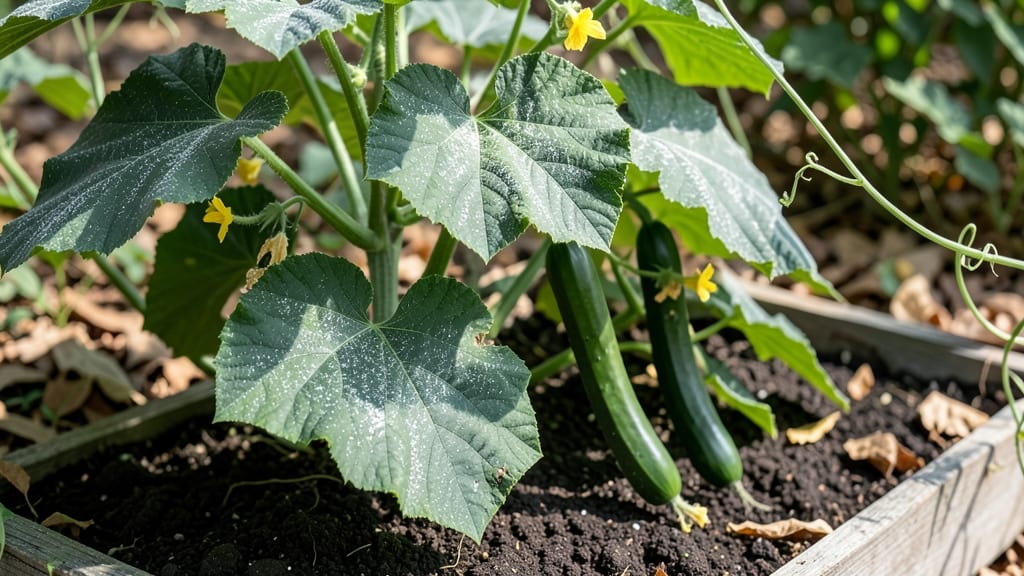
See those white spots on cucumber leaves pictures? That powdery film isn’t just unsightly—it’s stealing your harvest. 🌿 Powdery mildew spreads faster than you think, but I’ve learned the fast way to stop it before it ruins your plants.
The first step? Knowing exactly what you’re dealing with, because not all white spots are mildew.
Most likely, you’re seeing powdery mildew—the fuzzy white coating that starts on undersides of leaves and spreads like snow. But it could also be bacterial leaf spot (water-soaked spots) or even environmental stress from too much sun or poor airflow.
The key is acting within 48 hours to save your plants.
Once you confirm it’s mildew, the fix is simple: spray leaves with a baking soda mix (1 tsp baking soda + 1 quart water + a drop of dish soap) every 7-10 days.
For bad cases, neem oil or sulfur sprays work fast—but remove infected leaves immediately to stop the spread.
Prevention is easier than treatment: space plants for airflow, water at the base (never overhead), and choose mildew-resistant varieties like ‘Lemon Cucumber’ or ‘Straight Eight.’ Your next harvest will thank you.
Root Causes Behind Leaf Spots
White spots on cucumber leaves aren’t just a cosmetic issue—they’re a red flag from your plants. Understanding the why behind these spots is the first step to saving your harvest.
Below, we break down the most common culprits, backed by science, so you can diagnose the problem fast and act with confidence.
By far the most common cause of white spots on cucumber leaves is powdery mildew, a fungal disease caused by pathogens like Podosphaera xanthii or Erysiphe cichoracearum. Here’s how it happens:
- Spores in the air: Fungal spores (tiny, invisible to the naked eye) float in the environment and land on leaves. They thrive in warm, humid conditions—ideal for cucumbers!
- Surface colonization: Once spores land on a leaf, they germinate and form a white, powdery mycelium (the fuzzy spots you see). This mycelium blocks sunlight, weakening the leaf’s ability to photosynthesize.
- Rapid spread: The fungus reproduces quickly, releasing more spores that infect neighboring leaves. Without intervention, it can cover the entire plant in weeks.
💡 Pro Tip: Powdery mildew loves high humidity (70%+) and temperatures between 60–80°F (15–27°C). If your garden is shaded or lacks airflow, you’re creating the perfect breeding ground.
Not all white spots are fungal. Some are the handiwork of pests, particularly:
- Spider Mites: These microscopic pests (often Tetranychus urticae) suck plant sap, leaving behind tiny white or yellow stippling on leaves. Heavy infestations can cause leaves to dry out and turn white.
- Whiteflies: These small, white insects cluster on the undersides of leaves, excreting sticky honeydew that can foster sooty mold (a black fungal growth). Their feeding also weakens leaves, leading to white or yellow patches.
- Mealybugs: These cotton-like pests leave behind white, waxy residue as they feed. Infested leaves may also curl or develop black sooty mold.
🔍 Key Difference: Pest-related spots are often raised, sticky, or accompanied by webbing (in the case of mites). Check the undersides of leaves for tiny bugs or eggs.
Sometimes, white spots aren’t caused by pathogens or pests at all—they’re your plant’s stress response to harsh conditions:
- Overwatering or Poor Drainage: Excess moisture can lead to edema, where leaves develop white, blistered spots due to waterlogging. This is common in heavy clay soils or containers without drainage holes.
- Chemical Burn: Over-application of fertilizers (especially high-nitrogen or salt-based ones) or pesticides can cause white, crispy patches on leaves. This is often seen at the edges or tips.
- Sun Scorch: Intense afternoon sun on young or tender leaves can cause white, dry patches, especially in greenhouses or after transplant shock.
🌡️ Quick Check: Environmental stress spots are usually dry to the touch and don’t spread like a fungus. They often appear on older or younger leaves first.
While rare, severe nutrient imbalances can cause white or pale spots on cucumber leaves:
- Magnesium Deficiency: Leaves may develop interveinal chlorosis (white/yellow patches between veins), starting on older leaves. Magnesium is crucial for chlorophyll production.
- Calcium Deficiency: Can lead to white, necrotic spots on younger leaves, often accompanied by distorted growth. This is common in acidic soils.
- Excessive Salt Buildup: Poor-quality water or over-fertilization can cause white, crusty deposits on leaves, leading to burn-like symptoms.
📊 Soil Test Tip: If you suspect a deficiency, test your soil’s pH and nutrient levels. Cucumbers thrive in slightly acidic to neutral soil (pH 6.0–7.0).
Quick Fixes for Cucumber Leaf Spots
White spots on cucumber leaves can feel like a garden crisis, but the good news? Most causes have simple, effective solutions. Below, we’ve mapped the most common culprits to step-by-step fixes—plus prevention tips to keep your cucumbers thriving. 🌱💦
Signs: White, powdery patches (often on undersides of leaves) that spread like dust.
How to Fix It:
- 🧼 Remove Infected Leaves
- Snip off heavily spotted leaves with clean scissors and dispose of them in the trash (not compost). This stops the fungus from spreading.
- 💦 Water in the Morning
- Wet the leaves with water and a baking soda spray (1 tsp baking soda + 1 quart water + a drop of dish soap). This raises leaf pH, making it hostile to mildew. Spray both sides of leaves every 7–10 days.
- Pro tip: 🌡️ Avoid evening watering—wet leaves at night invite mildew to party.
- 🌿 Improve Airflow
- Prune nearby plants to create space between cucumber vines. Use stakes or trellises to elevate vines (aim for 6–12 inches off the ground).
- 🛡️ Preventative Sprays
- Neem oil (1 tsp per quart of water + surfactant) or milk spray (1 part milk to 9 parts water) applied weekly can deter mildew. Reapply after rain.
Signs: Tiny white specks (actually mites or aphid eggs), webbing, or sticky residue (honeydew).
How to Fix It:
- 🔥 Knock ‘Em Off
- Blast leaves with a strong stream of water from a hose to dislodge pests. Repeat every 2–3 days for a week.
- 🕷️ Introduce Predators
- Release ladybugs or lacewings (available at garden centers) to eat mites and aphids naturally.
- 🌿 Soap Suds Solution
- Mix 1 tbsp insecticidal soap in 1 quart of water and spray directly on pests (avoid hot sun—soap can burn leaves). Reapply after rain.
- 🛡️ Yellow Sticky Traps
- Hang yellow sticky cards near plants to catch flying pests like whiteflies.
Signs: White, crusty spots with yellow halos (often from Alternaria or Septoria fungi).
How to Fix It:
- 🚰 Adjust Watering
- Let soil dry 1–2 inches deep between waterings. Water at the base of plants (not overhead) to avoid splashing spores.
- 🧴 Copper Fungicide Spray
- Use a store-bought copper fungicide (like Bonide Copper Fungicide) or make a DIY version (1 tsp copper sulfate per gallon of water). Spray every 10–14 days.
- 🧹 Clean Up Debris
- Remove old leaves, mulch, or plant debris from around cucumbers—fungi love hiding there.
- 🌱 Rotate Crops
- If this happens yearly, don’t replant cucumbers or melons in the same spot for 2–3 years.
Signs: White, chalky spots (often from over-fertilizing or poor soil drainage).
How to Fix It:
- 📊 Test Your Soil
- Use a home soil test kit to check pH and nutrient levels. Cucumbers prefer pH 6.0–6.8.
- 💧 Flush the Soil
- Water heavily to leach excess salts or chemicals from the root zone.
- 🌿 Add Organic Matter
- Mix compost or worm castings into the soil to improve drainage and nutrient balance.
- 🚫 Avoid Over-Fertilizing
- Stick to a balanced, slow-release fertilizer (like 10-10-10) and follow package rates.
- 🌿 Space plants 2–3 feet apart for airflow.
- 🌞 Give 6+ hours of sunlight daily (shady spots breed mildew).
- 🍃 Use mulch (straw or grass clippings) to keep soil moist but not soggy.
- 🔄 Rotate crops yearly to prevent fungal buildup.
- 🛒 Buy disease-resistant varieties (like ‘Straight Eight’ or ‘Lemon Cucumber’).
Remember: The faster you act, the easier it is to save your cucumbers! If spots persist after 2 weeks, consider replacing heavily infected plants to protect the rest of your garden. 🚜🌿
Frequently asked questions
What do white spots on cucumber leaves look like compared to powdery mildew?
Powdery mildew appears as a white, powdery coating that looks like dust or frost on leaves, often starting on undersides. Other white spots may be tiny specks (spider mites), sticky residue (whiteflies), or crusty patches (nutrient burn). Check for webbing or pests hiding underneath leaves to confirm.
Can I still harvest cucumbers if the leaves have white spots?
Yes, but only if the spots are on leaves—not the fruit. Cucumbers absorb nutrients from the soil, not leaves, so the harvest remains safe. Remove heavily infected leaves to protect the plant, but don’t worry about cosmetic damage on foliage. For fungal issues, wash cucumbers thoroughly before eating.
How do I tell if white spots are from powdery mildew or environmental stress?
Mildew spreads rapidly and looks fuzzy, while stress spots are usually dry, localized, and don’t expand. Check leaf edges: mildew starts anywhere, while stress spots often appear at leaf tips or margins. Also, mildew thrives in humidity—stress spots appear in dry or extreme conditions.
Will neem oil kill spider mites causing white spots?
Neem oil is effective against spider mites, but you’ll need to apply it directly to the undersides of leaves where mites hide. Mix 1 tsp neem oil + 1 tsp dish soap per quart of water and spray every 5–7 days. For severe infestations, combine with releasing predatory mites or ladybugs for faster results.
How often should I spray baking soda solution for powdery mildew?
Spray a baking soda mix (1 tsp baking soda + 1 quart water + drop of soap) every 7–10 days during active growth. Stop spraying 2 weeks before harvest to avoid residue. For prevention, apply it weekly in humid conditions. Always spray in the morning so leaves dry quickly.