
Watering
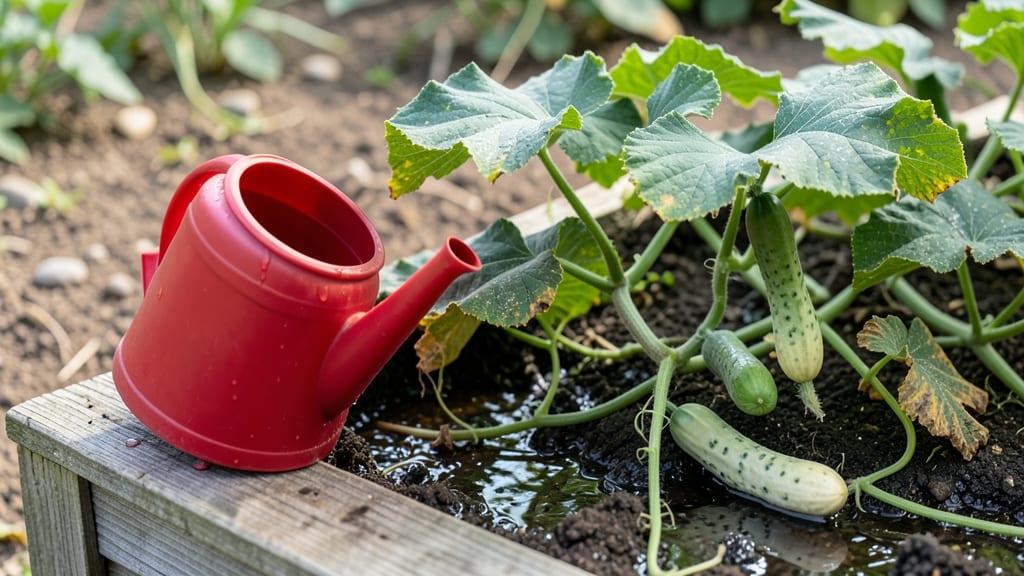
That overwatered cucumber plant in your garden—yellowing leaves, wilted stems, and that sad, limp look—means roots are suffocating. The good news? You can revive them with just three simple steps, even if they're already looking rough.
Overwatering happens when soil stays soggy for days, cutting off oxygen to roots and inviting rot. I've learned the hard way that cucumbers need consistent moisture, not puddles—think of it like a sponge that needs to breathe.
Most gardeners overdo it because cucumbers drink heavily, but too much water drowns them faster than you'd think.
Start by letting the soil dry out completely—yes, even if it means waiting a few days. Then, adjust your watering to once every 2-3 days (or when the top inch feels dry), and always water at the base, not the leaves.
Within a week, you'll see new green shoots pushing through, and those vines will bounce back stronger than ever.
Prevention is easier than rescue: use well-draining soil, containers with drainage holes, and a moisture meter to avoid guesswork. I swear by checking soil with my finger before watering—it's the foolproof way to keep cucumbers happy all season.
Root Causes Of Overwatering
When your cucumber plants look more like soggy sponges than thriving vines, the issue often boils down to a few key factors. Understanding why this happens is the first step to fixing it—and keeping your garden lush and productive. Let’s break down the science behind the sog.
Cucumbers thrive in well-draining soil, but when water pools around their roots, it creates a suffocating environment. Why does this happen?
- Compacted soil: Heavy clay or tightly packed dirt blocks water from draining, leaving roots drowning in moisture. This is especially common in gardens with high foot traffic or machinery use.
- Improper soil mix: If your planting area lacks organic matter (like compost or peat moss), water can’t move freely through the soil, leading to saturation.
- Low elevation or flat terrain: Cucumbers planted in depressions or areas where water naturally collects will absorb excess moisture, even if you’re not overwatering intentionally.
Pro tip: Test your soil’s drainage by digging a hole, filling it with water, and timing how long it takes to drain. If it takes more than 6 hours, your soil may be too dense. Amend it with perlite, sand, or coconut coir to improve airflow. 💡
Cucumbers have shallow roots and need consistent moisture—but that doesn’t mean they want a daily bath. Overwatering often stems from:
- Watering on a schedule: Many gardeners stick to a rigid routine (e.g., every morning at 8 AM), but cucumbers need water when the top 1–2 inches of soil are dry—not on a clock.
- Light, frequent showers: A little water every day can prevent deep root growth, making plants dependent on surface moisture. This leads to weak roots that can’t handle even moderate rainfall.
- Ignoring weather conditions: Watering heavily after a rainstorm or during high humidity tricks plants into thinking they’re thirsty when they’re not.
Science note: Cucumber roots thrive in aerated, slightly moist soil (not soggy). Overwatering triggers anaerobic conditions, where roots suffocate and harmful bacteria like Pythium take over. ⚠️
If your cucumbers are growing in pots, buckets, or fabric grow bags, lack of drainage holes is a silent overwatering culprit. Here’s how it backfires:
- Waterlogged roots: Without an exit for excess water, containers act like a bathtub, keeping roots submerged. This cuts off oxygen and triggers rot.
- False dryness at the surface: The topsoil may feel dry to the touch, but the roots below are drowning. This misleads gardeners into adding more water.
- Nutrient leaching: Overwatered containers flush away essential nutrients (like nitrogen and potassium) before roots can absorb them.
Fix it fast: Drill drainage holes in the bottom of containers and add a layer of gravel or broken pottery to prevent clogging. Always use a saucer under pots to catch runoff—don’t let plants sit in standing water. 🔧
Cucumbers spread like vines on a mission—but when they’re planted too closely, they compete for oxygen and water in the soil. Here’s the chain reaction:
- Reduced airflow: Dense foliage traps moisture, creating a humid microclimate that encourages fungal diseases (like powdery mildew) and root rot.
- Water pooling: In crowded beds, irrigation water can’t evaporate quickly, leading to prolonged soil saturation.
- Weak root systems: Plants fight for nutrients and space, resulting in shallow, stressed roots that can’t handle excess water.
Spacing rules: Give cucumbers 3–4 feet between plants in rows and 5–6 feet between hills. If growing vertically, space them 12–18 inches apart to improve airflow. ✨
Now that you know the real reasons behind the sog, the next step is reviving your cucumbers—without repeating the same mistakes. Stay tuned!
Revive Your Plants in 3 Steps
Overwatering can turn your cucumber plants into sad, droopy messes—but don’t panic! With the right adjustments, you can nurse them back to health and prevent future soggy soil disasters. Here’s how to diagnose the problem and fix it fast, along with long-term tips to keep your vines thriving.
Before you do anything else, halt all watering immediately. Soggy roots can’t breathe, and overwatering often leads to root rot, which is irreversible. Instead, focus on draining excess moisture and giving your plants a chance to recover.
- Check the soil: Stick your finger about 1–2 inches deep. If it feels damp or clumps together, your cucumbers are still drowning. - Inspect the leaves: Yellowing or wilting leaves are classic signs of overwatering.
If the stems feel mushy when squeezed, root rot may have set in. - Move potted plants: If your cucumbers are in containers, relocate them to a shady spot to slow evaporation and reduce stress.
Pro Tip 💡: If root rot is confirmed (black, mushy roots), you’ll need to repot the plant in fresh, dry soil—but more on that later.
Healthy cucumbers need well-draining soil and airflow to bounce back. Here’s how to create the perfect recovery environment:
For Garden Beds:
- Loosen compacted soil: Use a fork or trowel to aerate the top 6 inches of soil around the base of the plant.
This helps roots access oxygen. - Add organic matter: Mix in compost or coconut coir to improve drainage and retain just enough moisture without suffocating roots. - Mulch lightly: Apply a thin layer of straw or wood chips (1–2 inches) to prevent soil from drying out too quickly—but avoid piling mulch against the stem.
For Potted Cucumbers:
- Repot if necessary: If the soil is waterlogged and roots are rotting, transfer the plant to a clean pot with fresh, well-draining potting mix (add perlite or vermiculite for extra aeration).
- Elevate pots: Place pots on feet or a tray to prevent water pooling at the bottom.
- Check drainage holes: Ensure they’re not clogged—this is a common overwatering trap!
Pro Tip 🌡️: Morning watering is key—it gives excess moisture time to evaporate before nightfall, reducing humidity-related stress.
Now that your cucumbers are in better shape, it’s time to rewrite the watering rules for a soggy-free future.
How Much Water Do Cucumbers Really Need? Cucumbers are thirsty but hate wet feet.
Aim for: - 1–1.5 inches of water per week (including rainfall), delivered deeply 2–3 times per week (not daily shallow watering). - Water at the base: Avoid wetting leaves to prevent fungal diseases like powdery mildew. - Use the "finger test": Water only when the top 1–2 inches of soil feel dry.
Signs You’re Overwatering (Again):
| Symptom | Cause | Fix It |
|---|---|---|
| Yellow lower leaves | Root suffocation | Reduce water; improve drainage |
| Wilting despite wet soil | Root rot or compacted soil | Repot; aerate soil |
| Moldy soil smell | Fungal growth | Remove affected soil; add compost |
Pro Tip ✨: Drip irrigation or soaker hoses deliver water directly to roots, reducing waste and runoff—perfect for cucumbers!
Once you’ve revived your plants, lock in their success with these habits: - Upgrade your soil: Amend garden beds with sand or compost to boost drainage.
For pots, use a 50/50 mix of potting soil and perlite. - Monitor weather: Skip watering if rain is forecasted—cucumbers can handle extra moisture in moderation. - Prune wisely: Remove yellow or diseased leaves to redirect energy to healthy growth. - Rotate crops: If you grow cucumbers yearly, rotate planting spots to prevent soil-borne diseases.
Final Thought: Overwatering is a common mistake, but with these fixes, your cucumber vines will be back to vigorous growth in no time—and you’ll avoid the soggy soil trap next season! 🥒💚
Frequently asked questions
How can I tell if my cucumber plant is overwatered vs. underwatered?
Check the soil first—if it's soggy or smells musty, you're overwatering. Overwatered cucumbers show yellowing leaves (starting at the bottom), wilting despite wet soil, and mushy stems. Underwatered plants have crispy, brown leaf edges and dry soil that pulls away from the pot. The key difference? Overwatered plants feel heavy and limp, while underwatered ones feel light and brittle.
Can I save a cucumber plant with root rot from overwatering?
It depends on how severe the rot is. If only the outer roots are affected, trim the damaged areas with clean scissors and repot in fresh, dry soil with perlite. For advanced rot (black, mushy roots), the plant may not recover—start fresh with healthy seedlings. Always use pots with drainage holes to prevent future issues.
What's the best way to water cucumbers to avoid overwatering?
Use the "finger test"—water only when the top 1-2 inches of soil feel dry. Aim for deep watering 2-3 times per week (1-1.5 inches total) rather than daily shallow watering. Morning watering is ideal—it gives soil time to dry before evening. For containers, ensure they have drainage holes and elevate them to prevent water pooling.
Will overwatered cucumbers still produce fruit?
Probably not well. Overwatering stresses plants, diverting energy to survival rather than fruit production. You might get a few small cucumbers, but they'll likely be bitter or deformed. Focus on reviving the plant first—once roots recover, you'll see better yields. Healthy cucumbers need balanced moisture, not constant sogginess.
How long does it take to revive an overwatered cucumber plant?
With proper care, you'll see improvement in 3-7 days. Stop watering immediately, improve drainage, and move plants to shade. New growth should appear within a week if roots aren't severely damaged. For containers, repotting in fresh soil speeds recovery. Patience is key—don't rush by adding more water too soon.