
Blooming
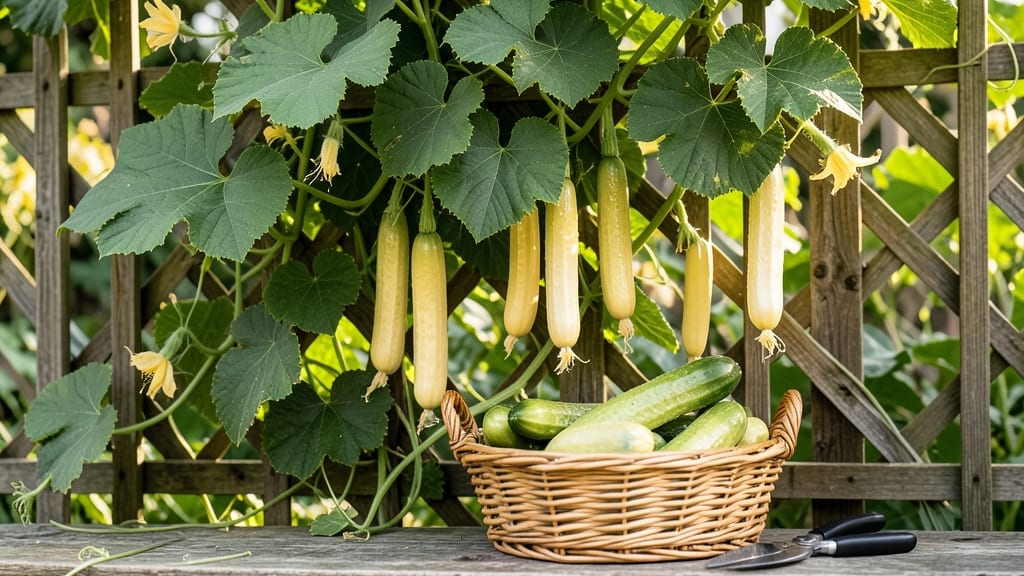
Growing long yellow cucumbers on a trellis means 55-day harvests of crisp, sun-kissed fruits that outshine store-bought varieties. 🌱 I learned the hard way that these beauties need pole training from day one—skimp on support, and you’ll end up with tangled vines and bruised cucumbers. The payoff?
A vertical garden that saves space, looks stunning, and produces 2-3 times more than bush varieties in the same footprint. The secret starts with well-draining soil rich in compost—these cucumbers hate soggy roots. Plant seeds 1 inch deep, 3-4 feet apart, and give them a 6-foot-tall trellis to climb.
Water deeply twice a week (more in heatwaves), always at the base to avoid fungal diseases. Prune regularly to encourage upward growth, and watch as those 12-inch-long yellow gems develop their signature sweetness.
By mid-summer, you’ll be harvesting 1-2 cucumbers per plant per week, their golden skins glowing in the sunlight. The flavor? Crisp, mild, and slightly sweet—perfect for slicing or pickling. Just beware of cucumber beetles; row covers early on keep them at bay.
Works in containers too if you use a sturdy trellis and dwarf varieties. Let’s get those vines climbing!
Root Causes Of Stunted Growth
If your long, slender cucumbers are turning a pale yellow instead of their usual vibrant green, it’s often a sign that something’s off in their care routine. Understanding these root causes can help you diagnose the issue quickly and restore your plants to peak productivity.
Let’s break down the most common reasons why this happens—and how to fix them.
A yellowing cucumber vine is often a cry for help from your plant’s roots. Cucumbers are heavy feeders, and when they don’t get enough of the right nutrients, their leaves and stems start to lose their green pigment (chlorophyll).
This condition is called chlorosis, and it’s usually tied to deficiencies in:
- Nitrogen (N): Leads to overall yellowing, starting with older leaves. Nitrogen is essential for leaf growth and photosynthesis.
- Magnesium (Mg): Causes yellow patches between the veins of leaves (interveinal chlorosis), a classic sign of deficiency.
- Iron (Fe): Results in yellowing between veins, especially in younger leaves. Iron is critical for chlorophyll production.
- Zinc (Zn) or Manganese (Mn): Can also trigger yellowing, often in younger leaves first.
Why it happens: Over time, soil nutrients deplete, especially if you’re growing cucumbers in the same spot year after year. Poor soil structure, high pH levels (alkaline soil), or even overwatering can wash away essential minerals. Alkaline soil (pH > 7.0) locks out iron and manganese, even if they’re present, because these nutrients become less available to plant roots.
Actionable fix:
- Test your soil’s pH and nutrients with a DIY kit or send a sample to a local extension office. Aim for a pH of 6.0–6.8 for cucumbers.
- Add compost or well-rotted manure to replenish organic matter and improve nutrient availability.
- Use a balanced fertilizer (10-10-10 or 5-5-5) at planting and a foliar spray with chelated iron or magnesium (like Epsom salt for magnesium) if chlorosis is severe.
- For container growers, flush the soil with water every 4–6 weeks to prevent salt buildup from fertilizers.
Cucumbers are thirsty plants, but they’re also sensitive to water stress—whether from drought or waterlogging. Yellowing can be a sign that your plant is either drowning or thirsty, and both scenarios disrupt nutrient uptake.
🔥 Overwatering & Root Rot
When soil stays soggy for too long, roots suffocate and can’t absorb oxygen or nutrients. This leads to:
- Yellowing leaves (especially lower ones).
- Wilting despite wet soil.
- A foul smell from the soil.
Why it happens: Cucumbers need 1–2 inches of water per week, but their roots are shallow and prone to rot in heavy, compacted, or poorly draining soil. Overwatering is common in containers without drainage holes or in clay soils that hold too much moisture.
🌡️ Underwatering & Stress
On the flip side, inconsistent watering causes:
- Yellowing edges on leaves (scorching).
- Dropped flowers or small, bitter fruits.
- Stunted vine growth.
Why it happens: Cucumbers have shallow roots and need consistent moisture. Fluctuations in soil moisture stress the plant, leading to nutrient uptake issues and yellowing. Mulching helps retain moisture, but if you forget to water, the plant reacts quickly.
Actionable fix:
- Check soil moisture 1 inch below the surface before watering. If it’s dry, water deeply until it drains out the bottom.
- Use drip irrigation or soaker hoses to deliver water directly to the roots and avoid wetting leaves (which can cause fungal diseases).
- Improve drainage by amending heavy soil with compost or perlite.
- For containers, ensure they have drainage holes and use a lightweight potting mix.
Cucumbers are sun-worshippers, but too much or too little light can turn their leaves yellow. Here’s how:
🌞 Too Much Sun (Sunburn)
In hot climates or during intense afternoon sun, cucumber leaves can scorch, turning yellow or brown at the edges.
Why it happens: While cucumbers need 6–8 hours of full sun daily, sudden heatwaves or reflective surfaces (like white walls or pavement) can overcook leaves. This is common in plastic mulch or black plastic that traps heat.
🌑 Too Little Sun (Leggy Growth)
If cucumbers don’t get enough light, they’ll stretch (etiolate) and produce weak, yellowing leaves.
Why it happens: Shade from trees, buildings, or overcrowding reduces photosynthesis. Weak stems and yellowing leaves follow, as the plant struggles to produce energy.
Actionable fix:
- Provide afternoon shade cloth (30–50%) in extreme heat (above 90°F/32°C) to prevent scorching.
- Space plants 3–4 feet apart to allow airflow and sunlight penetration.
- Use reflective mulch (like aluminum foil) around the base to bounce light onto leaves.
- If growing in containers, place them in the sunniest spot and rotate pots weekly for even exposure.
Yellowing cucumbers can also be a symptom of hidden pests or diseases that disrupt nutrient flow. Here’s how to spot them:
🐜 Sap-Sucking Pests
Insects like aphids, spider mites, or cucumber beetles drain plant sap, causing:
- Yellowing or curling leaves.
- Sticky residue (honeydew) on leaves.
- Black sooty mold (a fungal growth fed by honeydew).
Why it happens: These pests weaken the plant by blocking nutrient transport in the phloem (the plant’s “veins”). Heavy infestations lead to chlorosis as the plant can’t produce enough chlorophyll.
🍄 Fungal Infections
Diseases like powdery mildew or downy mildew thrive in humid conditions and cause:
- Yellowing leaves with white/powdery patches (powdery mildew).
- Brown/yellow spots on upper leaf surfaces (downy mildew).
Why it happens: Fungi clog stomata (leaf pores), reducing the plant’s ability to absorb CO₂ and nutrients. This leads to yellowing as the plant’s energy production slows.
Actionable fix:
- Inspect leaves daily for pests. Spray infested areas with neem oil or insecticidal soap for mild cases.
Fixing Your Twisted Cucumber Vines
Growing long, vibrant yellow cucumbers should be a rewarding experience—but when your vines twist, yellow, or underperform, it’s time to take action. Below are practical, step-by-step solutions tailored to the most common issues, from nutrient deficiencies to pest attacks.
Each fix includes prevention tips to keep your pole-trained cucumbers thriving for years.
Yellowing leaves or stunted growth? Your cucumbers might be crying out for essential nutrients. Here’s how to diagnose and fix:
🔥 Lack of Nitrogen (Pale Yellow Leaves)
Fix:
- Apply a balanced fertilizer (10-10-10 or 5-5-5) at half-strength around the base of the plant, not touching the stem.
- Use compost tea or a fish emulsion for a quick nitrogen boost.
- Top-dress with aged manure (chicken, cow, or worm castings) for slow-release nutrition.
Prevention: ✅ Test your soil before planting (ideal pH: 6.0–6.8). ✅ Side-dress with compost every 2–3 weeks during fruiting. ✅ Rotate crops—never plant cucumbers in the same spot two years in a row.
🍳 Magnesium Deficiency (Yellow Edges on Older Leaves)
Fix:
- Sprinkle Epsom salt (magnesium sulfate) around the base—1 tablespoon per plant, watered in.
- Use a liquid seaweed extract (rich in magnesium) as a foliar spray.
- Add dolomitic lime to the soil if your pH is too low (below 6.0).
Prevention: ✅ Mulch heavily to retain magnesium in the soil. ✅ Avoid overwatering, which leaches nutrients.
👨🍳 Calcium Deficiency (Blossom End Rot or Weak Vines)
Fix:
- Crush eggshells into a fine powder and mix into the top 2 inches of soil.
- Use crushed oyster shell or gypsum for a slow calcium release.
- Spray with a calcium nitrate solution (1 tsp per gallon of water) weekly.
Prevention: ✅ Keep soil consistently moist (not soggy) to prevent uptake issues. ✅ Avoid high-nitrogen fertilizers during flowering/fruiting—balance with potassium.
Yellowing or wilting vines? Pests or diseases could be the culprit. Act fast with these organic and chemical-free solutions:
🥘 Powdery Mildew (White Fuzzy Coating + Yellowing)
Fix:
- Spray with a baking soda solution (1 tbsp baking soda + 1 tsp dish soap + 1 gallon water) every 5–7 days.
- Apply neem oil (1 tsp per quart of water) in the early morning or evening to avoid burning leaves.
- Prune infected leaves and destroy them (do not compost).
Prevention: ✅ Space plants 18–24 inches apart for airflow. ✅ Water at the base (avoid wetting leaves). ✅ Plant disease-resistant varieties like ‘Lemon Cucumber’ or ‘Straight Eight’.
🔪 Cucumber Beetles (Chewed Leaves + Yellow Spots)
Fix:
- Handpick beetles (drop them in soapy water) early in the morning.
- Use row covers (fine netting) to block adults before they lay eggs.
- Plant trap crops like radishes or nasturtiums nearby to lure them away.
Prevention: ✅ Interplant with basil or dill—these repel beetles naturally. ✅ Rotate crops to break beetle life cycles.
⏰ Fungal Infections (Wilting + Yellowing Vines)
Fix:
- Remove infected plants immediately to prevent spread.
- Apply copper fungicide (follow label instructions) or hydrogen peroxide spray (3% solution, 1:10 water ratio).
- Improve drainage—raise beds or add sand/compost to heavy clay soil.
Prevention: ✅ Solarize soil in late summer (cover with clear plastic for 4–6 weeks) to kill fungal spores. ✅ Avoid overhead watering.
Heat, cold, or poor airflow can turn your cucumbers yellow. Adjust these factors for a stress-free harvest:
💡 Overwatering (Root Rot + Yellowing)
Fix:
- Let the top 1–2 inches of soil dry out between waterings.
- Improve drainage by mixing in perlite or coconut coir.
- Water deeply but infrequently (early morning is best).
Prevention: ✅ Use drip irrigation to deliver water directly to roots. ✅ Avoid soggy soil—cucumbers hate "wet feet."
🎯 Underwatering (Droopy, Yellow Leaves)
Fix:
- Water thoroughly until moisture reaches 12+ inches deep.
- Mulch with straw or grass clippings to retain moisture.
- Check soil moisture with a finger—if dry past 1 inch, water immediately.
Prevention: ✅ Monitor weather forecasts—drought stress is common in hot climates. ✅ Group plants together to create a microclimate with higher humidity.
- Train vines properly: Use soft ties or spiral trellis supports to avoid breaking stems.
- Harvest regularly: Pick cucumbers every 2–3 days to encourage more production.
- Rotate fertilizers: Alternate between nitrogen (growth) and potassium (fruit development) phases.
Remember: Most issues are preventable with consistent care. Once you spot a problem, act fast—your long, golden cucumbers are worth it! 🌿💛
Frequently asked questions
What’s the best trellis height for long yellow cucumbers?
For these vining beauties, aim for a 6-foot-tall trellis or taller. Their long, slender fruits need vertical space to develop properly without touching the ground. A sturdy spiral trellis or T-post with twine works best—just ensure it can support 12+ inch cucumbers without bending.
Can I grow long yellow cucumbers in containers?
Use a 5-gallon container minimum with a trellis or cage for support. Choose a dwarf variety like ‘Lemon Cucumber’ and ensure the pot has drainage holes. Place in full sun and water consistently—container-grown cucumbers dry out faster.
Why are my long yellow cucumbers turning bitter?
Bitterness usually means your cucumbers stayed on the vine too long or didn’t get enough water. Harvest when they’re 10–12 inches long and bright yellow. Also, avoid over-fertilizing with nitrogen—focus on a balanced 10-10-10 fertilizer instead.
How do I prevent powdery mildew on my cucumbers?
Space plants 18–24 inches apart for airflow, water at the base (never leaves), and apply a baking soda spray (1 tbsp baking soda + 1 tsp dish soap per gallon of water) weekly. For extra protection, plant marigolds nearby—they naturally repel fungal spores.
When’s the best time to harvest long yellow cucumbers?
Pick them when they’re 10–12 inches long and fully yellow, usually 55–65 days after planting. Use a sharp knife or pruners to avoid damaging the vine. Harvesting frequently encourages more production—aim for 1–2 cucumbers per plant per week at peak season.