
Diseases
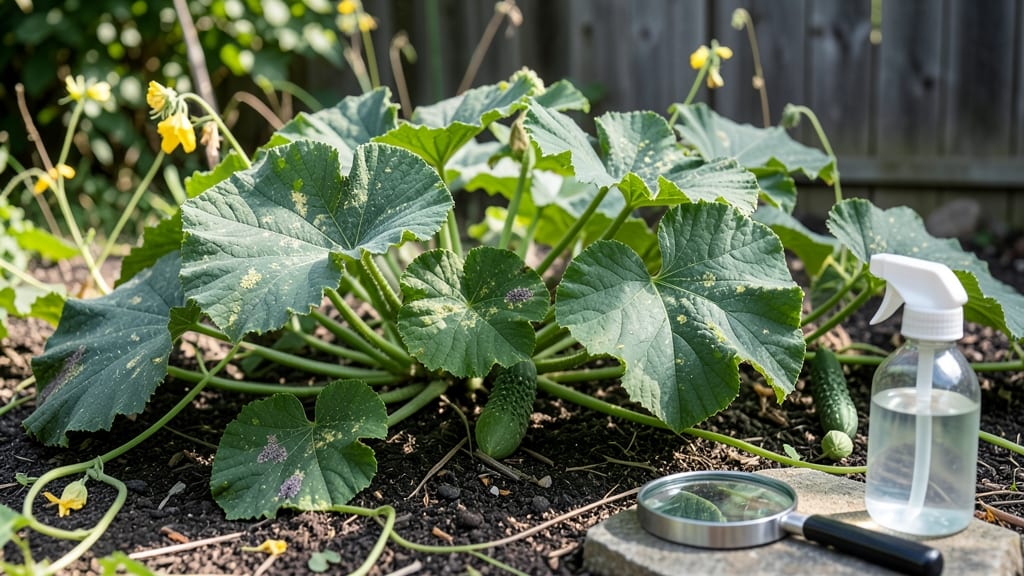
That first faint yellowing on your cucumber leaves might signal early stage downy mildew cucumber diseases, and spotting them fast could mean the difference between a thriving harvest and a sad, deflated vine—here’s how to fight back. 🌱 I learned these three critical steps that stop it dead.
The problem starts with warm, humid days and poor airflow, giving spores the perfect chance to spread. You’ll spot yellow patches on top leaves first, then that telltale white, fuzzy growth on the undersides by evening. The good news?
Catching it early means you can still rescue your plants without losing the whole crop. With the right mix of copper spray, pruning for airflow, and a quick soil drench, you’ll see new growth within days.
The key is acting before the disease moves to the fruit—because once it does, those cucumbers are ruined. I’ve saved entire plants this way, and you can too.
Start by removing all infected leaves immediately (don’t compost them—toss them far from the garden). Then spray the remaining foliage with a copper fungicide or a homemade mix of baking soda and dish soap—both work if applied every 5-7 days.
For extra protection, add row covers during high-humidity periods to block spores from landing. The long-term fix? Crop rotation and better spacing between plants to improve airflow. I’ve gone three seasons without downy mildew since switching to trellised cucumbers and rotating crops away from the cucurbit family.
Even in humid climates, these steps make a difference.
Don’t wait until the white fuzz appears—by then, the damage is done. Early action means you’ll still get a harvest, and your plants will bounce back stronger.
The first spray is the most critical, so don’t skip it. With these methods, you’ll break the cycle and keep your cucumbers healthy all season.
Root Causes Of Downy Mildew
Downy mildew isn’t just a random strike—it’s the result of a perfect storm of environmental and biological factors. Understanding these causes is your first line of defense. Below, we break down the key culprits 🌧️🍃 that turn your cucumbers into a fungal buffet.
---
Downy mildew is caused by the obligate parasite Pseudoperonospora cubensis, a fungus-like organism (oomycete) that thrives in damp conditions. Unlike true fungi, it lacks chitin in its cell walls, making some traditional fungicides less effective.
- How it spreads: - Spore germination: Spores land on cucumber leaves (or other cucurbits like squash or melons) and require free water (like dew or rain) to germinate within 4–6 hours. - Infection cycle: Once spores germinate, they penetrate leaf tissue, forming haustoria (root-like structures) to siphon nutrients, leading to yellowing (chlorosis) and white, fuzzy growth on leaf undersides. - Rapid reproduction: A single infected leaf can produce 10,000+ spores per day under ideal conditions (60–80°F and high humidity).
- Why it targets cucumbers: P. cubensis specifically attacks cucurbitaceae plants because they produce beta-cucurbicins, a compound that triggers spore germination. Sadly, this means resistance is rare—most cucumber varieties are susceptible.
---
Downy mildew loves specific weather patterns—think of it as the fungal equivalent of a heatwave and monsoon combined.
- High humidity (70%+): - Spores survive longer in moist air, increasing the chance of infection. - Leaf wetness (from dew, rain, or overhead watering) gives spores the 4–6 hours they need to germinate. - Pro tip: 🌡️ Avoid watering in the evening—wet leaves overnight = mildew party.
- Moderate temperatures (60–80°F): - Optimal range for spore production: Below 50°F or above 90°F slows the fungus, but 68–77°F is its sweet spot. - Nighttime temperatures: If nights stay above 60°F with high humidity, expect outbreaks within 5–7 days.
- Rain and wind: - Spores hitchhike on raindrops or wind currents, spreading up to 10 miles from infected plants. - Overhead irrigation (like sprinklers) splashes spores directly onto leaves—drip irrigation is your best friend here.
---
Downy mildew can’t survive in dry, breezy conditions—it needs stagnant, humid microclimates to thrive.
- Why crowded plants lose: - Reduced airflow = higher humidity trapped between leaves. - Shaded foliage stays cooler and wetter longer, creating the perfect mildew nursery. - Actionable fix: 🌿 Space plants 2–3 feet apart and prune lower leaves to improve air circulation.
- Monoculture farming: - Growing only cucumbers in a row creates a spore reservoir. Rotate crops with non-host plants (like beans or tomatoes) to break the cycle.
---
Stressed cucumbers are easy targets for P. cubensis. Push your plants too hard, and they’ll roll out the welcome mat for mildew.
- Nutrient deficiencies: - Low nitrogen (N): Leads to weak growth and thin leaves—easy entry points for spores. - Potassium (K) deficiency: Reduces cell wall strength, making leaves more susceptible to penetration. - Fix: 💪 Use a balanced fertilizer (10-10-10) and side-dress with compost for potassium.
- Overhead watering or injury: - Physical damage (from hail, pests, or rough handling) creates wounds where spores can invade. - Salt buildup (from poor-quality water) stresses roots, weakening the plant’s immune response.
- Late planting or early harvest: - Cucumbers planted too late in the season may face cooler nights + warm days, triggering mildew just as they’re maturing.
--- Downy mildew never truly disappears—it overwinters and waits for its next meal.
- How it persists: - On plant debris: Infected leaves or vines left in soil release spores for 1–2 years. - In soil: P. cubensis can survive as oospores (resting spores) in cold, moist conditions. - On weeds: Plants like morning glory or pigweed act as alternative hosts, keeping the fungus alive.
- Your cleanup checklist: - Remove all infected plants (🔥 burn or compost them—do not leave in the garden). - Rotate crops: Avoid planting cucurbits in the same spot for 3–4 years. - Solarize soil (cover with clear plastic for 4–6 weeks in summer) to kill oospores.
Quick Fixes for Fungal Blight
Downy mildew on cucumbers doesn’t have to mean the end of your harvest—act fast with these targeted solutions to stop the spread and save your plants. Below, we break down the most common causes and pair them with practical fixes, from organic remedies to cultural tweaks.
Prevention tips are woven in to keep future outbreaks at bay.
---
Downy mildew thrives in damp, stagnant conditions—think of it as the fungal equivalent of a sauna for pathogens.
How to Fix It: - 🔥 Increase Air Circulation - Prune aggressively to open up the canopy. Remove lower leaves (within 6–12 inches of the soil) to improve airflow and reduce humidity near the plant base. - Space plants 18–24 inches apart if replanting. Crowding = mildew’s best friend. - Use a fan (even a small oscillating fan on low) for 10–15 minutes daily to dry leaves faster.
- 🌡️ Reduce Nighttime Moisture - Water in the morning (before 10 AM) so foliage dries by evening. Avoid overhead watering—use drip irrigation or soaker hoses. - Mulch with straw or wood chips (2–3 inches thick) to prevent soil splashing onto leaves.
- 💡 Pro Tip: If humidity is consistently high (e.g., greenhouse or rainy climate), install a dehumidifier or ventilate your grow space with open windows or vents.
---
Even a single spore can hitch a ride from last year’s plants or old compost.
How to Fix It: - 🔪 Remove and Destroy Infected Plants - Pull affected plants immediately (don’t compost them—bag and trash them). Mildew spores can linger in plant debris for years. - Sterilize tools with 70% isopropyl alcohol or a 10% bleach solution (1 part bleach to 9 parts water) between uses.
- 🌱 Sanitize Your Soil - Solarize the soil (if possible): Cover beds with clear plastic for 4–6 weeks in hot sun to kill spores.
Or, amend soil with composted manure (fresh manure feeds mildew—avoid it!). - Add beneficial microbes: Mix in mycorrhizal fungi or trichoderma harzianum (a natural soil fungus that outcompetes mildew).
- 💡 Pro Tip: Buy certified disease-free seeds from reputable suppliers. If you save seeds, dry them thoroughly (below 10% moisture) and store in a cool, dark place.
---
Downy mildew spreads fast—you need a preventive shield before it takes hold.
How to Fix It: - 👨🍳 Apply Copper-Based Sprays (Organic Option) - Bordeaux mixture (copper sulfate + lime) or copper fungicide (like Cueva or Organic Copper). Spray every 7–10 days at dawn or dusk (avoid direct sun to prevent leaf burn). - DIY copper spray: Mix 1 tsp copper sulfate + 1 tsp baking soda + 1 drop liquid soap in 1 gallon of water. Shake well and spray undersides of leaves (where spores hide).
- 🥘 Use Preventative Fungicides - Neem oil (1% solution): Spray every 5–7 days to disrupt spore germination. Best used as a preventative, not a cure. - Serenade ASO (bacillus subtilis): A biological fungicide that colonizes plant surfaces.
Reapply after rain. - Conventional options: Chlorothalonil or mancozeb (follow label rates).
- ⏰ Timing Is Everything - Start spraying at first sign of mildew (yellowing leaves or grayish fuzz on undersides). Don’t wait—spores spread in 48 hours. - Reapply after rain (fungicides wash off).
- 💡 Pro Tip: Rotate fungicides to prevent resistance. For example, alternate copper spray one week and neem oil the next.
---
Once you’ve treated the current outbreak, lock in these habits to stop future infections:
| Prevention Step | How to Do It | |------------------------------|---------------------------------------------------------------------------------| | 🌿 Choose Resistant Varieties | Plant ‘Diva’, ‘Aristotle’, or ‘Corinto’ cucumbers (bred for mildew resistance). | | 🌞 Maximize Sunlight | Ensure 6+ hours of direct sun daily—mildew loves shade. | | 🍂 Clean Up Debris | Remove all plant waste after harvest (even healthy-looking vines). | | 🌡️ Monitor Soil pH | Test soil pH—aim for 6.0–6.8.
Acidic soil (below 6.0) weakens plants. | | 🌱 Crop Rotation | Never plant cucumbers, melons, or squash in the same spot two years in a row. |
--- Final Note: Early intervention is key—catch downy mildew in the first 24–48 hours, and you’ll save 80% of your crop. Combine airflow fixes + copper sprays + soil sanitation, and you’ll break the mildew cycle for good. 🚀
Frequently asked questions
What does early stage downy mildew look like on cucumber leaves?
Start by checking the top leaves for faint yellow patches that look like water-soaked spots. Flip leaves over—you’ll see tiny white or gray fuzzy spots (the mildew spores) on the undersides by late afternoon. These spots grow rapidly in humid conditions, so act fast if you spot them.
Can I still harvest cucumbers if downy mildew is present?
Yes, but only if the disease hasn’t reached the fruit yet. Check the undersides of leaves first—if you see mildew there, harvest any cucumbers within 24 hours to prevent spore contamination. Avoid harvesting from infected plants once the white fuzz appears on the leaves.
How often should I spray copper fungicide for prevention?
Apply copper spray every 7–10 days during humid weather or after rain. For organic prevention, mix 1 tsp copper sulfate + 1 tsp baking soda + 1 drop dish soap per gallon of water and spray at dawn or dusk. Always reapply after heavy rain since fungicides wash off.
Will neem oil stop downy mildew from spreading?
Neem oil helps prevent mildew but won’t cure an active infection. Use it as a prophylactic spray every 5–7 days during high-risk periods (warm, humid nights). For existing mildew, combine neem with copper sprays or prune infected leaves immediately.
Can I save my cucumber plants if downy mildew is already spreading?
You can still recover them with aggressive action! First, prune all infected leaves (don’t compost them—bag and trash). Then apply a copper fungicide and improve airflow by spacing plants wider. For severe cases, add row covers during high-humidity periods to block spores.