
Fertilization
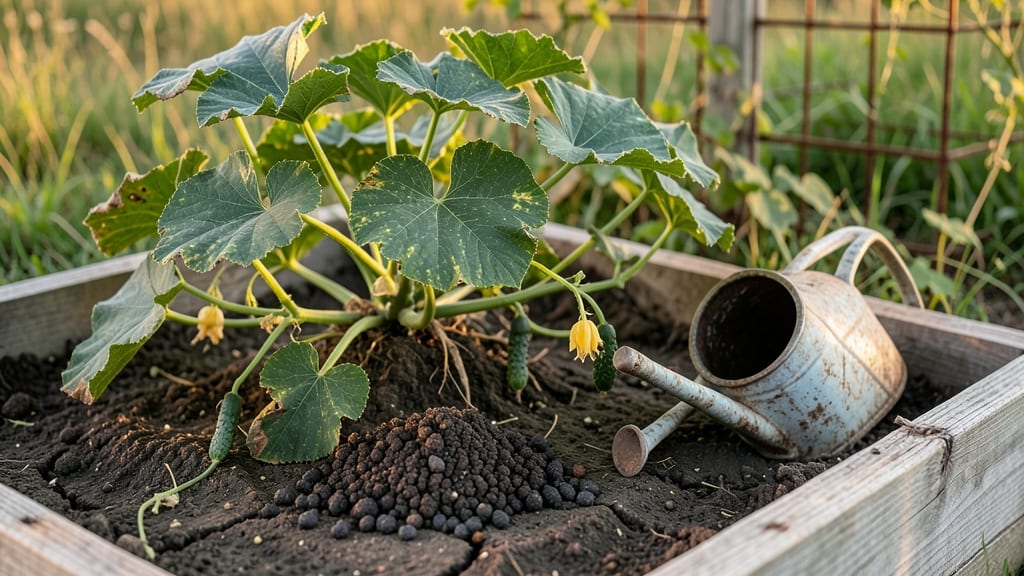
A cucumber plant nutrient deficiency can turn your leaves yellow overnight—but these three simple fixes will revive your plants before the season’s over. 🌱 The first clue is where the yellowing starts: older leaves mean nitrogen deficiency, while new leaves turning yellow signals potassium or magnesium issues.
Most gardeners overlook the soil test step, but that’s where the real answers hide—pH levels, organic matter, and hidden deficiencies. Within 10-14 days of the right fix, you’ll see fresh green leaves and vines pushing out new growth.
The secret isn’t just throwing fertilizer at the problem—it’s matching the deficiency to the exact amendment your soil needs. Works for both container and in-ground cucumbers, and the same principles apply to squash and melons too. Let’s turn those sad plants into productive powerhouses!
📚 In This Guide
- What you need
- Instructions
- Tips and common mistakes
- Wrapping up and next steps
What you need
- ● Soil test kit – To analyze pH and nutrient levels (e.g., Luster Leaf or MySoil).
- ● Balanced fertilizer – A 10-10-10 or 5-5-5 NPK blend (1–2 lbs per 100 sq ft).
- ● Epsom salt (magnesium sulfate) – 1 tbsp per gallon of water (for magnesium deficiency).
- ● Iron chelate or liquid iron supplement – 1 tsp per gallon (for chlorosis).
- ● Compost or worm castings – 2–3 cups per plant (organic nutrient boost).
- ● pH adjustment kit – Lime (to raise pH) or sulfur (to lower pH) if needed.
- ● Garden trowel or hand fork – For gentle soil mixing.
- ● Watering can or hose with spray nozzle – For foliar sprays.
- ○ Spray bottle – For targeted nutrient solutions (optional).
- ● Gloves – To protect hands from soil and chemicals.
- ● Measuring cups/spoons – For precise fertilizer dosing.
- ● Slow-release fertilizer granules – For long-term nutrient supply.
- ● Mulch (straw or wood chips) – Retains moisture and prevents nutrient loss.
- ● Plant food with micronutrients – For trace element deficiencies (e.g., zinc or manganese).
- ● Grow lights or LED bulbs – If indoor growing (to prevent light-stress deficiencies).
How to diagnose and fix cucumber plant nutrient deficiencies
Yellowing leaves don’t mean your cucumbers are doomed—here’s how to pinpoint the exact deficiency and restore health.
🌿 Step 1: Identify the Deficiency by Leaf Pattern
Nitrogen deficiency shows as yellowing between leaf veins (chlorosis) starting with the oldest leaves. This is your plant’s way of saying, "I need more protein to build new growth." Magnesium deficiency, however, causes yellowing between veins on mature leaves but often with purple stems—a classic sign of struggling to transport nutrients. I’ve seen this most often in hot, dry conditions where magnesium leaches out of the soil.
Potassium deficiency reveals itself as yellowing leaf edges that eventually turn brown and crispy. The plant looks like it’s suffering from thirst, but it’s actually starving for minerals that regulate water balance. Take a close look at the youngest leaves—if they’re curling and showing brown scorch marks, potassium is the culprit. I always check the soil pH here, because potassium becomes less available in soil pH above 7.0.
💧 Step 2: Apply Targeted Nutrient Solutions
For nitrogen deficiency, dissolve 1 tablespoon of blood meal in a gallon of water and apply directly to the soil. I like to do this in the early morning when evaporation is lowest, so the roots can absorb it immediately. Water the soil thoroughly first to help distribute the nutrients downward. You’ll see new growth within 7-10 days—watch for dark green leaves emerging from the center of the plant.
If it’s magnesium deficiency, mix 1 tablespoon of Epsom salt (magnesium sulfate) into a gallon of water and apply as a foliar spray or soil drench. I’ve had the best results with foliar feeding because magnesium moves slowly through the soil. Spray until the leaves glisten, focusing on the undersides where stomata absorb nutrients most efficiently. Repeat every 7-10 days until new leaves show uniform green color without yellow patches.
For potassium deficiency, use a balanced liquid fertilizer (like 5-5-5) diluted to half-strength. Potassium moves easily through the soil, so a soil drench works best. I apply it in the late afternoon to prevent leaf burn from the sun. You’ll know it’s working when the leaf edges stop browning and the plant regains turgor (that crisp, healthy snap when you touch the leaves).
✂️ Step 3: Adjust Care Practices for Long-Term Prevention
After treating the deficiency, prune any severely damaged leaves—they’re not just unsightly, they’re nutrient sinks that drain energy from healthy growth. Use clean, sharp pruners and cut just above a leaf node where new growth can emerge. I always sterilize my tools with rubbing alcohol to prevent introducing pathogens through open wounds.
Boost soil health by adding 1-2 inches of compost around the base of the plant. This improves microbiome activity, which helps break down organic matter into available nutrients. Water deeply after amending to help the compost integrate. I’ve found that mulching with straw retains moisture and slowly releases nutrients as it decomposes—critical for preventing future deficiencies.
Finally, test your soil pH every 4-6 weeks during the growing season. Cucumbers thrive in pH 6.0-6.8, and even slight deviations can lock out essential nutrients. If your soil is too acidic (below 6.0), sprinkle lime lightly and work it into the top 2 inches of soil. If it’s too alkaline (above 7.0), add sulfur or peat moss to lower the pH gradually. A simple home pH test kit gives you all the data you need without lab costs.
Tips & tricks for diagnosing and fixing cucumber nutrient deficiencies
Here’s what nobody tells you about reviving struggling cucumber plants—these insights come from years of watching nutrient deficiencies go from bad to thriving.
Leaf Pattern Clues: When diagnosing deficiencies in Step 1, compare the oldest leaves to the newest growth—this contrast reveals the exact nutrient missing. Nitrogen deficiency often starts with the bottom leaves turning yellow between veins, while magnesium deficiency affects mature leaves with purple stems. I’ve seen potassium deficiency show up first on the youngest leaves as crispy edges, which is counterintuitive but critical to spot early.
Foliar Spray Technique: For magnesium deficiency treatments in Step 2, focus your foliar spray on the undersides of leaves where stomata absorb nutrients most efficiently. Use a fine mist setting on your spray bottle and apply in the early morning to prevent evaporation. I’ve found that adding a drop of dish soap to the Epsom salt solution helps it adhere better to leaf surfaces without clogging the stomata.
Soil pH Timing: Testing soil pH every 4-6 weeks during the growing season (as mentioned in Step 3) is non-negotiable for preventing deficiencies. I recommend testing right after watering when nutrients are most mobile in the soil. If your pH is consistently outside the 6.0-6.8 range, consider using a calcium carbonate supplement for alkaline soils or sulfur for acidic soils—both adjust pH gradually over time.
Pruning Strategy: When pruning damaged leaves in Step 3, make cuts at a 45-degree angle just above a leaf node. This encourages new growth while minimizing stress on the plant. I always sterilize my pruners with rubbing alcohol between cuts to prevent spreading disease through open wounds. Remove no more than 20% of the plant’s foliage at once to avoid shocking the cucumber.
Pro Tips for Cucumber Plant Nutrient Deficiency
- Here’s what nobody tells you about reviving struggling cucumber plants—these insights come from years of watching nut...
- Leaf Pattern Clues: When diagnosing deficiencies in Step 1, compare the oldest leaves to the newest growth—this contr...
- Foliar Spray Technique: For magnesium deficiency treatments in Step 2, focus your foliar spray on the undersides of l...
Frequently asked questions
What are the most common signs of nutrient deficiency in cucumber plants?
Yellowing leaves (especially older ones), stunted growth, weak stems, and poor fruit production are red flags. Nitrogen deficiency causes pale yellow leaves, while potassium deficiency leads to brown leaf edges. Magnesium issues show as yellow patches between veins. Check your plants’ leaves for these clues!
How quickly can I fix a nutrient deficiency in my cucumbers?
With the right fix (like foliar sprays or soil amendments), you’ll see improvements in 1–2 weeks for mild deficiencies. Severe cases may take 3–4 weeks. Act fast—early intervention prevents permanent damage. Pro tip: Combine soil amendments with organic matter (like compost) for long-term health!
Can I use household items to fix cucumber nutrient deficiencies?
Yes! For nitrogen, try diluted urine (1:10 water ratio) or coffee grounds. Potassium? Banana peels (blended into water) work wonders. Calcium? Eggshell tea (crushed shells steeped in water) helps. Just avoid overdoing it—test soil first if possible!
Should I remove yellow leaves from my cucumber plant?
Only remove heavily damaged or diseased leaves—healthy yellowing leaves still photosynthesize! Prune with clean scissors to avoid spreading issues. Focus on fixing the root cause (like adding fertilizer or adjusting pH) instead. Warning: Don’t over-prune—stress weakens plants further.
What if my cucumbers still look bad after adding fertilizer?
Check for other issues first: pests, over/under-watering, or pH imbalances (ideal: 6.0–6.8). If symptoms persist, test your soil (DIY kits work!) or switch fertilizers. Sometimes, micronutrient deficiencies (like iron or zinc) need targeted solutions—try a balanced liquid feed or chelated supplements.
Wrapping up and next steps
Identifying and fixing nutrient deficiencies in your cucumber plants doesn’t have to be overwhelming—just follow the three simple steps we’ve shared! 🌱 By paying attention to leaf color, soil health, and balanced fertilization, you’ll help your plants thrive and enjoy a bountiful harvest. Don’t let yellowing leaves slow you down—take action today!
Your next step? Grab your pH test kit and a balanced fertilizer, then give your cucumbers the love they deserve. Happy gardening! 🌿