
Plants
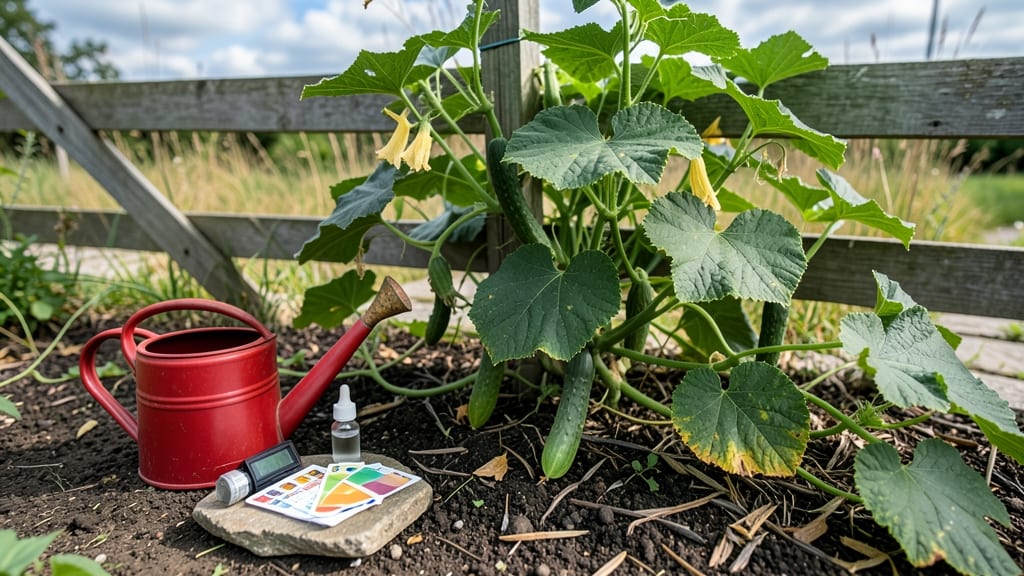
Your cucumber plant leaves turning yellow isn’t just a cosmetic issue—it’s a cry for help from your vines. 🌱 I’ve seen this happen when plants are either drowning in water or starving for nutrients, and the fix is simpler than you’d think.
The key is spotting the pattern: are the yellow leaves starting at the bottom (overwatering) or scattered randomly (nutrient deficiency)? Most gardeners panic when they see yellowing, but the real game-changer is checking the soil moisture and leaf texture.
Overwatered plants feel soggy at the roots, while nutrient-deficient ones show crispy edges. A quick soil test or leaf inspection tells you exactly what your cucumbers need—whether it’s less water or a balanced fertilizer.
By the end of these 3 simple steps, your plants will bounce back with vibrant green leaves and stronger vines. The best part? You’ll spot the early warning signs next time and act before it becomes a bigger problem. Let’s turn those yellow leaves around.
Here’s the thing—yellowing isn’t always about water. Sometimes, it’s a nutrient deficiency screaming for attention. My plants used to struggle until I started using a balanced 10-10-10 fertilizer every 2 weeks during peak growth. The difference? Healthier leaves, more flowers, and bigger cucumbers.
If you’re not sure whether it’s water or nutrients, dig into the soil. If it’s damp but not soggy, the issue is likely nutrients. A quick foliar spray with seaweed extract can work wonders in just a few days.
The goal is to give your plants what they’re missing before the yellow spreads.
Once you’ve fixed the root cause, keep an eye on your cucumbers. Prevent future yellowing by watering at the base (not the leaves) and mulching to retain moisture without drowning the roots. A little maintenance now means fewer surprises later—and more harvests to enjoy.
This works for both container and in-ground cucumbers, so don’t let yellow leaves stress you out. With these steps, your plants will be back to thriving in no time.
Root Causes Behind Yellowing Leaves
When your cucumber plant’s leaves start turning yellow, it’s often a cry for help—whether from hidden pests, overzealous watering, or a silent nutrient crisis. Understanding the why behind the yellowing is the first step to reviving your plant.
Below, we break down the most common culprits and their scientific triggers, so you can diagnose the issue like a pro.
💡 Pro Tip: Yellow leaves often signal a plant drowning in its own pot!
Cucumbers thrive in well-draining soil with moderate moisture, but too much water (or soggy roots) suffocates them. Here’s the science: - Oxygen deprivation: Roots need oxygen to absorb nutrients.
Waterlogged soil displaces oxygen, leading to anaerobic conditions—where harmful bacteria thrive and roots rot. - Nutrient leaching: Excess water washes away essential minerals (like nitrogen and potassium) that leaves rely on for their green pigment (chlorophyll). - Fungal infections: Stagnant moisture invites Pythium or Phytophthora, fungi that attack roots and block nutrient uptake.
How to spot it:
- Yellowing starts at older leaves (near the base) and spreads upward.
- Soil smells musty or feels squishy when pressed.
- Roots appear mushy or black if inspected.
📊 Nutrient deficiencies don’t just happen—they’re often a chain reaction from poor soil health.
Yellowing leaves can scream different nutrient deficiencies, each with a unique pattern:
- Nitrogen (N) deficiency:
- Older leaves turn pale yellow first (a classic "chlorosis" sign).
- Why? Nitrogen is mobile in plants—when scarce, it’s "recycled" from older leaves to new growth.
- Fix: Feed with a balanced fertilizer (e.g., 10-10-10) or compost.
- Magnesium (Mg) deficiency: - Yellowing appears as interveinal chlorosis (yellow between veins, with green veins). - Why? Magnesium is central to chlorophyll production.
Deficiency often stems from over-alkaline soil (pH >7.0) or poor organic matter. - Fix: Apply Epsom salt (1 tbsp per gallon of water, sprayed on leaves) or dolomitic lime to adjust soil pH.
- Iron (Fe) deficiency:
- Young leaves turn bright yellow while veins stay green.
- Why? Iron is immobile in plants—new growth suffers first. Common in calcareous (high-pH) soils, where iron becomes locked and unavailable.
- Fix: Use chelated iron (like Iron Chelate) or acidify soil with sulfur.
- Potassium (K) deficiency: - Yellowing edges or "scorch" on older leaves (often with brown spots). - Why? Potassium regulates osmotic balance and water retention.
Deficiency weakens cell walls, making leaves prone to burn or necrosis. - Fix: Apply potassium sulfate or wood ash (for a mild boost).
🌡️ Think of your cucumber plant like a thirsty athlete—it can’t perform without proper hydration.
- Water stress: When soil dries out, roots struggle to supply leaves with water and nutrients, causing chlorosis (yellowing) as chlorophyll breaks down. - Heat stress: High temperatures increase transpiration (water loss) faster than roots can replenish it.
Yellowing often pairs with wilting or crispy leaf edges. - Soil compaction: Hard, dry soil restricts root growth, limiting the plant’s ability to access moisture.
How to spot it:
- Yellowing is uniform (not patchy) and starts on older leaves.
- Soil feels bone-dry 1–2 inches below the surface.
- Leaves may curl or feel rough to the touch.
Fix:
- Water deeply (1–2 inches per week) and mulch to retain moisture.
- Shade cloth can protect plants from midday sun (especially in hot climates).
- Aerate compacted soil with a fork or organic matter (like coconut coir).
🐜 Not all yellowing is about water or nutrients—sometimes, tiny (or not-so-tiny) pests are to blame.
- Spider mites:
- Symptoms: Tiny yellow stipples or bronzing on leaves, often with fine webbing.
- Why? These pests pierce cells to suck sap, causing chlorosis and leaf drop.
- Fix: Spray with neem oil or insecticidal soap.
- Aphids:
- Symptoms: Sticky residue (honeydew) on leaves, curled or yellowed new growth.
- Why? Aphids inject toxins and steal sap, starving leaves of nutrients.
- Fix: Blast off with water or use pyrethrin-based sprays.
- Fungal diseases (e.g., Powdery Mildew):
- Symptoms: Yellow patches with white, powdery fungal growth (often on upper leaves).
- Why? Fungi clog stomata (leaf pores), blocking gas exchange and nutrient uptake.
- Fix: Improve air circulation, spray baking soda solution (1 tsp baking soda + 1 quart water + a drop of soap), or use copper fungicide.
- Root-knot nematodes:
- Symptoms: Stunted growth, yellowing leaves, and galls (lumpy roots).
- Why? These microscopic worms damage roots, reducing water/nutrient absorption.
- Fix: Plant marigolds (natural nematode repellent) or apply beneficial nematodes (Steinernema species).
🌱 Even the hardiest cucumbers can throw a fit when uprooted or shocked.
- Transplant shock: Moving cucumbers (especially from seedling trays) can sever fine root hairs, slowing nutrient uptake.
- Temperature swings: Cold drafts or sudden heat disrupt enzyme activity in leaves, causing chlorosis.
- Poor soil transition: If repotting, nutrient imbalances in new soil can trigger yellowing.
Fix:
- Acclimate plants gradually to outdoor conditions (harden off seedlings).
- Avoid transplanting during extreme heat or cold.
- Amend new soil with compost to ease the transition.
Quick Fixes for Yellowing Leaves
Reviving your cucumber plant’s vibrant green leaves starts with pinpointing the root cause—and then acting fast. Below, we’ve mapped out practical, step-by-step solutions for each common trigger, plus prevention tips to keep your plants thriving.
No green thumb? No problem. These fixes are beginner-friendly and backed by gardeners who’ve been there.
Signs: Yellowing lower leaves, mushy stems, or waterlogged soil. Why it happens: Too much moisture suffocates roots, blocking oxygen and nutrients.
How to Fix It
🔥 Step 1: Pause Watering Immediately Skip watering for 3–5 days to let the soil dry out. If the soil feels soggy 2 inches below the surface, hold off longer.
🍳 Step 2: Check Your Pots or Beds
- Potted plants? Ensure pots have drainage holes (add them if missing).
- Garden beds? Amend heavy clay soil with compost or perlite to improve aeration.
👨🍳 Step 3: Repot if Needed If roots are rotting (black, slimy, or smelly), repot in fresh, sterile potting mix. Trim away mushy roots with sterilized scissors.
🥘 Step 4: Adjust Your Watering Routine
- Water deeply but infrequently—aim for 1–1.5 inches per week (check with a rain gauge or tuna can).
- Water in the morning to reduce evening moisture buildup.
- Use the finger test: Stick your finger 1–2 inches into soil; water only if it’s dry.
💡 Pro Tip: If your plant is in a container, raise it on pot feet or a saucer to prevent water pooling.
Signs: Yellowing edges or bleached, crispy patches, especially on upper leaves.
How to Fix It
🔥 Step 1: Move to Partial Shade Cucumbers love 6–8 hours of sun daily, but afternoon heat (12–4 PM) can scorch leaves. Relocate to a spot with morning sun + dappled shade (e.g., under a sheer curtain or near taller plants).
🍳 Step 2: Mulch to Retain Moisture Spread 2–3 inches of straw or wood chips around the base to keep roots cool and hydrated.
👨🍳 Step 3: Boost Humidity (If Needed)
- Mist leaves lightly in the morning (avoid evening misting to prevent fungus).
- Place a tray of water near the plant to increase ambient moisture.
🥘 Step 4: Water at the Root Use a soaker hose or drip irrigation to deliver water slowly to the soil (not the leaves) to avoid evaporation.
🌡️ Pro Tip: If temperatures hit 90°F+ (32°C+), consider shade cloth (30–50%) to protect delicate leaves.
Signs: Pale yellow leaves (chlorosis) starting on older leaves, stunted growth, or weak stems.
How to Fix It
🔥 Step 1: Test Your Soil Grab a DIY soil test kit (or send a sample to a local extension office) to check pH (ideal: 6.0–6.8) and nutrient levels.
🍳 Step 2: Fertilize Smartly
- Nitrogen (N) deficiency? Use a balanced fertilizer (10-10-10) or compost tea.
- Magnesium (Mg) deficiency? Sprinkle Epsom salt (1 tbsp per gallon of water) every 2 weeks.
- Iron (Fe) deficiency? Apply chelated iron or use old coffee grounds (rich in iron).
👨🍳 Step 3: Improve Soil Health
- Add organic matter: Mix in well-rotted manure, worm castings, or coconut coir.
- Avoid over-fertilizing: Too much salt can burn roots—always water after fertilizing.
🥘 Step 4: Foliar Feed for Quick Relief Spray leaves with a liquid seaweed extract or fish emulsion (diluted per instructions) for fast nutrient absorption.
💡 Pro Tip: Yellowing from nitrogen? Side-dress with alfalfa meal (rich in N) or used tea bags (composted).
Signs: Yellowing with spots, holes, or webbing; sticky residue (aphids); or fungal growth.
How to Fix It
🔥 Step 1: Identify the Culprit
- Aphids/spider mites? Tiny bugs or webbing on undersides of leaves.
- Fungal disease (e.g., powdery mildew)? White powdery patches or yellow spots with black dots.
- Bacterial infection? Water-soaked yellow areas that spread quickly.
🍳 Step 2: Remove Infested Parts
- Snip off yellow/diseased leaves with sterilized pruners (don’t compost—bin them!).
- Wipe leaves with a soapy water solution (1 tsp mild soap per quart of water).
👨🍳 Step 3: Apply Natural Remedies | Problem | Solution | |----------------------|-----------------------------------------------------------------------------| | Aphids/Mites | Spray with neem oil (1 tsp + 1 tsp soap per quart of water).
Repeat weekly. | | Fungal Disease | Use copper fungicide or baking soda spray (1 tbsp + 1 tsp oil per gallon). | | Bacterial Infection | Remove plant if severe; sterilize tools and avoid overhead watering. |
🥘 Step 4: Prevent Future Outbreaks
- Rotate crops yearly to prevent soil-borne diseases.
- Space plants for airflow (cucumbers need 2–3 feet between vines).
- Water at the base (not leaves) to reduce fungal spores.
✨ Pro Tip: Ladybugs and lacewings eat aphids—invite them with dill or marigolds as companion plants!
Keep your cucumbers lush and green with these long-term habits: ✅ Water consistently—stick to a schedule (morning is best). ✅ Monitor soil moisture—use a moisture meter if unsure. ✅ Rotate crops—don’t plant cucumbers in the same spot yearly. ✅ Use raised beds for better drainage in heavy clay soils. ✅ Prune regularly—remove yellow leaves to redirect energy to healthy growth.
Frequently asked questions
Why do only the older leaves turn yellow first?
This is usually a sign of nitrogen deficiency or overwatering. Nitrogen is mobile in plants, so when it's scarce, the plant "recycles" it from older leaves to new growth. If the yellowing starts at the bottom and spreads upward, check your soil moisture—soggy roots can't absorb nutrients properly.
Can yellow leaves come back green?
Yes, but only if you catch it early! Severely yellowed leaves won't recover, but new growth can turn green again within 1-2 weeks if you fix the underlying issue (like adjusting watering or adding fertilizer). Focus on healthy leaves—they'll produce more chlorophyll and help the plant bounce back.
What's the difference between yellow leaves from overwatering vs. nutrient deficiency?
Key clues: Overwatered plants show yellowing on older leaves with mushy stems and musty soil. Nutrient-deficient plants may have yellow edges (potassium) or yellow between veins (magnesium). Check both soil moisture and leaf patterns to diagnose correctly.
Is it safe to use Epsom salt on cucumber plants?
For magnesium deficiency, mix 1 tablespoon of Epsom salt per gallon of water and spray on leaves every 2 weeks. It works fast—you'll often see improvement within 3-5 days. Just don't overdo it, as too much magnesium can cause other nutrient imbalances.
Why are my container-grown cucumbers turning yellow faster than in-ground plants?
Containers dry out faster and can overheat, leading to water stress or nutrient depletion. Use larger pots (5+ gallons), water more frequently, and add organic matter to retain moisture. Also, move containers to partial shade during peak afternoon sun.