
How To
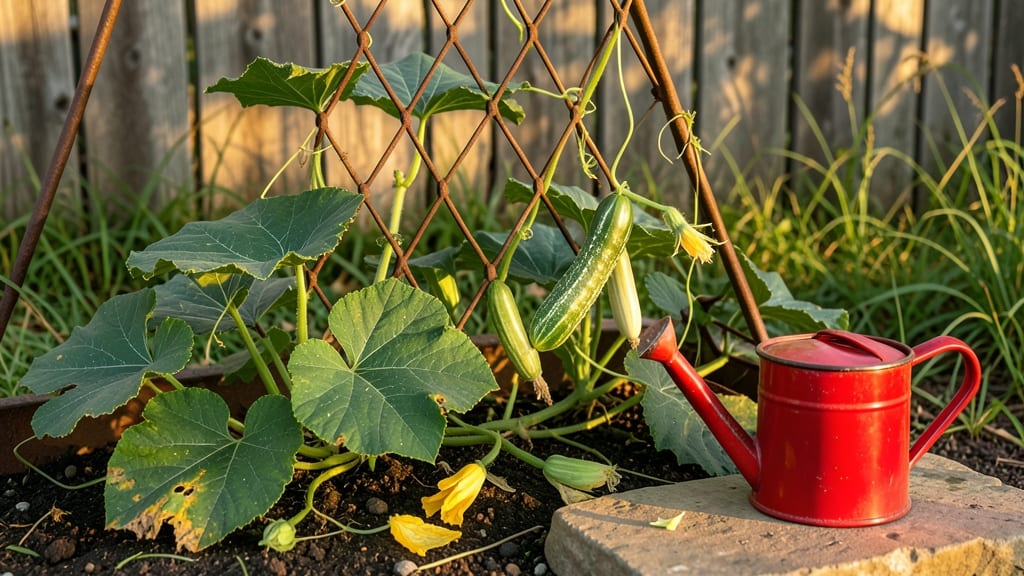
When cucumbers get too much water, they develop yellowing leaves, soft stems, and swollen fruit with bitter flavors while struggling to absorb nutrients. Reduce watering immediately, improve drainage, and prune affected foliage to revive the plant without killing it.
Too much water creates a suffocating environment for cucumber roots, cutting off oxygen and preventing nutrient uptake. 🌱 This leads to weakened vines that can't support fruit properly, causing them to swell unnaturally and develop that unpleasant bitterness.
I've seen gardeners accidentally drown their plants by watering on a strict schedule—cucumbers actually prefer consistent moisture but hate soggy soil. The key is checking soil moisture with your finger: if the top inch feels damp, wait before watering again.
What makes this tricky is that cucumbers need plenty of water during fruiting, but their roots can't handle saturation. 💦 The solution often involves improving drainage by mixing in perlite or sand, and redirecting water away from the base of the plant.
Even better, invest in a moisture meter to track soil conditions accurately—this simple tool has saved more of my plants than you'd think!
💡 In This Article
- How Overwatering Damages Cucumber Plants
- Step-by-Step Recovery Guide for Waterlogged Cucumbers
How overwatering damages cucumber plants
When cucumber roots sit in soggy soil for too long, they suffocate from lack of oxygen—a process called anoxia.
This triggers a chain reaction where roots can't absorb water or nutrients efficiently, even though the soil appears wet. 🌱 The plant's vascular system struggles to transport sugars and minerals from leaves to fruit, leading to those telltale signs: yellowing leaves (chlorosis) and soft, mushy stems.
I've seen this happen when gardeners water cucumbers daily without checking soil moisture, thinking more water equals better growth.
The real damage happens at the cellular level. Waterlogged soil creates anaerobic conditions where harmful bacteria thrive, producing toxic compounds that damage root hairs—the plant's nutrient absorbers. This explains why overwatered cucumbers often develop powdery mildew (a fungal infection) and bitter-tasting fruit.
The excess moisture also leaches vital nutrients like nitrogen and potassium from the soil, leaving plants starved even when surrounded by water. 💦 What's worse, the swollen cucumbers you see are actually a stress response—the plant tries to store excess water internally, but this dilutes sugars and creates that unpleasant bitterness.
Photosynthesis gets disrupted too. When roots can't function properly, the plant diverts energy away from leaf production and toward survival. You'll notice older leaves yellowing first (a sign of nutrient deficiency), while new growth appears stunted.
The vines become weak and may even collapse under the weight of overwatered fruit. This is why recovery requires both reducing water and improving soil aeration—roots need that oxygen to bounce back.
Consider this comparison: healthy cucumber roots should feel spongy but firm when gently squeezed, like a damp kitchen sponge. Overwatered roots turn mushy and blacken at the tips—a clear sign of rot. The good news is that cucumbers are resilient if you catch the problem early.
By improving drainage and adjusting your watering routine, you can often revive plants that would otherwise be lost to overzealous care.
One common misconception is that cucumbers need constant moisture to produce fruit. While they do require consistent water during fruiting (about 1-1.5 inches per week), their roots can't handle saturation.
The key is watering deeply but infrequently—enough to moisten the soil 6-8 inches deep—rather than frequent shallow watering that keeps surface soil damp. This mimics natural rainfall patterns and prevents waterlogging.