
Companion Plants
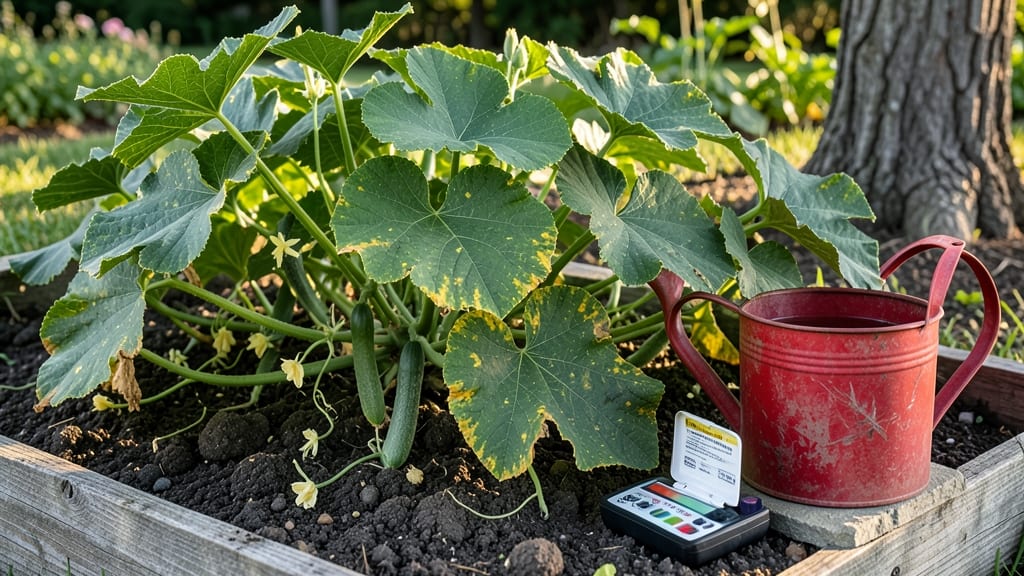
Your cucumber plant leaves turning yellow can mean one of two things: either you're drowning the roots or starving the soil. 🌱 I've seen this happen more than I'd like to admit—especially in hot summers when thirsty plants get overwatered or when spring soil is still too rich in last year's nutrients.
The good news? Both problems have quick fixes that don't require fancy tools or expensive amendments.
First, check the soil moisture by sticking your finger an inch deep—if it's soggy, you're overwatering. Cucumbers hate wet feet, so let the top 2-3 inches dry out between waterings. For nutrient issues, look for pale yellow between veins (nitrogen deficiency) or yellow with green veins (magnesium).
A balanced organic fertilizer or a handful of Epsom salt in the watering can often brings them back to vibrant green in 5-7 days.
What you'll end up with is a plant that recovers fast and keeps producing those crisp, cool cucumbers all season. The key is acting quickly—once yellow spreads to new growth, the damage is harder to reverse. I've saved plants this way even when they looked hopeless at first glance.
For prevention, mulch heavily to retain moisture without soggy soil and test your soil every spring. If your plants keep struggling despite these fixes, it might be time to consult a local extension office—they can check for hidden issues like fungal diseases or soil pH problems that need professional attention.
Root Causes Behind Yellowing Cucumber Leaves
Yellowing leaves on your cucumber plants aren’t just a random quirk of nature—they’re often a cry for help from your plants. Understanding the why behind the yellow is the first step to saving your harvest.
Below, we break down the most common triggers, backed by science, so you can diagnose and act fast.
When cucumber leaves turn yellow, excess moisture is often the culprit. Cucumbers thrive in well-drained soil, but soggy roots can’t absorb oxygen, leading to root rot (Pythium or Phytophthora fungi). Symptoms start with yellowing lower leaves, followed by wilting or mushy stems.
Why it happens:
- Waterlogged soil displaces oxygen in root zones, suffocating roots.
- Compacted or clay-heavy soil prevents excess water from draining, trapping roots in anaerobic conditions.
- Overhead watering (especially at night) promotes fungal growth, weakening leaves.
Red flags to watch for:
- Yellowing begins at the older leaves (not just tips).
- Soil smells sour or rotten when damp.
- Leaves feel soft or spongy to the touch.
Yellowing leaves can signal a lack of essential nutrients, each with its own "fingerprint" on the plant. Cucumbers are heavy feeders, and deficiencies show up fast.
| Nutrient | Yellowing Pattern | Why It Happens |
|---|---|---|
| Nitrogen (N) | Entire leaf turns yellow, veins stay green | Nitrogen fuels leaf growth; deficiency stunts chlorophyll production. Common in poor or depleted soil. |
| Magnesium (Mg) | Yellow patches between veins (interveinal chlorosis) | Magnesium is central to chlorophyll; deficiency often occurs in alkaline soil or after heavy rains leach it away. |
| Iron (Fe) | Young leaves yellow, veins stay green | Iron is immobile in plants—new growth can’t access it if roots can’t absorb it (common in calcareous or waterlogged soil). |
| Potassium (K) | Yellowing at leaf edges/margins (scorching) | Potassium regulates water and nutrient transport; deficiency weakens cell walls, leading to browning/yellowing. |
Pro tip: 💡 If your soil is alkaline (pH >7.0), iron and manganese become unavailable. Test your soil—amend with chelated iron or sulfur if needed.
While overwatering gets the blame, drought stress can also trigger yellowing—though it often starts with crispy edges before full yellowing. Heat waves compound the issue by increasing transpiration (water loss) faster than roots can replenish it.
Why it happens:
- Shallow root systems (common in container-grown cucumbers) can’t reach moisture in dry topsoil.
- High temperatures (>90°F/32°C) cause protein breakdown in leaves, leading to yellowing.
- Salty soil (from tap water or fertilizers) restricts water uptake, mimicking drought symptoms.
How to spot it:
- Yellowing starts at leaf tips or edges (not uniform).
- Soil feels bone-dry 1–2 inches below the surface.
- Leaves may curl or droop in the afternoon.
Not all yellowing is environmental—sap-sucking pests and pathogens can drain nutrients, causing leaves to bleach or yellow prematurely.
| Pest/Disease | Symptoms | Why It Causes Yellowing |
|---|---|---|
| Aphids/Spider Mites | Sticky residue ("honeydew"), speckled yellow | Pests inject toxins and steal sap, starving leaves of nutrients. |
| Powdery Mildew | White powdery coating, yellowing patches | Fungal infection blocks sunlight, reducing chlorophyll production. |
| Bacterial Leaf Spot | Water-soaked yellow/brown spots with halos | Bacteria (Xanthomonas) clog plant tissues, disrupting nutrient flow. |
| Root-Knot Nematodes | Stunted growth, yellowing from bottom up | Nematodes damage roots, reducing water/nutrient absorption. |
Pro tip: 🔥 If you see holes in leaves or black spots, inspect the undersides of leaves—pests love hiding there!
Cucumbers are sensitive to abrupt changes. Sudden shifts in light, temperature, or wind can trigger stress-related yellowing.
Common triggers:
- Transplant shock: Moving plants without hardening off (acclimating to outdoor conditions) causes stress.
- Cold drafts: Temperatures below 50°F (10°C) slow metabolism, leading to chlorosis (yellowing).
- Windburn: Strong winds desiccate leaves, causing yellow/brown patches (common in container gardens).
Quick fix: 🌡️ Shield plants from direct wind with burlap screens or stake them early to prevent flopping.
Cucumbers prefer slightly acidic to neutral soil (pH 6.0–7.0). If your soil is too alkaline (pH >7.5), key nutrients like iron, manganese, and zinc become locked away, even if they’re present.
Signs of pH-related yellowing:
- Young leaves yellow first (iron/manganese deficiency).
- Stunted growth despite regular fertilizing.
- White crust on soil surface (high calcium/salt buildup).
How to test:
- Use a soil pH kit or send a sample to a local extension office.
- Lower pH with sulfur, peat moss, or pine needles.
- Raise pH with lime (if below 6.0).
Quick Fixes for Yellowing Leaves
Yellowing cucumber leaves don’t have to mean the end of your harvest—most issues are fixable with the right care! Below, we’ll tackle the most common causes of yellowing leaves and provide practical, step-by-step solutions to revive your plants.
Whether it’s nutrient deficiency, overwatering, or pests, we’ve got you covered. Plus, we’ll share prevention tips to keep your cucumbers thriving long-term.
Yellowing leaves often signal a lack of essential nutrients. Here’s how to diagnose and treat the most common deficiencies:
💡 Yellow Leaves with Green Veins?
Check for Nitrogen Cause: Nitrogen deficiency (common in fast-growing cucumbers). Fix: - 🔥 Apply a balanced fertilizer (10-10-10 or 5-5-5) every 2–3 weeks. - 🍳 Use organic options like compost, manure tea, or fish emulsion for a slow-release boost. - 🌱 Top-dress with fresh compost around the base of the plant (avoid touching stems).
Prevention: ✨ Test your soil before planting—amend with compost if nitrogen levels are low. ✨ Mulch heavily to retain moisture and slow nitrogen breakdown.
🍎 Yellow Edges or Spots? Magnesium or Potassium May Be Missing
Cause: Magnesium (lower leaves yellow between veins) or potassium (edges brown/yellow) deficiency. Fix: - 👨🍳 For magnesium: Sprinkle Epsom salt (1 tbsp per gallon of water) and water at the soil line.
Repeat every 2 weeks. - 🥘 For potassium: Use a banana peel tea (steep peels in water for 24 hours) or apply wood ash lightly around the base.
Prevention: 💡 Rotate crops—never plant cucumbers in the same spot yearly to avoid nutrient depletion. 💡 Use a soil test kit to check levels before symptoms appear.
📊 Pale Yellow Leaves?
It Could Be Chlorosis (Iron or Zinc Issue) Cause: Poor iron or zinc uptake, often in alkaline soils. Fix: - 🔪 Acidify the soil by adding sulfur, peat moss, or coffee grounds (1 cup per plant). - 🌡️ Apply chelated iron (follow package instructions) or use iron sulfate. - 🎯 Water deeply to help roots absorb nutrients better.
Prevention: ✨ Plant in slightly acidic soil (pH 6.0–6.8)—test and adjust before planting. ✨ Avoid over-fertilizing with lime, which worsens chlorosis.
Cause: Yellowing leaves from root rot or soggy soil (common in containers or heavy clay). Fix:
- ⏰ Stop watering immediately—let the top 1–2 inches of soil dry out before watering again.
- 🥘 Improve drainage:
- Add perlite or vermiculite to pots.
- For in-ground plants, raise beds or mix in sand/compost.
- 🌱 Repot if needed—if roots are mushy or black, trim damaged roots and repot in fresh, dry soil.
Prevention: 💡 Use pots with drainage holes and avoid saucers that trap water. 💡 Water at the base (not overhead) to prevent fungal issues.
Cause: Spider mites, aphids, or fungal diseases (like powdery mildew) can cause yellowing. Fix:
- 🔥 For pests:
- Spray with neem oil (1 tbsp per quart of water) or insecticidal soap.
- 👨🍳 Introduce beneficial insects like ladybugs or lacewings.
- 🥘 For fungal issues:
- Remove infected leaves immediately.
- 🌡️ Apply baking soda spray (1 tsp baking soda + 1 tbsp oil + 1 quart water).
- 🎯 Space plants for airflow—crowding encourages disease.
Prevention: ✨ Inspect leaves weekly—catch pests early! ✨ Rotate companion plants like marigolds or basil to deter pests naturally.
Cause: Yellowing from sun scorch or heat stress (common in hot climates). Fix:
- 🌱 Provide afternoon shade with a light cloth or shade cloth (30–50%).
- 💦 Water deeply in the morning to cool roots.
- 🥘 Mulch heavily (2–3 inches) to retain moisture.
Prevention: 💡 Choose heat-tolerant varieties like ‘Straight Eight’ or ‘Marketmore 76’. 💡 Grow in partial shade if your climate is extremely hot.
Final Tip: 🌿 Act quickly! The sooner you address yellowing leaves, the better your cucumbers’ chances of recovery. Most plants bounce back within 1–2 weeks of proper care. Happy gardening! 🥒🌱
Frequently asked questions
Why do cucumber leaves turn yellow first on the older ones?
Older leaves yellow first because cucumber plants use a process called mobilization—they move nutrients from older leaves to new growth when resources are limited. This is normal if only a few lower leaves turn yellow, but if the yellowing spreads quickly or affects new leaves, check for overwatering or root rot. The key is to stop watering if soil feels soggy and improve drainage immediately.
Can I still harvest cucumbers if the leaves are yellow?
Yes, but focus on harvesting young, healthy cucumbers first—they won’t be affected by leaf yellowing. Avoid picking from vines with severe yellowing or wilting, as the plant may be stressed and produce smaller, bitter fruits. If the yellowing is from nutrient deficiency, the plant will recover and keep producing once you fix the soil.
How often should I fertilize cucumber plants to prevent yellow leaves?
Feed cucumbers every 2-3 weeks with a balanced fertilizer (like 10-10-10) once they start vining. For organic options, use compost tea or fish emulsion monthly. The key is consistency—don’t overdo it, as too much fertilizer can burn roots and worsen yellowing. Always water deeply after fertilizing to help roots absorb nutrients.
What's the fastest way to fix yellow leaves from overwatering?
Stop watering immediately and let the top 2-3 inches of soil dry out completely before watering again. Improve drainage by adding perlite or compost to the soil, and consider repotting if using containers. For severe cases, trim any mushy roots and replant in fresh, well-draining soil. Most plants show improvement within 3-5 days once roots can breathe properly.
Are yellow cucumber leaves contagious to other plants?
Not the yellowing itself, but the underlying causes can spread! Fungal diseases (like powdery mildew) or pests (like spider mites) that cause yellowing can infect nearby plants. Isolate affected plants immediately, remove severely infected leaves, and treat with neem oil or baking soda spray. Always clean tools between plants to prevent cross-contamination.