
Plants
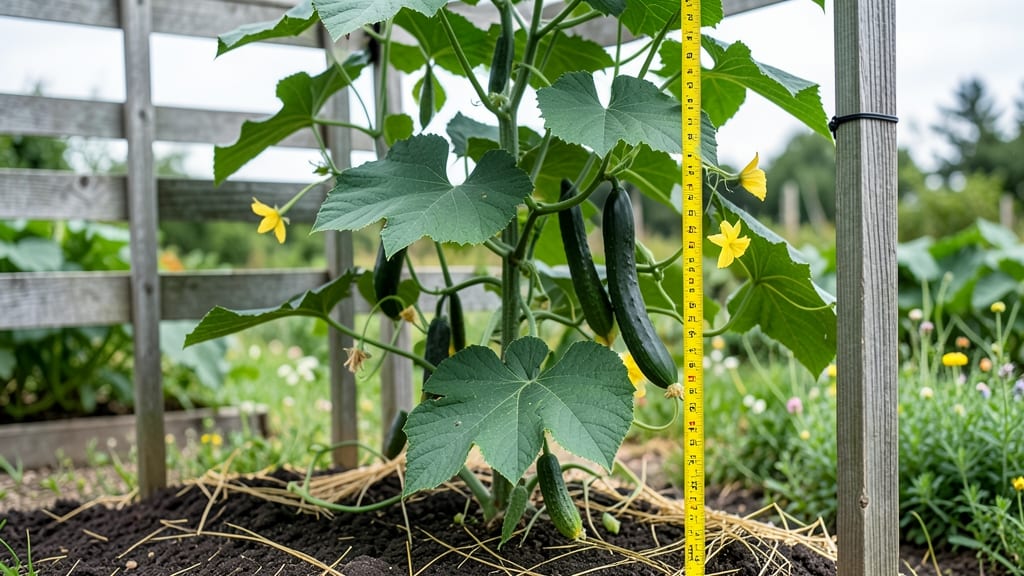
Before you sketch out your garden beds, you’ll want to know how tall does a cucumber plant grow—since some sprawl up to 15 feet while others stay compact, and the difference comes down to variety and training. success.
Picture this: a Straight Eight cucumber sprawling across your deck like a jungle vine, while a Bush Champion stays neatly contained in a corner bed. The wrong choice could mean wasted space or a harvest that never materializes.
Whether you’re working with a small balcony or a sprawling backyard, understanding these height ranges—and how to manage them—will save you from overcrowding, broken trellises, or worse, disappointed expectations.
In this guide, I’ll break down the exact height ranges for popular varieties, how to control growth with trellises and pruning, and the best space-saving tricks for even the most ambitious gardeners.


Cucumber plant height by type: vining vs bush varieties explained
When planning your cucumber garden, one of the first questions I ask myself is: how tall will these plants grow? The answer varies dramatically between vining and bush varieties, and choosing the right type for your space can make or break your harvest.
Vining cucumbers like 'Straight Eight' can climb 10-15 feet if given proper support, while compact bush varieties like 'Bush Champion' stay neatly contained at 1-3 feet tall. Understanding these differences helps me design my garden layout for maximum efficiency.
Your cucumber plant's height isn't just about variety—it's also influenced by trellising, pruning, and even your local climate. In my zone 6a garden, I've seen 'Marketmore' vining cucumbers reach 12 feet when trained vertically, while the same variety sprawls only 3-4 feet when left unchecked.
The key is matching your growing conditions to the plant's natural tendencies, which I'll break down in detail below.
🌱 comparison table element follows:
The root system plays a crucial role in determining how tall your cucumber plants grow. Vining varieties develop deep taproots that anchor them firmly, allowing them to support their own weight as they climb.
In contrast, bush varieties have shallow, fibrous roots that spread outward rather than downward, which is why they stay compact.
When I planted 'Bush Champion' in containers last summer, I noticed their roots stayed within the top 6 inches of soil, while my 'Straight Eight' vining cucumbers sent roots 18 inches deep to find stability.
If you're working with limited space, bush varieties are my top recommendation. They require no trellising and can thrive in 5-gallon containers or small garden beds.
Last year, I grew 'Spacemaster' cucumbers in hanging baskets on my balcony, and they produced 20 pounds of cucumbers in just 8 weeks without taking up any ground space. The trade-off? You'll get fewer cucumbers per plant compared to vining types, but the convenience makes them ideal for urban gardeners.
For vining cucumbers, the secret to controlling height lies in pruning and trellising. I use 6-foot tomato cages for my 'Marketmore' plants, which keeps their height manageable while maximizing vertical space.
Without support, these same plants would sprawl 8-10 feet across my garden, competing with my tomatoes and peppers. Always prune side shoots (those little branches growing from the main stem) to encourage upward growth and better air circulation, which reduces disease risk.
Your local climate also affects how tall cucumber plants grow. In hot, humid zones like mine (zone 6a), vining cucumbers tend to grow taller
How to maximize space for cucumber plants in small gardens
Small gardens don’t mean small harvests—especially when it comes to cucumbers! With the right techniques, you can grow high-yielding cucumber plants in tight spaces. The key lies in understanding vertical growth patterns and smart space-saving strategies that work for both vining varieties and compact bush types.
Whether you're working with a balcony, patio, or tiny backyard, these methods will help you optimize every inch.
First, let’s address the elephant in the garden: space constraints. Traditional vining cucumbers can sprawl up to 15 feet, while bush varieties stay neatly contained at 1-3 feet tall. The difference in growth habits means you can choose varieties that fit your space perfectly.
For example, 'Bush Champion' stays low and wide, while 'Straight Eight' climbs aggressively—ideal for trellises or vertical gardens.
🌱 Key Space-Saving Tips for Cucumber Plants
- 1. Choose compact varieties: Opt for bush cucumbers like 'Spacemaster' (2-3 ft tall) or 'Diva' (1-2 ft), saving floor space while still producing abundant fruit.
- 2. Use vertical trellises: Install 5-7 ft tall trellises for vining types like 'Marketmore' to grow upward, freeing up ground space for other plants.
- 3. Prune strategically: Trim side shoots to encourage stronger vertical growth and improve airflow, reducing disease risk in tight spaces.
- 4. Container gardening: Grow cucumbers in large pots (15+ gallons) with trellises attached—ideal for balconies or small patios.
- 5. Companion planting: Pair cucumbers with companion plants like beans or radishes to maximize space efficiency and deter pests.
For those with limited ground space, container gardening is a game-changer. A single 5-gallon bucket can support a bush cucumber variety like 'Salad Bush,' while larger containers (15+ gallons) can accommodate vining types with a sturdy trellis.
Ensure containers have drainage holes and use a lightweight potting mix to prevent root-bound issues. Place them in a south-facing location to maximize sunlight exposure, which is critical for cucumber growth.
Another clever trick is vertical gardening. Install a freestanding trellis or repurpose a chain-link fence as a cucumber support. Vining varieties like 'Arkansas Little Leaf' thrive when trained upward, producing fruit at waist height for easy harvesting.
This method not only saves space but also makes maintenance a breeze. Just be sure to tie vines gently every few days to prevent breakage as they grow.
Don’t overlook the power of companion planting to maximize your small garden’s potential. Plant radishes or lettuce around the base of cucumbers—they grow quickly and use up space before the cucumbers take over.
Additionally, interplanting with marigolds or nasturtiums can deter pests like cucumber beetles, reducing the need for chemical interventions. This multi-layered approach ensures every square foot of your garden is working for you.
Finally, remember that pruning is your friend in small spaces. Regularly pinch off side shoots (those growing from the main stem) to direct the plant’s energy into producing fruit rather than excessive foliage.
This technique also improves air circulation, reducing the risk of fungal diseases that thrive in crowded, humid conditions. With these strategies, you’ll transform even the tiniest garden into a productive cucumber paradise! 🥒