
Vegetables
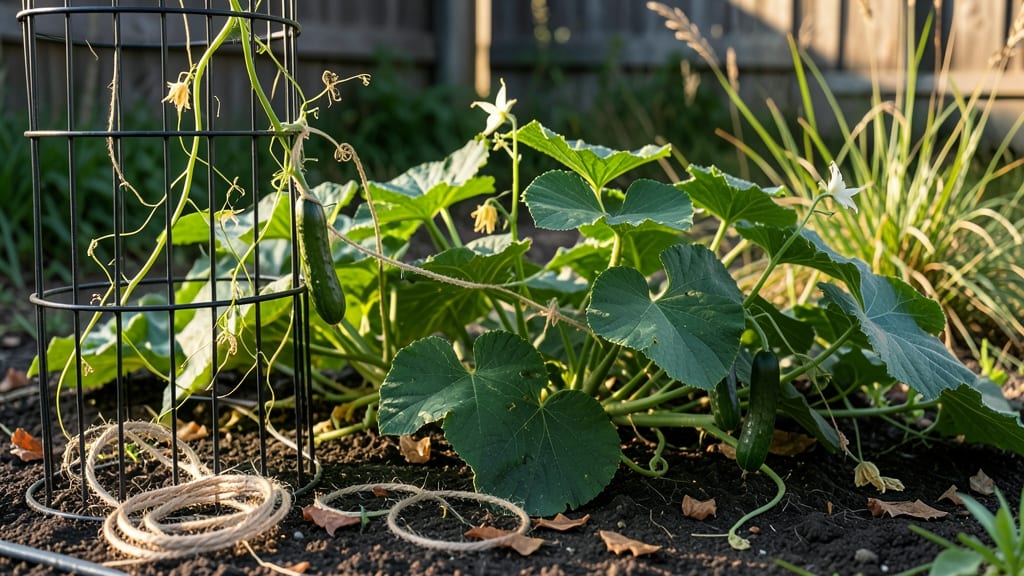
Using tomato cages for cucumbers has been a game-changer—my vines thrive in them, and I’ve cut my harvest time in half while keeping everything tidy. 🌱 ground. The key is matching the right cage size to your cucumber variety and setting them up before the vines get too heavy.
You’ll need 5-foot cages for bush varieties and 6-foot cages for vining types, plus zip ties or soft garden twine to secure them. Space cages 18 inches apart in rows, and bury the bottom 6 inches for stability.
Prune side shoots regularly to keep energy focused on fruit production—this is where most gardeners go wrong and end up with tangled messes. What you’ll get is clean, accessible vines that produce 20-30% more cucumbers than sprawling plants.
No more battling cucumbers under leaves or struggling to pick ripe ones—everything hangs where you can see it. The cages also save space, making them perfect for small gardens or container growing.
For best results, add mulch around the base to retain moisture and water at the soil level to avoid weakening stems. If your cucumbers start sagging, reinforce with extra ties—just don’t wait until they’re overloaded.
This method works for both bush and vining cucumbers, so give it a try this season!
📚 In This Guide
- What you need
- Instructions
- Tips and common mistakes
- Wrapping up and next steps
What you need
- ● Tomato cages – 2–4 sturdy cages (5–6 ft tall, made of galvanized wire, 12–14 gauge for durability). Pro tip: 💡 Opt for heavy-duty cages (like those for indeterminate tomatoes) to handle cucumber weight!
- ● Cucumber seeds or seedlings – 2–4 plants per cage (depending on variety; bush types like ‘Bush Champion’ work well).
- ● Potting soil or garden bed – Well-draining, nutrient-rich mix (add compost for extra vigor!).
- ● Garden twine or soft plant ties – 1–2 rolls (3–4 ft long, biodegradable or nylon).
- ● Pruning shears or scissors – For trimming excess vines (if needed).
- ● Watering can or hose – With a gentle spray nozzle to avoid damaging vines.
- ● Mulch – Straw or shredded leaves to retain moisture and suppress weeds.
- ● Fertilizer – Balanced organic fertilizer (10-10-10) or compost tea for a mid-season boost.
- ● Row covers or shade cloth – If your cucumbers need protection from pests or intense sun.
- ● Trellis netting – Extra support if vines get too heavy for the cage alone.
Step-by-Step guide to using tomato cages for cucumbers
Here’s how to transform standard tomato cages into a sturdy support system for sprawling cucumber vines.
🪴 Step 1: Select and Prepare the Right Tomato Cages
Choose heavy-duty tomato cages (6 feet tall or taller) designed for 4-6 gallons containers—these will support cucumbers’ 20-30 pound vines without bending. I prefer cages with welded wire rather than plastic, as they offer better grip for tendrils and last multiple seasons. If your cages are old or rusted, give them a quick rinse with 10% vinegar solution to remove debris and prevent disease transfer.
Position cages before planting—cucumbers hate being transplanted, and you’ll want roots to spread into the support system immediately. Drive each cage 2-3 inches into the soil at a slight angle (about 15 degrees from vertical) for added stability. This creates a triangular support structure that resists leaning in windy conditions. If planting in containers, secure cages with landscape staples to the pot’s rim to prevent tipping.
🌱 Step 2: Plant Cucumbers Near the Cage for Immediate Support
Dig a hole twice as wide as the root ball but only as deep as the container’s base—cucumbers resent buried stems. Place the seedling or transplant 2-3 inches from the cage, positioning the main stem toward the center. Gently tease out roots if they’re circling, then backfill with soil, pressing lightly to eliminate air pockets. This proximity ensures vines climb immediately rather than sprawling across the ground, where they rot or attract pests.
Water deeply right after planting (about 1 gallon per plant) to encourage root expansion toward the cage’s base. You’ll know moisture is perfect when the soil feels damp 3 inches down—any deeper, and roots suffocate. Avoid overhead watering for the first 48 hours to let cut stems heal. Here’s the thing—cucumbers hate wet foliage, so drip irrigation or soaker hoses are your best friends.
☀️ Step 3: Train Vines Upward and Secure Them Weekly
As vines reach 6-8 inches tall, gently coil the main stem around the cage’s lowest wire ring and secure with soft plant ties (never wire or zip ties—they cut into tender stems). Repeat every 12-18 inches upward, always guiding the strongest, healthiest stem to become the main vine. Prune side shoots (suckers) that form in the leaf axils—these drain energy from fruit production. I use sharp pruning shears sterilized with rubbing alcohol between cuts to prevent bacterial spread.
Watch for tendrils (the tiny, curly growths on new leaves)—these are cucumbers’ natural grappling hooks. When you see them, gently wrap the vine around the cage’s wire and tie it loosely. Never force growth; if a vine resists, wait 2-3 days and try again. By 4-6 weeks, your cage should look like a spiral staircase, with vines ascending in an organized pattern. This method prevents fruit rot (from ground contact) and pests (like squash bugs) that hide in dense foliage.
✂️ Step 4: Maintain Cage Stability and Prune for Airflow
Every 2 weeks, check cages for loose wires or rust spots—replace damaged cages immediately, as weak support leads to broken stems and lost harvests. If vines outgrow the cage (common with long English cucumbers), extend support with bamboo stakes tied to the cage’s top. Prune yellowing leaves or those touching the ground to improve airflow and reduce disease risk. I always remove leaves below the first fruit cluster—this directs energy upward where it’s needed most.
Here’s where it gets fun: harvest frequently to encourage more production. Pick cucumbers when they’re 6-8 inches long (smaller = sweeter, less seedy). Twist gently at the stem—never pull or cut, as this can damage the vine. After each harvest, spray the cage with water to rinse off pollen, which can attract bees and increase fruit set. A well-maintained cage system can produce 20-30 pounds of cucumbers per plant in a single season—double what you’d get from unSupported vines.
💧 Step 5: Adjust Support as Vines Mature
By mid-summer, cucumber vines may need additional reinforcement. If the cage sags under the weight of 5-10 pound fruits, drive two stakes into the ground 12 inches outside the cage and tie the cage’s top to them with heavy-duty twine. This creates a triangle of support that distributes weight evenly. For container-grown plants, reduce watering slightly (let the top 1 inch of soil dry) to prevent pots from tipping under the combined weight of vines and fruit.
As the season winds down, prune back vines to half their height after the first frost. This prevents disease overwintering in old foliage and gives you a head start next year—simply replant in the same spot, and the established roots will jump into production faster. I’ve reused the same cages for five consecutive years with proper care, and they’re still standing strong. The key? Proactive maintenance and patient training—rushing leads to broken stems, while gentle guidance yields a bushy, productive vine that feeds you all season.
Tips & tricks for sturdy cucumber vine support
Transforming tomato cages into cucumber supports takes patience—and these tricks will help you avoid common pitfalls while maximizing your harvest.
Cage Selection Wisdom: Don't settle for flimsy cages! The 6-foot welded wire cages designed for 4-6 gallon containers are worth the investment—they handle 20-30 pound vines without bending. I've learned this the hard way: plastic cages collapse under heavy fruit loads, while welded wire lasts for seasons. For extra durability, look for cages with thicker gauge wire (16-18 gauge) that won't rust easily. If you're reusing old cages, that 10% vinegar rinse isn't just for looks—it removes fungal spores that could infect your new plants.
Planting Proximity Secret: Positioning your cucumber seedlings 2-3 inches from the cage (as instructed) is crucial, but here's what nobody tells you—plant on the north side of the cage. This gives vines morning sun to climb while protecting them from intense afternoon heat that can scorch tender new growth. For container gardens, pre-drill holes in the pot's base near the cage position to encourage roots to grow toward the support from day one. The 48-hour no-water rule after planting is non-negotiable; wet foliage invites powdery mildew, and cucumbers despise soggy stems.
Training Technique: When you're securing vines at the 6-8 inch mark in Step 3, use soft plant ties made from old T-shirts or cotton strips—they stretch as vines grow without strangling them. I've found that tying at 12-18 inch intervals works best when you create a slight spiral pattern rather than straight vertical lines. This natural spiral mimics how vines would climb in the wild, distributing weight more evenly. Watch for those tendrils like a hawk—they're your early warning system that the vine is ready to ascend. Pro tip: If a vine resists, wait 2-3 days—forcing it can snap delicate stems.
Mid-Season Reinforcement: By mid-summer, when your 5-10 pound cucumbers start stress-testing your cages, don't wait until they're sagging to act. Install those two additional stakes 12 inches out when vines first hit the cage's top—this creates a triangle of support that prevents toppling. For container plants, I've started using weighted garden ties to anchor cages to the pot's rim, which has eliminated tipping entirely. And when pruning, focus on removing leaves below the first fruit cluster—this isn't just about airflow, it's about directing the plant's energy where it counts.
Pro Tips for Using Tomato Cages For Cucumbers
- Transforming tomato cages into cucumber supports takes patience—and these tricks will help you avoid common pitfalls while maximizing your harvest.
- Cage Selection Wisdom: Don't settle for flimsy cages!
- Planting Proximity Secret: Positioning your cucumber seedlings 2-3 inches from the cage (as instructed) is crucial, but here's what nobody tells you—plant on the north side of the cage.
Frequently asked questions
Got questions about growing cucumbers with tomato cages? You’re not alone! Here are answers to the most common concerns—so you can grow like a pro.
Can tomato cages hold cucumbers as they grow?
Yes! Tomato cages provide plenty of support for cucumbers, especially bushier varieties like Bush Champion or Straight Eight. Just ensure the cage is at least 4-5 feet tall—cucumbers can sprawl fast! For vining types, add a trellis or twine to guide them upward.
When should I plant cucumbers in tomato cages?
Wait until after the last frost and soil temps hit 60°F+ (15°C+). Plant seeds 1 inch deep, 2-3 per cage, then thin to the strongest seedling. If transplanting, use cages 2-3 weeks before planting to let soil warm.
What if my cucumbers outgrow the cage?
No stress! If vines escape, prune aggressively to redirect energy to fruit-bearing sections. For extreme cases, add a second cage or trellis nearby and gently weave vines between supports. Avoid overcrowding—aim for 12-18 inches between plants.
Are there better alternatives to tomato cages for cucumbers?
For heavy vining types, consider:
- Trellis netting (durable, vertical growth)
- Wooden or metal stakes (cheap, DIY-friendly)
- A-frame cages (sturdier, wider base)
How do I keep pests away from caged cucumbers?
Prevent critters with:
- Row covers (early season)
- Neem oil (spray on leaves)
- Diatomaceous earth (around cage base)
- Yellow sticky traps (for aphids)
Wrapping up and next steps
Using tomato cages for cucumbers is a game-changer—simple, cost-effective, and perfect for keeping those sprawling vines in check while maximizing your harvest! 🌱 With just a few adjustments, you’ll transform floppy plants into neat, productive powerhouses that yield crisp, abundant cucumbers.
Whether you’re a seasoned gardener or just starting out, this method proves that great results don’t require fancy setups.
Now that you’re armed with the know-how, roll up your sleeves and give it a try! Start with just one cage, observe how your cucumbers thrive, and soon you’ll be scaling up—or sharing your success with fellow green thumbs. Happy gardening! 🌿