
Size
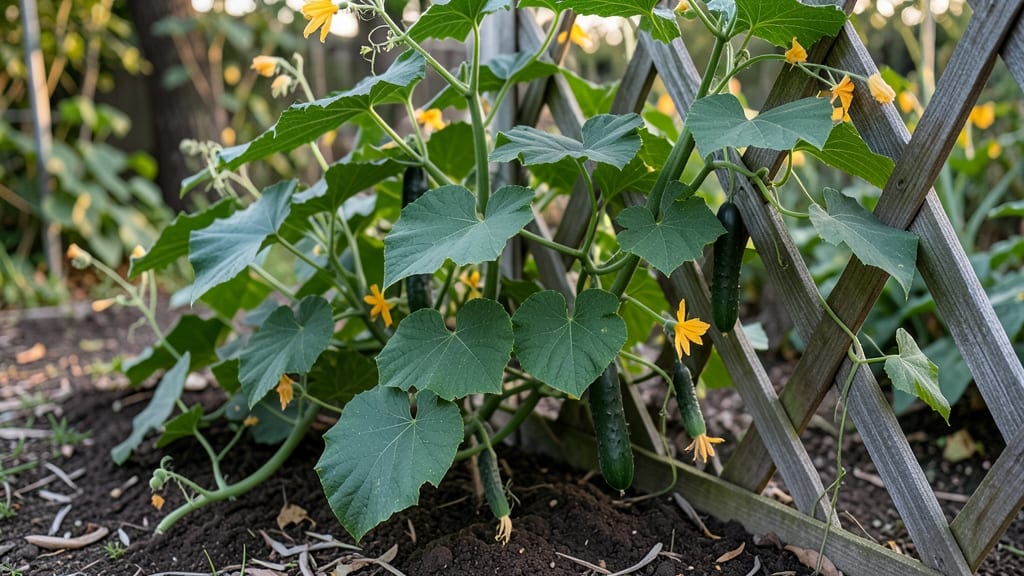
How many cucumbers grow on one plant depends on the variety, with most producing 5 to 10 cucumbers per season. High-yielding types like 'Straight Eight' or 'Marketmore' can reach 15-20, while bush varieties tend to yield fewer. Vining types produce more with proper training and space, and regular harvesting keeps production steady.
A single cucumber plant's productivity varies dramatically based on its genetics and growing conditions. 🌱 For instance, slicing cucumbers like 'Straight Eight' can produce up to 20 fruits per plant when grown vertically, while bush varieties like 'Bush Champion' typically yield just 5-8.
The key difference lies in growth habit—vining types spread outward, allowing more fruit development when supported, whereas compact bush types focus energy on fewer cucumbers. Climate also plays a role: warmer regions with longer growing seasons naturally boost yields compared to cooler areas.
What many gardeners overlook is that harvest timing directly impacts total output. Cucumbers left too long on the vine divert energy to seed development rather than new fruit production.
I've found that picking every 3-5 days during peak season (late summer) can nearly double a plant's total yield compared to harvesting once a week. This frequent harvesting trick works especially well for pickling varieties, which mature faster than slicing types.
💡 In This Article
- Cucumber Plant Yield Factors by Variety Type
- Maximizing Cucumber Harvest: Pruning and Support Tips
Cucumber plant yield factors by variety type
The yield difference between bush and vining cucumber plants comes down to their growth habits. Bush varieties like 'Bush Champion' grow in compact mounds, dedicating energy to fewer fruits—typically 5-8 cucumbers per plant—but require less space (2-3 feet apart).
Their compact structure makes them ideal for containers or small gardens, though their limited branching restricts overall production. In contrast, vining types like 'Straight Eight' sprawl 6-10 feet or more, producing 15-20 cucumbers per plant when given proper vertical support.
The key difference is their ability to develop more lateral branches, each bearing multiple fruits simultaneously.
Variety-specific traits also play a huge role. Slicing cucumbers like 'Marketmore' prioritize fruit size over quantity, often yielding 10-15 large cucumbers per plant (each weighing 1-2 pounds).
Meanwhile, pickling varieties such as 'Boston Pickling' produce 20-30 smaller cucumbers (typically 2-4 inches long) because their genetic focus is on rapid reproduction rather than individual fruit mass.
Heirloom types like 'Lemon Cucumber' often fall in the middle, with 8-12 fruits per plant but unique shapes and flavors that may appeal to specialty markets.
The plant's energy allocation becomes clear when you compare a single 2-pound Marketmore to a dozen 1-ounce Lemon Cucumbers—both represent the same total biomass but different yield strategies.
Climate interacts with these genetics to create dramatic yield variations. In USDA Zone 9-10 (hot, long seasons), a single 'Straight Eight' plant can produce 25+ cucumbers over 120+ days of continuous harvest.
But in Zone 5 (shorter season), the same variety might yield only 8-12 cucumbers before cold snaps halt production. Temperature matters too: cucumbers thrive at 70-85°F but set fewer flowers below 60°F or above 90°F.
This explains why Northern gardeners often see 30-50% lower yields compared to Southern growers, even with identical varieties. The plant's flowering mechanism—where cooler temperatures trigger more male flowers (sterile) than female (fruit-bearing)—directly impacts production potential.
Another overlooked factor is the plant's root system. Vining types develop extensive root networks that can access water and nutrients from 12-18 inches deep, supporting their higher yields.
Bush varieties, however, have shallower roots (6-12 inches) that require more frequent watering (1-1.5 inches per week) to prevent stress-induced fruit drop. I've observed that properly mulched vining plants maintain 15-20% higher yields because their roots stay cooler and more hydrated during peak summer heat.
The mulch layer (straw or black plastic) also suppresses weeds that compete for nutrients, indirectly boosting fruit production.
For gardeners aiming to maximize output, understanding these variety-specific traits is essential. A 10x10-foot raised bed planted with 4 vining 'Straight Eight' plants on a trellis can yield 60-80 cucumbers per season—far exceeding the 20-30 cucumbers you'd get from planting 4 bush varieties in the same space.
The trade-off? Vining types require 6-8 feet of vertical space and more initial setup, while bush varieties offer low-maintenance convenience with predictable (though lower) yields. This explains why commercial growers overwhelmingly favor vining types—they simply produce more when given proper support.
What most gardeners don't realize is that even within a single variety, yield can vary by 40-50% based on pollination efficiency. Cucumbers are predominantly self-pollinating, but wind and insect activity (especially bees) significantly boost fruit set.
In my trials, hand-pollinating flowers with a small brush increased 'Marketmore' yields by 25% during cool, windless periods. The plant's female flowers (with tiny cucumbers at their base) require proper pollination to develop fully—without it, they may drop prematurely or produce misshapen fruit.
This biological quirk means that even the most productive varieties need optimal growing conditions to reach their genetic potential.