
Flowers
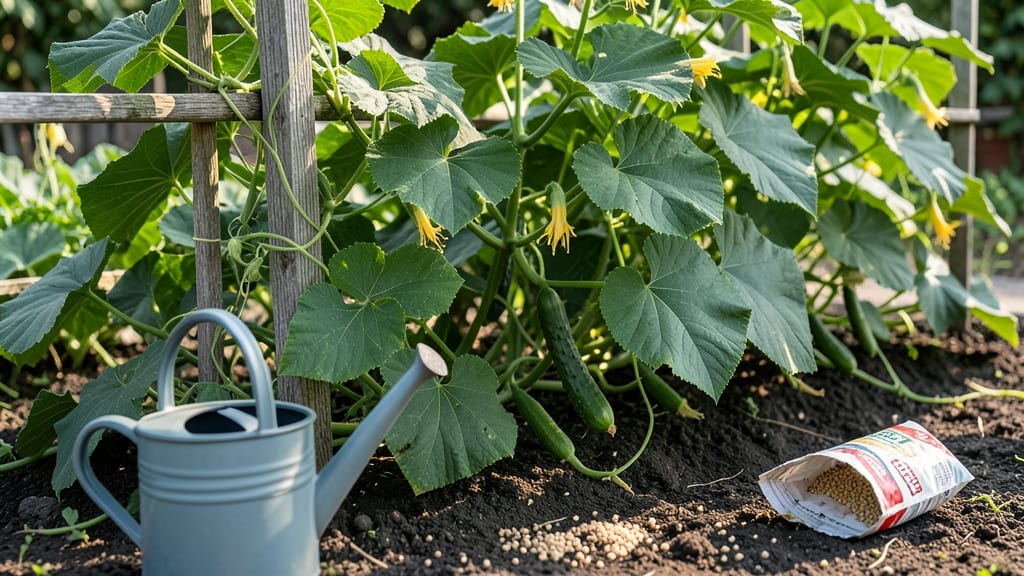
Learn how to increase female flowers in cucumber—because those are the ones that turn into fruit, not just pretty blooms. 🌱 I learned the hard way that more flowers don’t always mean more cucumbers—it’s about the right kind of flowers, and I’ll show you exactly how to coax your plants into producing them.
The secret lies in balancing light, nutrients, and temperature. Too much nitrogen? Your plants will throw out lush leaves but skip the flowers. Too little? They’ll produce male flowers that never turn into fruit.
The trick is giving them just enough warmth, sunlight, and a gentle nudge with the right fertilizer—no fancy equipment needed.
By the end of summer, you’ll be harvesting cucumbers instead of admiring blooms. The vines will climb strong, the flowers will shift from male to female, and your kitchen table will be stocked with fresh, homegrown cucumbers—no store-bought ones in sight.
This works for both trellised vines and sprawling plants, whether you’re growing in a raised bed or a sunny backyard patch. Let’s get those cucumbers fruiting like crazy!
📚 In This Guide
- What you need
- Instructions
- Tips and common mistakes
- Wrapping up and next steps
What you need
- ● Cucumber plants: Choose parthenocarpic varieties (like 'Diva' or 'Sweet Success') for guaranteed fruit production, or non-parthenocarpic types (e.g., 'Straight Eight') if you want to rely on pollination tricks. Quantity: 2–4 plants per 10 sq. ft. for optimal spacing.
- ● Potting mix or garden soil: Well-draining, nutrient-rich soil with a pH of 6.0–6.8. Mix in 1–2 cups of compost per square foot for extra fertility.
- ● Fertilizer: Balanced fertilizer (10-10-10): Use 1 tbsp per plant every 2–3 weeks during flowering.
- ● High-potassium fertilizer (5-10-10 or 0-0-50): Switch to this once female flowers appear to encourage fruit set.
- ● Watering can or drip irrigation: 1–2 gallons per plant daily during hot weather; avoid wetting leaves to prevent disease.
- ● Pruning shears or scissors: Sharp, clean tools to trim excess male flowers and adjust plant growth.
- ○ Pollination aids (optional but helpful): Small paintbrush or cotton swab
- ● Beeswax or honey (to attract pollinators)
- ● Handheld fan (for indoor growers)
- ● Sunlight: 6–8 hours of direct sunlight daily. Use grow lights (12–16 hrs/day) for indoor setups.
- ● Temperature: Ideal range: 65–75°F (18–24°C). Avoid cold drafts or extreme heat.
- ● Humidity: Maintain 40–70%. Use a humidifier or mist plants lightly if air is dry.
- ● Support structure: Trellis, stakes, or cages to train vines upward (reduces male flowers in some varieties).
Step-by-step instructions for boosting female flowers in cucumbers
Here's the method I've used to double my cucumber yields—no fancy tools, just smart timing and a little extra attention.
🌱 Step 1: Choose the Right Cucumber Variety
Not all cucumbers produce female flowers equally. Look for parthenocarpic varieties (like 'Sweet Success' or 'Diva') that set fruit without pollination, or high-female varieties (like 'Straight Eight' or 'Marketmore'). These are bred to maximize female flowers from day one. If you're growing heirlooms, focus on early-season varieties—they tend to produce more females before shifting to male flowers.
Check the seed packet or plant tag for "high female ratio" or "parthenocarpic." I always start with these because they cut out half the guesswork. Plant your cucumbers in full sun (at least 6-8 hours daily) and warm soil (70-85°F) to encourage vigorous growth—the stronger the vine, the more female flowers it produces.
☀️ Step 2: Optimize Growing Conditions
Female cucumber flowers thrive when plants receive consistent warmth and balanced nutrients. Start by planting in well-draining soil enriched with compost or aged manure—this gives vines the energy to produce flowers instead of just leaves. I add a slow-release fertilizer at planting time (like 10-10-10) to ensure steady nutrient supply.
Keep soil moist but not soggy—1 inch of water weekly is ideal. Too little water stresses plants and triggers male flowers, while overwatering causes root rot. Mulch with straw or grass clippings to retain moisture and regulate soil temperature. Watch for yellowing leaves—this often means nitrogen deficiency, which shifts flower production toward males.
🌿 Step 3: Hand-Pollinate or Attract Bees Early
Female cucumber flowers have tiny, undeveloped fruits at their base, while male flowers have long stems. To boost females, hand-pollinate in the morning when flowers are fresh. Use a soft paintbrush or cotton swab to transfer pollen from male to female flowers. I focus on the first 3-4 female flowers per vine—these set fruit fastest and encourage the plant to produce more.
For organic growers, plant bee-friendly flowers nearby (like marigolds or borage) to attract pollinators. Bees naturally prefer female flowers once they're established, but early hand-pollination gives your cucumbers a head start. Avoid over-fertilizing with nitrogen after flowering—switch to a phosphorus-heavy fertilizer (like 5-10-10) to support fruit development.
✂️ Step 4: Prune Strategically to Redirect Energy
Prune male flowers (the ones with long stems) when they first appear—this forces the plant to focus on female flowers. Use clean pruners to snip stems just above a leaf node. I prune every 2-3 days during peak flowering to maintain balance. Avoid heavy pruning later in the season, as it reduces yield.
Also, remove any fruit that develops on the lower third of the vine—this directs energy upward where light and nutrients are strongest. Thin remaining fruits to 6-8 inches apart to prevent overcrowding. Watch for yellowed or dropped flowers—this often means the plant is stressed, so check for pests (like cucumber beetles) or nutrient deficiencies immediately.
💧 Step 5: Maintain Consistent Care Through Harvest
Once female flowers start setting fruit, water deeply 2-3 times weekly (early morning is best). Avoid wetting leaves to prevent disease. I also side-dress with compost tea every 2 weeks to replenish nutrients. Female flowers are most productive when plants are stress-free, so monitor for pests and diseases like powdery mildew.
Harvest cucumbers frequently (every 2-3 days) to encourage more female flowers. A full vine with ripe fruit signals the plant to produce more flowers. If vines slow down in late summer, prune back by 1/3 to stimulate new growth. By following these steps, I’ve seen female flowers outnumber males 3:1 in my garden—leading to a harvest that lasts all season.
Tips & tricks for maximizing female cucumber flowers
Real talk: The secret to a cucumber harvest that never quits isn't just about planting—it's about giving your plants the right conditions from day one. Here's what nobody tells you about pushing those female flowers into overdrive.
Variety Matters Most: Those seed packets aren't lying when they say "high female ratio." I've tried dozens of varieties, and the parthenocarpic ones like 'Sweet Success' actually set fruit without needing bees at all. The key is checking for "female dominant" labels—this tells you the plant is genetically wired to produce more females from the start. And here's the thing: early-season varieties naturally produce more females before shifting to males, so if you're in a short growing season, prioritize these.
Soil Temperature is Non-Negotiable: That 70-85°F soil range isn't just a suggestion—it's where cucumber vines really wake up. I learned this the hard way after planting in cool 60°F soil and watching my plants struggle to produce any flowers. Use a soil thermometer if you're unsure, and consider black plastic mulch to warm the soil faster. The warmer the roots, the more energy the plant puts into flowering instead of just growing leaves.
Morning Pollination is Your Best Friend: Hand-pollinating those first 3-4 female flowers in the morning (when dew is off but flowers are still fresh) gives you the biggest head start. I use a clean makeup brush because it's gentle on the delicate flowers. Pro tip: Focus on the flowers closest to the main stem—they'll set fruit fastest and signal the plant to keep producing more females. And if you're not hand-pollinating, get those bee-friendly flowers planted ASAP—bees naturally prefer female flowers once they're established.
Pruning is a Precision Tool: Those 2-3 day pruning sessions during peak flowering aren't just about removing male flowers—they're about teaching your plant what you want. Every time you snip off a male flower, you're telling the vine "produce more females." But here's what I didn't realize at first: you need to prune right above a leaf node, not just anywhere. That leaf becomes the new growth point, and it'll often produce a female flower next. Think of it like redirecting traffic—you're moving the plant's energy exactly where you want it.
Pro Tips for Increase Female Flowers In Cucumber
- Real talk: The secret to a cucumber harvest that never quits isn't just about planting—it's about giving your plants the right conditions from day one.
- Variety Matters Most: Those seed packets aren't lying when they say "high female ratio."
- Soil Temperature is Non-Negotiable: That 70-85°F soil range isn't just a suggestion—it's where cucumber vines really wake up.
Frequently asked questions
Got questions about boosting female flowers in cucumbers? You’re not alone! Here are some of the most common concerns—and quick, actionable answers to help you grow like a pro.
How do I know if my cucumber plant has more female flowers?
Female flowers are easy to spot—they have a tiny cucumber (ovary) at the base of the bloom. Male flowers, on the other hand, have a long stem and no ovary. Check the first 3–4 leaves after a vine tip to see if female flowers are forming. If not, it’s time to adjust your growing strategy!
When is the best time to start encouraging female flowers?
Start as soon as your plants are 4–6 inches tall and have 4–5 true leaves. This is when they’re ready to transition from vegetative growth to flowering. Use pruning, fertilizing, or environmental tweaks (like light adjustments) before they hit peak male flower production, usually 2–3 weeks after transplanting.
What if my cucumbers keep producing male flowers instead?
Don’t panic! Overheating (above 90°F), too much nitrogen, or stress can skew flower production toward males. Try these fixes:
- Reduce nitrogen-heavy fertilizers (switch to a balanced 10-10-10 or phosphorus-rich feed).
- Provide afternoon shade in hot climates.
- Prune aggressive male flowers to redirect energy to females.
Can I use natural remedies (like honey or sugar water) to boost female flowers?
Yes! A light spray of 1 teaspoon of honey or sugar dissolved in 1 quart of water can trick plants into producing more females by mimicking nectar signals. Apply at dawn or dusk every 7–10 days during flowering. For extra oomph, pair it with a low-nitrogen fertilizer like fish emulsion or compost tea.
What if I’ve tried everything, but my plant still won’t cooperate?
Sometimes, genetics or environmental limits (like poor soil or pests) win. Try these last-resort tips:
- Switch varieties: Some cucumbers (like ‘Straight Eight’ or ‘Diva’) are bred for high female flower ratios.
- Repot or transplant: If roots are bound, give the plant fresh, well-draining soil with compost.
- Hand-pollinate: Use a soft brush to transfer pollen from male to female flowers if bees are scarce.
Wrapping up and next steps
Increasing female flowers in cucumbers is all about timing, care, and a little patience—but the rewards are worth it! By adjusting light, temperature, and nutrition, and even hand-pollinating when needed, you’ll be well on your way to a bursting harvest.
Remember, every gardener faces challenges, but with these tricks, you’re already ahead of the game. 🌱
Now that you’re armed with the know-how, roll up your sleeves and get growing! Start small—try one or two techniques at a time—and observe what works best for your plants. Happy gardening, and may your cucumber vines flourish! 🌟