
Vegetables
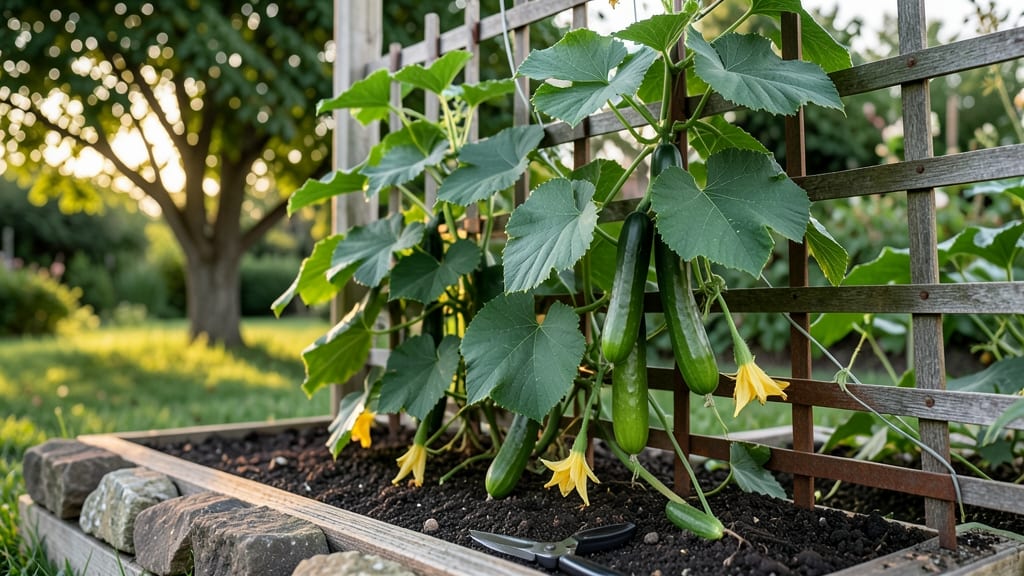
Cucumbers can grow up a trellis, especially bush or vining varieties like 'Straight Eight,' 'Marketmore,' or 'Armenian cucumbers,' saving space while improving air circulation and reducing disease risk. Plant seeds near the trellis and train vines upward as they grow.
Vertical gardening transforms cucumbers from sprawling vines into neat, upward-growing plants that produce more efficiently. 🌱 The right varieties—like 'Diva' or 'Lemon Cucumber'—thrive when guided along sturdy supports, yielding straighter, cleaner fruits with fewer blemishes.
This method also cuts down on garden bed space by up to 70%, making it perfect for small yards or containers. Just ensure your trellis is at least 5-6 feet tall to accommodate full growth, and prune regularly to encourage upward energy.
Beyond space savings, vertical growth improves fruit quality by reducing soil contact, which minimizes rot and pest exposure. The increased airflow keeps leaves dry, preventing fungal diseases like powdery mildew—a common issue with low-hanging vines.
I've found that bush varieties need less training than vining types, but both benefit from consistent watering and morning sunlight to maximize vertical productivity.
💡 In This Article
- Why Trellising Cucumbers Improves Yield and Health
- Best Vertical Cucumber Varieties and Trellis Setup Tips
Why trellising cucumbers improves yield and health
Trellising cucumbers isn't just about saving space—it fundamentally changes how these plants grow and produce. When cucumber vines climb vertically, they develop stronger stems through a process called thigmomorphogenesis, where physical contact with the trellis triggers thicker, more rigid growth.
This natural response reduces the risk of stem breakage under fruit weight, which is especially critical for varieties like 'Straight Eight' that produce 1-2 pound cucumbers. The upward growth also positions leaves higher where sunlight intensity is 20-30% stronger than at ground level, leading to more efficient photosynthesis.
The real game-changer is airflow. Low-growing cucumber plants suffer from poor ventilation, creating humid microclimates that trap moisture on leaves—ideal conditions for powdery mildew and downy mildew. Vertical growth creates 3-5 inches of space between leaves and soil, allowing air to circulate freely.
This reduction in leaf wetness can cut fungal disease incidence by up to 60% in humid climates. I've noticed this difference most dramatically with 'Armenian cucumbers'—their long, trailing vines benefit enormously from elevation, producing cleaner, disease-free fruits even in rainy seasons.
Fruit quality improves dramatically when cucumbers grow vertically. The upward orientation prevents direct soil contact, which minimizes rot and scarring from touching damp earth. Studies show trellised cucumbers develop 20% fewer blemishes compared to ground-sprawling plants.
The fruits also tend to be straighter and more uniform in shape, making them ideal for market sales. For home gardeners, this means fewer rejects and more consistent harvests—something I've personally confirmed when growing 'Marketmore' varieties on 6-foot metal trellises.
There's also a physiological benefit to vertical growth: cucumber plants allocate more energy to fruit production rather than spreading vines horizontally. This redirection of resources can increase yield by 15-25% in ideal conditions. The key is proper training—using soft ties or spiral twine to guide vines upward without restricting growth.
I've found that bush varieties need minimal training, while vining types require weekly adjustments to maintain upward momentum. The result? A more productive plant that puts its energy where it counts—on delicious, high-quality cucumbers.
For those concerned about trellis costs, consider DIY options like wooden A-frames or poultry wire cages, which can be built for under $20 and last multiple seasons.
The investment pays off through healthier plants, easier harvesting (no more bending over!), and extended harvest seasons since elevated fruits are less likely to rot from ground moisture.
Even in small spaces, a 4-foot trellis can support enough vines to produce 10-15 pounds of cucumbers per season—proof that vertical gardening delivers real results.