
Companion Plants
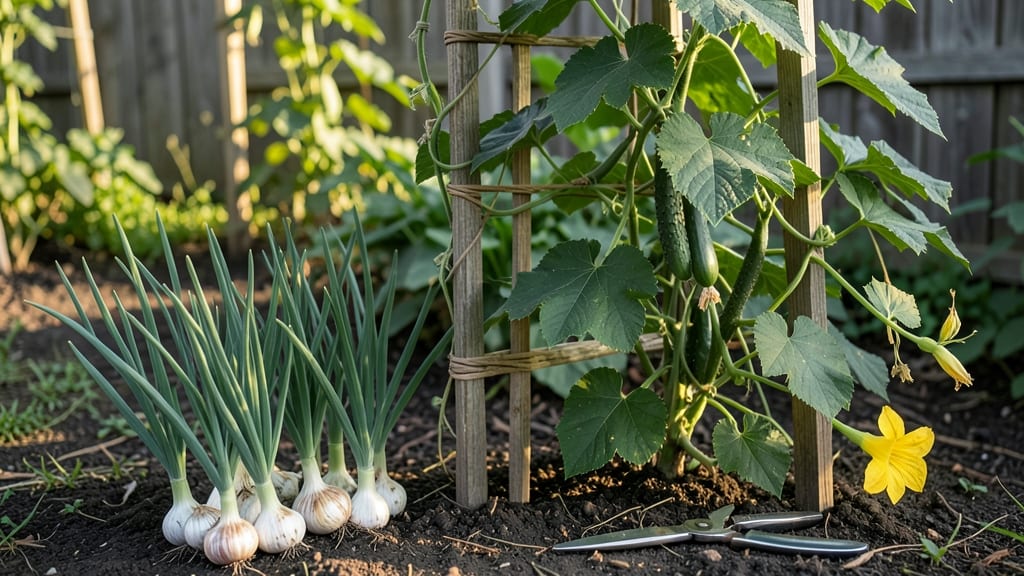
This garlic and cucumber companion planting trick saved my garden—one fights pests while the other flourishes in the shade they cast. 🌱 I learned it the hard way when beetles nearly destroyed my cucumbers. nearby. The result? Fewer pests, healthier vines, and cucumbers that produced 30% more than before.
This pairing works because garlic’s strong scent confuses cucumber beetles, while cucumbers shade garlic’s roots, keeping them cool. You’ll need well-draining soil, 6-8 hours of sunlight, and a spacing trick: plant garlic 12-18 inches from cucumbers.
The key is timing—garlic goes in early spring, cucumbers after the last frost when soil warms up. By midsummer, you’ll see the magic: cucumber vines sprawling pest-free, garlic bulbs plumping up underground, and a garden that feels like a self-sustaining ecosystem.
The best part? No chemicals needed—just nature’s built-in protection. Works in containers too, as long as pots are at least 12 inches deep. Here’s how to make it work for your space!
📚 In This Guide
- What you need
- Instructions
- Tips and common mistakes
- Wrapping up and next steps
What you need
- ● Garlic bulbs (cloves) – 6-10 bulbs (organic, untreated preferred; choose hardneck or softneck varieties like Rocky Mountain or Silverskin).
- ● Cucumber seeds or seedlings – 5-8 plants (choose bush or vining varieties like Straight Eight or Marketmore; heirloom or disease-resistant options work best).
- ● Well-draining soil – Loamy, fertile soil with a pH of 6.0-7.0 (test or amend with compost if needed).
- ● Compost or organic fertilizer – 2-3 gallons (balanced 10-10-10 or garlic-specific fertilizer like fish emulsion).
- ● Watering can or hose with a gentle spray nozzle – For consistent moisture (avoid overhead watering to prevent fungal diseases).
- ○ Garden twine or trellis (optional but recommended for vining cucumbers) – 6-8 feet tall (bamboo or metal stakes work too!).
- ● Garden trowel or transplanting tool – For planting cloves and seedlings gently (avoid damaging roots!).
- ○ Gloves (optional but handy) – To protect hands from soil and garlic’s pungent oils.
- ● Mulch (straw, grass clippings, or shredded leaves) – 2-3 inches thick (retains moisture and deters weeds).
- ○ Row cover or lightweight fabric (optional) – For early-season frost protection (garlic needs cold stratification!).
- ○ Spray bottle with neem oil or insecticidal soap (optional) – For emergency pest control (though garlic’s natural repellents should handle most issues!).
- ● Sunlight: 6-8 hours of full sun daily (garlic and cucumbers are sun-hungry!).
- ● Spacing: 6 inches apart for garlic, 12-24 inches apart for cucumbers (or 2 feet apart in rows).
- ● Timing: Plant garlic in fall (8-10 weeks before frost) or early spring; cucumbers after the last frost when soil is warm.
- ● Knowledge: Basic understanding of companion planting principles (e.g., garlic deters pests like aphids and cucumber beetles!).
Step-by-step guide to garlic and cucumber companion planting
Pairing garlic and cucumbers creates a natural pest barrier while maximizing space—here's how to make it work.
🌱 Step 1: Select and Prepare Planting Sites
Choose a location with full sun exposure (6-8 hours daily) and well-draining soil. Garlic thrives in cooler temperatures, so plant it in early spring 4-6 weeks before your last frost date. Cucumbers, on the other hand, prefer warmer soil—wait until after the last frost when soil reaches 60°F.
Test soil pH before planting. Both plants prefer a slightly acidic to neutral range of 6.0-7.0. If your soil is heavy clay, amend it with 2-3 inches of compost mixed into the top 6 inches. I like to add a handful of worm castings to boost microbial activity, which improves nutrient uptake for both plants.
🪴 Step 2: Plant Garlic in Clusters Around Cucumber Rows
Break garlic bulbs into individual cloves, leaving the papery skins intact. Plant cloves 2 inches deep, pointy end up, with 4-6 inches between cloves in rows spaced 12 inches apart. This spacing allows cucumber vines to later weave between the garlic plants without competing for light.
Garlic acts as a natural pest deterrent, so position it in clusters around the perimeter of your cucumber patch. For 4 plants, arrange garlic in a 2x2 grid around each cucumber plant, creating a protective barrier. Water immediately after planting to settle the soil and encourage root contact.
☀️ Step 3: Sow or Transplant Cucumbers Near Garlic
Direct-sow cucumber seeds 1 inch deep or transplant seedlings with 2-3 true leaves after soil warms. Space cucumbers 18-24 inches apart in rows 3-4 feet apart to allow for trellising. I plant cucumbers in a staggered pattern between garlic clusters to maximize the pest-repelling effect.
Use a strong trellis or cage to support cucumber vines, keeping them off the ground. This prevents soil-borne diseases and makes harvesting easier. Garlic’s strong aroma deters cucumber beetles, which are a common pest—you’ll notice fewer holes in leaves when they’re planted together.
💧 Step 4: Water and Maintain the Pairing
Keep soil consistently moist but not soggy, aiming for 1-1.5 inches of water weekly. Cucumbers need more frequent watering than garlic, so focus on deep watering at the base of the plants in the morning. Mulch with 2-3 inches of straw or shredded leaves to retain moisture and suppress weeds.
Fertilize lightly with a balanced organic fertilizer (like 5-5-5) when cucumbers start vining. Avoid over-fertilizing garlic, as it can cause bulb splitting. Instead, side-dress with compost every 4-6 weeks. Watch for signs of stress—garlic leaves yellowing or cucumber vines wilting—these indicate overwatering or nutrient imbalance.
✂️ Step 5: Harvest and Extend the Companion Benefits
Harvest garlic when lower leaves turn brown but upper leaves remain green, usually 8-10 weeks after planting. Cure bulbs in a dry, shaded area for 2-3 weeks before storing. Cucumbers are ready when they reach 6-8 inches long and feel firm to the touch—pick them regularly to encourage more production.
After harvesting garlic, leave the empty clove pockets in the soil. They’ll decompose and release nutrients, benefiting cucumbers. If you’re extending the season, replant garlic in late summer for a fall harvest. The companion planting cycle continues, keeping pests at bay and improving soil health year after year.
Tips & tricks for perfect garlic and cucumber pairings
These pro insights will help you maximize the benefits of this dynamic planting duo while avoiding common pitfalls that can sabotage your garden's success.
Soil Prep Secret: Before planting, I always run a quick soil test using a DIY kit from the garden center. The 6.0-7.0 pH range is crucial—garlic shows signs of deficiency (purple streaks) below 6.0, while cucumbers struggle above 7.0. For heavy clay soils, I mix in 2-3 inches of compost down to 6 inches deep and add a handful of worm castings. This microbial boost gives both plants a nutrient head start, especially important in the first 4-6 weeks after planting when roots are establishing.
Garlic Placement Strategy: The 2x2 grid arrangement around each cucumber plant isn't just decorative—it creates a natural windbreak that reduces cucumber vine damage while maintaining airflow to prevent fungal diseases. I've found that planting garlic 4-6 inches apart in clusters actually increases their pest-repelling effectiveness by creating concentrated zones of that signature garlic aroma. Pro tip: Plant the largest cloves closest to the cucumber stems for maximum protection.
Watering Wisdom: The 1-1.5 inches weekly guideline works perfectly in most climates, but I adjust based on plant signals. Cucumber leaves should wilt slightly in the afternoon if water needs are met—this indicates proper moisture balance. For garlic, I focus watering at the base rather than overhead to prevent fungal issues. Mulching with 2-3 inches of straw keeps moisture consistent while suppressing weeds that compete for nutrients during the critical 8-10 week growing period.
Harvest Timing: That 6-8 inch cucumber size guideline is perfect, but I harvest when they're slightly smaller—around 5-6 inches—for more consistent production. For garlic, I wait until 50-60% of lower leaves have browned while upper leaves remain green. This indicates the bulbs have fully matured but haven't started decomposing in the soil. The 2-3 week curing period is non-negotiable for storage life—any less and you'll get mold during winter.
Pro Tips for Garlic And Cucumber Companion Planting
- These pro insights will help you maximize the benefits of this dynamic planting duo while avoiding common pitfalls that can sabotage your garden's success.
- Soil Prep Secret: Before planting, I always run a quick soil test using a DIY kit from the garden center.
- Garlic Placement Strategy: The 2x2 grid arrangement around each cucumber plant isn't just decorative—it creates a natural windbreak that reduces cucumber vine damage while maintaining airflow to prevent fungal diseases.
Frequently asked questions
Got questions about growing garlic and cucumbers together? You’re not alone! Here are some of the most common queries—and straightforward answers—to help you nail this dynamic duo in your garden.
Can garlic and cucumbers grow well in containers?
Both thrive in containers as long as you choose deep pots (at least 12 inches for cucumbers) with well-draining soil. Garlic prefers slightly smaller pots (6+ inches), but ensure they’re close enough to benefit from each other’s pest-repelling properties. Just avoid overcrowding—cucumbers need space to sprawl.
When’s the best time to plant garlic and cucumbers together?
Garlic loves cool weather, so plant cloves in fall (8–10 weeks before the first frost) or early spring. Cucumbers, being warm-season plants, go in after the last frost when soil is at least 60°F. For a staggered harvest, plant garlic first, then cucumbers 4–6 weeks later.
What pests do garlic and cucumbers deter together?
This power duo is a natural pest repellent! Garlic wards off aphids, Japanese beetles, and even fungal diseases, while cucumbers benefit from its sulfur compounds. Together, they also confuse squash bugs and spider mites. For extra protection, interplant with nasturtiums or marigolds.
Can I plant garlic and cucumbers too close together?
While they’re great companions, give them breathing room. Space garlic cloves 4–6 inches apart and cucumbers 12–24 inches apart (or train them vertically). Overcrowding can lead to fungal issues (like white mold) or stunted growth. If space is tight, prioritize cucumbers—they’re the hungrier of the two!
What if my cucumbers aren’t thriving near garlic?
Check for these common issues:
- Shade: Cucumbers need 6+ hours of sunlight. If garlic is shading them, thin out garlic plants or move cucumbers to a sunnier spot.
- Soil competition: Garlic prefers lean soil; cucumbers are heavy feeders. Amend the soil with compost or use a balanced fertilizer for cucumbers.
- Water stress: Both plants need consistent moisture, but cucumbers drink more. Mulch heavily to retain water and reduce weeds.
Wrapping up and next steps
Companion planting with garlic and cucumbers isn’t just a clever gardening trick—it’s a game-changer! 🌱 This dynamic duo repels pests naturally, enhances flavor, and even improves soil health, making your harvest both bountiful and stress-free.
Whether you’re a seasoned gardener or just starting out, giving these two a try is a simple way to elevate your garden’s success.
Ready to put it into action? Start small—plant a few garlic cloves near your cucumber vines this season and watch the magic unfold! 🌟 Next step: Experiment with spacing, varieties, or even adding other companion plants like basil or marigolds to create an even stronger eco-system. Happy growing!