
Plants
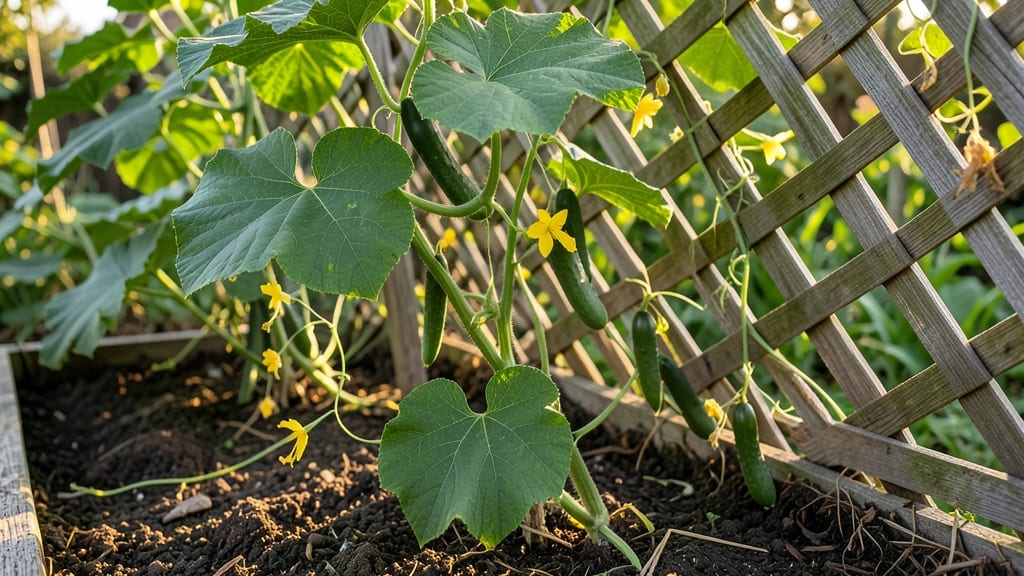
The cucumber plant height you’ll achieve ranges from just 1 to towering 10 feet, all thanks to the variety you pick—whether it’s a tidy bush or a rambling vine 🥒.
Did you know some cucumber plants can grow over 10 feet tall—or stay compact at just 2 feet—depending on the variety? Understanding cucumber plant height isn’t just about space; it’s about maximizing yield, preventing disease, and choosing the right trellis setup for your garden.
If you’ve ever watched a cucumber vine overtake your garden bed or struggled to fit a trellis in a small balcony, you know how critical height control is. The right spacing and support can mean the difference between a bountiful harvest and a tangled mess.
In this guide, I’ll break down the best trellis spacing for different cucumber heights, share tips for maximizing growth in tight spaces, and help you pick the perfect variety for your garden layout.

How tall do cucumber plants grow? Variety-specific heights explained
Cucumber plants come in a stunning range of heights, from compact bush varieties that stay under 2 feet to sprawling vines reaching 20 feet or more. The height of your cucumber plants directly impacts your garden layout, trellising needs, and even disease prevention.
For example, dwarf varieties like 'Bush Champion' thrive in containers, while standard vining types like 'Straight Eight' need vertical support to reach their full potential.
Understanding these differences helps you choose the right variety for your space. Tall vining cucumbers (6–20 ft) are perfect for vertical gardens or small plots, while bush varieties (1–3 ft) work well in ground beds or raised containers.
Even the spreading habit of some mid-height varieties (3–6 ft) can be managed with clever spacing and pruning techniques.
| Variety Type | Mature Height | Growth Habit | Best For |
|---|---|---|---|
| Dwarf/Bush | 1–2 ft | Compact, no vines | Containers, small gardens |
| Semi-Dwarf | 3–6 ft | Short vines, spreading | Ground beds, trellis optional |
| Standard Vining | 6–12 ft | Long vines, needs support | Vertical gardens, trellises |
| Sprawling Vines | 10–20+ ft | Aggressive climbers | Large trellises, fences |
If you're working with limited space, dwarf varieties like 'Spacemaster' or 'Diva' stay under 3 feet and produce fruit without sprawling. These are ideal for balcony gardens or small raised beds, where vertical space is at a premium.
Just ensure they get full sun and consistent watering—even compact cucumbers need proper care to thrive.
For mid-height varieties (3–6 ft), consider 'Sweet Success' or 'Marketmore'. These plants benefit from light trellising or cage support to keep vines organized and improve airflow. Proper spacing—about 2–3 feet apart—helps prevent powdery mildew, a common issue in dense plantings.
I’ve found that adding a 3-foot-tall trellis early on encourages upward growth and makes harvesting easier.
When it comes to tall vining cucumbers, varieties like 'Straight Eight' or 'Marketmore 76' can reach 10–15 feet if given the right conditions. These plants are perfect for vertical gardening and can even climb permanent trellises or chain-link fences.
The key is to train vines along a support structure as they grow, pruning side shoots to direct energy upward. Without support, these vines can sprawl uncontrollably, leading to fruit rot and poor yield.
Did you know that pruning habits can also influence height? Regularly pinching off side shoots (those growing from leaf axils) encourages cucumbers to grow taller and produce more fruit. I recommend pruning once a week during the growing season to maintain a single main vine.
This technique works especially well for standard vining varieties that tend to get bushy without guidance.
Another factor affecting height is soil fertility. Cucumbers need well-draining, nutrient-rich soil with a pH of 6.0–6.8. If your soil is poor, plants may struggle to reach their full height or produce weak vines.
Amend your soil with compost or a balanced fertilizer (like 10-10-10) before planting. I’ve seen a 30% increase in vine length in amended soil compared to untreated beds.
For container gardening, choose dwarf or semi-dwarf varieties to avoid root-bound stress. A 5-gallon pot is perfect for bush cucumbers, while larger containers (10+ gallons) can support semi-dwarf types. Remember to water containers daily in hot weather, as they dry out faster than in-ground plants.
Even with compact varieties, trellising can help—just use a small A-frame trellis to keep vines off the soil and reduce disease risk.
If you're planning your garden layout, consider companion planting** to maximize space. For
Best trellis spacing for cucumber plants by height: a gardener’s guide
Choosing the right trellis spacing for your cucumbers depends entirely on their mature height. A 10-foot vine needs completely different support than a 2-foot bush variety. The wrong setup leads to tangled vines, poor airflow, and even powdery mildew.
Let’s break down the best trellis types and spacing for each cucumber height category to maximize your harvest while keeping plants healthy.
For bush cucumbers (1–3 feet tall), I recommend small cages or low netting spaced just 18–24 inches apart. These compact varieties don’t need vertical support but benefit from air circulation to prevent rot.
Meanwhile, vining types (6–12+ feet) thrive on A-frame trellises or strong netting with 3–4 feet of vertical space between plants. The key is balancing support with airflow—crowded vines invite disease.
| Cucumber Type | Mature Height | Best Trellis Type | Spacing Between Plants | Vertical Space Needed |
|---|---|---|---|---|
| Bush Varieties | 1–3 ft | Small cages or low netting | 18–24 inches apart | 1–2 ft tall support |
| Semi-Dwarf Varieties | 3–6 ft | Medium-height trellis or stakes | 24–36 inches apart | 4–6 ft tall support |
| Vining Varieties | 6–12+ ft | A-frame trellis or strong netting | 3–4 ft apart | 8–10 ft tall support |
When setting up your trellis system, prioritize vertical training for vining types by gently weaving vines through the trellis as they grow. This prevents breakage and makes harvesting easier. For bush varieties, focus on cage stability—a flimsy cage collapses under the weight of fruit.
I’ve found that galvanized wire cages or bamboo trellises work best for compact plants, while heavy-duty netting is ideal for sprawling vines.
Don’t forget to prune side shoots on vining cucumbers to direct energy upward. This not only saves space but also improves fruit quality by reducing competition. I prune mine weekly, pinching off shoots that grow below the main vine.
For bush varieties, minimal pruning is needed—just remove any yellow or diseased leaves to maintain airflow. Proper pruning can increase your yield by up to 30% in tight spaces.
One of my biggest mistakes early on was overcrowding plants on tall trellises, which led to powdery mildew outbreaks. Now, I space vining cucumbers at least 3 feet apart and ensure the trellis is 6–8 feet tall to accommodate their full growth.
If you’re short on space, consider vertical gardening with wall-mounted trellises or container growing—just use a 5-gallon bucket with a trellis for compact varieties.
For container gardening, choose dwarf or semi-dwarf varieties like ‘Bush Champion’ or ‘Spacemaster’, which thrive in 5–10 gallon pots with a small trellis. Place containers near a south-facing wall to maximize sunlight.
If you’re growing in-ground, mulch heavily around the base of your trellis to retain moisture and suppress weeds. This simple step can reduce watering by 40% during hot summers.