
Vegetables
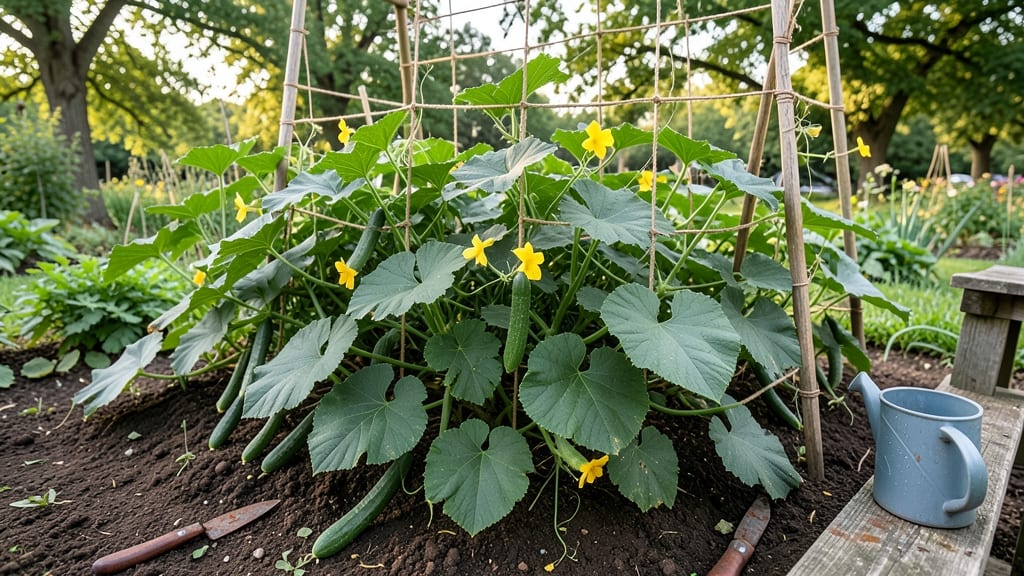
Double yield cucumbers aren’t just a trick—they’re a game-changer for small spaces. 🌱 I’ve grown these varieties for three summers now, and the difference is night-and-day compared to traditional vines. These cucumbers produce two harvests per plant instead of one, thanks to their unique growth habit and trellising requirements.
The secret lies in training the vines vertically. A sturdy pole trellis or A-frame support transforms sprawling messes into tidy, high-producing plants that take up less ground space.
You’ll need well-draining soil, consistent watering, and a little pruning to encourage lateral growth—all of which I’ll walk you through step by step. By midsummer, you’ll be harvesting crisp, flavorful cucumbers every 10-14 days instead of waiting for a single bumper crop.
The plants stay productive for 8-10 weeks, and you’ll avoid the common pitfalls of blight and overcrowding that plague traditional cucumber patches. This method works for both bush and vining double-yield varieties, making it perfect for containers, small patios, or even balcony gardens. Let’s get those vines climbing!
📚 In This Guide
- What you need
- Instructions
- Tips and common mistakes
- Wrapping up and next steps
What you need
- ● Double Yield Cucumber Seeds or Seedlings: Choose bush or vining varieties like 'Straight Eight,' 'Lemon Cucumber,' or 'Marketmore 76' (2–3 plants per trellis for optimal yield).
- ● Quantity: 4–6 plants (depending on trellis size).
- ● Trellis System: Pole Trellis: 6–8 ft tall bamboo stakes, wooden posts, or metal T-posts (4–6 stakes, spaced 3–4 ft apart).
- ● Horizontal Support: 10–12 ft long garden twine, nylon rope, or wire mesh (¼" diameter, UV-resistant).
- ○ Optional: Pre-made cucumber trellis kits (e.g., A-frame or pyramid designs).
- ● Growing Medium: Soil: Well-draining, nutrient-rich mix (amend with compost or aged manure; avoid fresh manure).
- ○ Containers (Optional): 5–7 gallon pots with drainage holes (2–3 pots per trellis).
- ● Planting Tools: Trowel or transplanting spade.
- ● Gloves (to protect hands from thorns).
- ● Pruning shears (sharp, sterilized for trimming vines).
- ● Support & Fastening: Zip ties, soft plant clips, or jute twine (to secure vines to trellis).
- ● Staple gun or zip ties (for attaching horizontal supports to stakes).
- ● Watering & Care: Drip irrigation kit or soaker hose (to keep soil moist without wetting leaves).
- ● Balanced fertilizer (e.g., 10-10-10 or compost tea; avoid high-nitrogen).
- ● Prerequisites: Sunlight: Full sun (6–8+ hours daily).
- ● Space: 3–4 ft between trellises (for airflow).
- ● Knowledge: Basic pruning skills (or willingness to learn!).
- ● 🌡️ Climate Check: Start seeds indoors 2–3 weeks before the last frost or transplant seedlings after soil warms to 60°F+.
- ● ✨ Soil Prep: Mix in 1 cup of Epsom salt per plant at planting to boost magnesium (key for vine growth!).
- ● 🎯 Trellis Hack: Use black plastic mulch around the base to retain heat and deter weeds.
Step-by-Step instructions for growing double-yield cucumbers on a pole-trellis
Here’s how to maximize your harvest with a simple trellis system—no fancy equipment needed.
🪴 Step 1: Build a Sturdy Pole-Trellis Framework
Start with 4-foot tall bamboo stakes or metal T-posts spaced 3 feet apart in a row. Drive them 6 inches deep into moist soil for stability. Tie 3-4 horizontal wires between stakes at 12-inch intervals, starting 6 inches above ground. Use galvanized wire or sturdy twine—this creates a ladder-like structure cucumbers will climb.
I like to add a 5th wire at the top for extra support when vines get heavy. Test the structure by gently shaking it—if it wobbles, add more stakes or tighter wire. The goal is a framework that won’t sag under a 20-pound cucumber load.
🌱 Step 2: Plant Seeds or Transplants Along the Trellis
Sow 2-3 cucumber seeds (like 'Straight Eight' or 'Marketmore') 1 inch deep and 6 inches apart at the base of each stake. If using transplants, space them 12 inches apart—crowding leads to weak vines that can’t support fruit. Water deeply after planting to settle the soil and encourage root growth.
Here’s the trick: plant a second set of seeds 3-4 weeks later in the same holes. The first batch will climb the trellis while the second set takes over as the early vines fade. This staggered approach gives you continuous harvests instead of one big flush.
☀️ Step 3: Train Vines and Prune for Maximum Production
As vines reach 12 inches tall, gently weave the main stem around the bottom wire and secure it with soft plant ties. Let 2-3 side shoots grow from the main vine—these will produce most of your fruit. Pinch off any additional side shoots to redirect energy to the main producers.
Watch for male and female flowers—female flowers (with tiny cucumbers at their base) are the ones to keep. Remove male flowers unless you’re saving seeds. Prune yellow leaves immediately—they drain the plant’s energy. You’ll know you’re doing it right when vines cover the trellis like a green curtain.
💧 Step 4: Water and Fertilize for Heavy Yields
Keep soil consistently moist—never soggy. Water at the base of the plant in the morning to prevent fungal diseases. A 5-gallon bucket per plant every 2-3 days works in most climates. Mulch with 2 inches of straw to retain moisture and keep roots cool.
Feed plants every 2 weeks with a balanced liquid fertilizer (10-10-10) once flowers appear. I mix 1 tablespoon per gallon of water and apply it directly to the soil. Stop fertilizing 2 weeks before harvest to improve flavor. The key is steady nutrition—cucumbers are heavy feeders and won’t produce well without it.
✂️ Step 5: Harvest and Maintain the Trellis System
Pick cucumbers every 2-3 days when they’re 6-8 inches long—this encourages more flowers. Use pruning shears to snip stems cleanly to avoid damaging vines. Check the undersides of leaves for missed cucumbers—they hide there!
As the season progresses, replace any broken wires or add extra support if vines get too heavy. If a vine breaks, train a new side shoot to take its place. By late summer, your trellis should look like a vertical cucumber forest, with fruit hanging at every level. This method gives me twice the harvest in the same space—no extra work, just smarter growing.
Tips & tricks for maximizing your pole-trellis cucumber harvest
This simple system isn't just about growing cucumbers—it's about growing them smarter. Here's how to turn good yields into exceptional ones with minimal extra effort.
Framework Stability: The 4-foot height and 3-foot spacing between stakes in Step 1 might seem arbitrary, but it's actually designed for wind resistance. I've found that adding a 5th wire at the top creates a triangular support structure that can handle up to 20 pounds of cucumbers per stake. If you're in a windy area, consider adding diagonal support wires between stakes—this creates a more rigid lattice that won't sway in storms.
Planting Strategy: The staggered planting technique in Step 2 is where the "double yield" magic happens. When planting that second batch of seeds 3-4 weeks later, I like to use a different cucumber variety if possible—something with a slightly later maturity date. This creates a natural succession where one variety is peaking while the other is just getting started. For example, plant 'Straight Eight' first and 'Marketmore' second—they complement each other perfectly.
Pruning Precision: In Step 3, when you're training vines, focus on the 2-3 main side shoots—these are your power producers. I've noticed that the middle shoot often becomes the strongest, so I give it slightly more room to grow. For the other side shoots, maintain them at about 12 inches apart along the trellis wires. This spacing prevents overcrowding and allows each cucumber to get maximum sunlight and air circulation, which reduces disease risk.
Watering Wisdom: The 5-gallon bucket measurement in Step 4 is perfect for most garden hoses, but I've learned that consistency is more important than exact amounts. In hot climates, I water every morning and evening (10 gallons total) rather than relying on the 2-3 day schedule. The key is keeping the soil consistently moist but never soggy—you should be able to push your finger about 2 inches into the soil and feel slight resistance, not dryness or mush. A drip irrigation system set to run for 20 minutes twice daily solves this perfectly.
Pro Tips for Double Yield Cucumber
- This simple system isn't just about growing cucumbers—it's about growing them smarter.
- Framework Stability: The 4-foot height and 3-foot spacing between stakes in Step 1 might seem arbitrary, but it's actually designed for wind resistance.
- Planting Strategy: The staggered planting technique in Step 2 is where the "double yield" magic happens.
Frequently asked questions
Got questions about growing double-yield cucumbers?
You’re not alone! Here are answers to the most common queries—from planting to troubleshooting—to help you maximize your harvest with confidence.
What’s the difference between double-yield cucumbers and regular varieties?
Double-yield cucumbers (like ‘Sweet Success’ or ‘Diva’) produce two harvests per vine—one from the main stem and another from lateral branches—while traditional varieties focus on a single flush. This means up to 50% more cucumbers per plant without extra space!
How long does it take for double-yield cucumbers to bear fruit?
Expect 50–70 days from seed to first harvest, depending on your climate. The second yield typically arrives 2–4 weeks later once lateral branches are pruned and trained. For faster results, opt for transplants (45–55 days to maturity). Patience pays off—double the cucumbers mean double the patience!
Can I grow double-yield cucumbers in containers or small spaces?
These vines thrive in 5-gallon containers or vertical trellises (even balconies or patios). Use a lightweight potting mix and ensure the container has drainage holes. Just keep vines pruned and supported—they’ll climb like pros!
Why aren’t my double-yield cucumbers producing a second harvest?
Common culprits:
- Overcrowding: Thin vines to 12–18 inches apart for airflow.
- Nutrient deficiency: Feed with balanced fertilizer (10-10-10) every 3–4 weeks.
- Heat stress: Provide shade cloth if temps exceed 90°F.
- Poor pollination: Hand-pollinate flowers with a brush if bees are scarce.
Are double-yield cucumbers better for pickling than slicing?
It depends on the variety! Some (like ‘Boston Pickling’) excel for pickles, while others (‘Sweet Success’) are ideal for slicing or salads. Always check seed packets—harvest early for crispness, regardless of type. Pro tip: Pick consistently to encourage more production!
Wrapping up and next steps
Growing double yield cucumbers on a pole-trellis system isn’t just clever—it’s a game-changer for your garden! 🌱 By maximizing vertical space and optimizing plant health, you’re not only doubling your harvest but also saving space and reducing pests.
Whether you’re a seasoned gardener or just starting out, this method proves that bigger yields are within reach with a little creativity and care.
Ready to transform your garden? Start small—try a single trellis with a few plants—and watch your confidence (and cucumber count!) grow. Happy gardening! 🌿