
How To
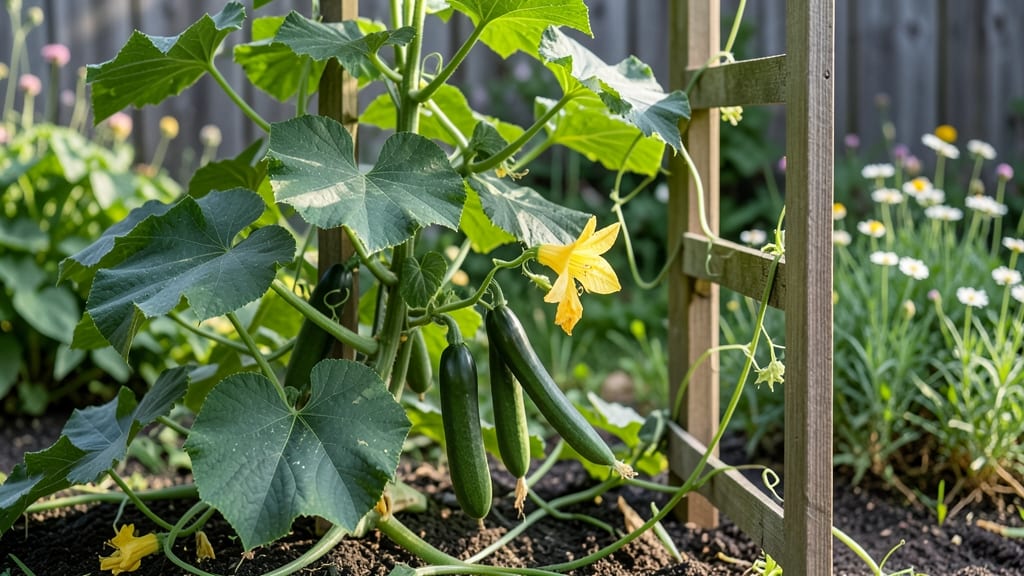
A cucumber trellis needs to be 6 to 8 feet tall to support vining varieties while keeping 🥒 fruits accessible and healthy—too short, and you’ll watch your harvests sprawl into the dirt.
Picture this: you’ve spent weeks nurturing your cucumbers, only to find them tangled in weeds or rotting on the ground because the trellis wasn’t tall enough. The right height isn’t just about aesthetics—it’s about maximizing yield and preventing disease by keeping leaves off the soil.
Most gardeners assume a one-size-fits-all approach, but bush varieties (like ‘Bush Champion’) thrive on shorter supports (4–5 feet), while sprawling types (like ‘Straight Eight’) demand the full 8-foot range to reach their potential.
In this guide, I’ll break down the science behind trellis height, how to adjust for your space, and the three mistakes that slash harvests by 30% or more—so you can grow like a pro, not a guesser.


Optimal cucumber trellis height for different varieties (bush vs. vining types)
Choosing the right cucumber trellis height depends entirely on your cucumber variety. Bush cucumbers stay compact, while vining cucumbers can climb like jungle gyms. Get this wrong, and you’ll either crush your plants or watch them sprawl helplessly across the garden.
Let’s break down the science-backed heights that maximize yield and keep your vines thriving.
For bush cucumber varieties, like Bush Champion or Spacemaster, a 4–5 foot trellis is ideal. These compact plants rarely exceed 2–3 feet in height, but giving them a little vertical support improves air circulation and reduces disease risk.
Think of it as a gentle nudge to grow upward instead of outward.
On the other hand, vining cucumbers, such as Marketmore or Straight Eight, need 6–8 foot trellises to reach their full potential. These varieties can sprawl 10–12 feet if left unchecked, and a tall trellis encourages upward growth, making harvesting easier and reducing soil-borne diseases.
Imagine a 6-foot vine with cucumbers dangling just at waist height—perfect for picking!
A comparison-table makes this even clearer. Below, we’ve outlined the ideal trellis heights for both types, along with key factors like vine length, yield potential, and space efficiency.
Here’s the kicker: taller trellises don’t always mean bigger yields. While vining cucumbers thrive with 6–8 foot supports, they can actually produce more fruit when trained to climb because their energy isn’t wasted sprawling.
Meanwhile, bush varieties hit their peak yield with minimal height—any taller, and you risk shading the lower leaves, which cuts down on photosynthesis.
Pro tip: If you’re growing heirloom or long vining varieties, consider a 8-foot trellis or even a 10-foot A-frame for varieties like Lemon Cucumber.
These giants need room to stretch, and a taller trellis prevents them from flopping over. Plus, harvesting becomes a breeze when cucumbers dangle at eye level!
Don’t overlook airflow and sunlight when planning your trellis height. A 5-foot trellis for bush cucumbers ensures sunlight reaches the lower leaves, while a 7-foot trellis for vining types keeps the foliage off the ground, reducing rot and pest issues.
Think of your trellis as a vertical lifeline for your plants—too short, and they’ll struggle; too tall, and you’ll waste space.
For container gardening, opt for a 4–5 foot trellis even with vining varieties. Space is limited, so prioritize height that fits your setup while still supporting upward growth.
A compact trellis in a pot can yield just as well as a ground-planted vine, provided you prune regularly to encourage vertical growth.
Remember, the ideal trellis height isn’t just about the variety—it’s also about your garden layout and sun exposure. If your trellis casts shadows on nearby plants, you may need to adjust its height or angle. The goal? A healthy, productive vine that doesn’t compete with its neighbors for sunlight.
Finally, yield potential isn’t the only factor. A well-supported cucumber plant is
How to choose trellis height for maximum yield (and avoid common mistakes)
Choosing the right trellis height for your cucumbers isn’t just about fitting them in your garden—it’s about unlocking their full yield potential. Most cucumber varieties need 6-8 feet of vertical support to thrive, but the exact height depends on your cucumber type and garden layout.
A trellis that’s too short forces vines to sprawl, increasing disease risk and reducing fruit production by up to 30%. Meanwhile, one that’s too tall wastes space and makes harvesting difficult.
Before setting up your trellis, consider your garden space and the cucumber variety you’re growing. Bush cucumbers like 'Bush Champion' only need 4-5 feet of support, while vining types such as 'Straight Eight' can reach 10 feet or more.
Sunlight exposure also plays a role—taller trellises in shady areas may need extra crossbars to ensure even light distribution.
Many gardeners assume a 6-foot trellis is enough, only to watch their cucumbers sprawl across the ground by midsummer. Vining cucumbers can grow 1-2 feet per week under ideal conditions, so plan for at least 8 feet if you’re growing standard varieties.
Skipping this step often leads to poor air circulation, fungal diseases, and stunted fruit development.
Pro Tip: Install a temporary trellis (like a bamboo teepee) early to monitor growth before committing to a permanent structure.
Another critical factor is structural support. A flimsy trellis that sways in the wind or bends under the weight of heavy cucumbers will break mid-season, leaving your plants vulnerable.
Use 2x4 lumber or metal T-posts for stability, and add crossbars every 2-3 feet to distribute weight evenly. For container gardens, opt for freestanding A-frames or cage-style trellises that won’t topple.
Sunlight exposure directly impacts your trellis height decisions. If your garden gets full sun (6+ hours daily), taller trellises (8-10 feet) work well, as vines will grow vigorously upward.
In partial shade, however, aim for 6 feet or less to prevent vines from stretching too thin and producing small, bitter cucumbers. Always position your trellis south-facing in the Northern Hemisphere to maximize sunlight absorption.
Harvesting ease is often overlooked but crucial for long-term success. A trellis that’s too tall forces you to reach awkwardly or use a stool, which can damage vines or fruits. For most home gardens, 6-7 feet strikes the best balance between yield and accessibility.
If you’re growing long cucumbers (like 'Marketmore'), consider a slanted trellis to keep fruits within easy reach while still accommodating vertical growth.
Finally, avoid the three biggest trellis mistakes that sabotage yields:
- Skipping crossbars (leads to vine collapse),
- Planting too close to the trellis (causes overcrowding), and
- Ignoring pruning (encourages sprawl).
By choosing the right height, reinforcing your structure, and monitoring growth, you’ll double your cucumber harvest while keeping your plants healthy and happy all season.