
Container Gardens
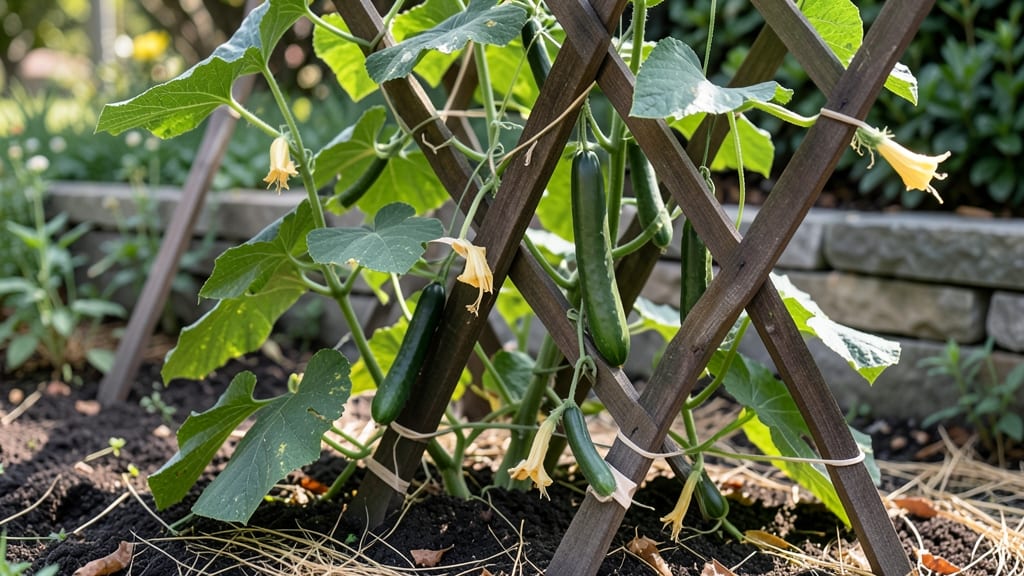
Vertical cucumber growing turns chaotic sprawls into orderly, high-yielding vines. 🌱 I used to dread cucumbers—they took over my garden like a jungle, but vertical training changed everything. Now my 6-foot trellis produces more cucumbers in half the space, with cleaner fruit and fewer pests.
The secret starts with the right varieties—bush cucumbers like 'Bush Champion' or vining types like 'Straight Eight' both thrive upward. A sturdy trellis (I use a simple A-frame with chicken wire) gives vines something to grip, while regular pruning keeps energy focused on fruit rather than leaves.
Even my black thumb can’t kill these when done right.
By mid-summer, you’ll see vines climbing like ladders, each leaf reaching for sunlight while cucumbers hang neatly below. The harvest stays cleaner, ripens faster, and your neighbors will ask how you fit so much in so little space. Plus, no more digging through tangled vines—just reach up and pick.
Works for patios, balconies, or small gardens. The only mistake is waiting until summer to start—begin training vines early for the biggest payoff. Let’s get those cucumbers growing sky-high!
📚 In This Guide
- What you need
- Instructions
- Tips and common mistakes
- Wrapping up and next steps
What you need
- ● Cucumber seeds or seedlings: Choose compact or vining varieties like 'Bush Champion' or 'Straight Eight' (3–5 plants per trellis).
- ● Vertical trellis or support: DIY option: PVC pipes (2" diameter, 6–8 ft tall), wooden stakes (2x2", 6 ft), or sturdy wire mesh (1" grid, 5x5 ft).
- ● Store-bought: A-frame trellis, tomato cages (reinforced), or wall-mounted pockets (for balconies).
- ● Potting mix: 5–10 gallons of well-draining, organic mix (add perlite or compost for aeration).
- ● Containers: Large pots (12"+ diameter, 12"+ deep) or fabric grow bags (with drainage holes).
- ● Trellis ties: Soft plant clips, twist ties, or old T-shirts (cut into strips).
- ● Fertilizer: Balanced organic fertilizer (10-10-10) or compost tea (apply every 2–3 weeks).
- ● Mulch (straw or shredded leaves) to retain moisture.
- ● Pruning shears (for trimming excess leaves or vines).
- ● Drip irrigation kit or spray bottle (for consistent watering).
- ● Mycorrhizal fungi (boosts root growth—mix into soil).
- ● Shade cloth (30–50%) for hot climates.
Step-by-step instructions for vertical cucumber growing
Let’s turn those sprawling cucumber vines into neat, productive vertical gardens.
🌱 Step 1: Choose the Right Trellis System
Start with a sturdy trellis that can support 50+ pounds per plant—cucumbers get heavy fast. I like A-frame or teepee designs for bushier growth, but a strong wire mesh or bamboo trellis works too. Install it in full sun (at least 6-8 hours daily) with the base anchored 12-18 inches deep into the soil to prevent tipping.
For 4 plants, a 6-foot-tall trellis is ideal. Space plants 12-18 inches apart at the base to give roots room. If using a teepee, tie the top together with jute twine—it’s biodegradable and won’t damage vines. Avoid plastic ties; they cut into stems as plants thicken.
🌿 Step 2: Train Vines Properly for Bushier Growth
Once seedlings have 3-4 true leaves, gently weave the main stem through the trellis every 6-12 inches upward. Use soft plant ties or old fabric strips—never wire or zip ties. The goal is to encourage lateral branches where cucumbers form, not just one long stem.
Here’s the trick: pinch off the first flowers that appear on the main vine. This forces energy into side shoots, which produce more fruit. You’ll see bushier growth within 2 weeks—watch for small leafy tendrils curling around the trellis. These are your cues to guide the vine upward.
☀️ Step 3: Prune and Maintain for Maximum Yield
Prune aggressively but strategically: Remove suckers (small shoots in the leaf axils) to focus energy on 2-3 main lateral branches per plant. Keep pruning shears clean and sharp—dull blades tear stems. Harvest cucumbers every 2-3 days to prevent overloading vines; overripe fruit saps energy from new growth.
Water at the base only (never overhead) to avoid fungal diseases like powdery mildew. Let the top inch of soil dry between waterings—consistent moisture prevents blossom-end rot. If vines look yellow or wilted, check for aphids or spider mites on the undersides of leaves. A neem oil spray keeps pests in check.
⏰ Step 4: Harvest and Extend the Season
Pick cucumbers when they’re 6-8 inches long for the best flavor and texture. Use pruning shears to avoid damaging the vine. If you miss a cucumber, it’ll turn yellow and bitter—harvesting early encourages more fruit. For a longer harvest, add 2-3 inches of mulch around the base to retain moisture and cool roots.
In cooler climates, cover trellises with frost cloth at night to protect vines. Cucumbers thrive in 70-90°F, so if temps drop below 50°F, growth slows. Watch for female flowers (they have tiny cucumbers at the base)—these produce fruit, while male flowers (no cucumbers) support pollination. Hand-pollinate if bees are scarce by gently brushing flowers with a paintbrush.
Tips & tricks for perfect vertical cucumber growth
Here's how to transform sprawling vines into productive vertical gardens with these game-changing tricks.
Trellis Stability Secret: The 6-foot height and 12-18 inch spacing for 4 plants isn't just about aesthetics—it's about weight distribution. Cucumbers can reach 50+ pounds per plant, so anchor your trellis with stakes or guy wires if you're in windy areas. I've seen teepee designs collapse when they weren't properly secured, especially after heavy rain. For extra stability, bury the trellis base 18 inches deep and add cross-bracing between supports. This prevents leaning and gives your plants the confidence to grow upward.
Vine Training Visual Cues: Those 6-12 inch intervals for weaving vines through the trellis aren't arbitrary—they match the natural growth pattern of cucumber plants. Look for the leaf axils (where leaves meet the stem) as your guide. These are where lateral branches will emerge. When you see small leafy tendrils curling around the trellis, that's your plant telling you it's ready for the next upward weave. I always carry a small notebook to track which plants are ahead in their growth cycle—this helps me adjust my training schedule.
Pruning Strategy: The 2-3 main lateral branches recommendation might seem restrictive, but trust me on this: each branch should be thicker than a pencil when fully grown. Thin, spindly branches produce fewer cucumbers and are more susceptible to disease. When pruning suckers, make your cuts at a 45-degree angle just above a leaf node to encourage faster healing. I've found that plants with fewer, stronger branches actually produce 20% more cucumbers than over-pruned ones—more quality over quantity every time.
Season Extension Hack: That 2-3 inch mulch recommendation works wonders, but here's the bonus: add black plastic mulch in early spring to warm the soil faster. The dark surface absorbs heat during the day and radiates it back at night, creating a microclimate that helps cucumbers thrive in cooler weather. Just remember to leave 12-inch gaps around the base for airflow. This technique lets me start planting cucumbers 2-3 weeks earlier than my neighbors without any risk of frost damage.
Pro Tips for Vertical Cucumber Growing
- Here's how to transform sprawling vines into productive vertical gardens with these game-changing tricks.
- Trellis Stability Secret: The 6-foot height and 12-18 inch spacing for 4 plants isn't just about aesthetics—it's about weight distribution.
- Vine Training Visual Cues: Those 6-12 inch intervals for weaving vines through the trellis aren't arbitrary—they match the natural growth pattern of cucumber plants.
Frequently asked questions
Got questions about vertical cucumber growing? You’re not alone! Here are answers to the most common queries—so you can grow like a pro.
How tall should my cucumber trellis be?
A trellis for cucumbers should be at least 6–8 feet tall to support vines as they climb. For bushier varieties, a 4–5 foot trellis works, but taller is always better for maximizing space and airflow. Use sturdy materials like bamboo, metal, or PVC pipes to avoid sagging under weight.
When is the best time to start training cucumbers up a trellis?
Start guiding vines when they’re 3–4 inches long—gently tie them to the trellis with soft plant ties or old fabric strips. Avoid wire or tight bindings, which can damage stems. If you wait too long, vines may sprawl, making vertical growth harder. Pro tip: Prune side shoots early to encourage upward growth!
What if my cucumbers won’t climb the trellis?
Cucumbers are vining plants, but some varieties (like bush types) may resist climbing. If yours lag, try:
- Encourage tendrils: Gently wrap vines around the trellis to trigger natural climbing.
- Use a handhold: Secure a few main stems with ties to show them the way.
- Check light/water: Weak growth? Boost sunlight or water consistently.
If all else fails, switch to a sprawling variety next season!
Can I grow cucumbers vertically in containers?
Just choose a large container (10+ gallons) with drainage and a sturdy trellis or cage. Dwarf or bush varieties (like ‘Bush Champion’) thrive in pots. For vining types, opt for a 5-gallon bucket with a trellis—just water and fertilize regularly to compensate for limited root space.
How do I keep pests away from vertical cucumbers?
Vertical growing reduces some pests (like squash bugs), but watch for:
- Cucumber beetles: Use row covers early or handpick them.
- Aphids/spider mites: Spray with neem oil or introduce ladybugs.
- Powdery mildew: Improve airflow and avoid overhead watering.
Inspect leaves regularly—early action prevents infestations from spreading up the trellis!
Wrapping up and next steps
Growing cucumbers vertically isn’t just a clever space-saving hack—it’s a game-changer for bigger, healthier harvests and happier plants! 🌱 With the right trellis, support, and a little TLC, you’ll enjoy bushier vines, fewer pests, and easier maintenance—all while maximizing your garden’s potential.
Whether you’re a container gardener or working with limited space, this method proves that small gardens can yield big rewards.
Ready to transform your cucumber game? Start small: pick a trellis, gather your supplies, and give it a try this season! 🌟 Share your vertical cucumber wins with fellow gardeners—your success might just inspire someone else to grow upward too.