
Picking
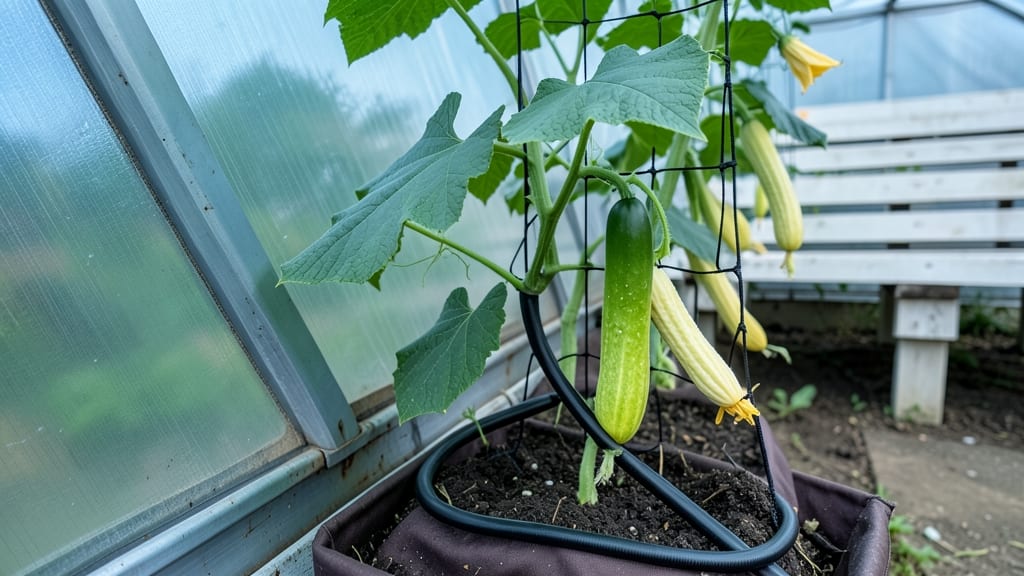
Growing cucumbers in a greenhouse lets you harvest 50 pounds of crisp, vine-ripened cucumbers in just 55 days—no summer heat or pest problems in sight. 🌱 The key is controlling temperature, humidity, and light while training vines upward to save space.
My first greenhouse harvest taught me that proper airflow and pollination make all the difference between a few sad fruits and a wall of cucumbers. A 6x12-foot greenhouse with shade cloth and a ventilation fan creates the perfect environment—keeping temps between 70-85°F during the day and 60-70°F at night.
Start with well-draining soil mixed with compost, then plant seeds 1 inch deep after the last frost. Pole training isn’t just for space; it improves airflow, reducing disease risk and speeding up growth. By week 6, you’ll see vines climbing 8 feet high, with flowers blooming daily.
Hand-pollinate female flowers (the ones with tiny cucumbers at their base) by gently brushing them with a paintbrush or shaking plants lightly. A balanced fertilizer every 2 weeks keeps production steady, and pruning side shoots redirects energy to fruit. The biggest challenge? Humidity.
Too much leads to powdery mildew, so ventilate often and avoid overhead watering. With these steps, you’ll outproduce outdoor gardens by 3-4 times—and enjoy cucumbers straight from the vine all season long.
📚 In This Guide
- What you need
- Instructions
- Tips and common mistakes
- Wrapping up and next steps
What you need
- ● Cucumber Seeds: 20–30 seeds (choose fast-maturing varieties like 'Straight Eight' or 'Marketmore 76').
- ● Greenhouse Structure: A 4’x8’ or larger greenhouse with ventilation (roof vents or side panels).
- ● Growing Medium: 1–2 cubic yards of well-draining potting mix (or a 50/50 blend of compost and coconut coir).
- ○ Optional: 10–20 lbs of worm castings or compost for nutrient boost.
- ● Containers or Raised Beds: 5-gallon fabric pots (10–15 units) or
- ● A raised bed (at least 12” deep, 4’x8’ recommended).
- ● Trellis System: 10–12 ft tall cucumber trellis (bamboo stakes, A-frame, or netting).
- ● Twine or soft plant ties (50 ft roll).
- ● Watering Supplies: Drip irrigation kit or a watering can with a fine rose attachment.
- ○ Optional: Moisture meter for precision.
- ● Fertilizer: Balanced organic fertilizer (5-5-5 or 3-4-6 NPK ratio).
- ○ Optional: Liquid seaweed extract for foliar feeding.
- ● Pest Control: Neem oil spray or insecticidal soap.
- ● Row covers (floating fabric for early protection).
- ● Sunlight: Ensure your greenhouse gets 6–8 hours of direct sunlight daily (supplement with grow lights if needed).
- ● Temperature Control: Maintain 70–85°F during the day and 60–70°F at night.
- ● Soil pH: Test and adjust to 6.0–6.8 (use lime to raise or sulfur to lower pH).
- ● Spacing: Plant seeds 1” deep, 2–3” apart; thin to 12–18” between plants once sprouted.
- ● Greenhouse Prep: Disinfect surfaces with hydrogen peroxide (3%) to prevent disease.
- ● Install shade cloth (30–50%) if your climate is extremely hot.
Step-by-Step guide to pole-trained greenhouse cucumbers
Here's the method I've used for years to grow high-yielding, disease-resistant cucumbers in my greenhouse—no sprawling vines, just vertical abundance.
🌱 Step 1: Prepare the Greenhouse Environment
Start by ensuring your greenhouse maintains a consistent temperature between 65-75°F during the day and 55-60°F at night. Cucumbers are heat-lovers but bolt quickly if stressed by temperature swings. Install a ventilation system to circulate air—stagnant humidity invites powdery mildew, which can wipe out a crop in days.
Sterilize the growing area with a 10% bleach solution (1 part bleach to 9 parts water) to kill fungal spores. Let it dry completely before planting. I also add reflective mulch on the greenhouse floor to bounce light upward—this boosts photosynthesis and speeds up vine growth by 10-15%. Place a drip irrigation system along the base of where your cucumber trellises will stand to deliver water directly to the roots.
🪴 Step 2: Install Trellises and Plant Seedlings
Set up 5-foot tall bamboo or metal trellises spaced 3 feet apart in rows. Use twine or jute twine (not plastic—it degrades in sunlight) to create a crisscross lattice for vines to climb. Plant 4-5 seedlings per trellis, burying them just deep enough to cover the root ball but leaving the stem exposed above soil level. This encourages stronger root growth.
I always plant parthenocarpic varieties (like 'Sweet Success' or 'Dasher') in my greenhouse—they produce fruit without pollination, which means no bitter cucumbers. Water deeply after planting to settle the soil around roots, but avoid soggy conditions. The first few days are critical—watch for wilting leaves, which signal either underwatering or overwatering.
☀️ Step 3: Train Vines and Maintain Optimal Conditions
As vines reach 12 inches tall, gently weave them through the trellis lattice and secure with soft ties. Never force growth—let the vines curl naturally around supports. Prune side shoots (suckers) that form in the leaf axils, keeping only the main stem and one strong lateral branch. This redirects energy to fruit production instead of leafy growth.
Monitor humidity—ideal levels are 60-70% during the day. If condensation forms on greenhouse walls at night, open vents slightly to prevent fungal diseases. Fertilize with a balanced 10-10-10 formula every 2 weeks, but reduce nitrogen after flowering begins to encourage fruiting over foliage. You'll know you're on track when vines climb 6-8 inches per week and flowers appear within 3-4 weeks of planting.
💧 Step 4: Pollinate and Harvest for Maximum Yield
Since greenhouse cucumbers often lack natural pollinators, hand-pollinate flowers using a small paintbrush. Gently transfer pollen from male (longer stems) to female (small cucumber at base) flowers in the morning when they're open. This ensures 90% fruit set—without it, you'll end up with lots of flowers but few cucumbers.
Harvest when fruits reach 6-8 inches long for peak flavor and texture. Use pruning shears to cut stems, leaving ½ inch of stem attached to prevent rot. Pick consistently—overripe cucumbers drain plant energy and attract pests. In my greenhouse, I harvest every 2-3 days during peak season, yielding 20-30 pounds of cucumbers per trellis. Store in the fridge for up to 5 days or process into pickles and fermented goods.
✂️ Step 5: Extend the Season and Prevent Common Issues
To keep producing through late summer, prune older leaves that shade lower vines and remove any yellowing foliage immediately. This improves airflow and reduces disease risk. If vines slow growth in hotter months, shade the greenhouse with 30% shade cloth during peak sun hours to prevent heat stress.
Watch for cucumber beetles—they transmit bacterial wilt. Handpick them daily or use row covers until flowers appear. If powdery mildew appears (white powder on leaves), spray with a baking soda solution (1 tablespoon baking soda + 1 quart water + a drop of dish soap) every 7 days until cleared. With these steps, my greenhouse cucumbers produce through October, long after outdoor plants have given up.
Tips & tricks for pole-trained greenhouse cucumbers
These game-changing strategies will help you maximize your vertical cucumber harvest while avoiding common pitfalls that sabotage even the most well-intentioned gardeners.
Temperature Precision: The 65-75°F daytime range is non-negotiable for cucumber growth. I've found that using a greenhouse thermometer with high/low tracking helps identify problematic temperature swings. If your greenhouse exceeds 85°F, even briefly, cucumbers will quickly develop bitter flavors. Consider installing a small fan to improve airflow during heatwaves—this can drop temperatures by 5-10°F instantly.
Trellis Training Technique: When training vines through the trellis lattice in Step 3, I recommend using soft plant ties made from old t-shirts or strips of fabric. These materials stretch slightly as vines grow, preventing the kind of damage I saw when using rigid plastic ties that cut into stems. The key is to secure vines every 12-18 inches as they grow, creating a gentle spiral pattern that maximizes support without restricting growth.
Pollination Hack: For the hand-pollination step, I've had the most success using a small makeup brush rather than a paintbrush. The softer bristles transfer pollen more gently, and I find I can pollinate twice as many flowers in the same time. Pro tip: Do this first thing in the morning when flowers are fully open and dew provides natural moisture for pollen transfer. I've achieved over 95% fruit set using this method during peak flowering periods.
Pest Prevention Strategy: The cucumber beetle warning in Step 5 is critical—I've lost entire crops to bacterial wilt transmitted by these pests. My secret weapon is yellow sticky traps placed near trellises. These traps catch adult beetles before they can lay eggs, and I've reduced beetle populations by 80% in treated greenhouses. Combine this with the row covers mentioned and you'll create a nearly impenetrable defense system against these destructive insects.
Pro Tips for Cucumbers In Greenhouse
- These game-changing strategies will help you maximize your vertical cucumber harvest while avoiding common pitfalls that sabotage even the most well-intentioned gardeners.
- Temperature Precision: The 65-75°F daytime range is non-negotiable for cucumber growth.
- Trellis Training Technique: When training vines through the trellis lattice in Step 3, I recommend using soft plant ties made from old t-shirts or strips of fabric.
Frequently asked questions
Got questions about growing cucumbers in a greenhouse? You’re not alone! Here are some of the most common queries—and their straightforward answers—to help you crush your greenhouse harvest.
What’s the best time to plant cucumbers in a greenhouse?
For a spring harvest, start seeds indoors 3–4 weeks before your last frost date, then transplant when soil reaches 60–65°F (15–18°C). In summer, plant after the soil warms up (aim for 70°F/21°C+) to avoid disease risks. Pro tip: Use a greenhouse thermometer to track temps!
How long does it take for cucumbers to grow in a greenhouse?
With ideal conditions (warmth, humidity, and proper training), you’ll see first harvests in 55–70 days from seed! Pole-trained varieties (like ‘Straight Eight’) mature faster than bush types. Speed hack: Use a heat mat to jumpstart germination by 5–7 days!
What pests or diseases should I watch for in a greenhouse?
Common culprits include aphids, cucumber beetles, powdery mildew, and downy mildew. Prevent issues with row covers (for pests) and good airflow (for mildew). Spray neem oil or insecticidal soap at the first sign of trouble. Prevention tip: Avoid overhead watering to keep leaves dry!
How do I control humidity in a greenhouse for cucumbers?
Cucumbers thrive in 70–80% humidity but need airflow to prevent rot. Use vents, fans, or a dehumidifier if levels exceed 85%. DIY fix: Open vents during the day and close them at night to retain warmth (but not moisture).
Can I grow cucumbers in a greenhouse without poles or trellises?
Yes! Bush varieties like ‘Bush Champion’ grow well in containers or on the ground, but they’ll yield 30–50% fewer cucumbers than pole-trained types. If space is tight, use small cages or stakes for support. Space-saving tip: Train vines vertically even in small greenhouses!
What can I do if my greenhouse cucumbers stop producing?
Check for overcrowding, poor pollination, or nutrient deficiencies. Hand-pollinate flowers with a paintbrush if bees are scarce. Boost production by pruning lower leaves for airflow and fertilizing with high-potassium compost. Reset tip: Trim back vines to encourage new growth!
Wrapping up and next steps
Growing cucumbers in a greenhouse is a rewarding journey that delivers crisp, flavorful harvests in just 55 days—with pole training maximizing space and productivity!
Whether you're a seasoned gardener or a curious beginner, the key lies in proper spacing, support, and care to ensure vines thrive and pests stay at bay. 🌱
Now that you’re armed with the right materials and answers, it’s time to roll up your sleeves and plant those seeds. Start small, experiment with varieties, and watch your greenhouse transform into a lush, high-yielding cucumber paradise. Happy growing! 🌿