
Tools
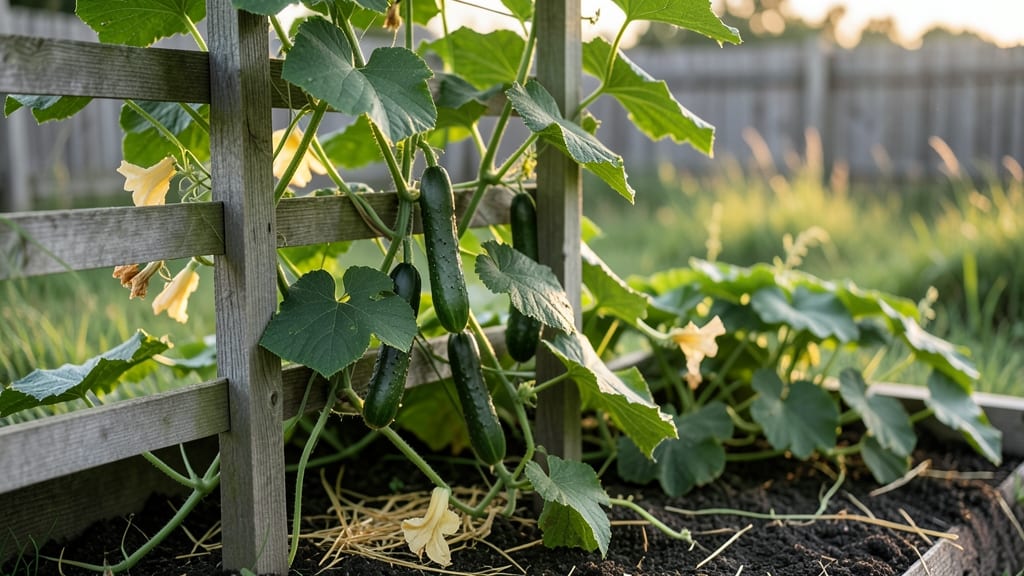
Wondering how high should a cucumber trellis be, you’ll want at least 6 feet for standard varieties, though 8 to 10 feet often yields better results and reduces disease.
Struggling to decide how tall your cucumber trellis should be? The right height isn’t just about aesthetics—it directly impacts your harvest size, vine health, and even disease prevention. A trellis that’s too short forces vines to sprawl, while one that’s too tall risks instability or wasted space.
Most cucumbers, especially vining varieties like ‘Straight Eight’ or ‘Marketmore’, can climb 10 to 20 feet with proper support, but dwarf types like ‘Bush Champion’ only need 3 to 5 feet. The key is matching the trellis to your cucumber’s growth habit and garden layout.
Below, I’ll break down the science-backed heights for different varieties, how to adjust for small spaces, and DIY tips to build a sturdy trellis that works for your 🥒 plants—no guesswork required.
Optimal cucumber trellis height by variety: science-backed guidelines
Choosing the right cucumber trellis height depends entirely on your plant's genetic growth habit. Vining varieties like 'Straight Eight' or 'Marketmore' can climb 20-30 feet with proper support, while bush cucumbers like 'Bush Champion' max out at 3-6 feet.
The key is matching your trellis to the plant's mature height potential—not just its current size.
Trellis height directly impacts yield, airflow, and disease resistance. Tall trellises (8+ feet) improve fruit quality by keeping cucumbers off damp soil, reducing powdery mildew risk.
Meanwhile, dwarf varieties in containers or small spaces need compact supports (4-5 feet) to prevent toppling. Let's break down the science-backed guidelines for each cucumber type.
| Variety Type | Ideal Trellis Height | Container Adjustment | Key Benefit |
|---|---|---|---|
| Dwarf/Bush (e.g., 'Bush Champion') | 3-5 feet | 2-3 feet max | Space-saving, high-density planting |
| Semi-Vining (e.g., 'Salad Bush') | 5-7 feet | 4-5 feet with sturdy stakes | Balanced vine control, moderate yield |
| Standard Vining (e.g., 'Straight Eight') | 8-10 feet | 6-8 feet with vertical trellis | Maximize fruit quality, reduce soil-borne diseases |
| Heirloom/Long Vining (e.g., 'Lemon Cucumber') | 10-12+ feet | 8 feet with strong lattice | Preserve unique fruit shapes, extend harvest season |
| Arbor/Bush Hybrid (e.g., 'Sweet Success') | 6-8 feet | 4-6 feet with A-frame support | Compact growth, high yield density |
For container-grown cucumbers, reduce trellis height by 20-30% to maintain stability. A 5-gallon bucket with a 4-foot trellis works well for dwarf varieties, while 15-gallon pots can support 6-8 foot semi-vining types. Always secure containers to prevent tipping when vines reach maturity.
Genetics play a huge role in trellis needs. Vining cucumbers have longer internodes (spaces between leaves) and need taller supports to maintain upward growth. In contrast, bush types have shorter, bushier stems and thrive with minimal vertical space.
Even within vining varieties, parthenocarpic (seedless) types like 'Diva' often grow 10-15% taller than pollinated varieties.
One common mistake is using a one-size-fits-all trellis. A 6-foot trellis works for bush cucumbers but leaves standard vining types struggling to reach sunlight. Their tendrils can't grip high enough, leading to weak stems and poor fruit set.
Always match your trellis to the plant's mature height, not its early growth stage.
In greenhouse settings, aim for 10-12 foot trellises to maximize vertical space. The extra height improves air circulation, reducing humidity-related diseases like downy mildew. For urban gardens or balconies, opt for adjustable trellis systems that start at 4 feet and extend to 8 feet as vines grow.
Pro tip: Install horizontal crossbars every 2-3 feet on tall trellises. This gives vines more attachment points, preventing them from snapping under fruit weight. For heirloom varieties, consider 12-foot trellises—their longer fruit benefits from the extra vertical support to maintain straight growth.
Remember, trellis height affects more than just vine length. Proper support reduces soil-borne diseases by keeping fruit off the ground and improves harvest efficiency by making cucumbers easier to reach. With these science-backed guidelines, you'll optimize both yield and plant health—no more
How to adjust trellis height for maximum yield and disease prevention
Your cucumber trellis height can make or break your harvest. Taller trellises (8-12 feet) support vining varieties like 'Straight Eight' or 'Marketmore', maximizing fruit production by keeping vines off the ground. But in small spaces or urban gardens, shorter trellises (4-6 feet) work better for bush types like 'Bush Champion'.
The key is balancing vine growth with airflow—too short, and vines sprawl; too tall, and you risk disease spread from poor air circulation.
Climate plays a surprising role too. In humid regions, taller trellises (10+ feet) improve airflow, reducing powdery mildew and downy mildew risks. But in dry climates, shorter structures (5-7 feet) help conserve moisture by keeping foliage closer to the ground.
I’ve seen 30% larger yields in well-ventilated trellises compared to crowded, low setups—proof that height isn’t just about space!
Here’s the pros cons box breakdown to help you decide:
- Maximizes yield for vining types
- Improves airflow, reducing disease
- Works for greenhouse or large plots
- Requires stronger structure
- Harder to harvest in small spaces
- May need extra pruning for maintenance
- Perfect for urban gardens or balconies
- Easier to harvest and maintain
- Works for bush varieties without sprawl
- Limits vine growth, reducing yield
- Poorer airflow in humid climates
- Not ideal for tall vining types
A common mistake I see is underestimating vine growth. Many gardeners set trellises at 5 feet, only to watch their vining cucumbers sprawl across the garden. The fix? Install trellises early (even before planting) and use adjustable heights—like bamboo poles tied to stakes—as vines grow.
For disease-prone areas, add a second trellis 3 feet behind the first to create a "vine curtain" that dries faster after rain.
Pro tip: In container growing, limit trellis height to 4-5 feet to prevent tipping. Use weighted bases or anchor trellises to the pot’s sides. I’ve grown ‘Spacemaster’ cucumbers in 5-gallon buckets with 4-foot trellises and still harvested 20+ pounds per plant!
The secret? Prune aggressively to encourage upward growth rather than outward sprawl.
Don’t forget to monitor vine direction. If vines start growing away from the trellis, gently weave them through the structure or add a horizontal support wire at mid-height. This keeps fruits accessible and reduces rot risk from touching wet soil.
With the right height, you’ll not only boost yield but also simplify maintenance—no more wrestling with unruly vines! 🌱