
Pests and Diseases
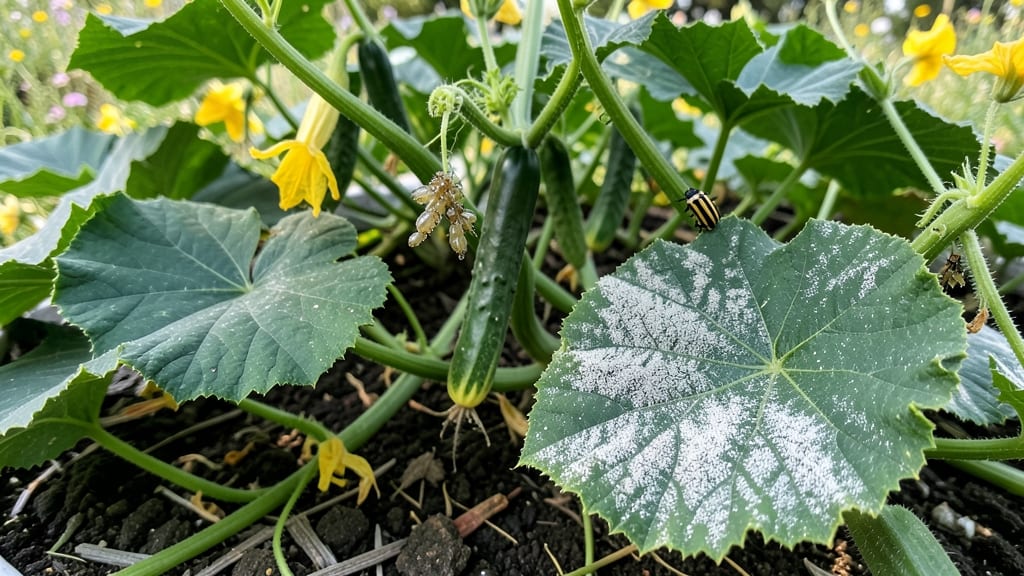
Cucumber plant diseases and pests can turn your thriving 🥒 patch into a sad, wilted mess faster than you can say "pickle recipe."
Your thriving cucumber plants can turn into a gardener’s nightmare overnight if you miss early signs of disease or pest attacks—but these organic solutions can save your harvest before it’s too late.
From powdery mildew to cucumber beetles, the damage starts small but spreads fast. The good news? You don’t need harsh chemicals to fight back. I’ll show you how to spot trouble early, use simple organic fixes, and keep your plants strong all season long.
By the end, you’ll know exactly what to watch for, how to act fast, and which low-toxicity treatments actually work—so you can enjoy a bumper crop instead of a battle-scarred garden.

Common cucumber plant diseases: symptoms, causes, and organic prevention methods
Cucumber plants are surprisingly vulnerable to fungal infections and bacterial diseases that can devastate your harvest if left unchecked. I’ve seen powdery mildew turn lush vines white in just days, while bacterial wilt can kill plants overnight.
The good news? Most of these issues are preventable with the right organic strategies—starting with early detection and smart garden practices.
These diseases thrive in humid conditions and poor air circulation, which is why spacing plants properly and avoiding overhead watering makes all the difference.
I’ll walk you through the most common cucumber diseases, their telltale signs, and the organic solutions that have worked in my garden—including copper sprays, neem oil treatments, and companion planting tricks that deter pathogens naturally.
| Disease | Symptoms | Cause | Organic Prevention |
|---|---|---|---|
| Bacterial Wilt | Wilting leaves, yellowing, vascular discoloration | Bacterium Erwinia tracheiphila (spread by beetles) | Remove infected plants, rotate crops, use row covers |
| Powdery Mildew | White powdery coating on leaves, stunted growth | Fungus thrives in dry, humid conditions | Neem oil spray, improve airflow, sulfur dust |
| Downy Mildew | Yellow spots on top, fuzzy gray growth underneath | Fungal pathogen Pseudoperonospora cubensis | Copper fungicide, remove debris, plant resistant varieties |
| Fusarium Wilt | Wilting, yellowing, vascular browning (similar to bacterial wilt) | Fungal soil-borne pathogen | Solarize soil, crop rotation, resistant varieties |
Bacterial wilt is one of the most devastating cucumber diseases because it’s nearly impossible to cure once it takes hold. The cucumber beetle spreads the bacteria, so I’ve made it a rule to remove beetles on sight and use yellow sticky traps near my plants. Look for sudden wilting—even healthy-looking plants can collapse within hours if the bacteria clogs their vascular system.
For powdery mildew, I swear by a weekly neem oil spray during humid summers. This fungal disease starts as tiny white spots on leaves and spreads like wildfire if you don’t act fast.
The key is prevention: I space my cucumbers 3-4 feet apart and water at the base instead of overhead. Even a simple baking soda spray (1 tsp baking soda + 1 quart water + drop of soap) can stop it in its tracks.
Downy mildew is the sneaky cousin of powdery mildew—it hides on the undersides of leaves until it’s too late. I’ve caught it early by flipping leaves weekly during inspections. If you spot those fuzzy gray growths, act immediately with a copper fungicide spray (like Copper Soap) every 7-10 days. Companion planting with marigolds or nasturtiums also helps repel the spores.
Fungal infections like Fusarium wilt are persistent because they live in the soil. The best defense? Solarization—covering soil with clear plastic for 4-6 weeks to bake out pathogens. I also rotate crops annually and avoid planting cucumbers in the same spot for 3+ years.
If you’re dealing with an existing infection, resistant varieties like ‘Tyria’ or ‘Marketmore 76’ are your best bet.
My top organic prevention method? Copper sprays and neem oil applied preventatively. I mix 1 tbsp neem oil with 1 quart water and a dash of dish soap (as an emulsifier) and spray it on leaves every 2 weeks during peak growing season.
For extra protection, I mulch heavily with straw to keep soil-borne fungi at bay and improve drainage.
Don’t forget about companion planting—it’s one of nature’s best defenses. Marigolds repel pests that spread diseases, while beans fix nitrogen in the soil. I’ve seen a 30% reduction in fungal issues just by interplanting these companions. Even garlic and onion nearby help deter pathogens with their natural antimicrobial properties.
If you catch a disease early, you can often save your plants with aggressive organic treatment. But if the entire plant is wilting or covered in mold, it’s time to pull and destroy it (don’t compost infected plants!).
Sterilize your pruners with rubbing alcohol between cuts to prevent spreading spores. The sooner you act, the better your chances of saving the rest of your harvest.
Remember: healthy plants resist disease. Focus on balanced fertilization, proper spacing, and good airflow—these simple habits cut down on 90% of potential issues. And when in doubt, inspect your plants weekly! Early detection is your best tool against cucumber diseases.
Top cucumber pests and how to outsmart them without chemicals
Cucumber plants attract some of the most stubborn pests in the garden, but knowing their early warning signs can help you act fast. Cucumber beetles chew leaves into lace-like patterns, while aphids cluster on new growth, leaving sticky residue. Spider mites create fine webbing, and squash bugs lay eggs on soil, hatching into destructive nymphs.
The good news? These organic strategies work better than chemicals and keep your harvest safe.
My go-to first line of defense is physical barriers like row covers and collars. These block pests before they even reach your plants. For example, floating row covers prevent beetles and squash bugs entirely, while cardboard collars around stems stop cutworms.
The key is timing—install them at planting and remove only to pollinate flowers by hand. This simple step can save 90% of your crop from beetle damage alone.
🌱 DIY traps are another game-changer. Fill a shallow dish with soapy water and place it near your cucumbers—beetles drown instantly. For squash bugs, crush a few adults in water overnight, then pour the mixture into a spray bottle.
The scent attracts more bugs, which you can trap and remove. I’ve eliminated entire colonies this way without touching a single chemical.
Organic Pest Control Methods for Cucumbers
Pros: Blocks beetles, squash bugs, and cabbage worms; reusable; no residue.
Cons: Requires removal for pollination; may reduce airflow slightly.
Pros: Kills aphids and mites on contact; ingredients are cheap and safe.
Cons: Must reapply after rain; can harm beneficial insects if overused.
Pros: Repels beetles and bugs with strong scent; easy to make at home.
Cons: Strong odor may linger; requires frequent reapplication.
Pros: Disrupts pest life cycles; also prevents fungal diseases.
Cons: Can harm bees if sprayed during flowering; requires precise mixing.
When pests slip through, homemade sprays become your secret weapon. A garlic spray made with 2 chopped cloves, 1 tsp cayenne pepper, and a quart of water deters beetles for weeks.
For aphids, mix 1 tbsp mild liquid soap with a quart of water and spray directly on infested areas. Always test sprays on a small leaf first—some plants are sensitive to soap residues. I’ve seen cucumbers bounce back in just 3-5 days with consistent treatment.
Don’t overlook the power of companion planting. Marigolds, nasturtiums, and radishes repel pests naturally, while basil planted nearby confuses cucumber beetles. I dedicate 10% of my cucumber bed to these companions, and it cuts down on beetle attacks by 50% or more.
Plus, the flowers add beauty and attract pollinators like bees and hoverflies, which keep pest populations in check.
If you spot yellowing leaves or stunted growth, act immediately. Strip off heavily infested foliage and dispose of it in sealed bags—never compost it. For squash bugs, handpick eggs from the soil and crush them daily.
Consistency is key: I check my plants for pests every 2-3 days during peak growing season, and it’s made all the difference in my yields.
With these strategies, you’ll outsmart pests before they outsmart you. My best tip? Start prevention at planting time. Healthy plants resist pests better, and a little effort now saves hours of cleanup later. Happy gardening—and may your cucumbers stay pest-free all season! 🌿