
Companion Plants
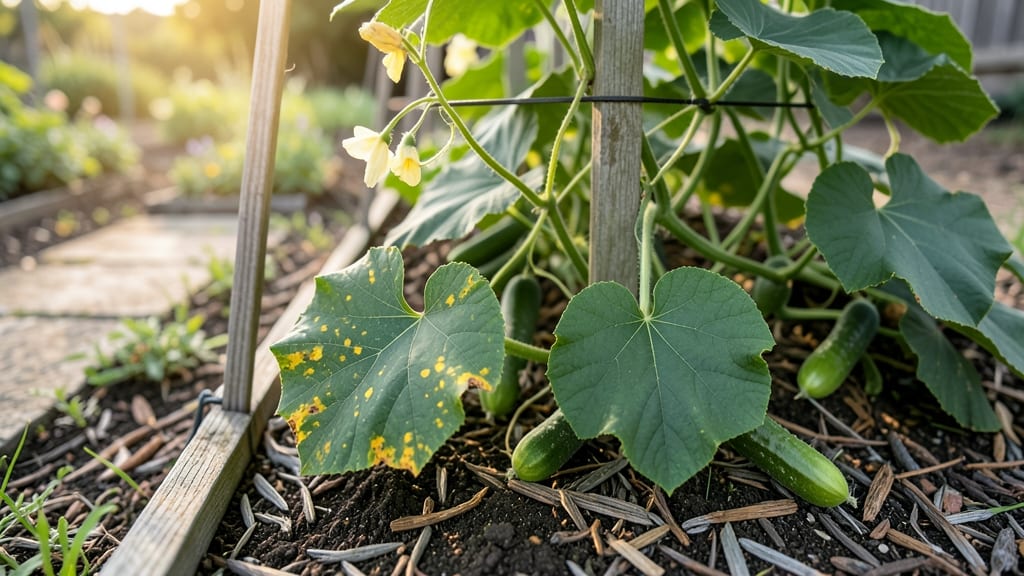
Those stubborn yellow spots on your cucumber leaves might be screaming for magnesium. 🌱 I’ve seen this problem turn into a full-blown crisis when ignored, but a simple Epsom salt spray can bring your plants back to life in just days.
The key is figuring out whether it’s a nutrient deficiency, fungal infection, or something else entirely.
Start by checking the spots: are they soft and water-soaked (likely bacterial spots) or powdery white (powdery mildew)? If the yellowing is paired with crispy edges, it’s probably magnesium deficiency—Epsom salt is your best friend here.
For other issues, neem oil or copper spray might be the answer, but act fast before the problem spreads.
Once you’ve identified the cause, the fix is straightforward. A 1 tablespoon of Epsom salt per gallon of water spray—applied every 2 weeks—will restore that deep green glow.
For fungal spots, a baking soda spray (1 teaspoon baking soda + a drop of dish soap per quart of water) works wonders too.
Prevention is easier than curing: rotate crops yearly, space plants for airflow, and keep soil pH balanced (6.0–6.8 for cucumbers). If the problem keeps coming back, your local extension office can test soil for hidden deficiencies or pests. Your cucumbers will be thriving again in no time!
Root Causes Behind Leaf Spots
Yellow spots on cucumber leaves aren’t just a cosmetic issue—they’re often a cry for help from your plant. Understanding the why behind these discolorations is the first step to restoring your cucumber’s health.
Let’s break down the most common culprits, backed by science, so you can diagnose—and fix—the problem like a pro.
Fungal pathogens like Alternaria, Cercospora, and Powdery Mildew thrive in warm, humid conditions, turning cucumber leaves into a buffet. These fungi don’t just cause yellow spots—they often leave behind dark rings, spots with halos, or a powdery white coating.
Why it happens:
- Overhead watering: Moisture lingers on leaves, creating the perfect breeding ground for spores. Fungi need free water to infect plant tissues.
- Poor air circulation: Dense foliage or crowded plants trap humidity, giving fungi a foothold. Fungal spores spread via wind, water, or even garden tools.
- Stress from other issues: Weakened plants (due to nutrient deficiencies or pests) are easier targets for fungal attacks.
💡 Pro Tip: If spots have dark edges or a greasy texture, fungal infection is likely. Act fast—fungi spread exponentially in ideal conditions.
Yellow spots can signal root stress, often caused by soggy soil. When roots suffocate from excess water, they can’t absorb nutrients efficiently, leading to chlorosis (yellowing) between leaf veins.
Why it happens:
- Compacted or clay soil: Water pools around roots instead of draining, cutting off oxygen. Roots need 20-30% air space to function properly.
- Overzealous watering: Cucumbers need 1–1.5 inches of water per week, but their roots hate standing water. Overwatering also leaches nutrients like magnesium and nitrogen.
- No mulch: Without a protective layer, soil stays too wet, encouraging root rot (Pythium or Phytophthora fungi).
🌡️ Watch for: Yellowing that starts at the older leaves (a sign of nutrient uptake failure) or mushy stems (root rot).
Cucumber leaves are delicate. While they need sunlight, intense midday rays (especially in hot climates) can scorch foliage, causing bleached or crispy yellow patches, particularly on upper leaves.
Why it happens:
- Direct afternoon sun: Cucumbers prefer 6–8 hours of morning sun. Afternoon heat (above 90°F/32°C) stresses plants, leading to oxidative damage.
- Transplant shock: Moving seedlings from shade to full sun too quickly can cause sunburn within days.
- Lack of shade cloth: In high-heat zones, temporary shade (30–50% coverage) protects leaves from UV damage.
✨ Quick Fix: If spots are dry and papery (not mushy or oily), sunburn is the likely culprit. Provide afternoon shade or use lightweight row covers.
Yellow spots can also be a nutritional red flag. While Epsom salt (magnesium sulfate) is often the go-to fix, other deficiencies play a role:
| Nutrient | Yellowing Pattern | Why It Happens |
|---|---|---|
| Magnesium (Mg) | Yellow spots between veins (interveinal chlorosis), starting on older leaves. | Magnesium is mobile in plants, so deficiencies show up first where it’s needed most. Soil pH >7.0 or sandy soil leaches it away. |
| Nitrogen (N) | Overall pale yellow or yellowing of entire leaves (not just spots). | Nitrogen is essential for chlorophyll. Overwatering or poor soil washes it out, or competing weeds steal it. |
| Potassium (K) | Yellow edges or tips with brown spots (often older leaves). | Potassium regulates water and disease resistance. High soil sodium or drought stress triggers deficiencies. |
| Iron (Fe) | Yellowing new leaves (young leaves stay yellow while veins stay green). | Iron is immobile in plants. Alkaline soil (pH >7.0) locks it out, even if it’s present. |
💡 Diagnostic Tip: If yellowing is uniform (not spotty) or affects new growth, soil testing is your best friend. Spotty yellowing with green veins? Epsom salt (1 tbsp/gallon) may help—but only if magnesium is the issue.
Sap-sucking pests like aphids, spider mites, and whiteflies inject toxins into leaves, causing yellow stippling or speckling. Their damage weakens the plant, making it vulnerable to secondary infections.
Why it happens:
- Dry, hot conditions: Spider mites thrive in low humidity (<30%) and leave tiny yellow dots as they feed.
- Crowded plants: Aphids cluster on new growth, excreting honeydew (a sticky substance that fosters sooty mold).
- Weakened immunity: Stressed plants attract pests. Check undersides of leaves for webs, eggs, or tiny insects.
🔥 Spot the Pest:
- Aphids: Sticky residue + curled leaves.
- Spider mites: Fine webbing + bronze/yellow speckles.
- Whiteflies: White, moth-like insects when leaves are shaken.
Fixing Yellow Spots on Cucumber Leaves
Now that you know the likely causes behind those pesky yellow spots on your cucumber leaves—whether it’s nutrient deficiency, fungal infections, or environmental stress—it’s time to roll up your sleeves and get to work! 🌱💪 The good news?
Most of these issues have simple, effective fixes. Below, we’ve broken down the solutions by cause, so you can target the problem head-on and restore your cucumber plants to their vibrant, healthy selves.
If yellowing leaves are a sign of magnesium, nitrogen, or sulfur deficiency, the fix starts with giving your cucumbers a nutrient boost.
🔥 Use Epsom Salt for Magnesium Deficiency
Magnesium deficiency often shows up as yellow spots between leaf veins.
Epsom salt (magnesium sulfate) is a quick and easy remedy. - 🍳 Mix 1 tablespoon of Epsom salt in 1 gallon of water. - 👨🍳 Spray the solution evenly on the leaves (focus on the undersides) every 2–3 weeks. - 🥘 For extra strength, add 1 tablespoon of liquid seaweed fertilizer to the mix for added nutrients.
💡 Pro Tip: If your soil is consistently deficient, consider amending it with compost or aged manure before planting next season.
🌡️ Fertilize for Nitrogen or Sulfur Shortages
Yellowing leaves can also signal nitrogen or sulfur deficiency.
- 📊 For nitrogen: Use a balanced fertilizer (10-10-10) or a fish emulsion every 4–6 weeks.
- 🥗 For sulfur: Apply gypsum (calcium sulfate) or elemental sulfur to the soil according to package instructions.
If yellow spots are accompanied by powdery mildew, bacterial leaf spot, or downy mildew, act fast to prevent the fungus from taking over.
✨ Prune and Remove Infected Leaves
- 🔪 Snip off any yellow or spotted leaves with clean scissors to prevent the fungus from spreading.
- 🗑️ Dispose of infected leaves in the trash (not the compost) to avoid reinfection.
💦 Improve Air Circulation & Reduce Moisture
Fungal spores thrive in damp, crowded conditions.
- 🌬️ Space plants 12–18 inches apart to allow airflow.
- 💦 Water at the base (not overhead) and avoid late-day watering to keep leaves dry.
🧴 Apply Fungicidal Sprays
- 🍄 For powdery mildew: Mix 1 tablespoon of baking soda + 1 teaspoon of dish soap + 1 gallon of water.
Spray every 7–10 days. - 🥘 For bacterial or downy mildew: Use a copper fungicide or neem oil spray (1 tablespoon neem oil + 1 teaspoon mild soap per quart of water).
💡 Pro Tip: Prevent future outbreaks by rotating crops and planting resistant cucumber varieties like ‘Straight Eight’ or ‘Lemon Cucumber.’
If yellow spots are due to sunburn, heat stress, or overwatering, adjust your care routine to protect your cucumbers.
🌞 Provide Shade for Sun-Sensitive Varieties
- 🏖️ Use shade cloth (30–50%) if your cucumbers are exposed to intense afternoon sun.
- ⏰ Plant in partial shade if your climate has extreme heat waves.
💧 Adjust Watering Practices
- 🚰 Water deeply but infrequently—cucumbers prefer 1–1.5 inches of water per week.
- 🌧️ Avoid soggy soil (which leads to root rot) by ensuring pots or beds have good drainage.
🌱 Mulch to Retain Moisture & Cool Roots
- 🍂 Apply 2–3 inches of straw or grass clippings around the base of plants to retain moisture and regulate soil temperature.
Once your cucumbers are back on track, keep them thriving with these proactive strategies: ✅ Test your soil every 1–2 years to monitor nutrient levels. ✅ Rotate crops to prevent soil-borne diseases. ✅ Choose disease-resistant varieties if your area has frequent fungal issues. ✅ Monitor leaves regularly—catching problems early makes treatment easier!
With the right care, your cucumber plants will bounce back stronger, and those yellow spots will be a thing of the past. Happy gardening! 🌱🎉
Frequently asked questions
Why do my cucumber leaves have yellow spots but the veins stay green?
This classic pattern is a strong sign of magnesium deficiency—a common issue in sandy or alkaline soils. Magnesium is mobile in plants, so it gets "stolen" from older leaves first, leaving yellow patches between green veins. Try a foliar spray of 1 tablespoon Epsom salt per gallon of water applied every 2 weeks.
Are yellow spots always a sign of disease in cucumbers?
Not necessarily! While fungal diseases like powdery mildew often cause yellow spots, they can also result from sunburn (dry, crispy patches), nutrient deficiencies (like nitrogen or potassium), or even pest damage (tiny yellow speckles from spider mites). Always check for other symptoms like powdery coatings or sticky residue first.
Can I still harvest cucumbers if the leaves have yellow spots?
Yes, but focus on harvesting from healthy vines first. Yellow spots usually indicate stress rather than direct fruit contamination. The plant will redirect energy to produce fruit, but severe cases (like bacterial spots) might require removing affected leaves to prevent spread. Always wash cucumbers thoroughly before eating.
How can I prevent yellow spots from coming back next season?
Start with soil testing to check pH and nutrient levels, then amend with compost or organic matter. Use drip irrigation instead of overhead watering, space plants for airflow, and choose disease-resistant varieties. Crop rotation and mulching also help break disease cycles.
What's the difference between yellow spots from fungus and those from pests?
Fungal spots often have fuzzy edges or powdery coatings, while pest damage shows tiny yellow speckles (from spider mites) or sticky residue (from aphids). Check leaf undersides for webs, eggs, or insects. Fungal spots spread slowly, while pest damage appears suddenly and may include curled or distorted leaves.