
Pests and Diseases
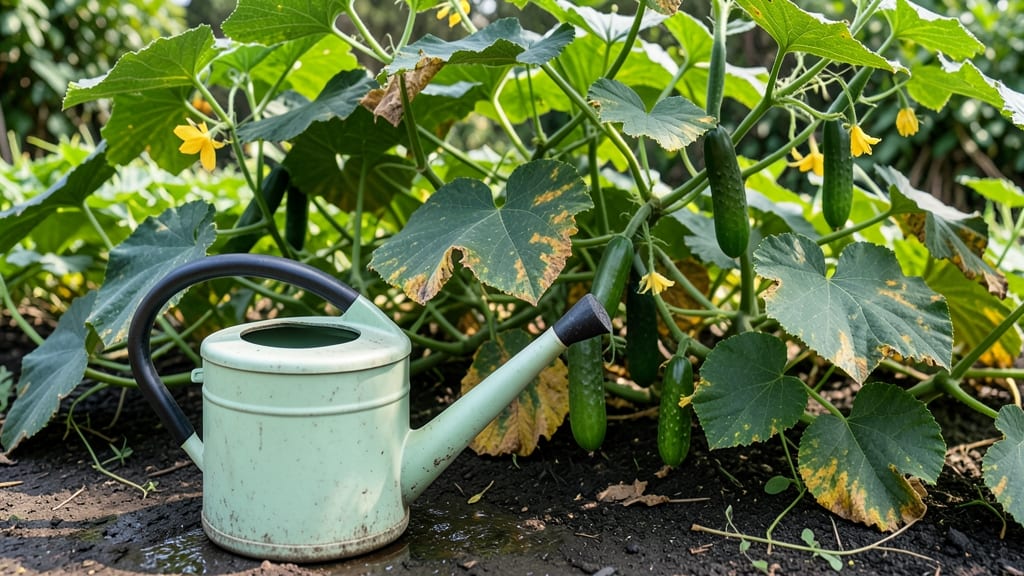
Your cucumber leaves turning yellow and brown? That’s your plant’s SOS signal—and it’s fixable. 🌱 I’ve saved more cucumbers than I’ve lost, and the key is acting fast before the problem spreads. The good news? Most causes have simple solutions, whether it’s overwatering, pests, or a hidden fungal infection.
First, check the soil moisture—soggy roots or bone-dry dirt both trigger stress. Then inspect the undersides of leaves for spider mites or powdery white spots (powdery mildew). A nutrient deficiency, like nitrogen or magnesium, can also cause yellowing, especially if older leaves turn first.
The fix? Adjust your watering, spray neem oil for pests, or feed with a balanced fertilizer.
Within days, you’ll see new green growth if you catch it early. Prevention is easier: water at the base (not overhead), space plants for airflow, and rotate crops yearly.
If the problem persists after a week, it might be time to consult a local extension service for a soil test or targeted treatment.
Don’t panic—this is a common issue, and cucumbers bounce back fast with the right care. The sooner you act, the sooner you’ll be back to harvesting crisp, vine-ripened cucumbers. Let’s get those leaves healthy again!
Root Causes Behind Yellowing Brown Leaves
Understanding why your cucumber leaves are turning yellow and brown is the first step to saving your plant. These changes are rarely random—they’re often your plant’s way of signaling distress. Below, we break down the most common culprits, from environmental stressors to hidden pests, with clear explanations and actionable insights.
When cucumber leaves turn yellow and brown, overwatering is often the silent villain. Unlike drought stress, which causes crispy edges, excess moisture leads to: - Root suffocation: Compacted, waterlogged soil cuts off oxygen, forcing roots to "drown."
Without oxygen, roots can’t absorb nutrients or water efficiently, causing leaves to yellow (chlorosis) and eventually brown as they die. - Fungal infections: Stagnant water creates the perfect breeding ground for pathogens like Pythium or Phytophthora, which rot roots and spread upward, turning leaves mushy and discolored. - Nutrient leaching: Overwatering washes away essential minerals (like nitrogen and potassium) from the soil, leaving leaves starved and prone to yellowing.
How to spot it: Check the soil—if it’s soggy 1–2 inches down or water pools around the base for hours, you’re overdoing it. Brown leaves may also feel soft or mushy to the touch.
On the flip side, chronic underwatering triggers a survival response in cucumbers.
These plants are 95% water, and when deprived, they: - Lose turgor pressure: Cells collapse as moisture evaporates faster than roots can replenish it, causing leaves to wilt, yellow, and crisp at the edges before turning brown. - Stunt nutrient transport: The plant prioritizes water delivery to critical organs (like fruits), leaving older leaves to bear the brunt of stress.
This is why lower leaves yellow first. - Develop sunburn: Wilting leaves can’t protect themselves from intense sunlight, leading to bleached or brown patches (especially on upper surfaces).
How to spot it: Soil feels dry 1–2 inches deep, leaves are crispy to the touch, and the plant appears limp even in the morning. Cucumbers need 1–1.5 inches of water per week (more in heatwaves).
Cucumbers are heavy feeders, and deficiencies in key nutrients can mimic disease symptoms. Here’s what to watch for:
| Symptom | Likely Deficiency | What It Means |
|---|---|---|
| Yellowing between veins | Nitrogen (N) | Chlorosis starts on older leaves (the plant "steals" N from them to survive). |
| Brown, crispy edges | Potassium (K) | Weak cell walls can’t regulate water, leading to scorched tips. |
| Yellowing with purple stems | Phosphorus (P) | Stunted growth + dark leaves signal P struggles (common in cool soils). |
| Pale green/yellow leaves | Magnesium (Mg) | Interveinal chlorosis (yellowing between veins) on older leaves first. |
Pro Tip: Test your soil (or use a simple DIY test kit)—cucumbers thrive in pH 6.0–6.8. Amend soil with compost or balanced fertilizer (10-10-10) if deficiencies are confirmed.
Tiny invaders can cause brown, chewed, or speckled leaves without obvious signs of disease. Common culprits: - Spider mites: Tiny yellow/red dots on leaves that weave webs and cause stippling (tiny brown specks).
They thrive in dry, hot conditions and suck sap, starving leaves. - Aphids: Cluster on undersides, excreting sticky honeydew (which fosters sooty mold, a black fungal film). Leaves may curl and yellow from sap loss. - Cucumber beetles: Chewing notches on leaves + yellow halos around feeding sites.
They also spread bacterial wilt, a fatal disease. - Fungal or bacterial spots: Circular brown/yellow patches with dark borders (e.g., Alternaria leaf spot) or water-soaked lesions (Pseudomonas).
How to spot them: Inspect leaf undersides with a magnifying glass. Shake plants over a white sheet—pests will drop.
Cucumbers are tropical annuals and struggle outside their comfort zone: - Heat stress: Temperatures above 90°F (32°C) cause sunscald—leaves develop bleached or brown patches, especially on upper surfaces.
Young leaves may cup or pucker. - Cold damage: Below 50°F (10°C), growth slows, and leaves turn yellow-brown and mushy.
Frost instantly kills tissue, leaving crispy, brown patches. - Windburn: Strong winds desiccate leaves, causing brown, papery edges (similar to underwatering but often on exposed leaves).
Solution: Use shade cloth in heatwaves, row covers for frost, and windbreaks (like burlap screens) in exposed areas.
If leaves turn yellow-brown with spots, lesions, or mold, a pathogen is likely at work: - Powdery mildew: White, powdery coating on leaves that turns yellow-brown as it spreads.
Thrives in humid, shady conditions. - Downy mildew: Yellow spots on top, fuzzy purple-gray mold on undersides. Spreads via splashing water. - Bacterial leaf spot: Water-soaked brown spots with yellow halos. Often appears after rain or overhead watering.
Key difference: Fungal diseases often have visible spores or mold, while bacterial spots are greasy to the touch and ooze when pressed.
Too much of a good thing can fry your cucumbers: - Salt burn: Excessive synthetic fertilizers or poor-quality water (high sodium) cause brown, crispy leaf edges and stunted growth.
Soil may look crusty or white (salt buildup). - Herbicide drift: If nearby weeds were sprayed, cucumber leaves may develop irregular brown patches or bleaching. - pH imbalance: Soil too acidic (<5.5) or alkaline (>7.5) locks out nutrients, causing yellowing + brown leaf tips.
Fix: Flush soil with water to dilute salts, or amend with lime (to raise pH) or sulfur (to lower pH).
Quick Fixes for Reviving Your Cucumbers
Now that you know the common causes behind those unsightly yellow and brown leaves on your cucumber plants, let’s roll up our sleeves and get to work! 🌱💪 The good news?
Most of these issues are fixable with a little attention and care. Below are targeted solutions for each problem, along with prevention tips to keep your plants thriving.
Fix it fast:
- Check the soil moisture – Stick your finger about an inch into the soil. If it’s soggy, hold off on watering for a few days. Cucumbers prefer consistent moisture but hate waterlogged roots.
- Improve drainage – If your pots or garden bed retain too much water, add perlite, coarse sand, or compost to the soil to create better airflow.
- Repot if needed – If roots are sitting in standing water, transfer the plant to a container with drainage holes or a raised bed.
- Trim damaged leaves – Use sterilized scissors to snip off yellow or mushy leaves to redirect energy to healthy growth.
💡 Pro Tip: Water early in the morning to allow excess moisture to evaporate before nightfall.
Fix it fast:
- Water deeply and regularly – Aim for 1–1.5 inches of water per week, either from rainfall or manual watering. Use a soaker hose or drip irrigation to deliver water directly to the roots.
- Mulch to retain moisture – Spread 2–3 inches of organic mulch (straw, wood chips, or grass clippings) around the base of the plant to lock in moisture.
- Provide shade during peak heat – If temperatures soar above 90°F (32°C), use shade cloth (30–50%) or a temporary shade structure to protect leaves.
- Prune sunburned leaves – If edges are crispy and brown, trim them back to encourage new, healthier foliage.
🌡️ Watch Out For: Overcompensating with water can lead to root rot—balance is key!
Fix it fast:
- Blast pests off – Spray plants with a strong stream of water to dislodge aphids and spider mites. Do this early in the morning for best results.
- Use neem oil or insecticidal soap – Mix 1–2 tablespoons of neem oil with a quart of water and a drop of dish soap. Spray every 5–7 days until pests are gone.
- Introduce beneficial insects – Ladybugs, lacewings, and parasitic wasps love eating cucumber pests. Buy them online or attract them with dill or fennel plants.
- Set up yellow sticky traps – These catch flying pests like cucumber beetles before they lay eggs.
- Remove heavily infested leaves – Drop them into a soapy water bucket to kill pests and prevent spread.
🔥 Emergency Move: If beetles are devastating your plant, cover young cucumbers with floating row covers to protect them while the plant recovers.
Fix it fast:
- Prune infected leaves immediately – Cut off yellow, spotted, or powdery leaves and dispose of them in the trash (not compost).
- Apply a fungicide –
- Baking soda spray: Mix 1 teaspoon baking soda + 1 quart water + a few drops of dish soap. Spray every 7–10 days.
- Copper fungicide: Follow package instructions for preventive and curative treatment.
- Improve airflow – Space plants 18–24 inches apart and avoid overcrowding.
- Water at the base – Avoid wetting leaves to prevent spore spread. Use a watering can with a narrow spout or drip irrigation.
💡 Prevention Power Move: Rotate crops—don’t plant cucumbers in the same spot next year to break disease cycles.
Fix it fast:
- Test your soil – A simple soil test kit (available at garden centers) will tell you if your cucumbers need nitrogen (N), phosphorus (P), or potassium (K).
- Fertilize correctly –
- For yellow leaves (nitrogen deficiency): Use a balanced fertilizer (10-10-10) or compost tea.
- For brown edges (potassium deficiency): Apply wood ash or a banana peel tea (rich in potassium).
- For interveinal yellowing (magnesium deficiency): Sprinkle Epsom salt (1 tablespoon per gallon of water) every 2 weeks.
- Feed organic matter – Mix well-rotted manure or compost into the soil before planting for long-term nutrition.
📊 DIY Fertilizer Chart:
| Issue | Quick Fix | Prevention |
|---|---|---|
| Pale yellow leaves | Compost or nitrogen-rich fertilizer | Mulch with nitrogen-rich materials |
| Brown leaf edges | Banana peel tea or potassium fertilizer | Avoid overwatering |
| Yellow between veins | Epsom salt spray | Test soil pH (ideal: 6.0–6.8) |
- Support your cucumbers – Use trellises or cages to improve airflow and reduce disease risk.
- Harvest regularly – Pick cucumbers every 2–3 days to encourage new growth and prevent stress.
- Rotate crops – Avoid planting cucumbers (or related plants like squash) in the same spot for 3 years to prevent soil-borne diseases.
- Monitor daily – Check leaves every few days for early signs of trouble. Catching issues early = easier fixes!
Final Thought: 🎯 Most cucumber leaf problems are manageable with quick action. Focus on proper watering, pest control, and soil health, and your plants will bounce back stronger than ever!
Frequently asked questions
Why are my cucumber leaves turning yellow first, then brown?
This is often a sign of nutrient deficiency or water stress. When older leaves yellow between veins, it usually means a magnesium deficiency (common in alkaline soils). If edges brown first, check for potassium deficiency or underwatering. Both issues force the plant to prioritize new growth over older leaves.
Can I save my cucumber plant if most leaves are already brown and crispy?
It depends! If the central stem and new growth are still healthy, prune all brown leaves (down to the main stem) and adjust care immediately. For severe cases, check for root rot (smell the soil—rotten odor = bad news). If roots look black/mushy, repot with fresh soil. Otherwise, focus on water consistency and fertilizer.
How do I tell if my cucumber leaves are dying from pests vs. disease?
Pests leave physical damage: spider mites cause tiny brown specks and webbing, while cucumber beetles create chewed notches with yellow halos. Diseases show as spots with mold (powdery mildew) or greasy lesions (bacterial spots). Check leaf undersides with a magnifying glass—pests often hide there.
Will Epsom salt fix yellowing cucumber leaves?
Only if the issue is a magnesium deficiency! Mix 1 tablespoon Epsom salt per gallon of water and spray leaves every 2 weeks. For other yellowing (like nitrogen deficiency), use compost tea or balanced fertilizer (10-10-10). Always test soil first—pH matters! Cucumbers thrive in 6.0–6.8 pH.
How often should I water cucumbers to prevent yellow/brown leaves?
Aim for 1–1.5 inches of water per week, delivered at the base of the plant (never overhead). Water early morning to reduce fungal risks. Check soil moisture daily in extreme heat—cucumbers need consistent moisture but hate soggy roots. Mulch with straw to retain moisture and prevent evaporation.