
Pests
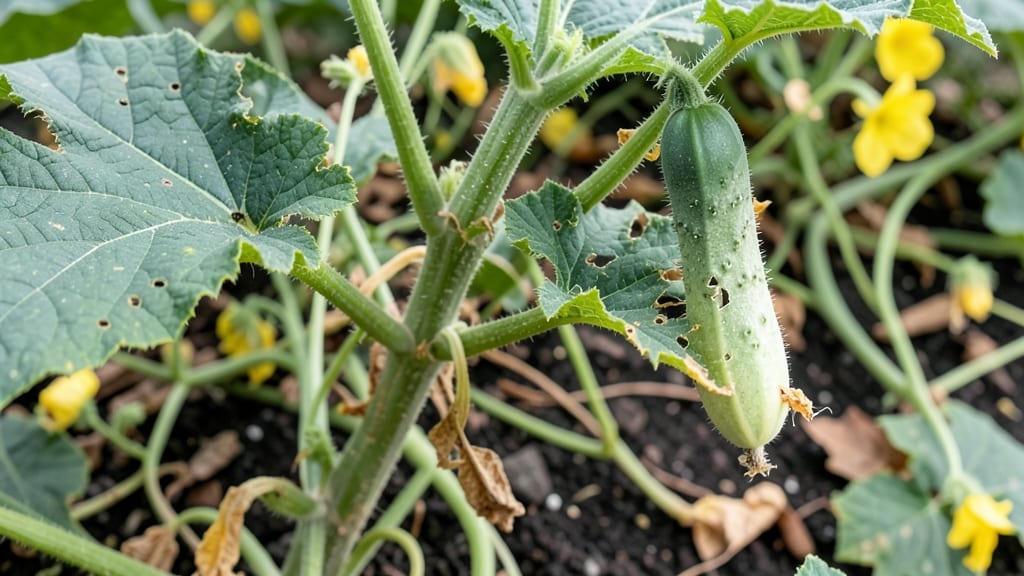
Cucumber beetle damage turns your thriving vines into skeleton leaves overnight—🌱 I’ve watched my prized cucumbers go from lush to lifeless in days. These striped pests don’t just chew leaves; they spread bacterial wilt, a silent killer that can wipe out entire plants before you even notice.
The first sign is jagged holes in leaves, but the real damage comes from their feeding scars, which create entry points for disease. I learned the hard way that waiting to act means losing your harvest. The good news?
Organic sprays like neem oil or kaolin clay can stop them in their tracks when applied at the right time. By combining sprays with row covers and trap plants like radishes, you’ll reclaim your garden in 2-3 weeks.
The key is acting fast—once bacterial wilt takes hold, there’s no saving the plant. But with these fixes, your cucumbers can bounce back stronger than ever.
Most gardeners panic when they spot the first beetle, but the solution is simpler than you think. Start by hand-picking adults in the morning when they’re sluggish, then apply your chosen spray every 5-7 days during peak beetle season.
The goal isn’t perfection—it’s breaking their life cycle before they multiply. What you’ll end up with is a cucumber patch that stays healthy enough to produce plump, disease-free fruit all season. The sprays work best when combined with preventive measures like reflective mulch or early planting of trap crops.
Even if you miss a few beetles, your plants will have the resilience to fight back.
This approach works for both backyard gardens and larger plots, and it’s safe for pollinators when used correctly. The secret is consistency—skipping a spray or two gives beetles a chance to regroup.
But once you’ve got the routine down, you’ll wonder why you ever struggled with them in the first place.
The Real Culprits Behind Plant Harm
Cucumber beetles—those tiny, striped invaders—aren’t just a nuisance; they’re stealthy plant saboteurs. Their damage stems from a mix of feeding habits, disease transmission, and reproductive behaviors.
Understanding why they wreak havoc on your cucumbers, melons, and squash is the first step to outsmarting them. Let’s break down the science behind their destructive tendencies.
Cucumber beetles (both Acalymma vittatum and Diabrotica undecimpunctata) have mandibles built for destruction. Their sharp, saw-like mouths chew through plant tissue, leaving behind:
- Ragged holes in leaves, weakening photosynthesis and stunting growth.
- Notched or serrated edges on stems, which can girdle young plants and kill them.
- Sap leakage, creating sticky residue that attracts mold and secondary pests.
Adult beetles prefer new growth—vines, flowers, and young leaves—because the tender tissue is easier to devour. Pro tip: If you spot chewed leaves with a silvery sheen, that’s beetle saliva drying—your plants are under siege.
Here’s the real kicker: Cucumber beetles don’t just eat—they infect. As they feed, they spread Erwinia tracheiphila, the bacterium causing bacterial wilt, a fatal disease for cucurbit crops. The process works like this:
- Beetles ingest bacteria from infected plants.
- The bacteria multiply in their gut, then re-enter their saliva.
- When they bite a new plant, they inject the pathogen directly into the vascular system.
Once infected, plants wilt rapidly (hence the name), even with adequate water. The disease clogs xylem vessels, cutting off nutrient flow. No cure exists—prevention is your only defense.
Adult beetles aren’t the only menace—their larvae (grubs) are just as destructive. Females lay eggs in soil near host plants, and when the larvae hatch, they:
- Burrow into roots, chewing on fibrous tissue and disrupting water uptake.
- Feed on decaying organic matter, but also attack healthy roots if food is scarce.
- Create entry points for soil-borne pathogens, like fungi or nematodes.
Larval damage often goes unnoticed until plants suddenly wilt or show stunted growth—by then, the beetles may have already moved on. Pro tip: Check soil near plants for tiny white grubs (½ inch long) with brown heads.
Cucumber beetles aren’t random—they’re drawn to specific conditions:
- Young, vigorous plants: Beetles target new growth because it’s nutrient-rich and tender.
- Cucurbit family crops: They have a chemical preference for cucumbers, melons, squash, and pumpkins due to compounds like cucurbitacins (which some varieties produce to deter pests).
- Warm, sunny microclimates: Beetles thrive in temperatures above 70°F (21°C) and prefer dry, sandy soil for egg-laying.
- Polyculture gardens: Beetles spread easily when multiple host plants grow nearby.
If your garden is a beetle buffet, they’ll keep coming back until you disrupt their cycle.
Now that you know why these pests target your plants, the next step is action. Stay tuned for organic spray solutions to stop the damage in its tracks.
Quick Fixes for Beetle-Battered Plants
Cucumber beetles may be tiny, but their damage can feel devastating—especially when your prized vines show up chewed, spotted, or wilted. The good news? You can fight back with organic, practical solutions that work fast and prevent future invasions.
Below, we break down the most effective fixes, organized by the root cause of the problem. Whether it’s direct feeding damage, disease spread, or root girdling, these steps will help you reclaim your garden—without harsh chemicals.
If your cucumbers, melons, or squash leaves look like Swiss cheese or have jagged edges, the beetles are actively munching. Act fast to minimize further harm.
🔥 Handpick & Crush (Best for Small Infestations)
- When to use: Early signs of damage (few holes, minimal wilting).
- How to do it:
- Go out early in the morning when beetles are sluggish (they’re slow after cool nights).
- Shake plants gently over a bucket of soapy water (1 tbsp dish soap per gallon) to dislodge them.
- Crush any you find on leaves or stems—no need to save them!
- Pro tip: 💡 Use a white tray or sheet under plants to spot beetles hiding in soil crevices.
🍳 Neem Oil Spray (Best for Heavy Feeding)
- Why it works: Disrupts beetle feeding and reproduction while being pet-safe.
- Recipe:
- Mix 2 tbsp neem oil + 1 tsp mild liquid soap + 1 quart water.
- Spray directly on beetles and undersides of leaves (they love hiding there!).
- Reapply every 5–7 days or after rain.
- Pro tip: 🌡️ Apply in early morning or late evening to avoid harming bees.
👨🍳 Diatomaceous Earth (DE) Barrier (Best for Soil-Dwelling Beetles)
- Why it works: DE’s microscopic particles dehydrate beetles on contact.
- How to use:
- Sprinkle a thin, even layer around plant bases and along rows.
- Avoid over-applying—it loses effectiveness when clumped.
- Reapply after rain or watering.
- Caution: ⚠️ DE can irritate lungs—wear a mask when applying.
Beetles thrive where they’re unnoticed and unchallenged. Break their cycle with these preventive barriers.
🥘 Row Covers & Physical Barriers (Best for Long-Term Protection)
- Why it works: Beetles can’t chew through fine mesh (like floating row covers).
- How to use:
- Install lightweight fabric over young plants at soil level.
- Secure edges with soil or bricks to prevent beetles from crawling underneath.
- Remove covers when flowers appear to allow pollination (or hand-pollinate if needed).
- Pro tip: ✨ Use yellow sticky traps near plants to lure and trap adult beetles before they lay eggs.
🔪 Trap Cropping (Best for Early Detection)
- Why it works: Beetles prefer certain plants—use them as a decoy!
- How to do it:
- Plant radishes, turnips, or nasturtiums near your cucurbits.
- Check these daily and destroy any beetles you find.
- Remove trap crops once beetles move to your main plants.
- Bonus: Nasturtiums also repel beetles naturally with their strong scent.
🌿 Companion Planting (Best for Natural Deterrence)
- Why it works: Some plants confuse or repel beetles with their smells.
- Best pairings:
- Marigolds (release a scent beetles dislike).
- Basil (plant near cucumbers to mask their scent).
- Oregano or thyme (beetles avoid their strong fragrance).
- Pro tip: 🎯 Interplant these among your cucurbits for maximum effect.
Even with beetles gone, your plants may still show wilting, stunted growth, or bacterial wilt. Here’s how to nurse them back to health.
💧 Hydration & Fertilizer Boost (Best for Wilting Plants)
- Why it works: Beetles sever roots and vascular tissue, causing water uptake issues.
- How to help:
- Water deeply 2–3 times per week (beetles thrive in drought-stressed plants).
- Use a balanced organic fertilizer (like fish emulsion or compost tea) to rebuild strength.
- Prune severely damaged leaves to redirect energy to healthy growth.
🔪 Remove Infected Tissue (Best for Bacterial Wilt)
- Why it happens: Beetles spread bacterial wilt, which clogs plant veins.
- How to treat:
- Cut off and destroy any yellowing, wilting, or discolored vines (don’t compost them!).
- Dip pruners in rubbing alcohol between cuts to prevent spread.
- Avoid overhead watering—water at the base only to limit bacterial splash.
🌿 Soil Health Check (Best for Root Damage)
- Why it matters: Beetles eat roots, leaving plants vulnerable to disease.
- How to fix:
- Add compost or worm castings to stimulate root regrowth.
- Mulch heavily (2–3 inches) to insulate roots and deter future beetles.
- Test soil pH—beetles love slightly acidic soil (pH 6.0–6.8); adjust if needed.
Final Reminder: 🚨 Consistency is key! Check plants daily for new beetles, especially after rain or warm spells. With these steps, your cucurbits can bounce back stronger—and next season, you’ll be one step ahead of those pesky striped invaders.
Frequently asked questions
What do cucumber beetle holes look like on leaves?
Look for irregular, jagged edges with notches along the leaf margins—unlike clean cuts from other pests. The damage often appears on newer growth, and you may spot tiny black or yellow beetles (about ⅛ inch long) hiding underneath leaves or on stems.
How do I know if my plants have bacterial wilt from beetles?
Check for sudden wilting (even with adequate water) and yellowing vines that feel mushy when squeezed. Cut open a stem—if it’s discolored or oozing, bacterial wilt has taken hold. Unlike drought stress, wilting happens within hours of infection, and there’s no cure.
Can neem oil harm my plants if I use too much?
Neem oil is safe when used correctly, but concentrated applications can burn tender leaves. Stick to the 2 tbsp per quart water ratio and test on a small area first. Avoid spraying in direct sunlight or when plants are stressed (like after transplanting).
Will row covers work if my cucumbers are already flowering?
Row covers block pollinators, so remove them when flowers appear. For existing flowers, hand-pollinate by gently tapping vines with a paintbrush. If beetles return, switch to yellow sticky traps or kaolin clay spray—both protect blooms while allowing bees to visit.
How long does it take to see results from diatomaceous earth?
DE works within 24–48 hours for visible beetles, but it takes 5–7 days to fully dehydrate larvae in soil. Reapply after rain or watering, and focus on dry, sunny conditions—DE loses effectiveness when wet. For best results, combine it with hand-picking adults in the morning.