
Pests
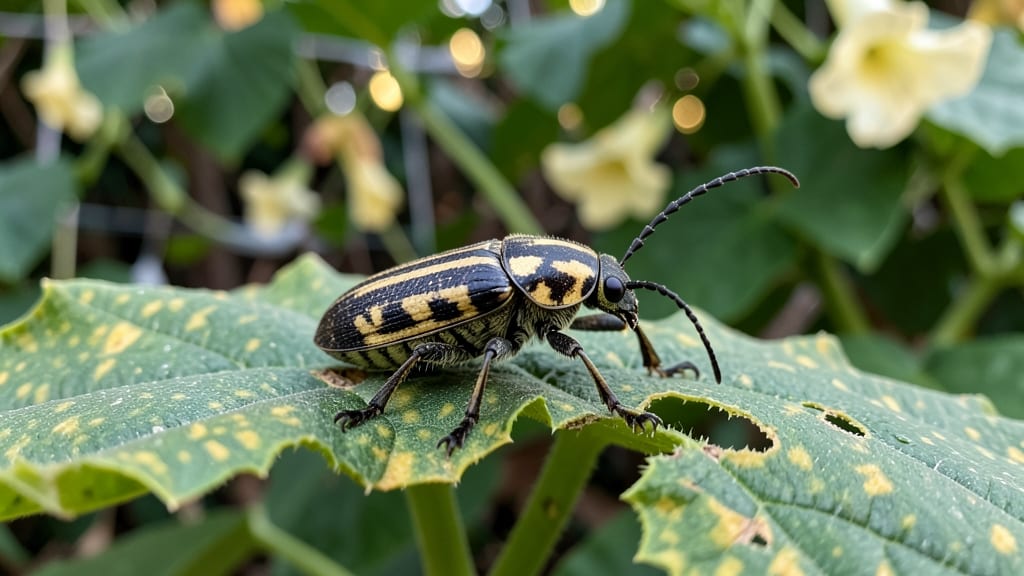
Noticing these cucumber beetle damage pictures on your plants? That’s the striped scourge of the garden—cucumber beetles—and they’re worse than just unsightly. 🌿 These yellow-and-black striped pests spread disease while they chew, turning healthy vines into a skeleton of leaves overnight.
I’ve watched entire squash plants wilt from their damage, and trust me, you don’t want to wait until your harvest is at risk.
The damage starts small but escalates fast: chewed leaf edges, silvery scars on stems, and wilting that spreads like a bad rumor. Worse, they carry bacterial wilt, which can kill plants in weeks.
But here’s the good news—you can spot their work early and stop them before they ruin your garden. I’ll show you exactly what to look for, plus the foolproof organic fixes that actually work (no more failing with store-bought sprays).
By the end, you’ll recognize their damage in seconds and have a battle plan ready. We’re talking row covers that block them, companion plants that repel them, and sprays that knock them out without harming your crop.
The key is acting fast—these beetles don’t wait, and neither should you. Let’s turn that “oh no” moment into a “got ‘em” victory.
This works for cucumbers, squash, melons, and even pumpkins—anything in the cucurbit family. Whether you’re dealing with a small patch or a full garden, the same tactics apply.
No more guessing if those holes are beetles or just bad luck. You’ll know exactly what to do the second you see the damage.
📚 In This Guide
- What you need
- Instructions
- Tips and common mistakes
- Wrapping up and next steps
What you need
- ● Camera or smartphone: For capturing cucumber beetle damage pictures—ensure it has at least 5MP resolution for clear details.
- ● Magnifying glass or loupe: 10x magnification to inspect beetle damage up close.
- ● Field guide or printed ID chart: For accurate beetle identification (striped vs. spotted varieties).
- ● Measuring tape or ruler: To document the size of affected plants or damage areas.
- ● Notebook or digital notes app: To log observations, dates, and locations of damage.
- ○ Gloves (optional but recommended): Nitrile or latex gloves to avoid direct contact with pests or contaminated plants.
- ● Spray bottle (8 oz): For applying homemade remedies like neem oil or soapy water.
- ● Row covers (floating fabric): Lightweight, breathable fabric (e.g., Agribon) to protect plants—measure based on garden bed size.
- ● Yellow sticky traps (2-4 traps): To monitor beetle activity (1 trap per 100 sq. ft. of garden).
- ● Handheld UV light: Beetles fluoresce under UV—great for nighttime spotting!
- ● Garden twine or clips: For securing row covers tightly.
- ● Beneficial nematodes (e.g., Steinernema feltiae): For organic soil treatment (follow package rates).
- ● Pyrethrin-based spray: As a last-resort chemical control (follow label instructions carefully).
- ● Plant collars (cardboard or plastic): To block beetles from reaching young seedlings.
How to identify and treat cucumber beetle damage on plants
Here’s how to spot the telltale signs of these destructive pests—and how to stop them before they ruin your harvest.
🌿 Step 1: Look for the Classic Signs of Beetle Damage
Start by examining the leaves, stems, and fruit of your cucurbit crops—cucumbers, squash, melons, and pumpkins. Cucumber beetles leave distinctive jagged holes along leaf edges, often with a silvery sheen where their feeding disrupts plant fluids. Check the undersides of leaves first—the beetles hide there during the day.
You’ll also notice yellowing or wilting on heavily infested plants, especially in warm, humid conditions. The beetles spread bacterial wilt, which clogs plant vessels and causes sudden collapse. If you see black streaks in stems when cut open, that’s a sure sign of infection.
🐞 Step 2: Confirm the Presence of Adult Beetles
Cucumber beetles are small, oval, and brightly colored—either yellow with black stripes (striped cucumber beetle) or solid black with white markings (spotted cucumber beetle). They’re most active in morning or late afternoon, so scan plants then. Look for them clinging to leaf veins or crawling along stems.
If you find tiny, yellowish eggs laid in clusters along leaf undersides, that’s a fresh infestation. Shake plants gently over a white towel—adults will drop, confirming their presence. This is the moment to act before larvae (which look like gray, worm-like grubs) burrow into roots and cause even more damage.
✂️ Step 3: Remove Beetles and Eggs Manually
Pick beetles off by hand and drop them into soapy water—this kills them instantly. Focus on new growth areas where they lay eggs. For stubborn clusters, use fine-tipped tweezers to scrape eggs off leaves. Check plants daily for a week after first sighting, as new adults emerge quickly.
After removal, wipe leaves with a damp cloth to disrupt pheromone trails that attract more beetles. Avoid watering from above—this washes eggs into soil where they hatch. Instead, water at the base to keep foliage dry and less appealing to pests.
🌱 Step 4: Use Physical and Organic Barriers
Cover young plants with floating row covers (made of lightweight fabric) to block beetles entirely. Secure edges with soil or bricks to prevent gaps. Leave covers off during pollination if growing cucumbers or squash—hand-pollinate with a small brush if needed. For established plants, wrap stems with cardboard collars (cut from a box) to deter beetles from climbing up.
Interplant with radishes or nasturtiums—these act as trap crops, luring beetles away from your main crops. Check trap plants daily and destroy them (don’t compost) to break the beetle life cycle. Rotate crops yearly to starve beetles of their preferred hosts.
💧 Step 5: Apply Organic Sprays for Long-Term Control
Spray plants with neem oil (mix 1 tablespoon per quart of water with a drop of dish soap as an emulsifier) every 5–7 days during active beetle season. Reapply after rain. For severe infestations, use kaolin clay (a natural repellent) mixed with water—it coats plants and makes them unappealing to feed.
Introduce beneficial nematodes (Steinernema carpocapsae) to soil—these microscopic predators seek out and kill beetle larvae. Apply in early morning or evening when soil is moist but not soggy. Combine with diatomaceous earth around plant bases for added protection, but reapply after rain.
Tips & tricks for spotting and stopping cucumber beetle damage
Real talk: Catching cucumber beetles early saves your garden from total devastation. These sneaky pests strike fast, so here's how to outsmart them before they ruin your harvest.
Timing is Everything: The morning and late afternoon are your best times to spot cucumber beetles—they're most active then. I always check my plants during these windows because that's when they're out feeding and laying eggs. If you miss them in the morning, don't skip the afternoon inspection, especially on warm days when they're extra active.
Visual Cues That Save the Day: Look for those distinctive jagged holes along leaf edges—they're your first warning sign. But here's what nobody tells you: the silvery sheen on leaves is actually plant fluids leaking from beetle feeding. This is your cue to act immediately. Also, check the undersides of leaves first—the beetles hide there during daylight hours to avoid predators.
Prevention That Actually Works: Floating row covers are your best defense for young plants, but here's the trick: secure those edges tightly with soil or bricks to prevent beetles from crawling underneath. For established plants, wrap stems with cardboard collars—it's a simple but effective barrier that stops beetles from climbing up. I've saved multiple crops this way when I was too late with the row covers.
Organic Spray Strategy: When using neem oil or kaolin clay, timing matters. Apply sprays in the early morning or evening when temperatures are cooler—this prevents leaf burn that can happen in hot midday sun. And here's a pro move: always reapply after rain, because water washes away the protective coatings. I learned this the hard way after losing a batch of squash plants to both beetles AND sunburn from improper timing.
Pro Tips for Cucumber Beetle Damage Pictures
- Real talk: Catching cucumber beetles early saves your garden from total devastation. These sneaky pests strike fast, ...
- Timing is Everything: The morning and late afternoon are your best times to spot cucumber beetles—they're most active...
- Visual Cues That Save the Day: Look for those distinctive jagged holes along leaf edges—they're your first warning si...
Frequently asked questions
Got questions about cucumber beetle damage?
You’re not alone! Here are answers to the most common concerns—from spotting early signs to saving your garden.
What does cucumber beetle damage look like on plants?
Cucumber beetle damage often starts with chewed leaves (especially notched edges) and silver or yellow speckling on foliage. Look for tiny holes in cucumber, squash, or melon leaves, and wilting or stunted growth in severe cases. Check our visual guide for side-by-side comparisons!
When do cucumber beetles usually appear, and how fast do they destroy plants?
These pests emerge in early spring (as soon as temps hit 55°F) and peak in late spring to summer. Damage can appear within days if left unchecked—especially on young seedlings. Pro tip: Monitor plants weekly once they sprout to catch infestations early!
Are there natural ways to control cucumber beetles without chemicals?
Yes! Try these DIY methods:
- Row covers (floating fabric) to block beetles before planting.
- Handpick adults (drop in soapy water) in the morning when they’re sluggish.
- Neem oil or kaolin clay sprays (reapply after rain).
- Plant traps like radishes or nasturtiums nearby to lure them away.
Can cucumber beetles kill my plants, or is the damage mostly cosmetic?
While they rarely kill mature plants, cucumber beetles can severely stress young seedlings and transmit bacterial wilt, a fatal disease. Cosmetic damage (chewed leaves) reduces yield, but wilting or yellowing vines signal a serious threat. Act fast if you spot these red flags!
Will cucumber beetles attack other vegetables besides cucumbers?
They love the cucurbit family (cucumbers, squash, melons, pumpkins) but also munch on:
- Beans
- Peas
- Corn
- Potatoes
- Even some herbs like basil.
How can I take good pictures of cucumber beetle damage for identification?
For clear damage documentation:
- Use natural light (avoid flash).
- Focus on leaf edges, stems, and fruit—close-ups work best!
- Include a ruler or coin for scale.
- Snap both damaged and healthy leaves side by side.
Wrapping up and next steps
Spotting cucumber beetle damage early is your best defense against these pesky pests! 🌱 From chewed leaves to wilted vines, recognizing their telltale signs helps you act fast—whether through organic sprays, row covers, or beneficial predators. Don’t let these striped troublemakers ruin your harvest!
Ready to reclaim your garden? Take action now:
- Inspect your plants regularly for cucumber beetle damage pictures as a reference.
- Try one of the proven prevention methods from this guide.