
Pests and Diseases
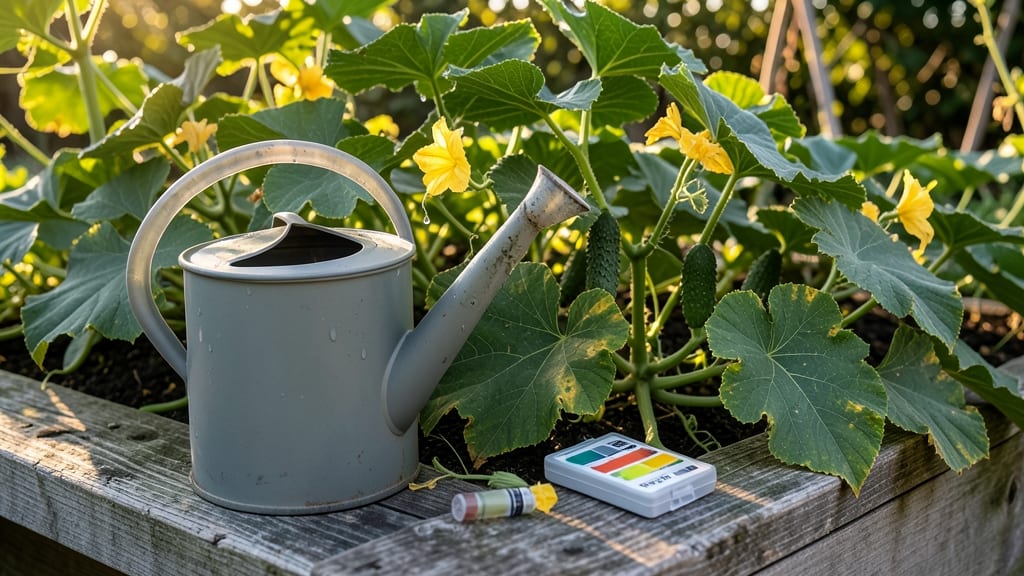
Seeing your cucumber leaves going yellow isn’t just frustrating—it’s a sign your plants are screaming for help. 🌱 I’ve seen this happen after just a few weeks of neglect, and the good news is most cases fix fast with the right tweaks.
The key is pinpointing whether it’s overwatering, nutrient starvation, or something sneaky like disease before the whole plant wilts into submission.
Most yellow leaves start with nutrient deficiency—especially nitrogen or magnesium—which you can spot by checking the leaf pattern. If the yellowing starts at the edges and works inward, it’s often overwatering or poor drainage.
But if the whole leaf turns yellow while the veins stay green, you’ve got a classic nutrient crisis. The quickest fix? A balanced fertilizer or compost tea applied right to the soil, not the leaves.
Within a week of adjusting watering or feeding, you’ll see new growth pushing through with that rich, deep green you crave. The secret is consistency: don’t drown them, don’t starve them, and keep an eye out for pests hiding under those yellowing leaves.
Once you catch it early, your cucumbers bounce back faster than you’d expect.
For stubborn cases that won’t improve in 10 days, it might be time to pull the plant and test your soil—sometimes the problem runs deeper than we think.
But 90% of the time, these quick fixes work wonders, and your vines will be back to producing crisp, cool cucumbers in no time.
Understanding the Root Causes
Yellowing cucumber leaves rarely happen by chance—they’re your plants’ way of signaling distress. Let’s break down the most common culprits, why they trigger this reaction, and how to spot them early.
When cucumber plants sit in soggy soil, their roots suffocate from a lack of oxygen. This disrupts nutrient uptake, leading to chlorosis (yellowing between leaf veins). Overwatering also promotes fungal diseases like Pythium, which further stresses the plant.
How to identify:
- Wilting despite wet soil
- Yellowing starting at the older leaves (not just the edges)
- A foul, musty smell near the roots
Scientific angle: Excess water displaces oxygen in soil pores, triggering anaerobic conditions. Roots can’t absorb water or nutrients efficiently, causing nutrient deficiency symptoms—even when fertilizer is present.
Cucumbers thrive in warm but not scorching conditions. When temperatures exceed 90°F (32°C), leaves lose chlorophyll faster, turning yellow or developing bleached patches. Direct afternoon sun can also cause sun scorch, where leaves crisp and yellow at the edges.
How to identify:
- Yellowing on exposed leaves (top or sides)
- Leaves feel dry or papery to the touch
- Wilting in the heat but recovering at night
Scientific angle: High temperatures accelerate photosynthesis breakdown and increase transpiration rates, dehydrating leaves. The plant prioritizes survival, shedding damaged foliage to conserve energy.
Yellowing often stems from macronutrient imbalances. Here’s how to diagnose each:
| Symptom | Likely Deficiency | What’s Happening |
|---|---|---|
| Yellow between veins | Nitrogen (N) | Chlorophyll production halts; older leaves yellow first (senescence-like). |
| Yellow edges, purple stems | Potassium (K) | Cell membranes weaken; edges burn first. Common in sandy or leached soils. |
| Yellow with dark spots | Magnesium (Mg) | Chlorophyll breaks down; starts in older leaves (Mg is immobile in plants). |
Pro tip: 💡 Test your soil with a DIY kit (or send to a lab) before guessing. Cucumbers need balanced NPK (5-10-10) but also micronutrients like iron and zinc.
Hidden invaders like aphids, spider mites, or fungal infections (e.g., Alternaria leaf spot) drain nutrients, causing yellowing. Pests inject toxins or feed on sap, while pathogens clog stomata, preventing gas exchange.
How to identify:
- Sticky residue (aphid honeydew) or fine webbing (mites)
- Yellow spots with black rings (fungal leaf spot)
- Curling or distorted leaves (viral or pest damage)
Scientific angle: Pests disrupt phloem transport, starving leaves of sugars and nutrients. Fungi block stomatal openings, reducing photosynthesis efficiency by up to 50% in severe cases.
Disturbed roots (from repotting or rough handling) struggle to absorb water/nutrients, leading to partial yellowing. If roots are pruned or diseased, the plant can’t support foliage growth.
How to identify:
- Yellowing after repotting or disturbance
- Slow recovery despite proper care
- Mushy, black roots (if inspected)
Fix it fast: 🚨 After transplanting, water deeply and avoid fertilizing for 1 week to let roots recover.
- Windburn: High winds dry leaves faster, causing yellowing and browning at edges.
- Salt buildup: Over-fertilizing or poor-quality water leaves salty crust on soil, burning roots.
- Compacted soil: Roots can’t penetrate hard soil, leading to stunted growth and yellowing.
Quick check: 🔍 Dig near the base—if soil is hard as concrete or crusty, it’s compacted.
Quick Fixes for Yellowing Cucumber Leaves
If your cucumber plants are showing signs of yellowing leaves, don’t panic—most issues can be resolved with targeted care. Below are practical, step-by-step solutions tailored to the most common causes, plus preventive tips to keep your plants thriving. 🌱
Yellowing leaves often signal root stress, and soggy soil is a top culprit. Overwatering cuts off oxygen to roots, leading to suffocation and nutrient uptake issues.
How to Fix It:
- 🔥 Step 1: Check the Soil Stick your finger 1–2 inches into the soil. If it’s damp, hold off on watering. Cucumbers prefer consistently moist but not waterlogged soil.
- 🍳 Step 2: Improve Drainage If your pots or garden bed retain too much water, amend the soil with:
- Perlite or vermiculite (20–30% mix)
- Compost (for organic matter)
- Coarse sand (for sandy soils)
- 👨🍳 Step 3: Adjust Watering Habits Water deeply 2–3 times per week (more in extreme heat) and always at the base of the plant, avoiding wet foliage. Morning watering is best to prevent fungal risks.
- ⏰ Step 4: Monitor for 1–2 Weeks Yellowing should improve within 7–14 days if roots recover. If not, check for root rot (see next section).
💡 Prevention Tips:
- Use mulch (straw or shredded leaves) to retain moisture without over-saturating soil.
- Choose well-draining soil mixes labeled for vegetables.
- Avoid watering daily—cucumbers are drought-tolerant once established!
Dark, mushy roots and yellowing leaves often mean root rot, caused by overwatering or fungal pathogens like Pythium. Left untreated, it can kill your plant.
How to Fix It:
- 🔥 Step 1: Diagnose the Problem Gently dig around the roots (wear gloves!). Healthy roots are firm and white; rotten roots are brown, slimy, and smell foul.
- 🍳 Step 2: Prune Damaged Roots Use sterilized scissors to trim away black/mushy roots. Healthy roots should be snipped cleanly.
- 👨🍳 Step 3: Repot or Transplant
- For container plants: Repot in fresh, sterile potting mix with perlite.
- For garden beds: Dig a hole, add a 2-inch layer of compost, and replant.
- 🔪 Step 4: Treat with Fungicide (If Needed) Spray roots and soil with a copper-based fungicide or hydrogen peroxide (3%) for mild cases. Follow label instructions.
- ⏰ Step 5: Adjust Care Routine Let the soil dry out between waterings and avoid overhead watering.
💡 Prevention Tips:
- Rotate crops yearly to prevent fungal buildup.
- Use resistant varieties like ‘Straight Eight’ cucumbers if root rot is recurrent.
- Add mycorrhizal fungi to soil to boost root health naturally.
Yellowing leaves can also signal nutrient imbalances. Older leaves turning yellow often mean nitrogen deficiency, while younger leaves yellowing may indicate iron or magnesium issues.
How to Fix It:
| Symptom | Likely Deficiency | Quick Fix |
|---|---|---|
| Older leaves yellow (veins stay green) | Nitrogen (N) | Apply blood meal or fish emulsion (diluted). |
| Young leaves yellow (veins stay green) | Iron (Fe) | Sprinkle iron chelate or use Epsom salt (1 tbsp/gal water). |
| Yellow patches between veins | Magnesium (Mg) | Mix 1 tbsp Epsom salt per gallon of water and water soil. |
| Pale green/yellow overall | General weakness | Use a balanced fertilizer (10-10-10) every 4–6 weeks. |
💡 Prevention Tips:
- Test soil annually with a home kit or lab to monitor pH (ideal: 6.0–6.8 for cucumbers).
- Compost regularly to replenish organic matter.
- Avoid over-fertilizing—more isn’t better! Follow package rates.
Pests like aphids or spider mites can suck sap, causing yellowing or stippling. Fungal diseases (e.g., powdery mildew) also stress plants.
How to Fix It:
- 🔥 Step 1: Identify the Culprit Check the underside of leaves for:
- Aphids: Tiny green/black bugs clustered together.
- Spider mites: Fine webbing and speckled yellow leaves.
- Powdery mildew: White, powdery coating on leaves.
- 🍳 Step 2: Remove Pests Manually
- Blast off aphids with a strong spray of water.
- Wipe leaves with soapy water (1 tsp mild soap per quart of water).
- Use a magnifying glass to spot and squish spider mites.
- 👨🍳 Step 3: Apply Natural Remedies
- Neem oil spray (1 tsp neem oil + 1 tsp soap per quart of water). Spray every 5–7 days.
- Garlic spray (blend 2 garlic cloves + 1 quart water; strain and spray).
- Baking soda solution (1 tbsp baking soda + 1 quart water + soap) for powdery mildew.
- ⏰ Step 4: Improve Airflow Prune crowded vines and space plants 2–3 feet apart to reduce humidity (which fuels fungi).
💡 Prevention Tips:
- Introduce beneficial insects like ladybugs or lacewings to eat pests naturally.
- Rotate crops to break pest/disease cycles.
- Water in the morning to let foliage dry quickly, deterring mildew.
With these targeted fixes, your cucumber plants should bounce back in 1–3 weeks. 🌿 Keep an eye on soil moisture, nutrients, and pests, and your vines will stay lush and productive all season!
Frequently asked questions about cucumber leaf yellowing
Why do cucumber leaves turn yellow first on the older ones?
This is usually a sign of nitrogen deficiency or normal leaf senescence. Cucumbers prioritize feeding nutrients to new growth, so older leaves yellow first when nitrogen is low. Check if the veins stay green—if they do, it’s likely nitrogen. Apply fish emulsion or compost tea to restore balance.
Can yellow cucumber leaves turn green again?
Yes! If the yellowing is from overwatering or nutrient issues, new leaves should return to green within 1-2 weeks of adjusting care. For severe cases, prune heavily damaged leaves to redirect energy. Avoid fertilizing until roots recover if overwatering was the issue.
What’s the difference between yellow leaves from pests vs. nutrient issues?
Pest damage often shows as speckled yellowing with visible bugs or webbing, while nutrient deficiencies cause uniform yellowing (whole leaf or between veins). Check leaf undersides—pests leave sticky residue or tiny holes. For nutrients, the pattern matters most: edges vs. between veins.
Is it too late to save my cucumber plant if most leaves are yellow?
Not necessarily! If the new growth is still green and firm, the plant can recover. Focus on fixing the root cause (water, nutrients, or pests) and remove any severely damaged leaves. If the entire plant is yellow and wilted, it may be too late—but check for root rot first before giving up.
How often should I fertilize cucumbers to prevent yellowing?
Feed every 4-6 weeks with a balanced fertilizer (5-10-10) during the growing season. Over-fertilizing causes salt buildup, which burns roots and triggers yellowing. Always water thoroughly after applying fertilizer to prevent root damage.