
Pests and Diseases
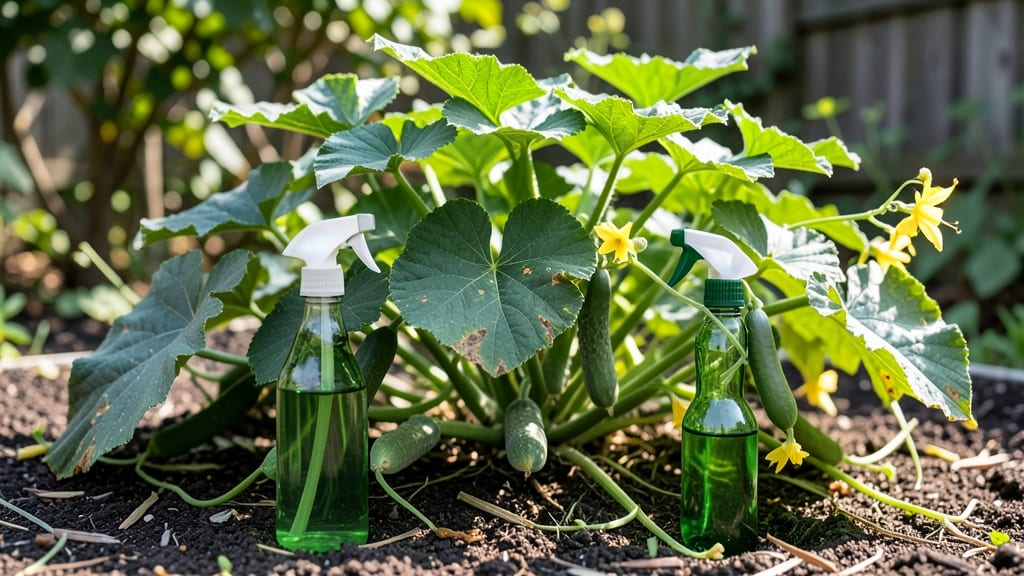
Spotting cucumber diseases early—and recognizing them from cucumber disease images—saved my first garden’s harvest when those yellow spots and wilting vines spread faster than I expected. 🌱 These fungal spots aren’t just ugly; they’re sneaky, often starting as tiny dots before turning leaves into Swiss cheese.
The good news? Most have telltale signs you can catch before they ruin your plants.
Powdery mildew leaves that chalky white dust, downy mildew creates yellow patches with fuzzy undersides, and bacterial wilt makes vines collapse like overcooked noodles.
I’ve seen all seven of these troublemakers up close, and the key to beating them is knowing what to look for before the damage gets out of control. No fancy tools needed—just your eyes and a spray bottle.
You’ll walk away knowing exactly which spots mean “act now” (like powdery mildew) and which ones need a closer look (like mosaic virus). The fixes are simple: neem oil, copper sprays, or even a good pruning session can turn things around if you catch it early.
And yes, I’ve learned the hard way that ignoring those first warning signs leads to a sad, spotty harvest.
Whether you’re growing in the ground or containers, these tips work for any cucumber variety. The goal? Healthy vines, crisp cucumbers, and no more guessing games when your plants start looking sick. Let’s get those diseases identified—and defeated.
The Hidden Triggers Behind Cucumber Diseases
Cucumber diseases don’t just appear out of nowhere—they’re often the result of a perfect storm of environmental factors, poor growing practices, or even the plants themselves. Understanding the why behind these issues is the first step to prevention.
Below, we break down the most common causes, backed by science, so you can protect your crop before problems start.
Fungal diseases like downy mildew and powdery mildew thrive in moist environments because they rely on water to spread their spores. When humidity stays above 75-80% for extended periods—or when leaves remain wet for more than 6-12 hours—fungal spores germinate and infect plants.
- Why it happens: High humidity creates a film of water on leaf surfaces, making it easy for spores to land and penetrate plant tissues. Some fungi, like Pseudoperonospora cubensis (downy mildew), even produce motile spores that swim through water to find new hosts.
- Actionable fix:
- Space plants 12-18 inches apart for better airflow.
- Water early in the day (before 10 AM) to allow foliage to dry quickly.
- Use drip irrigation instead of overhead sprinklers to avoid wetting leaves.
Stagnant air traps moisture and heat, creating ideal conditions for fungal growth. Dense plantings or crowded rows restrict airflow, leaving leaves damp longer and increasing disease risk.
- Why it happens: Poor ventilation slows evaporation, keeping humidity high near the plant canopy. Fungi like Botrytis cinerea (gray mold) exploit this by spreading rapidly in still, moist air.
- Actionable fix:
- Prune lower leaves to improve airflow between plants.
- Avoid over-fertilizing with nitrogen, which promotes lush, dense growth.
- Consider trellising cucumbers to lift vines off the ground and reduce humidity at soil level.
Soil-borne pathogens like Fusarium and Phytophthora can persist in garden beds for years, while dirty pruners or hands unknowingly transfer diseases from plant to plant.
- Why it happens: Many fungal spores survive in organic matter or soil, waiting for the right conditions to activate. Even sterilized soil can reintroduce pathogens if contaminated tools or infected plant debris are reused.
- Actionable fix:
- Rotate crops—avoid planting cucumbers in the same spot for at least 3 years.
- Solarize soil in late summer (cover with clear plastic for 4-6 weeks) to kill pathogens.
- Disinfect tools with 70% isopropyl alcohol or a 10% bleach solution between uses.
Stressed cucumber plants—whether from nutrient deficiencies, pests, or extreme temperatures—are far more susceptible to infections. A healthy plant’s cuticle and natural defenses keep pathogens at bay.
- Why it happens: Stress disrupts the plant’s phenolic compounds (natural fungicides) and thickens cell walls, making it easier for fungi to breach defenses. For example, powdery mildew targets plants weakened by low phosphorus or high nitrogen.
- Actionable fix:
- Test soil pH (aim for 6.0-6.8)—acidic or alkaline soil stresses plants.
- Apply compost or balanced fertilizer (e.g., 10-10-10) to avoid nutrient imbalances.
- Monitor for pests like aphids or spider mites, which damage leaves and open doors for fungi.
Cucumbers prefer warm, stable temperatures (70-85°F), but drastic changes—like cool nights followed by hot days—can shock plants and trigger stress responses that make them vulnerable.
- Why it happens: Temperature fluctuations disrupt stomatal function (leaf pores), making it harder for plants to regulate moisture. Fungi like Alternaria exploit these conditions by entering through damaged or weakened tissues.
- Actionable fix:
- Use row covers in early spring to protect seedlings from cold snaps.
- Avoid planting cucumbers in low-lying areas where cold air pools overnight.
- Mulch with straw or black plastic to moderate soil temperature swings.
Pro Tip: 💡 Scout your garden regularly—catching early signs of disease (like yellowing leaves or white powder) lets you act before fungi spread. A 10-minute daily check can save your entire crop!
Fixing Fungal Foes in Your Cucumber Patch
Fungal diseases don’t have to spell the end of your cucumber harvest—with the right know-how, you can turn the tide and save your plants! Below, we’ve mapped out practical, step-by-step fixes for the most common fungal issues, from powdery mildew to downy mildew and beyond.
Plus, we’ll share prevention tips to keep your cucumbers thriving long-term.
Cause: White, powdery spots (like dust) on leaves, caused by Podosphaera xanthii or Golovinomyces cichoracearum.
How to Fix It: 🍳 Remove Infected Leaves – Snip off heavily affected leaves (wear gloves!) and compost them away from the garden (don’t toss them back into the soil—spores can survive!). 👨🍳 Neem Oil Spray – Mix 1 tbsp neem oil + 1 tsp mild soap + 1 quart water. Spray every 7–10 days until symptoms fade. Best applied in the evening to avoid burning leaves. 🥘 Baking Soda Solution – For mild cases, try 1 tsp baking soda + 1 quart water + a few drops of soap. Spray directly on leaves (undersides too!). ⏰ Improve Airflow – Prune crowded vines and space plants 12–18 inches apart to reduce humidity.
💡 Prevention Tip: Plant resistant varieties like ‘Straight Eight’ or ‘Lemon Cucumber’ and water at the base (never overhead).
Cause: Yellow spots on top leaves, fuzzy gray growth on undersides—caused by Pseudoperonospora cubensis.
How to Fix It: 🔪 Prune Aggressively – Cut off all infected leaves (this disease spreads fast!). Dispose of them in the trash, not compost. 🥗 Copper Fungicide – Use copper-based sprays (like Bordeaux mixture) every 5–7 days for 2–3 weeks. Follow label instructions! 🌧️ Reduce Moisture – Water in the morning so leaves dry by evening. Avoid late-night watering. 🎯 Reflective Mulch – Lay white plastic mulch around plants to disrupt the fungus’s spore production (it hates light!).
💡 Prevention Tip: Rotate crops—don’t plant cucumbers in the same spot for 3+ years. Interplant with marigolds (they repel downy mildew spores).
Cause: Dark, sunken spots with yellow halos—thrives in hot, humid weather.
How to Fix It: 🔥 Burn or Bag Infected Fruit – Anthracnose lives on fallen fruit. Pick up and dispose of infected cucumbers (don’t leave them on the ground). 🍳 Copper or Sulfur Spray – Apply copper fungicide (like Cheshunt Compound) every 10 days until harvest. 🌡️ Cool It Down – Use shade cloth (30–50%) to lower leaf temperature and reduce overhead watering. ✨ Sanitize Tools – Clean pruners with 70% rubbing alcohol between cuts to avoid spreading spores.
💡 Prevention Tip: Harvest frequently—overripe cucumbers are a fungus buffet!
Cause: Water-soaked spots that turn yellow/brown—spread by rain splashes and tools.
How to Fix It: 🚿 Wash Hands & Tools – Sanitize pruners and gloves with bleach solution (1:10 bleach:water) before and after use. 🍳 Copper Soap Spray – Mix 1 tbsp copper sulfate + 1 tsp soap + 1 gallon water. Spray every 7–10 days. 🌧️ Avoid Overhead Watering – Use a drip irrigation system or soaker hose to keep leaves dry. 🔄 Crop Rotation – Never plant cucumbers, squash, or melons in the same spot next year.
💡 Prevention Tip: Plant in raised beds to improve drainage and reduce soil-borne bacteria.
No matter the disease, strong plants fight better.
Try these proactive steps: - Compost tea (1 cup compost + 5 gallons water, steep 24 hours) as a foliar spray for nutrients. - Beneficial bacteria like Bacillus subtilis (found in products like Serenade ASO) to outcompete fungi. - Silica-rich soil (add diatomaceous earth or rice hulls) to strengthen plant cell walls.
Final Reminder: 🚨 Act fast! Fungal diseases spread exponentially—the sooner you treat, the better your chances of saving your crop. Prevention is your best tool, but when trouble strikes, clean, copper, and airflow are your holy trinity!
Frequently asked questions
How can I tell if my cucumber plant has a fungal disease just by looking?
Check for these key visual clues: white powdery spots (powdery mildew), yellow patches with fuzzy undersides (downy mildew), or dark sunken spots with yellow halos (anthracnose). Compare your plants to cucumber disease images online—most fungal issues show up first on older leaves before spreading. If you see wilting vines with no visible leaf damage, it might be bacterial wilt.
Can I use the same fungicide spray for all cucumber diseases?
No—different diseases need different treatments. Copper sprays work for downy mildew and anthracnose, while neem oil or baking soda is better for powdery mildew. Always check the label! For bacterial wilt, fungicides won't help—you'll need to remove infected plants immediately to prevent spread.
Will my cucumbers still be safe to eat if the leaves have fungal spots?
It depends! Most fungal diseases (like powdery mildew) only affect leaves and won't harm the fruit. However, if you see spots or lesions on the cucumbers themselves, discard them. When in doubt, wash all produce thoroughly with water and vinegar (1:3 ratio) before eating.
How often should I check my cucumber plants for diseases?
Inspect your plants every 3-4 days during warm, humid weather when diseases spread fastest. Focus on the undersides of leaves (where many fungi hide) and new growth. Early detection is key—catching powdery mildew when it's just a few spots can save your entire plant!
Can I save my cucumber plants if they already have severe disease symptoms?
For fungal diseases, it depends on how far it's spread. If less than 20% of leaves are affected, aggressive pruning and fungicide treatments can often save the plant. But if you see widespread wilting, blackened stems, or extensive leaf damage, it's usually better to remove the plant completely to prevent spread to healthy plants.