
Container Gardens
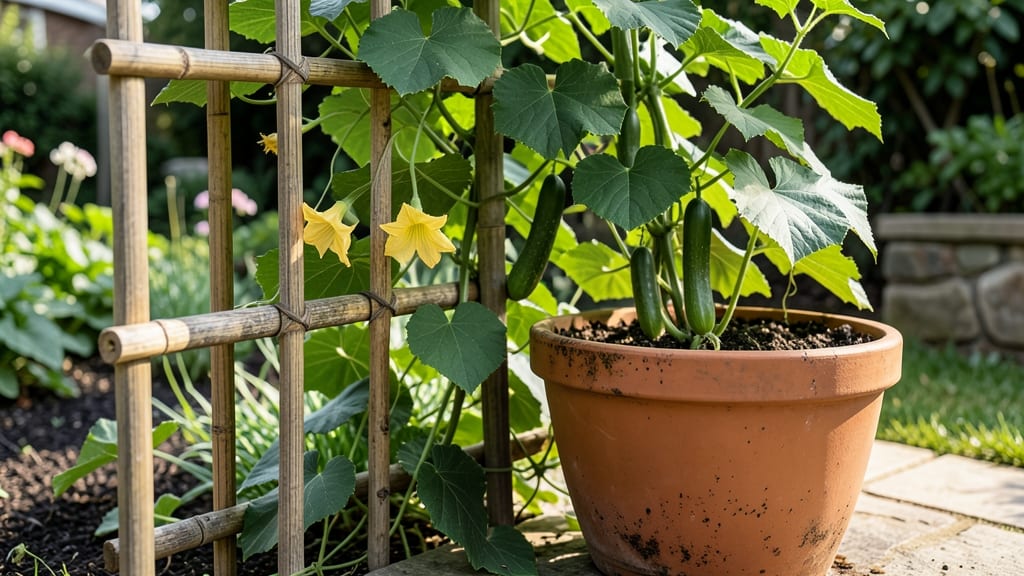
Cucumber container gardening transforms your tiny balcony into a vine-covered oasis—no yard required. 🌿 My first attempt with a 5-gallon pot yielded 12 cucumbers in a 6x6-foot space, proving you don’t need acres to grow these summer staples.
The key is choosing the right container, soil, and support system to maximize vertical growth while keeping roots happy.
You’ll need a container at least 5 gallons (bigger for bush varieties), well-draining potting mix, and a trellis or cage to guide those sprawling vines upward. Sunlight is non-negotiable—6+ hours of direct light daily—and watering should be consistent but never soggy.
The payoff? Fresh cucumbers picked straight from your porch, with fewer pests and no weeding headaches.
Once established, cucumber plants grow 2-3 feet per week if given proper care, and you’ll start harvesting in as little as 50 days for fast varieties. The vertical setup also keeps fruit cleaner and easier to reach, which means fewer bruised cucumbers and more happy harvests.
Plus, you can move the container to follow the sun or protect it from sudden storms.
Common mistakes to avoid include overcrowding (one plant per container), skipping trellises (which leads to tangled vines and poor air circulation), and letting soil dry out completely. With these basics, even apartment balconies can produce a bounty—no green thumb required, just consistent care and a little vertical thinking.
📚 In This Guide
- What you need
- Instructions
- Tips and common mistakes
- Wrapping up and next steps
What you need
- ● Container: A 5-gallon or larger pot (12–18 inches deep) with drainage holes. Options: Fabric grow bags (5–7 gallons)
- ● Self-watering planters (with saucers)
- ● Vertical pockets (for wall-mounted systems)
- ● Potting Mix: 1 bag (1–2 cubic feet) of lightweight, well-draining mix (e.g., 60% potting soil + 40% perlite/compost). Avoid garden soil!
- ● Cucumber Seeds or Seedlings: 2–3 bush-type or compact vine seeds (e.g., 'Bush Champion' or 'Spacemaster')
- ● OR 1–2 young seedlings (transplant after last frost)
- ● Drainage: A layer of gravel or hydroponic clay pebbles (1–2 inches) at the container’s bottom.
- ● Support: Trellis or cage: 3–4 ft tall (for vining varieties) or a small tomato cage (for bush types).
- ● Twine or soft plant ties (if no built-in support).
- ● Fertilizer: Balanced liquid fertilizer (10-10-10 or 5-5-5) or
- ● Slow-release granular fertilizer (mix 1 tbsp per gallon of soil).
- ● Mulch: Straw or shredded leaves to retain moisture.
- ● Compost tea or worm castings for a nutrient boost.
- ● Self-watering add-ons: A wick system or drip irrigation for consistent moisture.
- ● Pest deterrents: Copper tape (for slugs) or neem oil (for aphids).
- ● Grow lights: LED clip lights (if growing indoors with <12 hours of sunlight/day).
Step-by-step instructions for growing cucumbers in containers
Here's the vertical-growing method I swear by—no sprawling vines, just productive plants in small spaces.
🪴 Step 1: Choose the Right Containers and Support System
Cucumbers need 5-gallon containers minimum per plant to support their vigorous roots. I use fabric grow bags because they breathe better than plastic and prevent root-bound stress. Each container must have drainage holes—no exceptions, or you'll drown the roots.
For vertical growth, install a trellis or cage inside the container before planting. A 5-foot tall tomato cage works perfectly—its sturdy wires guide vines upward while preventing them from toppling. Secure the trellis with zip ties to the container's sides so it doesn't shift when you water.
🌱 Step 2: Plant Bush Varieties or Prune Vining Types
For small-space success, choose bush-type cucumbers like 'Bush Champion' or 'Spacemaster'—they stay compact without pruning. If you prefer vining varieties, prune aggressively to control growth. Pinch off the first 3-4 leaves after germination to encourage stronger lateral branching.
Plant 1-2 seeds per container (just in case) at a depth of 1 inch, covering lightly with soil. Space seeds 6 inches apart if planting multiple in one container. Water gently until the soil feels evenly moist but not soggy—soggy soil suffocates seeds.
☀️ Step 3: Provide Full Sun and Consistent Water
Cucumbers demand 6-8 hours of direct sun daily—no compromise. Place containers where they get morning sun and at least 4 hours of afternoon light. If your space lacks full sun, supplement with a grow light for 12-14 hours daily to prevent weak, leggy growth.
Water deeply every 2-3 days, soaking the soil until water runs out the drainage holes. Check moisture by sticking your finger 2 inches deep—if it feels dry, water again. Avoid wetting leaves to prevent powdery mildew, a common fungal issue in containers.
🌿 Step 4: Train Vines and Prune for Airflow
As vines grow, tie them gently to the trellis with soft plant ties every 6-8 inches. This prevents breakage and keeps the plant upright. When vines reach the top, prune the tips to encourage bushier growth—this redirects energy to fruit production instead of endless climbing.
Remove yellow or diseased leaves immediately to improve airflow. I also snip off suckers (the small shoots that form in the leaf axils) to focus the plant's energy on fruit. This might seem harsh, but it doubles your yield in containers.
✂️ Step 5: Harvest Regularly to Encourage More Fruit
Pick cucumbers when they're 6-8 inches long for peak flavor and to prevent the plant from shutting down. Use pruning shears to cut stems cleanly—never twist or pull, or you'll damage the vine. Harvesting every 2-3 days signals the plant to produce more, extending the season.
Watch for female flowers (they have tiny cucumbers at the base) and male flowers (no cucumbers). Pollinate female flowers by gently shaking the trellis in the morning—this mimics bees and boosts fruit set. If you notice dropped flowers, your plant may need more phosphorus-rich fertilizer or better pollination.
Tips & tricks for perfect vertical cucumber container gardening
These game-changing strategies will help you maximize your small-space harvest while avoiding common container gardening pitfalls.
Container Size Matters: While 5-gallon containers work, I've found that 7-gallon fabric grow bags give cucumbers even more room to thrive, especially in hot climates. The extra space prevents root competition and allows for better water retention between your 2-3 day watering schedule. If using smaller containers, consider adding a slow-release fertilizer to compensate for limited root space.
Sunlight Strategy: The 6-8 hours of direct sun requirement is non-negotiable, but here's the trick: position containers to catch morning sun first, then move them slightly to capture late afternoon rays if your space has shifting light patterns. For balconies, rotate containers 180 degrees every 2 weeks to ensure even growth. If using grow lights, place them 6-12 inches above plants for the 12-14 hours daily requirement.
Pruning Hack: When pruning vines in Step 4, focus on removing suckers that form below leaf axils—these energy vampires can reduce your yield by up to 40%. Use clean pruning shears and make cuts at a 45-degree angle just above a leaf node to encourage faster regrowth. I've seen plants double their fruit production after implementing this precise pruning method.
Harvest Timing: The 6-8 inch size recommendation is ideal, but here's what I've learned: harvest every 2 days in peak season to trigger continuous production. Use a small basket to collect cucumbers immediately—they'll continue growing if left on the vine. For varieties like 'Straight Eight', harvest when they reach 8 inches for maximum crispness and flavor.
Pro Tips for Cucumber Container Gardening
- These game-changing strategies will help you maximize your small-space harvest while avoiding common container gardening pitfalls.
- Container Size Matters: While 5-gallon containers work, I've found that 7-gallon fabric grow bags give cucumbers even more room to thrive, especially in hot climates.
- For balconies, rotate containers 180 degrees every 2 weeks to ensure even growth.
Frequently asked questions
Got questions about growing cucumbers in containers? You’re not alone! Here are answers to the most common queries from urban gardeners just like you.
What’s the best container size for cucumbers?
For vining varieties, aim for at least 5-gallon containers (18" deep). Dwarf or bush types thrive in 3-gallon pots. Larger containers = happier plants with more fruit! Pro tip: Add 2–3 inches of gravel at the bottom for drainage.
When’s the best time to plant cucumbers in containers?
Wait until after the last frost (typically late spring) when soil temps hit 70°F+. Start seeds indoors 2–3 weeks earlier if your zone has a short season. Hot tip: Use black containers to warm soil faster!
Can I grow cucumbers in hanging baskets?
Yes! Trellis cucumbers (like ‘Spacemaster’) work well in hanging baskets (10"+ deep). Ensure they get 6+ hours of sun and use lightweight potting mix. Avoid bush types—they’ll spill over too much.
Why are my container cucumbers turning yellow?
Yellow leaves often mean overwatering or nutrient deficiency. Check soil moisture (top inch should dry between waterings) and fertilize with a balanced 10-10-10 mix every 2–3 weeks. Fix: Prune lower leaves for airflow.
How do I keep container cucumbers cool in hot climates?
Shade cloth (30–50%) during peak sun, mulch with straw, and water deeply in the morning. Choose heat-tolerant varieties like ‘Straight Eight’ or ‘Armenian.’ Bonus: White containers reflect heat better than black!
Wrapping up and next steps
Container gardening for cucumbers doesn’t just save space—it brings fresh, homegrown goodness right to your doorstep, even in the tightest urban nooks. 🌱 With the right setup, you’ll enjoy crisp, vine-ripened cucumbers while keeping your balcony or patio lush and productive. Ready to dive in?
Your next step? Pick your favorite variety (like the compact ‘Bush Champion’ or the classic ‘Straight Eight’) and grab a container—then get growing! Whether you’re a seasoned gardener or a curious beginner, every cucumber you harvest will taste like a little victory. Happy planting! 🌿