
Companion Plants
Struggling with pests or poor yields in your zucchini and cucumber patch? These 10 companion plants create a thriving ecosystem that naturally deters pests, improves soil, and maximizes harvests—without chemicals.
Marigolds for Pest Deterrence and Soil Health
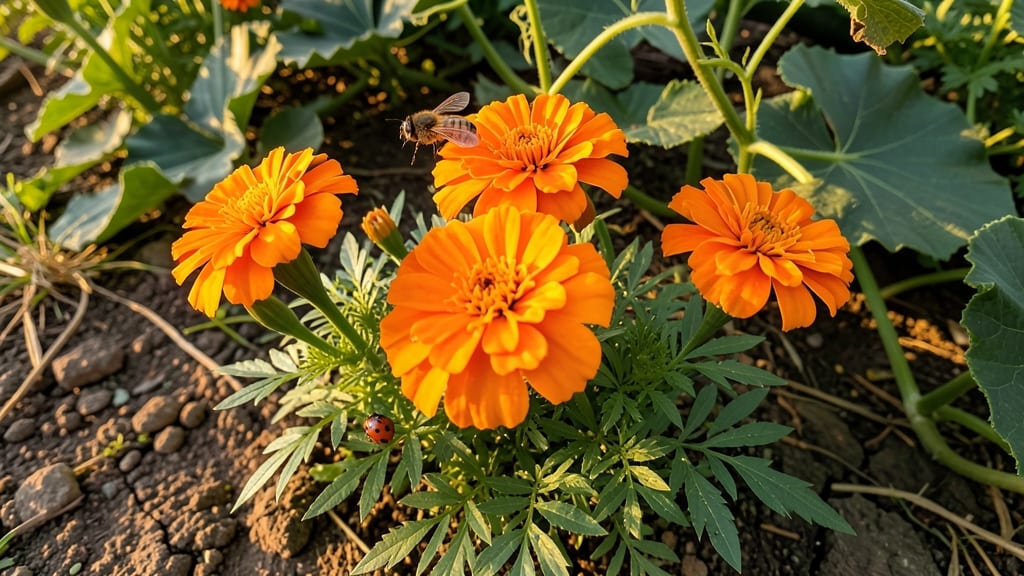
Tired of cucumber beetles munching your zucchini leaves? French marigolds are your secret weapon—these vibrant orange bloomers release limonene, a natural nematicide that repels pests while luring in beneficial insects like ladybugs and hoverflies. Their strong scent confuses squash bugs, giving your plants a fighting chance without harsh chemicals.
Plant French marigolds at the edges of your zucchini and cucumber patch for maximum pest protection. They thrive in full sun and well-draining soil, making them low-maintenance allies. For extra benefits, interplant them with your cucumbers to deter nematodes and improve soil health as they decompose.
This dynamic duo is perfect for organic gardeners and beginners alike—just sprinkle seeds in early spring and watch your plants flourish. 🌻
Nasturtiums to Trap Aphids and Boost Flavor
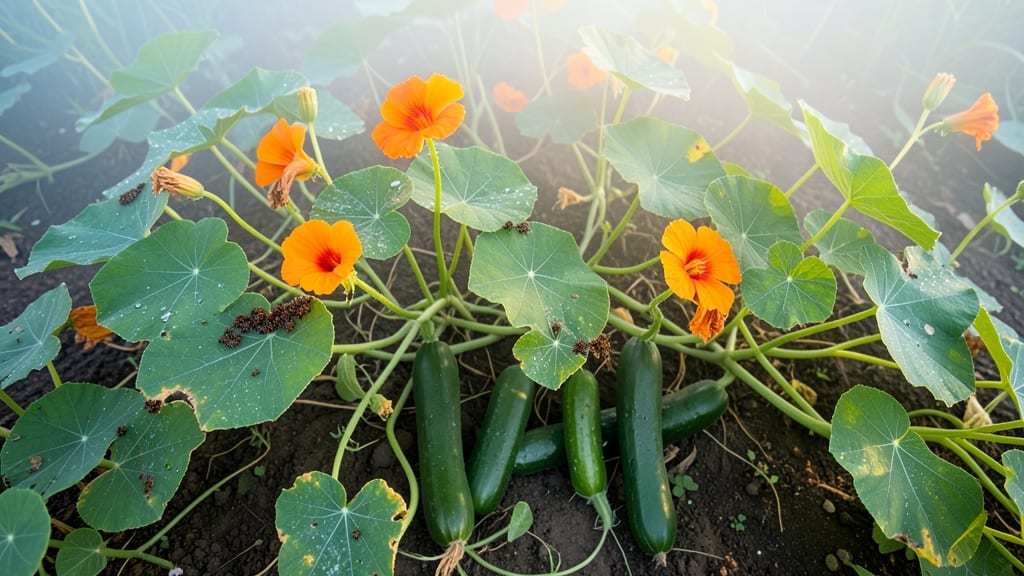
If aphids are turning your cucumbers into sticky, curled messes, nasturtiums are your secret weapon—and they’re edible too! These vibrant flowers act as a sacrificial trap crop, luring aphids away from your prized cucumbers while their peppery leaves add a zesty kick to salads.
Plant nasturtiums at the base of cucumber vines or in containers nearby—their strong scent confuses aphids, and their tender leaves are a more appealing snack. Bonus: They thrive in partial shade, making them perfect for small spaces or under trellised cucumbers. Harvest young leaves for salads or let them flower to attract pollinators like bees.
Urban gardeners and beginners will love this dual-purpose plant—it’s easy to grow, pest-proofs your garden, and rewards you with a harvest of its own. 🌿
Basil for Cucumber Flavor and Pest Control
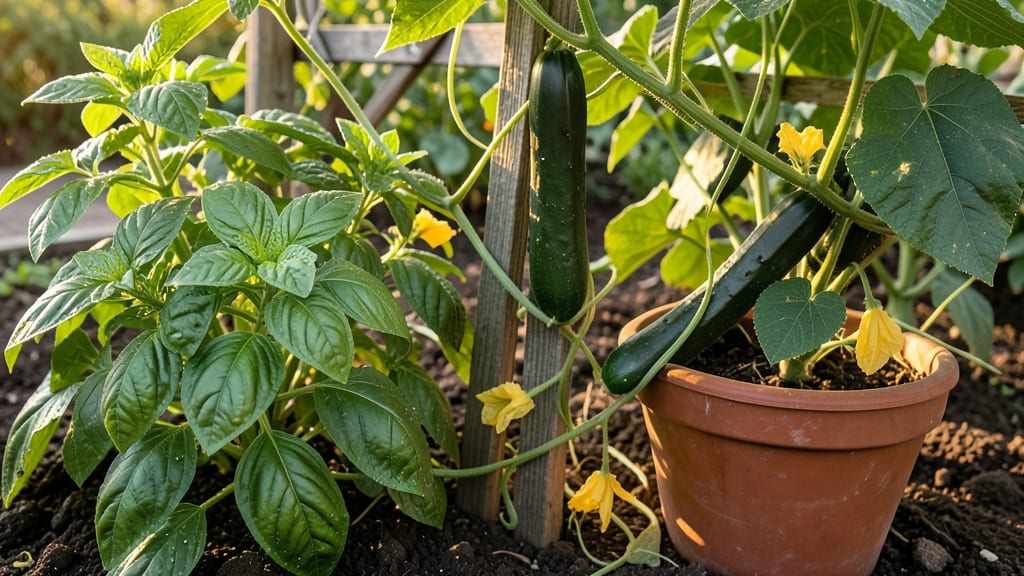
Want cucumbers that taste fresher and a garden that naturally fights pests? Genovese basil is your secret weapon—it repels whiteflies and thrips while boosting cucumber flavor when planted nearby.
This aromatic herb thrives in containers or alongside trellised cucumbers, making it perfect for small spaces. Simply tuck a few basil plants at the base of your cucumber vines or in nearby pots—their strong scent confuses pests while their leaves add a signature anise-like flavor to your harvest. For best results, give basil 6-8 hours of sun daily and harvest leaves regularly to encourage bushier growth.
Urban gardeners and container growers will love this dual-purpose pairing—it’s a space-efficient way to improve both yield and pest control without extra effort. 🌱
Radishes to Break Soil and Confuse Pests
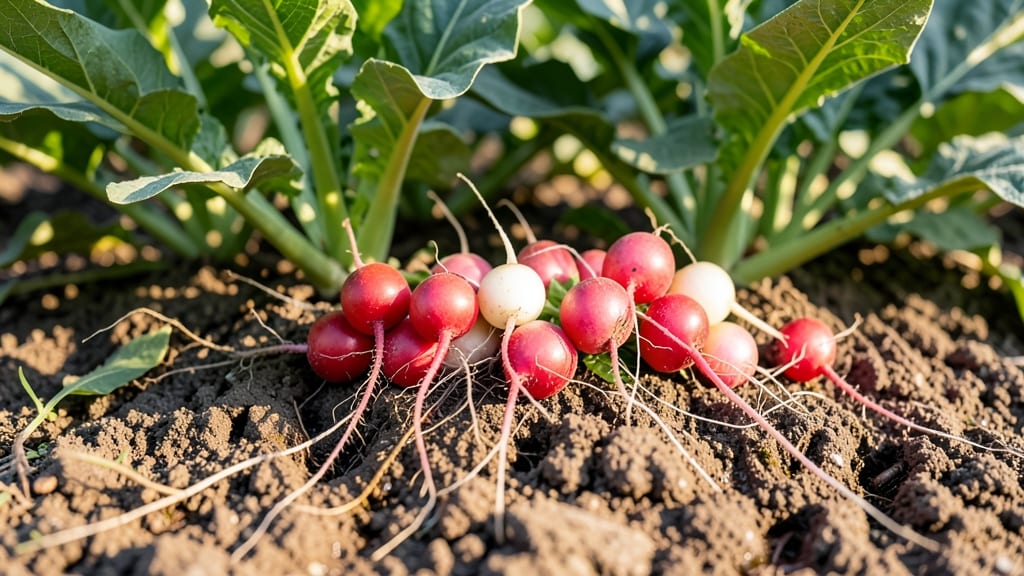
Tired of battling cucumber beetles and compacted soil that stunts your zucchini’s growth? Radishes might be the unsung hero you’ve been missing—these speedy growers do double duty as both a pest disruptor and soil savior.
Plant fast-maturing radish varieties like Cherry Belle or Easter Egg alongside your cucumbers. Their strong scent confuses cucumber beetles, while their deep taproots break up compacted soil, improving drainage and aeration for your vining plants. Radishes also disrupt nematode cycles in the soil, reducing damage to cucumber roots. For best results, sow radish seeds 2-3 weeks before transplanting cucumbers, then harvest them before they bolt—leaving their roots to work their magic underground.
This trick is especially valuable for urban gardeners with limited space or new gardeners dealing with heavy clay soil. Plus, you’ll get a bonus harvest of crisp, peppery radishes to enjoy in salads! 🌱
Dill for Beneficial Insects and Pollination
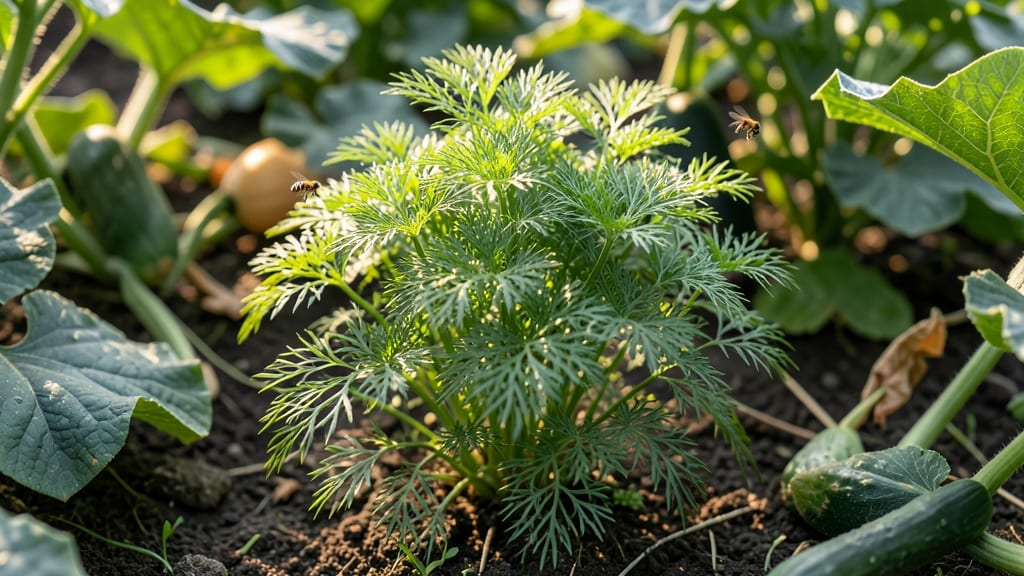
If squash vine borers and cucumber beetles are wreaking havoc in your garden, dill might be your secret weapon. This feathery annual doesn’t just add flavor to your kitchen—it transforms your garden into a natural pest-control hub by luring parasitic wasps that hunt vine borers while inviting bees to pollinate cucumber flowers.
Plant dill near your cucumbers and zucchini in full sun (at least 6 hours daily) for best results. Its tall, airy stems provide shelter for beneficial insects, and the yellow blooms attract hoverflies and ladybugs too. For organic gardeners, dill is a must-have—it’s easy to grow from seed and thrives in well-draining soil, making it a low-maintenance ally.
This dual-purpose plant works especially well for those battling squash vine borers or struggling with poor cucumber yields. Even urban gardeners with small spaces can tuck dill into containers beside their cucumber vines. 🌻
Beets for Soil Improvement and Pest Deterrence
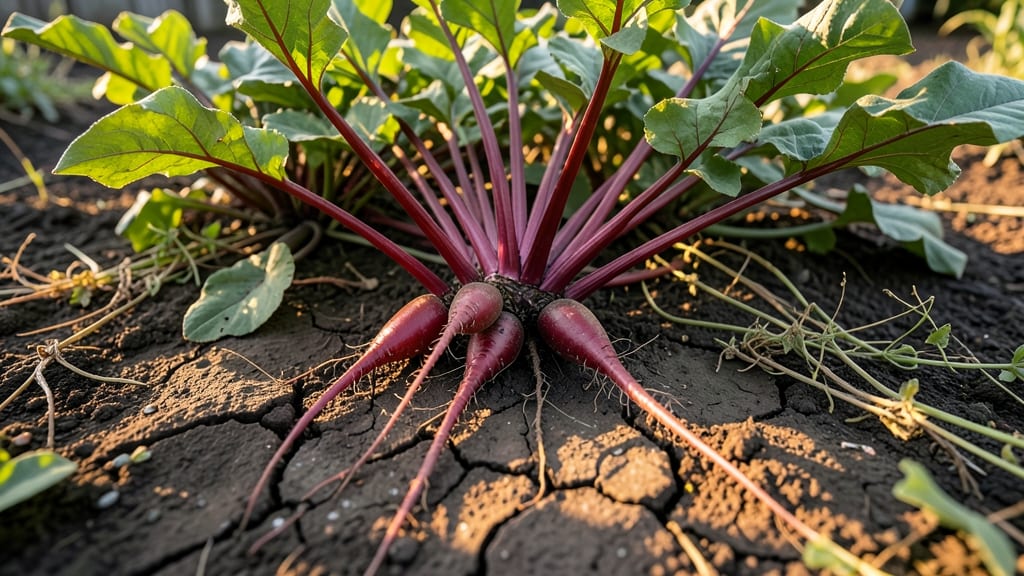
If you're tired of battling weeds and soil compaction in your garden, beets are the unsung heroes you’ve been missing. Their deep taproots break up hardpan while suppressing weeds naturally, creating a healthier environment for your zucchini and cucumbers to thrive.
Beyond soil improvement, beets act as a pest deterrent by repelling carrot rust flies, which may also target cucumbers. Plant them in early spring or late summer for a long-season rotation, harvesting the greens young for salads while the roots improve soil structure. Their dual-purpose nature makes them a must for organic gardeners.
Perfect for beginners or those with heavy clay soil, beets are low-maintenance and add a bonus harvest. Try them alongside your cucumbers this season for stronger plants and fewer pests! 🌱
Lettuce for Shade and Continuous Harvests
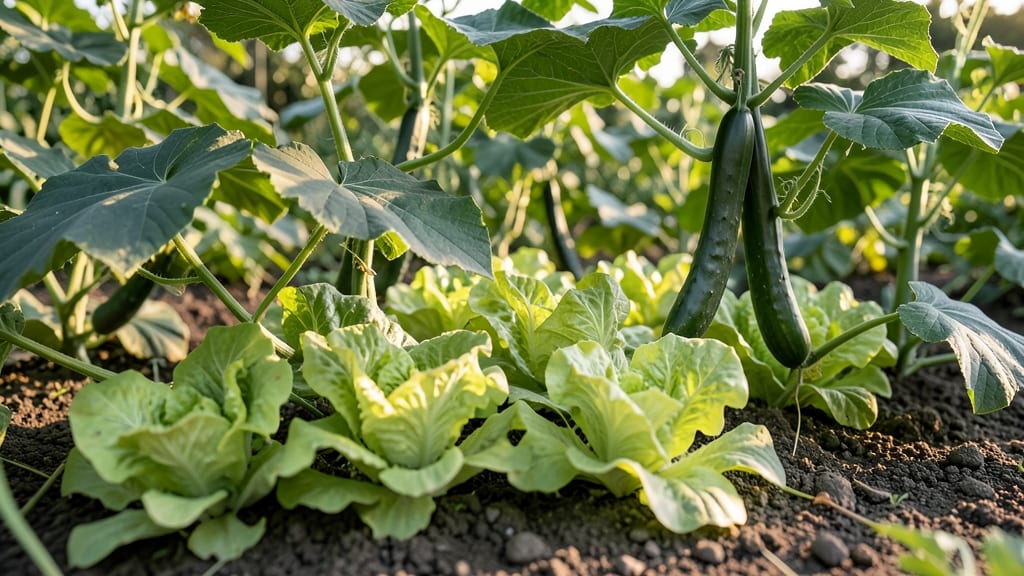
Want a low-maintenance way to keep cucumber roots cool and your soil moist without extra work? Butterhead lettuce is your secret weapon—a living mulch that doubles as a shade provider and harvestable crop.
This tender, loose-leaf variety thrives in partial shade, making it ideal for planting beneath cucumber vines where sunlight is limited. Its broad leaves create a natural ground cover that locks in moisture, reducing watering needs by up to 30%. Plus, its shallow roots don’t compete with cucumbers, while its sequential planting means you can harvest outer leaves for weeks without disturbing the roots—perfect for spring and fall gardens.
Urban gardeners and beginners will love this dual-purpose plant: it extends your growing season while giving you fresh greens. Just remember to space lettuce 6–12 inches from cucumber vines to avoid overcrowding. 🌿
Chives for Onion Family Pest Protection
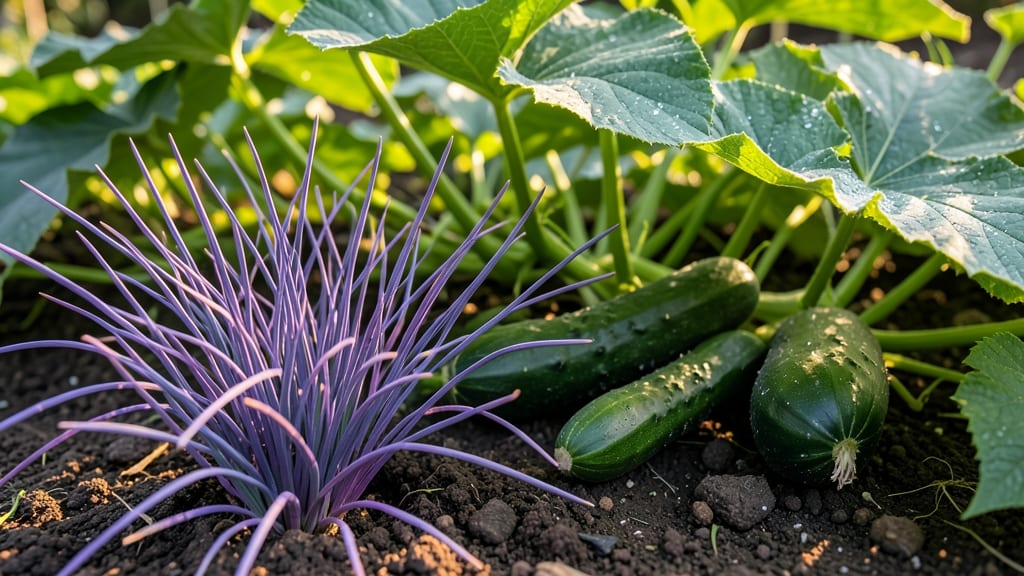
Tired of battling aphids and spider mites on your cucumbers? Purple chives might be your secret weapon—this compact onion relative doesn’t just repel pests, it also deters squash bugs with its subtle scent while adding beauty to your garden.
Plant purple chives 12-18 inches away from your cucumbers or zucchini, as their mild onion aroma confuses pests while their clumping habit makes them perfect for containers or interplanting. They thrive in full sun to partial shade and tolerate poor soil, so they’re low-maintenance yet highly effective. Snip leaves as needed for cooking or garnishes—you’ll get both pest control and fresh herbs!
Urban gardeners and small-space growers will love how chives fit neatly into pots or garden beds, providing year-round protection when planted in early spring. Their delicate purple flowers also attract pollinators, giving you a double benefit. 🌻
Sunflowers for Shade and Pollinator Support

If your cucumbers are wilting under the midday sun or struggling with ravenous pests, sunflowers might be the unsung hero of your garden. Their towering presence doesn’t just add drama—it provides afternoon shade that keeps cucumber vines cool while their bright blooms lure in pollinators like bees and butterflies.
Plant sunflowers along the perimeter of your garden to create a natural windbreak and deter larger pests like raccoons, who avoid the open, well-lit areas they create. Choose dwarf varieties (3-5 feet tall) for smaller gardens or let giant varieties (8+ feet) cast shade over sprawling cucumber patches. Their deep roots also help break up compacted soil, improving drainage for your cucumbers.
This dual-purpose plant is perfect for gardeners who want low-maintenance pest control without sacrificing beauty. Plus, the seeds are a bonus harvest for birds or your kitchen! 🌻
Clover for Nitrogen Fixation and Weed Suppression

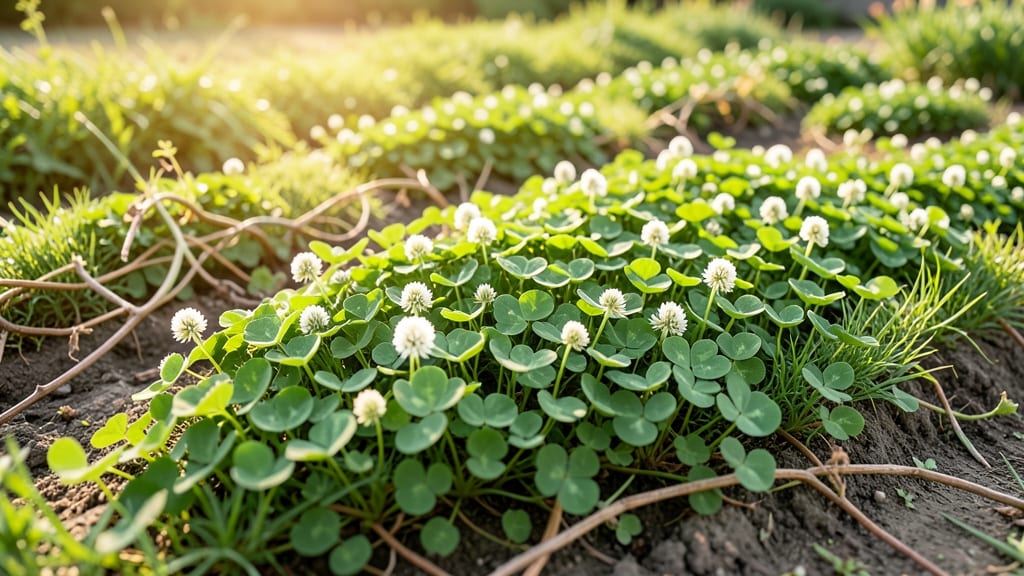
If your garden beds feel tired after growing heavy feeders like zucchini and cucumbers, white clover is the unsung hero you’ve been missing. This hardy ground cover doesn’t just survive—it thrives in perennial beds, fixing nitrogen while outcompeting weeds naturally.
Plant clover around the edges or between rows of cucumbers to create a living mulch that suppresses weeds and improves soil fertility over time. Its shallow roots also attract predatory insects like ground beetles, which hunt cucumber beetles and squash bugs—giving you a dual pest-control system. Best of all, it’s drought-tolerant once established, making it ideal for low-maintenance gardens.
Perfect for gardeners who want to reduce synthetic fertilizers and mulch costs, clover turns neglected beds into productive ecosystems. 🌿