
Companion Plants

Want to grow thriving cucumber plants with fewer pests and bigger harvests? Strategic companion planting can transform your garden by improving soil health, deterring insects, and maximizing space efficiency—here are the 10 best partners for cucumbers.
Dill Plants Enhance Cucumber Flavor and Attract Beneficial Insects
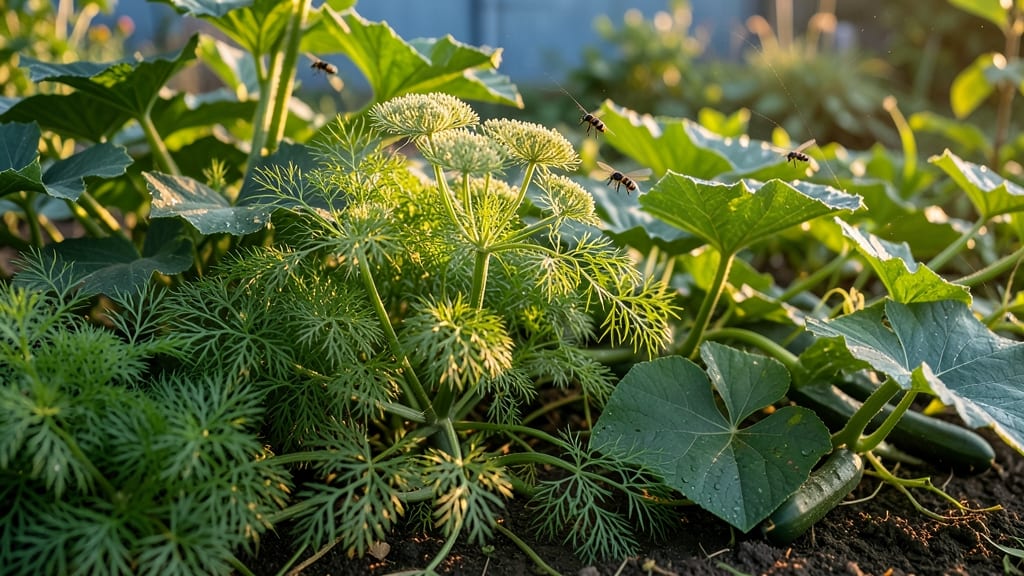
If you love fresh cucumbers but dread cucumber beetles, dill might be your new garden superhero. This feathery herb doesn’t just add flavor to your dishes—it confuses beetles with its strong scent while luring in predatory wasps that devour pests like aphids and caterpillars.
Plant dill alongside cucumbers in full sun (6+ hours daily) and watch your vines thrive with fewer beetle attacks. The wasps attracted by dill’s flowers will patrol your garden, keeping pests in check. Plus, harvesting dill leaves for soups or salads means you get a bonus crop from the same space!
Organic gardeners and small-space growers will love this dual-purpose plant—it’s easy to grow, pest-resistant, and packed with benefits. 🌱
Nasturtiums Act as Natural Pest Barriers Against Cucumber Beetles
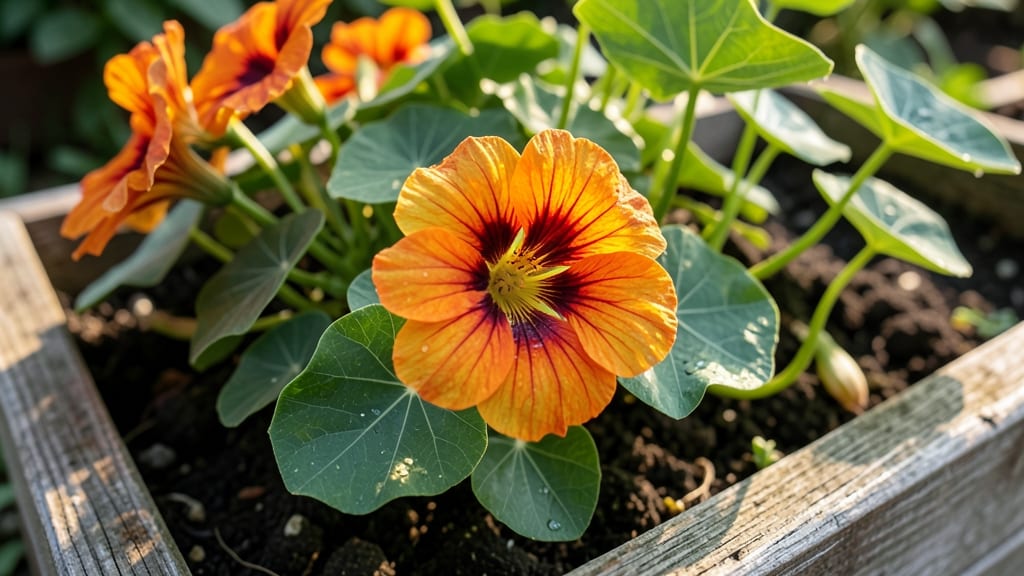
Tired of cucumber beetles wreaking havoc on your vines? Nasturtiums are the colorful, edible solution you’ve been missing—these peppery flowers act like tiny pest-repelling guards while adding a pop of color to your garden.
Their strong scent confuses cucumber beetles, keeping them away from your plants, and their bright blooms come in shades of orange, red, and yellow. Plus, you can harvest and eat the leaves and flowers for a spicy kick! They thrive in containers or small spaces, making them perfect for urban gardeners or balcony growers.
This dual-purpose plant works wonders for both pest control and aesthetics, giving you a low-maintenance way to protect your cucumbers while enjoying edible blooms. 🌻
Marigolds Deter Nematodes and Improve Soil Health Near Cucumbers
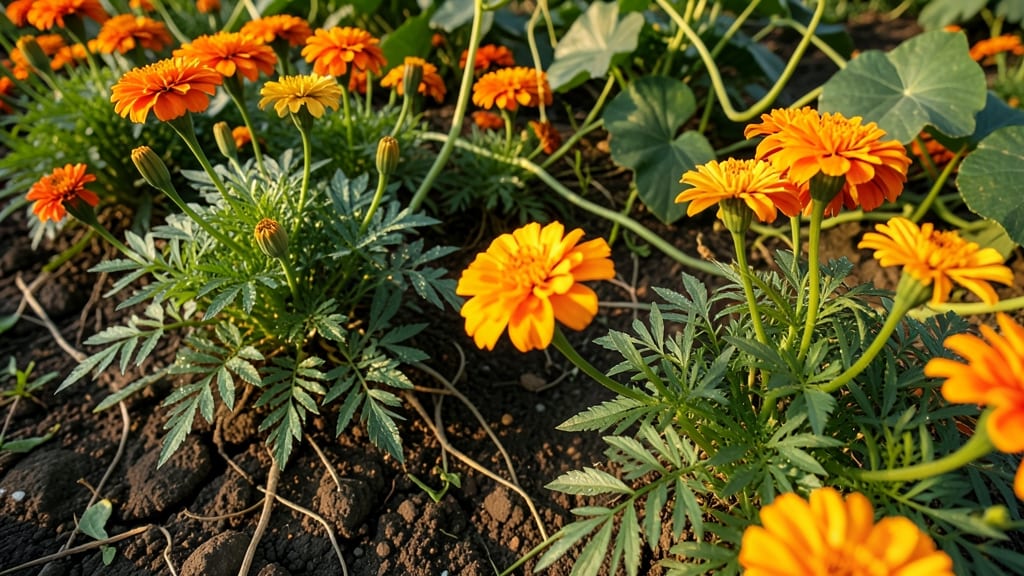
If your garden soil feels heavy or compacted, French marigolds are the secret weapon you’ve been missing. These vibrant bloomers don’t just deter pests—they actively improve soil structure while releasing natural compounds that poison nematodes, microscopic worms that damage cucumber roots.
Plant French marigolds directly around cucumber patches in early spring, spacing them 12-18 inches apart for optimal coverage. Their deep roots break up compacted soil, while their bright flowers attract pollinators like bees and hoverflies, boosting cucumber yields. For heavy clay soils, interplant marigolds with cucumbers to create a living soil amendment that works year after year.
This companion is especially valuable for gardeners with poor-draining soils or those battling nematode infestations. The best part? You’ll get stunning blooms while your cucumbers thrive. 🌻
Beans Fix Nitrogen While Providing Vertical Support for Cucumbers

Turn your cucumber patch into a dual-purpose powerhouse by planting bush or pole beans nearby. These legumes do double duty: they fix nitrogen in the soil, enriching it for next year's crops, while their sturdy stems naturally support cucumber vines, eliminating the need for extra trellising.
Start by planting pole beans (like Kentucky Wonder) along the edges of your cucumber bed or in containers. Their vines grow 6-8 feet tall, giving cucumbers a perfect vertical lifeline. For smaller spaces, bush beans (like Blue Lake) work well too—they stay compact but still boost soil fertility. Plant beans first in early spring, then let cucumbers climb as they mature, saving you space and effort.
This combo is a game-changer for urban gardeners or anyone with limited space. You’ll harvest fresh beans while your cucumbers thrive—plus, the nitrogen-rich soil will reward you for years to come. 🌱
Radishes Repel Cucumber Beetles and Improve Soil Structure

If your garden soil feels as hard as a rock after winter, radishes could be the secret weapon you’ve been missing. These speedy growers (ready in just 30 days) don’t just repel cucumber beetles—they physically break up compacted soil, creating ideal conditions for cucumber roots to spread and thrive.
Plant radish varieties like 'Cherry Belle' or 'French Breakfast' in early spring, just 1–2 inches from cucumber seedlings. Their rapid growth disrupts beetle life cycles by outcompeting weeds and confusing pests with their strong scent. Plus, once harvested, their roots leave behind natural aeration channels, improving drainage for your cucumbers.
This duo is especially helpful for urban gardeners or those with heavy clay soil, offering a two-in-one solution for pest control and soil prep. 🌱
Basil Enhances Cucumber Flavor and Repels Mosquitoes
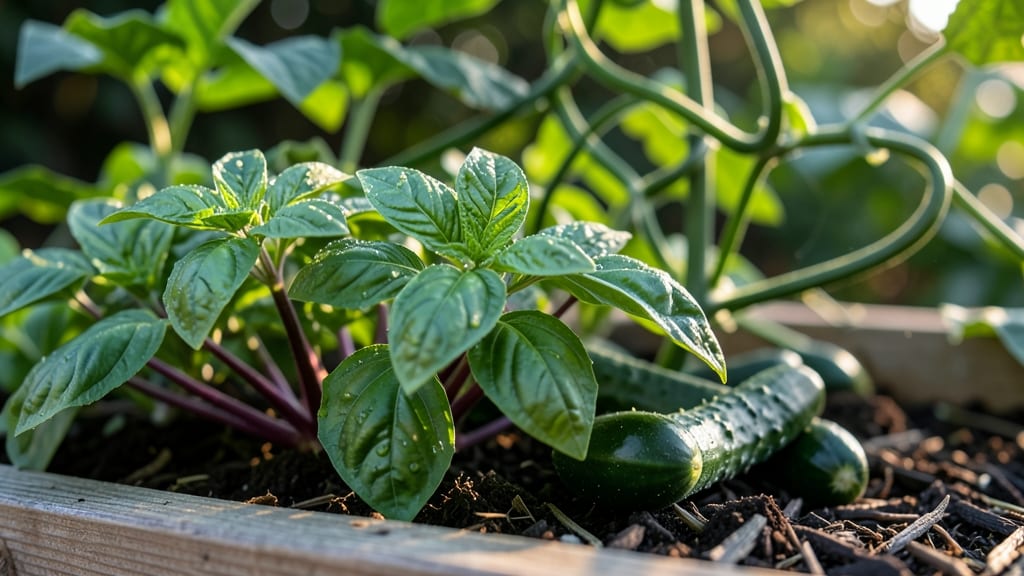
Looking for a way to make your cucumbers taste even sweeter while keeping mosquitoes at bay? Basil is the secret weapon you’ve been missing. This fragrant herb doesn’t just repel pests—it actually enhances the flavor of cucumbers when planted nearby, creating a delicious and functional garden duo.
Both purple and green basil varieties work wonders, and they’re easy to grow alongside cucumbers. Simply place basil plants at the base of your cucumber vines, and you’ll enjoy mosquito-repelling benefits while harvesting cucumbers with a richer taste. Bonus: The aromatic leaves make a refreshing pest-repelling tea—just steep a few leaves in hot water for a natural remedy.
This companion pairing is perfect for container gardeners or small spaces, as basil thrives in pots and can be tucked right beside your cucumbers. It’s a win-win for flavor, pest control, and multi-functional gardening! 🌿
Lettuce Provides Shade and Attracts Pollinators for Cucumbers
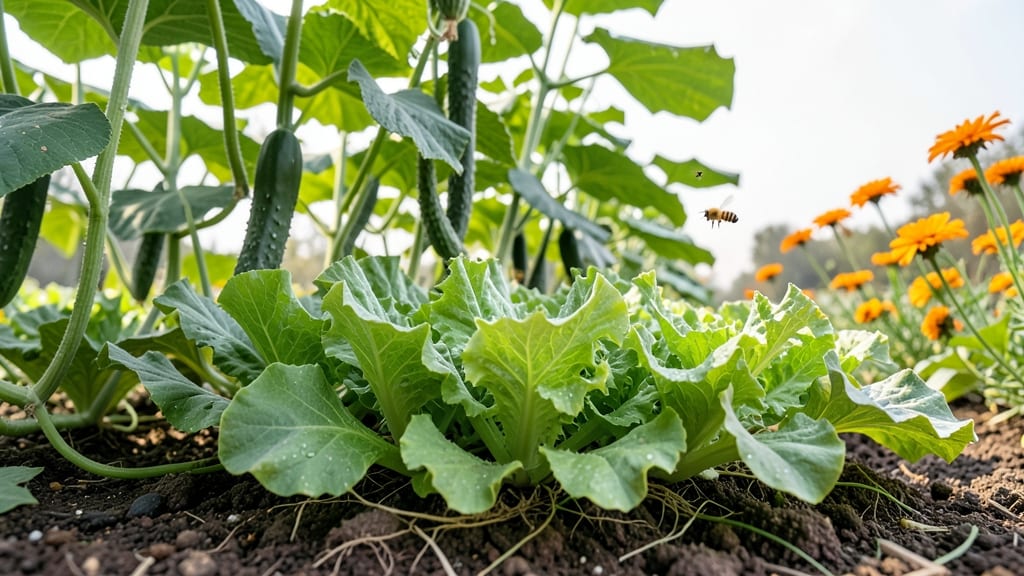
If you’re growing cucumbers in cooler climates or early spring, loose-leaf lettuce is your secret weapon for keeping roots cool and roots hydrated while inviting helpful pollinators to visit. Unlike head lettuce, these varieties like buttercrunch or oakleaf stay low and spread gently, creating a living mulch that locks in moisture.
Plant loose-leaf lettuce just 6–12 inches from cucumber vines to shade the soil without competing for sunlight. The broad leaves also attract ladybugs and hoverflies, which feast on cucumber pests like aphids. For best results, sow lettuce 2–3 weeks before cucumbers or in succession every 2 weeks—this ensures continuous shade as cucumbers mature. 🌱
This pairing is ideal for gardeners in USDA Zones 3–7 or those extending their growing season with row covers. The lettuce harvests early, leaving space for cucumbers to sprawl later in the season, making it a win-win for both crops. ✨
Onions Deter Cucumber Beetles with Strong Aromatic Compounds
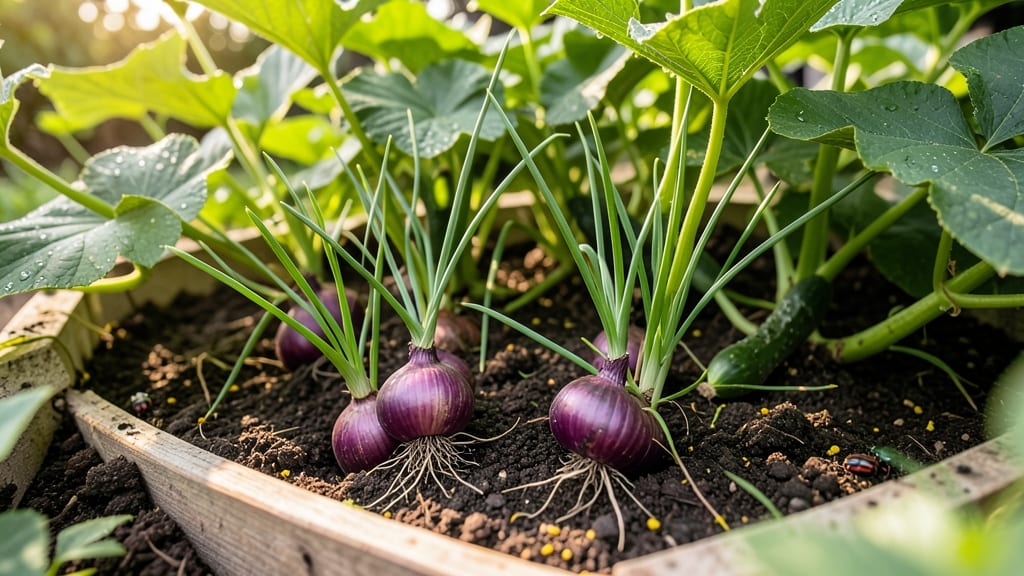
If you’ve ever battled cucumber beetles in your garden, you’ll love this two-for-one solution: onions and chives not only repel those pesky pests but also give you a harvestable crop. Their strong sulfur-based aroma masks cucumbers’ scent, confusing beetles while adding flavor to your kitchen.
Plant green onions, shallots, or chives around your cucumber patch, spacing them every 12-18 inches to maximize their pest-repelling power. These low-maintenance perennials thrive in full sun to partial shade and tolerate most soil types, making them perfect for square-foot gardens or container edges. Plus, you can snip leaves as needed for cooking without harming the plant.
This combo is especially great for urban gardeners or those with limited space—you get pest control and a fresh crop with minimal extra effort. 🌱
Sunflowers Provide Shade and Attract Predatory Wasps
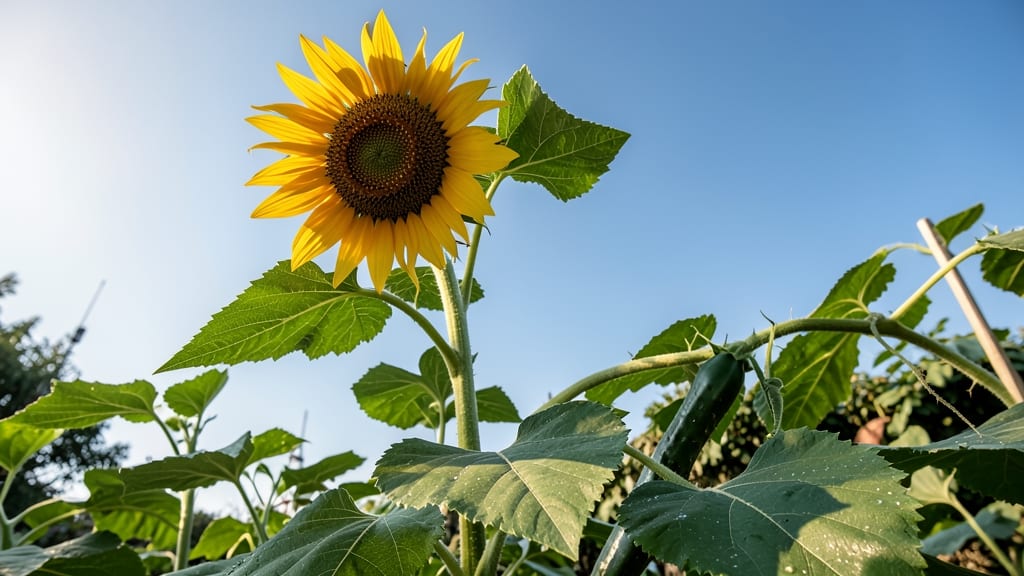
If you're dealing with tomato hornworms or struggling to keep cucumber vines cool in hot afternoons, sunflowers might be your unexpected hero. These towering plants don’t just add height and drama to your garden—they create a natural shade canopy that helps cucumbers retain moisture while attracting predatory wasps that hunt down hornworms before they can devour your tomatoes.
Plant sunflowers at least 3 feet away from cucumber beds to avoid competing for nutrients, but close enough to cast shade on vines during peak sun hours. Their deep roots also help break up compacted soil, improving drainage for cucumbers. For best results, choose early-maturing varieties like 'Mammoth' or 'Autumn Beauty' to ensure they’re established before cucumbers need shade.
This dynamic duo is especially valuable for gardeners with large plots or those growing both cucumbers and tomatoes nearby. The wasps drawn to sunflowers will patrol your garden, reducing the need for chemical interventions while your cucumbers thrive in cooler conditions. 🌻
Cabbage Family Plants Confuse Cucumber Beetles with Similar Scents

If you’ve struggled with cucumber beetles ruining your harvests, the solution might be growing what you already eat. Broccoli, kale, and cabbage release similar chemical scents that confuse these pests, acting like a natural misdirection tactic while boosting your garden’s productivity.
Plant these leafy greens within 12–18 inches of your cucumbers—their strong aromas mask the cucumber scent, making it harder for beetles to locate their favorite meal. Plus, you’ll enjoy a double harvest: nutrient-packed greens and thriving cucumbers. These companions thrive in cool-season beds, making them perfect for early spring or fall planting.
This strategy is ideal for gardeners who want low-maintenance pest control without synthetic sprays. Try interplanting broccoli for its bold flavor or kale for year-round harvests—your cucumbers (and taste buds) will thank you. 🌱